Introduction
To gaze upon these ten masterpieces is to step back into a world where skill reigned supreme, and art served as a mirror reflecting not just appearances, but the very soul of human experience. The Academic Realism movement, born from the hallowed halls of European academies in the 19th century, wasn’t merely about depicting life ‘as it was’; it was an ambitious pursuit of ideal beauty through meticulous observation and technical mastery.
Emerging as a reaction against Romanticism's emotional fervor and Neoclassicism's rigid formality, Academic Realism sought to elevate the everyday. Artists painstakingly honed their craft – anatomy, perspective, light, and shadow – believing that true art lay in flawlessly representing the tangible world. This wasn’t simply about photographic accuracy; it was a quest for verisimilitude , a convincing illusion of reality achieved through years of dedicated study and practice.
The cultural context is crucial. The rise of scientific inquiry fueled a desire for objective representation, while the burgeoning middle class sought art that resonated with their values – morality, domesticity, and historical grandeur. Salons became battlegrounds where artists vied for recognition, judged not only on subject matter but also on the sheer virtuosity of their technique. These paintings weren’t just decorative objects; they were statements about societal ideals, political narratives, and the power of human intellect.
But why do these works continue to captivate us today? Beyond their technical brilliance, they offer a poignant glimpse into a bygone era – a world of elaborate costumes, stately interiors, and carefully constructed compositions. They remind us of the enduring human fascination with storytelling, the beauty of detail, and the power of art to transcend time. More importantly, these paintings challenge us to consider what ‘realism’ truly means: is it simply replication, or something far more profound?
Prepare to embark on a journey through ten exceptional canvases – each a testament to the skill, ambition, and enduring legacy of Academic Realism. We will explore not only what these artists painted, but how they painted it, and why their creations continue to resonate with audiences centuries later.
The wave - William-Adolphe Bouguereau
 The wave - William-Adolphe Bouguereau
A whisper of salt air, a sun-drenched shore, and the quiet resilience of the human spirit – William-Adolphe Bouguereau’s 1896 masterpiece, *The Wave*, encapsulates these sensations with breathtaking beauty. This painting isn't merely a depiction of a woman by the sea; it is an exploration of vulnerability and strength in the face of nature’s immense power.
Bouguereau, a leading figure in 19th-century Academic Realism, elevates the everyday to the sublime. His meticulous technique – evident in the delicate rendering of skin tones and the dynamic brushwork capturing the sea foam – creates an illusion of reality that is both captivating and deeply moving. The composition, with the solitary figure dwarfed by the crashing waves, speaks volumes about our place within the natural world.
What sets *The Wave* apart is its masterful balance of calm and chaos. The woman’s introspective gaze invites contemplation, while the turbulent sea evokes a sense of life's inherent challenges. This duality resonates deeply, reminding us that even amidst turmoil, there exists a quiet strength within.
Today, *The Wave* continues to inspire a desire for serenity and connection with nature in modern interiors. Its palette of soft blues and creams lends itself beautifully to coastal-inspired décor, while its themes of resilience and introspection offer a timeless message. Bouguereau’s legacy endures as a testament to the power of Academic Realism and the enduring beauty of the human form – a true cornerstone among the Top 10 Masterpieces That Defined the ''Academic Realism'' Art Movement .
Biblis - William-Adolphe Bouguereau
 Biblis - William-Adolphe Bouguereau
Unveiled to discerning eyes, William-Adolphe Bouguereau’s 1884 *Biblis* is a sanctuary of sorrow rendered with breathtaking sensitivity – a painting that transcends mere technical skill and delves into the very heart of human grief. This work secures its place among the Top 10 Masterpieces That Defined the ''Academic Realism'' Art Movement not through spectacle, but through an unparalleled understanding of emotional nuance.
Bouguereau masterfully depicts the mythological Biblis in a moment of quiet contemplation following tragedy. The flawlessly rendered anatomy and luminous skin tones – hallmarks of his Academic Realism style – are juxtaposed with a palpable sense of vulnerability, creating a captivating tension. Observe how he uses chiaroscuro to sculpt form and draw the viewer into her private world.
More than just a beautiful image, *Biblis* is a meditation on loss and resilience. The painting’s subdued palette and intimate composition evoke a sense of timeless sorrow, resonating with audiences across generations. Bouguereau's influence can be seen in the enduring appeal of classical forms and idealized beauty.
Today, *Biblis* continues to inspire refined aesthetics in modern interiors. Its muted tones and elegant composition lend themselves beautifully to spaces seeking a sense of tranquility and sophistication – a testament to its lasting legacy as a symbol of both artistic skill and profound emotional intelligence. It is a reminder that true beauty lies not only in what we see, but in the stories it tells.
Florinda - Franz Xaver Winterhalter
 Florinda - Franz Xaver Winterhalter
Imagine a sun-dappled glade, alive with laughter and the gentle murmur of conversation – then you begin to glimpse the enchantment held within Franz Xaver Winterhalter’s 1853 masterpiece, *Florinda*. This captivating scene isn't simply a depiction of figures in nature; it is a celebration of camaraderie and beauty that rightfully earns its place among the Top 10 Masterpieces That Defined the ''Academic Realism'' Art Movement .
Winterhalter, renowned for his portraits of European aristocracy, demonstrates remarkable versatility here. His fluid lines and harmonious composition draw the eye into a dynamic gathering, while the rich textures – from the smooth skin of the figures to the flowing fabric of their garments – showcase his technical brilliance. The warm, earthy palette, punctuated by softer hues, creates an inviting atmosphere.
What sets *Florinda* apart is its ability to evoke a sense of both intimacy and grandeur. The artist’s masterful use of light and shadow adds depth and dimension, while the distant structure hints at civilization beyond the idyllic setting. This painting embodies the Academic Realism style – meticulous detail combined with a romantic sensibility.
Today, *Florinda* continues to transform spaces, bringing a touch of timeless elegance and joy to any interior. Its vibrant colors and dynamic composition make it a striking centerpiece, reminding us that art has the power to uplift the spirit and connect us to moments of shared beauty – a legacy Winterhalter so skillfully captured.
A Coign of Vantage - lourens alma tadema
 A Coign of Vantage - lourens alma tadema
A whisper of sea breeze, a sun-warmed stone, and the quiet contemplation of figures lost in thought – Sir Lawrence Alma-Tadema’s 1895 masterpiece, *A Coign of Vantage*, captures these sensations with exquisite detail. This painting isn't merely a depiction of classical elegance; it is an invitation to step into a world of serene beauty and profound emotion, securing its place among the Top 10 Masterpieces That Defined the ''Academic Realism'' Art Movement .
Alma-Tadema’s meticulous technique – evident in the flowing lines of drapery and the soft pastel tones – creates an illusion of reality that is both captivating and deeply moving. The balanced composition, with figures arranged along a stone railing overlooking the sea, draws the eye into a scene of quiet intimacy.
What sets *A Coign of Vantage* apart is its ability to evoke a sense of longing and tranquility. The artist’s masterful use of light and shadow enhances the gentle mood, while the presence of flowers hints at nature's fleeting beauty. This painting embodies the principles of Academic Realism – detailed representation combined with a romantic sensibility.
Today, *A Coign of Vantage* continues to inspire refined aesthetics in modern interiors. Its soft color palette and serene subject matter lend themselves beautifully to spaces seeking a touch of timeless elegance – a testament to its lasting legacy as a symbol of both artistic skill and emotional depth.
Las Meninas (after Velazquez) - John Singer Sargent
 Las Meninas (after Velazquez) - John Singer Sargent
Imagine stepping into a grand studio bathed in soft light, witnessing a fleeting moment of social intimacy – that is the captivating experience offered by John Singer Sargent’s 1879 *Las Meninas (after Velazquez)*. This isn't simply a reproduction; it’s a profound dialogue with a masterpiece, securing its place among the Top 10 Masterpieces That Defined the ''Academic Realism'' Art Movement .
Sargent’s meticulous technique – evident in the luminous skin tones and intricate textures – captures the opulence of the Spanish Baroque period. The semi-circular composition draws the eye into a scene of quiet contemplation, while subtle chiaroscuro adds depth and mood. This painting embodies the principles of Academic Realism , showcasing technical brilliance alongside a romantic sensibility.
What sets this work apart is its ability to evoke a sense of reverence for artistic tradition. Sargent’s homage to Velázquez isn't merely imitation; it’s an exploration of perception and reality, bridging centuries of artistic imagination. The soft palette and delicate brushwork create a calming atmosphere, inviting viewers to reflect on themes of innocence, social decorum, and the quiet dignity of aristocratic life.
Today, *Las Meninas (after Velazquez)* continues to inspire refined aesthetics in modern interiors. Its timeless elegance and subtle emotional resonance lend themselves beautifully to spaces seeking a touch of sophistication – a testament to its lasting legacy as a symbol of both artistic skill and intellectual depth.
The Siege of Cosel - wilhelm von kobell
 The Siege of Cosel - wilhelm von kobell
A sense of solemnity hangs in the air, a quiet anticipation before the clash of empires – Wilhelm von Kobell’s 1808 *The Siege of Cosel* captures this moment with commanding grandeur. This isn't merely a depiction of military might; it is a meticulously detailed chronicle of resilience and resolve, rightfully earning its place among the Top 10 Masterpieces That Defined the ''Academic Realism'' Art Movement .
Kobell’s masterful technique – evident in the precise brushwork and subtle shading – brings a lifelike quality to the soldiers and landscape. The balanced composition draws the eye into a scene of historical significance, while the subdued palette evokes a sense of both power and vulnerability. This painting embodies the principles of Academic Realism , showcasing technical brilliance alongside a romantic sensibility.
What sets *The Siege of Cosel* apart is its ability to evoke a profound emotional response. The distant fortress symbolizes formidable obstacles, while the disciplined figures represent unity and purpose. Today, this artwork continues to inspire refined aesthetics in modern interiors. Its timeless elegance and historical resonance lend themselves beautifully to spaces seeking a touch of sophistication – a testament to its lasting legacy as a symbol of both artistic skill and human endurance.
Mademoiselle Legrand - Pierre-Auguste Renoir
 Mademoiselle Legrand - Pierre-Auguste Renoir
A whisper of quiet dignity and a gaze that invites introspection – Pierre-Auguste Renoir’s 1875 *Mademoiselle Legrand* captures the essence of youthful innocence with breathtaking detail. This isn't merely a portrait; it is a testament to the power of academic realism, securing its place among the Top 10 Masterpieces That Defined the ''Academic Realism'' Art Movement .
Renoir’s meticulous technique – evident in the precise brushwork and subtle tonal gradations – brings a lifelike quality to the young girl. The soft, luminous color palette and balanced composition draw the eye into a moment of quiet contemplation, while the subdued background emphasizes her personality and emotional depth.
What sets *Mademoiselle Legrand* apart is its ability to evoke a sense of tenderness and nostalgia. This painting embodies the principles of Academic Realism – technical brilliance combined with a romantic sensibility. Today, this artwork continues to inspire refined aesthetics in modern interiors. Its timeless elegance and emotional resonance lend themselves beautifully to spaces seeking a touch of sophistication – a testament to its lasting legacy as a symbol of both artistic skill and human connection.
Portrait of Gustav Klimt’s sister Hermine in profile facing left - Gustav Klimt
 Portrait of Gustav Klimt’s sister Hermine in profile facing left - Gustav Klimt
Unveiled to discerning eyes, Gustav Klimt’s 1888 *Portrait of Gustav Klimt’s sister Hermine in profile facing left* is a study in quiet dignity and burgeoning artistic talent – a graphite drawing that transcends mere likeness. This work secures its place among the Top 10 Masterpieces That Defined the ''Academic Realism'' Art Movement not through overt spectacle, but through an unparalleled mastery of detail and subtle stylistic innovation.
Executed with meticulous precision, Klimt’s rendering of Hermine Gallia captures a sense of timeless elegance. The soft, velvety texture achieved through graphite pencil lends itself to nuanced tonal variations, while the artist’s careful attention to her attire – a fashionable “reform” gown – hints at the changing social landscape of Vienna.
What sets this portrait apart is its ability to evoke both intimacy and sophistication. This work embodies the principles of Academic Realism – technical brilliance combined with a romantic sensibility, foreshadowing Klimt’s later Symbolist explorations. Today, *Portrait of Gustav Klimt’s sister Hermine in profile facing left* continues to inspire refined aesthetics in modern interiors. Its understated beauty and emotional resonance lend themselves beautifully to spaces seeking a touch of timeless grace – a testament to its lasting legacy as a symbol of both artistic skill and human connection.
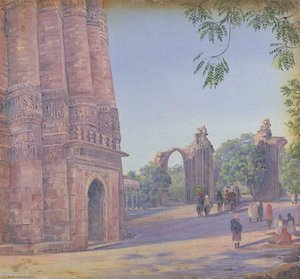
'The Kutub. Delhi. India. Novr. 1878' - Marianne North
 'The Kutub. Delhi. India. Novr. 1878' - Marianne North
A rare glimpse into a world largely unknown to Victorian audiences – Marianne North’s 1878 *The Kutub. Delhi. India. Novr.* is more than just a watercolor; it's a testament to the power of independent exploration and meticulous observation, rightfully earning its place among the Top 10 Masterpieces That Defined the ''Academic Realism'' Art Movement .
North’s delicate precision captures the grandeur of the ancient temple complex with remarkable detail. The muted blues and greens, punctuated by earthy ochres, evoke a sense of quiet contemplation, while the towering minaret draws the eye upwards, symbolizing India's rich historical legacy. This work embodies the principles of Academic Realism – technical brilliance combined with an unwavering commitment to capturing the nuances of light and shadow.
What sets *The Kutub* apart is its ability to transport viewers to another time and place. Today, this artwork continues to inspire refined aesthetics in modern interiors. Its timeless elegance and emotional resonance lend themselves beautifully to spaces seeking a touch of global sophistication – a testament to North’s lasting legacy as an artist who dared to venture beyond convention.
Gate of the Palace. Oodipore. Janr. 1879 - Marianne North
 Gate of the Palace. Oodipore. Janr. 1879 - Marianne North
Bathed in the soft light of an overcast Rajasthan day, Marianne North’s 1879 *Gate of the Palace. Oodipore. Janr.* is a captivating glimpse into a world of royal formality and enduring tradition – a work that rightfully claims its place among the Top 10 Masterpieces That Defined the ''Academic Realism'' Art Movement .
North’s meticulous observation captures the grandeur of the palace entrance with remarkable detail. The muted palette, dominated by ochre and terracotta, evokes a sense of timelessness, while the imposing architecture – defined by straight lines and geometric precision – contrasts beautifully with the organic forms of the surrounding foliage and figures.
What sets this painting apart is its ability to transport viewers to another time and place. Today, *Gate of the Palace* continues to inspire refined aesthetics in modern interiors. Its timeless elegance and emotional resonance lend themselves beautifully to spaces seeking a touch of global sophistication – a testament to North’s lasting legacy as an artist who dared to venture beyond convention.
Conclusion
As we close our journey through these ten defining works of Academic Realism, it’s not merely a farewell to paintings on canvas, but rather an invitation to welcome living presences into your own world. These masterpieces are more than historic treasures; they are echoes of human emotion, testaments to skill and vision, and gentle reminders of the beauty that surrounds us.
Each brushstroke holds a story – a moment captured, a life observed, a feeling conveyed. To live with these artworks is to invite contemplation, spark conversation, and nurture a deeper connection to our shared human heritage. Imagine *Mademoiselle Legrand’s* quiet dignity gracing your walls, or the vibrant energy of North's Indian scenes infusing your space with warmth and wonder.
The legacy of Academic Realism lies not just in its technical brilliance, but in its enduring ability to move hearts and shape our perceptions. We invite you to explore further – to discover the full breadth of this remarkable movement and find the pieces that resonate most deeply within your own soul. Begin your journey today with our full collection , and allow these timeless works to illuminate your life for years to come.