The Foundations of Academic Art: From Guilds to the Académie
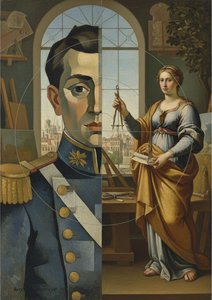
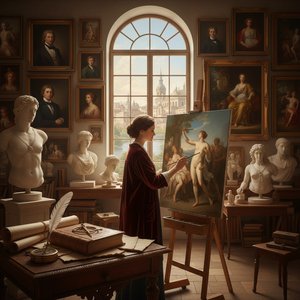
For centuries, the creation of art existed within a framework largely defined by guilds – associations of craftsmen regulating standards and protecting their trades. However, the Renaissance witnessed a shift, a burgeoning desire to elevate artistic practice beyond mere skill and into the realm of intellectual pursuit. This aspiration found its first formal expression in Florence with Cosimo I de’ Medici’s founding of the Accademia e Compagnia delle Arti del Disegno in 1563. Under the guidance of Giorgio Vasari, this institution wasn't simply a workshop; it was a crucible for defining artistic excellence, emphasizing drawing as the foundational skill and fostering a reverence for classical traditions. The initial membership – including luminaries like Michelangelo – signaled a new era where artists were not just artisans but esteemed intellectuals. This Florentine model quickly gained traction, spreading across Europe and ultimately culminating in the establishment of powerful national academies, most notably the Académie Royale de Peinture et de Sculpture in Paris under Louis XIV in 1648.
The French Académie was pivotal. It wasn’t merely about technical training; it actively sought to distinguish artists from common craftsmen, positioning them closer to scholars and thinkers. Emphasis was placed on studying the Old Masters, anatomy, geometry, and perspective – a rigorous curriculum designed to produce technically proficient and intellectually grounded painters and sculptors. This systematization of art education had profound consequences, shaping artistic styles for generations and establishing a hierarchy of genres where history painting reigned supreme due to its perceived edifying value.
Neoclassicism, Romanticism & Ingres: Defining the 19th-Century Style
The 19th century witnessed Academic art reach its zenith following the Napoleonic Wars in 1815. While often described as a single style, it was, in reality, a synthesis of Neoclassicism and Romanticism – a delicate balance between order and emotion. Neoclassicism, with its emphasis on clarity, symmetry, and classical subject matter, provided the structural foundation. Think of Jacques-Louis David’s austere grandeur; this pursuit of idealized form and moral virtue was deeply ingrained in Academic principles. However, the burgeoning Romantic movement injected a vital dose of passion, drama, and individualism into the mix.
Jean-Auguste-Dominique Ingres stands as a central figure in defining the 19th-century Academic style. His meticulous technique, precise draftsmanship, and dedication to classical ideals epitomized the Academy’s values. Yet, his works also possessed a subtle sensuality and psychological depth that transcended mere imitation. Ingres wasn't simply copying the past; he was reinterpreting it through his own unique lens, creating paintings of breathtaking beauty and intellectual rigor. His influence extended far beyond his studio, shaping generations of artists who sought to emulate his mastery.
The Salon System: Exhibition, Patronage and Artistic Success
Central to the dominance of Academic art was the Salon system – the annual or semi-annual exhibitions organized by the Académie. These weren’t simply showcases for artistic talent; they were crucial gatekeepers controlling public taste and official patronage. Success at the Salon meant recognition, commissions, and a secure career. The jury, comprised of established academicians, held immense power, determining which artists would be exhibited and, consequently, who would thrive.
The Salon became a cultural event, attracting vast crowds eager to view the latest works and engage in critical debate. Artists meticulously prepared for these exhibitions, often spending years perfecting their submissions. The paintings that graced the walls of the Salon weren’t merely aesthetically pleasing; they were statements of artistic skill, intellectual prowess, and adherence to Academic principles. Patronage was inextricably linked to Salon success. Wealthy collectors, members of the aristocracy, and even the state itself sought out artists who had gained recognition through the Academy, further solidifying its control over the art world.
Key Masters of Academic Painting: Bouguereau, Couture & Beyond
While Ingres laid the groundwork, a constellation of other masters flourished under the umbrella of Academic art. William-Adolphe Bouguereau, perhaps the most celebrated painter of the 19th century, epitomized the style’s technical brilliance and idealized beauty. His paintings – often depicting mythological scenes or portraits of graceful women – were renowned for their flawless execution and captivating realism. Bouguereau's ability to render flesh tones, drapery, and light with astonishing accuracy made him a favorite among collectors.
Thomas Couture, though sometimes considered a bridge between Romanticism and Realism, also played a significant role in shaping Academic painting. He emphasized historical subject matter but infused his works with a dramatic intensity and psychological depth that set him apart. Couture was also an influential teacher, mentoring artists like Édouard Manet, whose later rejection of Academic conventions would challenge the very foundations of the system. Other notable figures included Hans Makart, known for his monumental historical paintings, and Alexandre Cabanel, celebrated for his classical and allegorical works.
Technique and Subject Matter: Idealism, History & Orientalism
Academic art, academicism, or academism, is a style of painting and sculpture produced under the influence of European academies of art. This method extended its influence throughout the Western world over several centuries, from its origins in Italy...
Academic art was characterized by a distinct set of technical principles. Emphasis was placed on meticulous draftsmanship, precise modeling, and the mastery of color and light. Brushstrokes were often hidden, creating a smooth, polished surface that enhanced the illusion of realism. The goal wasn’t to showcase the artist’s hand but to create a seamless representation of reality – or rather, an idealized version of it.
Subject matter also played a crucial role. History painting held the highest status, depicting grand narratives from ancient mythology, classical literature, and religious texts. These paintings were intended to be edifying, conveying moral lessons and celebrating heroic virtues. Orientalist art – depictions of scenes from North Africa, the Middle East, and Asia – became increasingly popular, offering exotic subject matter that appealed to a growing fascination with other cultures. While often romanticized and imbued with Western biases, these works demonstrated the Academic artist’s ability to render diverse landscapes and costumes with remarkable detail.
The Decline and Legacy of Academic Art in the Modern Era
By the late 19th century, the foundations of Academic art began to crumble. The rise of Realism, Impressionism, and other avant-garde movements challenged its conventions and questioned its authority. Artists like Gustave Courbet rejected idealized beauty in favor of depicting everyday life with unflinching honesty, while Monet and his contemporaries sought to capture fleeting moments of light and color. These new approaches were initially met with resistance from the Academy, but they gradually gained acceptance, ultimately transforming the art world.
Although Academic art fell from favor among critics and collectors in the early 20th century, its legacy endures. The emphasis on technical skill, anatomical accuracy, and classical traditions continues to influence artists today. Moreover, a renewed appreciation for the beauty and craftsmanship of Academic painting has emerged in recent decades. At OriginalUniqueArt.com, we celebrate this enduring tradition by offering high-quality reproductions of masterpieces by Bouguereau, Ingres, Cabanel, and other key masters, allowing you to experience the splendor of Academic art firsthand. Explore our collection and discover the timeless elegance and intellectual depth that define this remarkable style – a testament to the power of skill, dedication, and artistic vision.