
 Preview
 Send
Send Share
Share
 Details
 Guide
Guide

 Download
 Similars
 X-Ray
X-Ray Diaporama
 Q&A
Q&A Stats
StatsCIRCLE_A

- 136.0 x 136.0 cm


 Read More
The artwork displayed on this page is protected by copyright law, which means we cannot legally create or sell an identical reproduction. This protection is enforced under international agreements such as the Berne Convention and by national laws, including those outlined by the U.S. Copyright Law - Title 17.
This method fully complies with copyright regulations because it does not involve copying or duplicating the protected artwork. Instead, it is a creative reinterpretation - a new painting that is influenced by the original but not identical to it.
Giclée / Art Print
Museum-quality giclée or canvas print with fast production and flexible finish options. ( Buy Hand Made Painting Switch to Digital Image)




P118B $10

P118H $10

P118W $10

P438Z $10

P508JH $12

P508YH $12

P805H $10

P805Z $10

P919BZ $10

P919G $10

P919XJ $10

P959ZH $10

P968JZ $12

W106C $8

W218G $10

W218JH $8

W218Y $10

W307PJ $10

W316G $10

W316PJ $8

W316Y $10

W398PJ $8

W4111J $10

W500HY $15

W500JH $15

W692G $12

W849H $8

W940BG $15

W953PJ $8




Pick from our preset sizes that match the artwork's original proportions.

Type the width and the height you need, to fit your frame or your wall. A print can only be cut, never made bigger than the picture, so a size with a different shape loses a part of the image. We send you a digital mockup to approve before we print anything. The picture shown on this page does not show the real cut — only the mockup does.
Worldwide Delivery () in 2 weeks instead of standard 4/5 weeks. (8 November)

Free Worldwide Express Shipping

High-Quality Linen Canvas

Full Shipping Insurance

Customs Tax Refund Guarantee

True Color Matching Guarantee

100-Day Return Policy (Defects Only)

100% Money-Back Guarantee

Bulk Discount Offer
 Glass option is only available in size under 110 CM

CIRCLE_A
Giclée / Art Print
Reproduction Size
-


Total Price
$ 81
The Geometry of Essence
In this 1968 oil on canvas, the canvas is divided by a warm, red field that provides a sense of depth and heat. Two distinct circles occupy the space, positioned in a way that creates a subtle tension between the upper left and the center-right. The first circle is a pale orange, while the second is a deeper, more saturated hue. These forms do not represent physical objects but instead distill the concept of shape and color into their most fundamental states. The composition relies on a quiet balance, using the weight of the circles to anchor the viewer's gaze within the red expanse.
The work reflects a period of intense formal exploration. By stripping away the recognizable world, the artist focuses on the relationship between geometry and the void. The interaction between the orange and red tones creates a visual harmony that feels both structured and organic.
Abstraction and the Korean Landscape
Yoo Youngkuk emerged as a central figure in the development of Korean abstraction, seeking a visual language that could express the essence of existence without relying on literal representation. This piece, created in 1968, demonstrates a mastery of non-representational form. The artist’s background in the Sinsasil-pa group and his early training in Tokyo informed this rigorous approach to composition.
While the work is purely abstract, it carries the weight of a search for order. The circles act as points of stability within the field, echoing the artist's lifelong interest in the structural rhythms found in nature. Through this reduction of form, the painting achieves a sense of permanence.
Questions & Answers
What is "CIRCLE_A" about?
"CIRCLE_A" by Yoo Youngkuk depicts: abstract, geometric, circles, red background, orange tones, minimalism.
How does the style of "CIRCLE_A" relate to its creator's era?
"CIRCLE_A" by Yoo Youngkuk is placed in the Abstract Art movement, within the Modern era of its creator.
Where is "CIRCLE_A" suggested to be displayed, considering its palette?
The dark colors of "CIRCLE_A" by Yoo Youngkuk match its recommended space: a living room.
Artist Biography
A Pioneer of Korean Abstraction: The Life and Art of Yoo Youngkuk
Yoo Youngkuk, a name synonymous with the birth of abstract art in Korea, emerged as a pivotal figure during a period of immense social and political upheaval. Born in 1916 in the coastal town of Uljin, South Korea, his artistic journey was one of relentless exploration and unwavering dedication to forging a new visual language for a nation grappling with identity and modernity. His early life, steeped in the natural beauty of the Korean landscape – particularly the majestic mountains that would become a recurring motif throughout his career – instilled within him a deep connection to nature, a sentiment that subtly permeated even his most geometrically rigorous compositions. This formative experience laid the groundwork for an artistic vision that sought not merely to represent the external world, but to distill its essence into pure form and color. Yoo’s path toward abstraction began with formal training at Bunka Gakuin University in Tokyo, graduating from the oil painting department in 1938. It was here he encountered Western abstract movements and engaged with pioneering Japanese artists like Murai Masanari and Hasegawa Saburo, figures who profoundly influenced his early experimentation and solidified his commitment to non-representational art.Forging a New Path: Sinsasil-pa and Early Experimentation
Returning to Korea in 1943 amidst the turbulence of World War II, Yoo faced significant challenges in pursuing his artistic vision. The war years were marked by hardship and disruption, forcing him to sustain himself through various means while maintaining a steadfast commitment to his art. However, with the liberation of Korea and the subsequent establishment of the Republic of Korea, a new era dawned for the nation’s artistic community. In 1948, Yoo Youngkuk joined forces with Kim Whanki and Lee Kyusang to form *Sinsasil-pa* (New Realism Group), a watershed moment in Korean art history. This avant-garde collective represented the first organized attempt to break away from traditional representational styles and embrace modern abstract expression. The group’s manifesto called for an art that reflected the realities of post-war Korea, but interpreted through a lens of abstraction—a bold move that challenged conventional artistic norms and ignited debate within the Korean art world. Yoo's early works during this period demonstrate a dynamic interplay between color fields and emerging geometric forms, hinting at the direction his style would take in later years. He also briefly shared his expertise as a professor at Seoul National University for two years, nurturing the next generation of artists.The Mountain Within: Evolution of Style and Symbolic Resonance
Throughout the 1950s and early 60s, Yoo Youngkuk’s artistic style underwent a significant transformation. While his earlier works explored color field painting, he gradually began to incorporate more defined geometric shapes, influenced by his ongoing dialogue with nature and his personal experiences. This period saw the emergence of what would become his signature motif: the mountain. Often referred to as “the painter of mountains,” Yoo didn’t depict mountains in a literal sense; rather, he abstracted their essence—their solidity, their grandeur, their spiritual resonance—into powerful compositions of color and form. The mountain became a symbol of Korea itself, representing resilience, endurance, and the enduring spirit of the nation. Following his participation in the São Paulo Biennial in 1963, Yoo experienced a period of artistic consolidation, withdrawing from group activities to focus on solo exhibitions held every other year for two decades. This allowed him to refine his unique style, pushing the boundaries of geometric abstraction and exploring increasingly complex relationships between color, line, and space. Despite facing debilitating illnesses that confined him to a wheelchair from the 1960s onward, Yoo’s creative energy remained undiminished; he continued to paint with unwavering dedication until just three years before his death in 2002 at the age of eighty-six.A Lasting Legacy: Recognition and Enduring Influence
Yoo Youngkuk's contributions to Korean modern art were widely recognized during his lifetime, culminating in a survey by *Monthly Art* magazine that hailed him as the most outstanding artist among over a hundred of his contemporaries. His work has been exhibited extensively both domestically and internationally, solidifying his position as a leading figure in the global abstract art scene. His legacy extends beyond his paintings; he paved the way for subsequent generations of Korean artists to explore abstraction and experiment with new forms of expression. Yoo’s unwavering commitment to artistic innovation, coupled with his deep connection to Korean culture and landscape, continues to inspire artists today. His ability to translate the emotional and spiritual qualities of nature into a purely abstract visual language remains a testament to his profound artistry and enduring influence. Exploring Yoo Youngkuk's masterpieces – such as “Mountain” or “Work”– at platforms like OriginalUniqueArt.com offers a glimpse into the mind of a true pioneer, an artist who dared to break with tradition and forge a new path for Korean art. His work stands as a powerful reminder of the transformative power of abstraction and its ability to capture the essence of both the external world and the inner self.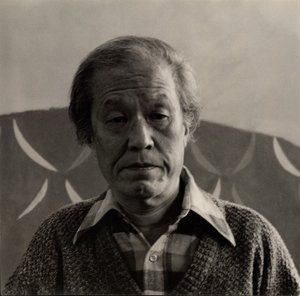
Yoo Youngkuk
1916 - 2002 , South Korea
Quick Facts
- Artistic Movement Or Style: Abstract painting
- Artists Or Movements Influenced By This Artist: ['Kim Whanki']
- Artists Who Influenced This Artist:
- Murai Masanari
- Hasegawa Saburo
- Date Of Birth: 1916
- Date Of Death: 2002
- Full Name: Yoo Youngkuk
- Nationality: Korean
- Notable Artworks:
- Mountain
- Work
- Place Of Birth: Ulchin, South Korea
Related Articles

Geometric Abstraction's 10 Defining Masterpieces | Art for Your Home - OriginalUniqueArt
Explore 10 defining masterpieces of Geometric Abstraction! Discover Kandinsky, Mondrian & Malevich’s iconic works. Find museum-quality art reproductions and curated decor ideas to elevate your home at OriginalUniqueArt.com.

Mastering Abstraction: The 25 Most Iconic Works by Wassily Kandinsky
Explore 25 iconic Kandinsky masterpieces and the birth of abstraction. Discover the full collection online at OriginalUniqueArt.com.
Beyond Form & Color: Geometric Abstraction's Enduring Legacy in Art History
Explore the captivating world of geometric abstraction! Discover its origins, key artists like Malevich & Mondrian, and why this movement remains highly valued by art collectors today. Expert insights at OriginalUniqueArt.

Beyond Form & Color: Geometric Abstraction's Evolution in 20th/21st Century Art
Explore the evolution of geometric abstraction from Cubism to contemporary art. Discover key artists like Malevich & Mondrian, investment insights, and expert collecting advice at OriginalUniqueArt.

Abstract Expressionism's 10 Defining Masterpieces |
Explore 10 defining Abstract Expressionism masterpieces by Pollock, Rothko & de Kooning. Discover the stories behind these iconic paintings and find museum-quality art reproductions to elevate your home decor on .


