Text size

() ·

A painting made for you, by hand

CIRCLE_A

Hand Made Oil Reproduction

Hand-painted oil on canvas in your size and frame, made to order by our artists. ( Switch to Print Switch to Digital Image)

Collectible Description

Experience the warm harmony of this 1968 abstract masterpiece CIRCLE_A by Korean pioneer Yoo Youngkuk, featuring vibrant orange and red geometric forms that invite you to bring modern elegance into your collection.

Artist Biography

Discover Yoo Youngkuk (1916-2002), Korea's first abstract painter & pioneer of modern art. Explore his geometric abstractions, 'mountain' motifs, and lasting legacy. #abstractart #koreanart

from ·

Chapter 1

How large should it be?

Slide to change the size; the picture on the left shows the frame at its real width. The proportions of the original are kept.

Standard
custom
CM
INCH

Pick from our preset sizes that match the artwork's original proportions.

width
height

Type the width and the height you need, to fit your frame or your wall. This is hand-painted, so for a size with a different shape the artist can paint a bit more around the picture, or cut a bit — you choose. We send you a digital mockup to approve before the painting starts. The picture shown on this page does not show the real result — only the mockup does.

Chapter 2

How should it arrive?

Choose the edges of the stretched canvas

Choose your frame

Corner sample of the WhiteWrap canvas edge finish, stretched on solid wood bars
White $1
Corner sample of the BlurSideWrap canvas edge finish, stretched on solid wood bars
Blurside $1
Corner sample of the ExtendedWrap canvas edge finish, stretched on solid wood bars
Extended $1
Corner sample of the P118B picture frame: moulded polystyrene, 5 cm wide and 3 cm thick
P118B $10
Corner sample of the P118H picture frame: moulded polystyrene, 5 cm wide and 3 cm thick
P118H $10
Corner sample of the P118W picture frame: moulded polystyrene, 5 cm wide and 3 cm thick
P118W $10
Corner sample of the P438Z picture frame: moulded polystyrene, 5.5 cm wide and 3.5 cm thick
P438Z $10
Corner sample of the P508JH picture frame: moulded polystyrene, 7 cm wide and 3.5 cm thick
P508JH $12
Corner sample of the P508YH picture frame: moulded polystyrene, 7 cm wide and 3.5 cm thick
P508YH $12
Corner sample of the P805H picture frame: moulded polystyrene, 5 cm wide and 3.5 cm thick
P805H $10
Corner sample of the P805Z picture frame: moulded polystyrene, 5 cm wide and 3.5 cm thick
P805Z $10
Corner sample of the P919BZ picture frame: moulded polystyrene, 7 cm wide and 3.5 cm thick
P919BZ $10
Corner sample of the P919G picture frame: moulded polystyrene, 7 cm wide and 3.5 cm thick
P919G $10
Corner sample of the P919XJ picture frame: moulded polystyrene, 7 cm wide and 3.5 cm thick
P919XJ $10
Corner sample of the P959ZH picture frame: moulded polystyrene, 5 cm wide and 3 cm thick
P959ZH $10
Corner sample of the P968JZ picture frame: moulded polystyrene, 6 cm wide and 4 cm thick
P968JZ $12
Corner sample of the W106C picture frame: solid wood, 5 cm wide and 3 cm thick
W106C $8
Corner sample of the W218G picture frame: solid wood, 5 cm wide and 3 cm thick
W218G $10
Corner sample of the W218JH picture frame: solid wood, 5 cm wide and 3 cm thick
W218JH $8
Corner sample of the W218Y picture frame: solid wood, 5 cm wide and 3 cm thick
W218Y $10
Corner sample of the W307PJ picture frame: solid wood, 6 cm wide and 3 cm thick
W307PJ $10
Corner sample of the W316G picture frame: solid wood, 6 cm wide and 3 cm thick
W316G $10
Corner sample of the W316PJ picture frame: solid wood, 6 cm wide and 3 cm thick
W316PJ $8
Corner sample of the W316Y picture frame: solid wood, 6 cm wide and 3 cm thick
W316Y $10
Corner sample of the W398PJ picture frame: solid wood, 5 cm wide and 3 cm thick
W398PJ $8
Corner sample of the W4111J picture frame: solid wood, 6.5 cm wide and 3.5 cm thick
W4111J $10
Corner sample of the W500HY picture frame: solid wood, 7 cm wide and 5 cm thick
W500HY $15
Corner sample of the W500JH picture frame: solid wood, 7 cm wide and 5 cm thick
W500JH $15
Corner sample of the W692G picture frame: solid wood, 8 cm wide and 4 cm thick
W692G $12
Corner sample of the W849H picture frame: solid wood, 5 cm wide and 3 cm thick
W849H $8
Corner sample of the W940BG picture frame: solid wood, 7.5 cm wide and 4.5 cm thick
W940BG $15
Corner sample of the W953PJ picture frame: solid wood, 6 cm wide and 3.5 cm thick
W953PJ $8
Corner sample of the H24-GOLD picture frame: carved wood with gesso, 10 cm wide and 6 cm thick
H24-GOLD $30
Corner sample of the H24-SILVER picture frame: carved wood with gesso, 10 cm wide and 6 cm thick
H24-SILVER $30
Corner sample of the H36-GOLD picture frame: carved wood with gesso, 15 cm wide and 6.5 cm thick
H36-GOLD $45
Corner sample of the H36-SILVER picture frame: carved wood with gesso, 15 cm wide and 6.5 cm thick
H36-SILVER $45
Frame preview
Framed

Moulding: . Overall size with the frame: .

Chapter 3

Who paints it, and should anything change?

Examples of what can be changed: Replace face with customer photo; Add pet (e.g., replace cat with dog); Include hidden message in background; Change background landscape or elements.
After order, OriginalUniqueArt.com team will email client for instructions and provide a mockup preview

Worldwide Delivery () in 3/4 weeks instead of standard 5 weeks. (8 November). No compromise on quality.

Chapter 4

The finishing touches

A nameplate, as in a museum?

Engraved Bronze Plaque Details

This elegant plaque features the artist's name and the title of the artwork, finely engraved for a timeless presentation.

It is made from bronze with a refined, elegant finish. The text is precisely laser-engraved for a sharp and permanent result. Measuring 9x2 cm, the plaque is compact yet easy to read. It's built to be durable and scratch-resistant, offering a professional, museum-quality look. Mounting is simple thanks to the included adhesive backing.

Transparent Acrylic Plaque Details

The plaque includes essential engraved details such as the artist's name, the title of the artwork, the date it was created, the type of media used-like oil on canvas or watercolor-a brief description of the piece, and a QR code that links to the complete artwork information.

It is crafted from clear acrylic, offering a sleek, modern appearance. The text is UV-engraved in black to ensure strong visual contrast. With a size of 10x15 cm, it ensures optimal readability. It comes equipped with two metal hooks for secure wall mounting. The plaque is designed to be weather-resistant, making it suitable for various environments, and it includes interactive features that work seamlessly with smartphone scanning.

Black Acrylic Plaque Details

This elegant plaque includes engraved information such as the artist's name, the title of the artwork, the date it was created, the type of media used (like oil on canvas or watercolor), a short description of the artwork, and a QR code for quick access to more information.

The plaque itself is made from refined black acrylic with a premium finish. The text is laser-engraved in white for high contrast and readability. Its size is 10x15 cm, designed to be easy to read. It comes with two metal hooks for professional mounting. The design is sleek and fits any interior style. It is also weather-resistant and durable, with built-in digital integration for mobile compatibility.

A protective varnish?

When do you need it?

Chapter 5

Your painting, as you ordered it

CIRCLE_A

Reproduction Medium

Reproduction Size

-

Elite Senior Artist

More detail, finesse, and extra production time

-

Reproduction Frame

-

-

For artworks or reproductions larger than 105 cm (approximately 41 inches) on any side, the frame will be shipped as a kit, disassembled. This method ensures safe delivery and prevents damage during transport.

Professional assembly required - this is not a DIY product.
The kit must be assembled and the canvas stretched by an experienced professional framer, using wood glue (not supplied), a canvas stretching plier and clamps to hold the bars square while the glue dries. Incorrect assembly or uneven canvas tension can permanently damage the artwork and is not covered by our warranty.

  • All solid wood bars are included, precisely cut to size.

  • Assembled with the screws provided, plus wood glue for the corner joints, which is not supplied and must be sourced by your framer.

  • Professional tools are required and not included: a canvas stretching plier (tensioner) and clamps to hold the bars square while the glue dries.

Important:
The corner joints require wood glue, the bars must be held with clamps until the glue is fully dry, and tightening the canvas on the assembled frame requires a canvas stretching plier. None of these are included in the kit. Please arrange an experienced professional framer before ordering this size.

Nameplate

-

-

Protective Varnish

Glossy Varnish (enhances colors, protects against light/moisture)

-

Customize My Artwork

Examples of what can be changed: Replace face with customer photo; Add pet (e.g., replace cat with dog); Include hidden message in background; Change background landscape or elements.

-

Urgent

Worldwide Delivery () in 3/4 weeks instead of standard 5 weeks. (8 November). No compromise on quality.

-

Express Shipping

Worldwide Delivery () in 5 weeks. (15 November).

Included

Total Price

$ 300

Total Price $ 300

Glass option is only available in size under 110 CM

Included with every order

  • Free Worldwide Express Shipping
  • High-Quality Linen Canvas
  • Full Shipping Insurance
  • Customs Tax Refund Guarantee
  • True Color Matching Guarantee
  • 100-Day Return Policy (Defects Only)
  • 100% Money-Back Guarantee
  • Bulk Discount Offer

The Geometry of Essence

In this 1968 oil on canvas, the canvas is divided by a warm, red field that provides a sense of depth and heat. Two distinct circles occupy the space, positioned in a way that creates a subtle tension between the upper left and the center-right. The first circle is a pale orange, while the second is a deeper, more saturated hue. These forms do not represent physical objects but instead distill the concept of shape and color into their most fundamental states. The composition relies on a quiet balance, using the weight of the circles to anchor the viewer's gaze within the red expanse.

The work reflects a period of intense formal exploration. By stripping away the recognizable world, the artist focuses on the relationship between geometry and the void. The interaction between the orange and red tones creates a visual harmony that feels both structured and organic.

Abstraction and the Korean Landscape

Yoo Youngkuk emerged as a central figure in the development of Korean abstraction, seeking a visual language that could express the essence of existence without relying on literal representation. This piece, created in 1968, demonstrates a mastery of non-representational form. The artist’s background in the Sinsasil-pa group and his early training in Tokyo informed this rigorous approach to composition.

While the work is purely abstract, it carries the weight of a search for order. The circles act as points of stability within the field, echoing the artist's lifelong interest in the structural rhythms found in nature. Through this reduction of form, the painting achieves a sense of permanence.

Questions & Answers

What is "CIRCLE_A" about?

"CIRCLE_A" by Yoo Youngkuk depicts: abstract, geometric, circles, red background, orange tones, minimalism.

How does the style of "CIRCLE_A" relate to its creator's era?

"CIRCLE_A" by Yoo Youngkuk is placed in the Abstract Art movement, within the Modern era of its creator.

Where is "CIRCLE_A" suggested to be displayed, considering its palette?

The dark colors of "CIRCLE_A" by Yoo Youngkuk match its recommended space: a living room.

More about this painting

Preview AR preview Switch to Print Switch to Digital Image Send
Details Guide Add to favorites Download Similars X-Ray Diaporama Q&A Stats

In numbers

  • 1968the year it was painted
  • 29frames to choose from
  • standard sizes, in its own proportions
  • 5weeks to paint and deliver it

About the original

Dimensions
136.0 x 136.0 cm
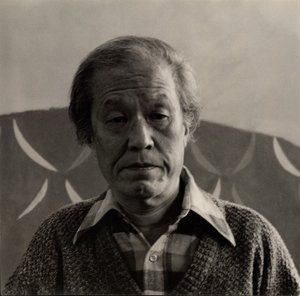
Yoo Youngkuk

Yoo Youngkuk

1916 - 2002, South Korea

Quick facts about Yoo Youngkuk

  • Artistic Movement Or Style: Abstract painting
  • Artists Or Movements Influenced By This Artist: ['Kim Whanki']
  • Artists Who Influenced This Artist:
    • Murai Masanari
    • Hasegawa Saburo
  • Date Of Birth: 1916
  • Date Of Death: 2002
  • Full Name: Yoo Youngkuk
  • Nationality: Korean
  • Notable Artworks:
    • Mountain
    • Work
  • Place Of Birth: Ulchin, South Korea

Artist Biography

A Pioneer of Korean Abstraction: The Life and Art of Yoo Youngkuk

Yoo Youngkuk, a name synonymous with the birth of abstract art in Korea, emerged as a pivotal figure during a period of immense social and political upheaval. Born in 1916 in the coastal town of Uljin, South Korea, his artistic journey was one of relentless exploration and unwavering dedication to forging a new visual language for a nation grappling with identity and modernity. His early life, steeped in the natural beauty of the Korean landscape – particularly the majestic mountains that would become a recurring motif throughout his career – instilled within him a deep connection to nature, a sentiment that subtly permeated even his most geometrically rigorous compositions. This formative experience laid the groundwork for an artistic vision that sought not merely to represent the external world, but to distill its essence into pure form and color. Yoo’s path toward abstraction began with formal training at Bunka Gakuin University in Tokyo, graduating from the oil painting department in 1938. It was here he encountered Western abstract movements and engaged with pioneering Japanese artists like Murai Masanari and Hasegawa Saburo, figures who profoundly influenced his early experimentation and solidified his commitment to non-representational art.

Forging a New Path: Sinsasil-pa and Early Experimentation

Returning to Korea in 1943 amidst the turbulence of World War II, Yoo faced significant challenges in pursuing his artistic vision. The war years were marked by hardship and disruption, forcing him to sustain himself through various means while maintaining a steadfast commitment to his art. However, with the liberation of Korea and the subsequent establishment of the Republic of Korea, a new era dawned for the nation’s artistic community. In 1948, Yoo Youngkuk joined forces with Kim Whanki and Lee Kyusang to form *Sinsasil-pa* (New Realism Group), a watershed moment in Korean art history. This avant-garde collective represented the first organized attempt to break away from traditional representational styles and embrace modern abstract expression. The group’s manifesto called for an art that reflected the realities of post-war Korea, but interpreted through a lens of abstraction—a bold move that challenged conventional artistic norms and ignited debate within the Korean art world. Yoo's early works during this period demonstrate a dynamic interplay between color fields and emerging geometric forms, hinting at the direction his style would take in later years. He also briefly shared his expertise as a professor at Seoul National University for two years, nurturing the next generation of artists.

The Mountain Within: Evolution of Style and Symbolic Resonance

Throughout the 1950s and early 60s, Yoo Youngkuk’s artistic style underwent a significant transformation. While his earlier works explored color field painting, he gradually began to incorporate more defined geometric shapes, influenced by his ongoing dialogue with nature and his personal experiences. This period saw the emergence of what would become his signature motif: the mountain. Often referred to as “the painter of mountains,” Yoo didn’t depict mountains in a literal sense; rather, he abstracted their essence—their solidity, their grandeur, their spiritual resonance—into powerful compositions of color and form. The mountain became a symbol of Korea itself, representing resilience, endurance, and the enduring spirit of the nation. Following his participation in the São Paulo Biennial in 1963, Yoo experienced a period of artistic consolidation, withdrawing from group activities to focus on solo exhibitions held every other year for two decades. This allowed him to refine his unique style, pushing the boundaries of geometric abstraction and exploring increasingly complex relationships between color, line, and space. Despite facing debilitating illnesses that confined him to a wheelchair from the 1960s onward, Yoo’s creative energy remained undiminished; he continued to paint with unwavering dedication until just three years before his death in 2002 at the age of eighty-six.

A Lasting Legacy: Recognition and Enduring Influence

Yoo Youngkuk's contributions to Korean modern art were widely recognized during his lifetime, culminating in a survey by *Monthly Art* magazine that hailed him as the most outstanding artist among over a hundred of his contemporaries. His work has been exhibited extensively both domestically and internationally, solidifying his position as a leading figure in the global abstract art scene. His legacy extends beyond his paintings; he paved the way for subsequent generations of Korean artists to explore abstraction and experiment with new forms of expression. Yoo’s unwavering commitment to artistic innovation, coupled with his deep connection to Korean culture and landscape, continues to inspire artists today. His ability to translate the emotional and spiritual qualities of nature into a purely abstract visual language remains a testament to his profound artistry and enduring influence. Exploring Yoo Youngkuk's masterpieces – such as “Mountain” or “Work”– at platforms like OriginalUniqueArt.com offers a glimpse into the mind of a true pioneer, an artist who dared to break with tradition and forge a new path for Korean art. His work stands as a powerful reminder of the transformative power of abstraction and its ability to capture the essence of both the external world and the inner self.

Quick Facts

  • Artistic style: Abstract
  • Artist: Yoo Youngkuk
  • Subject or theme: Geometric shapes and warm colors

Art Quiz

There is only one correct answer for each question.

Question 1:
What is the primary subject matter of the painting CIRCLE_A?
Question 2:
What are the predominant colors used in CIRCLE_A?
Question 3:
In what year was CIRCLE_A created?
Question 4:
What is the size of the artwork CIRCLE_A?
Question 5:
What is the medium of the painting CIRCLE_A according to the research?