Naive Art · 1969
Untitled (Yi Eungro, 1969)
Yi Eungro (1904–1989) made Untitled. It dates from 1969. It belongs to the Naive Art movement. It is made in ink on paper. It is kept at Lee Ungno Museum in Daegu, South Korea. It measures 33 × 36 cm (13 × 14.2 in).
- 1969
- Ink On Paper
- 33 × 36 cm (13 × 14.2 in)
- Lee Ungno Museum, Daegu

 Preview

 Hand Made Oil Painting
 Send
 Share
 Fact sheet


 Download
 Similars
 X-Ray
 Diaporama
 Q&A

 Stats
Untitled, in brief
- Title
- Untitled
- Artist
- Yi Eungro (1904–1989)
- Artist born in
- Seoul, South Korea
- Date
- 1969
- Medium
- Ink On Paper
- Dimensions
- 33 × 36 cm (13 × 14.2 in)
- Where to see it
- Lee Ungno Museum, Daegu, South Korea
- Movement
- Naive Art
- Period
- Modern
- Subject
- whimsical village, abstract cityscape, crowded scene, ink illustration, folk art style, layered composition
What does Untitled depict?
Visual Composition and Subject Matter
In "Untitled" by Yi Eungro, a dense and whimsical world unfolds through a chaotic arrangement of life. The composition is an overwhelmingly busy landscape, resembling a stylized village or cityscape where every inch of the surface is occupied. Small figures, animals, and carts move through a labyrinth of overlapping layers, creating a sense of depth without the use of traditional perspective. Buildings appear as blocky, geometric forms, stacked upon one another in a way that feels both structured and unsettled. It is a scene of constant, quiet movement.
The subject matter captures the fragments of daily life, rendered in a way that feels dreamlike and fantastical. People and creatures navigate a terrain of angular, jagged lines that cut through the space. This frantic energy is tempered by a muted and limited color palette. Pale washes of blue and pink drift across the scene, meeting the starkness of black and gray. The shapes are simplified, stripped of unnecessary detail to focus on the essence of the crowd. A sense of a bustling, imaginary settlement remains held within these thin, expressive strokes.
Technique and Artistic Style
The work is executed in a loose, sketchy black ink style. The artist employs line drawing as the primary method, using varying thickness and pressure to create a tactile sense of texture. These ink strokes are punctuated by limited color washes. Pale blue and pink watercolor washes are applied sparingly, appearing as soft stains against the darker linework.
The style leans toward naive or folk art. It prioritizes expressive, jagged lines and symbolic representation over any attempt at realistic depiction. Instead of traditional perspective, depth emerges through the dense layering and overlapping of geometric, blocky forms. Buildings and figures stack upon one another to build a sense of space. Lighting remains implied, existing only through the arrangement of shapes rather than an explicit source of shadow or light.
The composition feels energetic and slightly unsettling. Angular lines cut through the muted palette of black, gray, and pale washes. It is a world of movement and quiet, crowded activity. The ink remains the heartbeat of the piece.
Which museum holds Untitled?
Lee Ungno Museum
Daegu, South Korea
A Symphony of Ink and Modernity: The Legacy of Lee Ungno In the heart of Daejeon’s cultural landscape, the Lee Ungno Museum stands as a profound testament to the transformative power of artistic vision. This institution serves as a bridge between eras, offering a rare glimpse into the soul of a man who successfully synthesized the meditative weight of Eastern ink wash painting with the bold, experimental frontiers of Western modernism. To step into this museum is to enter a space where the ancient traditions of Korean calligraphy meet the electric energy of European abstract expressionism, creating a dialogue that resonates across generations.
High-resolution images of Untitled

Protected by copyright: these files are for personal reference, not a licence to republish.
Yi Eungro, Untitled (1969).
Yi Eungro (1904–1989), Untitled, 1969, ink on paper, Lee Ungno Museum, Daegu, South Korea. Image: OriginalUniqueArt.com.
Questions on Untitled, answered
Which museum holds the original "Untitled"?
"Untitled" by Yi Eungro is on display at the Lee Ungno Museum, Daegu, South Korea. The museum listing refers to the original work, not to reproductions.
What technique was used for "Untitled" by Yi Eungro?
"Untitled" is executed in ink on paper.
What size is "Untitled" by Yi Eungro in real life?
What is "Untitled" about?
The subjects of "Untitled" are whimsical village, abstract cityscape, crowded scene, ink illustration, folk art style, layered composition, sketchy detail.
Is "Untitled" free of copyright?
Who created "Untitled"?
What style does "Untitled" belong to?
About the artist, Yi Eungro

1904–1989, South Korea
Yi Eungro
**early life and training** lee ungno, also known as yi eungro, was a korean-born french painter and printmaker born in séoul, south korea in 1904. his early life was marked by a brief stint at the hongseong botong hakyo (홍성보통학교, 홍城초등학교, 洪城普通學校), after which he dedicated himself to studying painting under yeomjae song tae-hoe from 1920. **artistic career in korea and japan** lee ungno's artistic career began in earnest when he moved to seoul in 1922, becoming an apprentice to celebrated calligrapher-painter-photographer haegang kim gyu-jin. he primarily learned to paint the four gentlemen in the 'haegang style.' notably, his inkwash painting of a bamboo, mukjuk (묵죽, 墨竹, ink bamboo), won a prize in the 3rd annual joseon art exhibition.
Also by Yi Eungro
 Composition1970
 I Ching 64 Hexagrams Sequence (火風鼎)1974
 People1979
 The travels of Marco Polo Series1980
Essays around Untitled
 The Weight of a Single Stroke: Exploring the Technical Depth and Philosophical Resonance of Ink Wash PaintingMaster the technical depth of ink wash painting and sumi-e traditions. Explore the power of the brushstroke today.
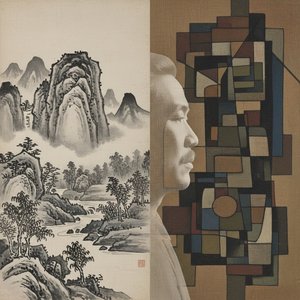 Yi Eungro: Bridging East & West in the Landscape of Korean ModernismExplore the captivating world of Yi Eungro (Lee Ungno), a pivotal figure in Korean modernism. Discover his unique fusion of Eastern and Wes…
 Color & Emotion: The 25 Most Iconic Masterpieces by Mark RothkoBorn in Latvia and shaped by the migrations of the early 20th century, Rothko turned large-scale color fields into windows for the soul.