1976
Bamboo (Yi Eungro, 1976)
Yi Eungro (1904–1989) made Bamboo. It dates from 1976. It is kept at Lee Ungno Museum in Daegu, South Korea. It measures 133 × 69 cm.
- 1976
- 133 × 69 cm
- Lee Ungno Museum, Daegu

 Preview

 Hand Made Oil Painting
 Send
 Share
 Fact sheet


 Download
 Similars
 X-Ray
 Diaporama
 Q&A

 Stats
Bamboo, in brief
- Title
- Bamboo
- Artist
- Yi Eungro (1904–1989)
- Artist born in
- Seoul, South Korea
- Date
- 1976
- Dimensions
- 133 × 69 cm
- Where to see it
- Lee Ungno Museum, Daegu, South Korea
What does Bamboo depict?
Which museum holds Bamboo?
Lee Ungno Museum
Daegu, South Korea
A Symphony of Ink and Modernity: The Legacy of Lee Ungno In the heart of Daejeon’s cultural landscape, the Lee Ungno Museum stands as a profound testament to the transformative power of artistic vision. This institution serves as a bridge between eras, offering a rare glimpse into the soul of a man who successfully synthesized the meditative weight of Eastern ink wash painting with the bold, experimental frontiers of Western modernism. To step into this museum is to enter a space where the ancient traditions of Korean calligraphy meet the electric energy of European abstract expressionism, creating a dialogue that resonates across generations.
High-resolution images of Bamboo

Protected by copyright: these files are for personal reference, not a licence to republish.
Yi Eungro, Bamboo (1976), Lee Ungno Museum.
Questions on Bamboo, answered
Where can I see the original "Bamboo" by Yi Eungro?
"Bamboo" by Yi Eungro is on display at the Lee Ungno Museum, Daegu, South Korea. The museum listing refers to the original work, not to reproductions.
In what year was "Bamboo" by Yi Eungro created?
How big is the original "Bamboo"?
"Bamboo" measures 133 x 69 cm in its original form. Original dimensions are a useful reference when choosing a reproduction size.
Is "Bamboo" by Yi Eungro in the public domain?
How old was Yi Eungro when creating "Bamboo" in 1976?
Is "Bamboo" by Yi Eungro in the public domain, and why?
The copyright status of "Bamboo" - still protected by copyright - follows from the artist's death in 1989.
About the artist, Yi Eungro

1904–1989, South Korea
Yi Eungro
**early life and training** lee ungno, also known as yi eungro, was a korean-born french painter and printmaker born in séoul, south korea in 1904. his early life was marked by a brief stint at the hongseong botong hakyo (홍성보통학교, 홍城초등학교, 洪城普通學校), after which he dedicated himself to studying painting under yeomjae song tae-hoe from 1920. **artistic career in korea and japan** lee ungno's artistic career began in earnest when he moved to seoul in 1922, becoming an apprentice to celebrated calligrapher-painter-photographer haegang kim gyu-jin. he primarily learned to paint the four gentlemen in the 'haegang style.' notably, his inkwash painting of a bamboo, mukjuk (묵죽, 墨竹, ink bamboo), won a prize in the 3rd annual joseon art exhibition.
Also by Yi Eungro
 Untitled1969
 Composition1970
 I Ching 64 Hexagrams Sequence(澤風大過)1974
 People1979
Essays around Bamboo
 The Metamorphosis of Francisco Goya: From Spanish Courtly Grace to the Introspective Shadows of the SoulExplore Goya's radical shift from Rococo grace to the haunting Black Paintings. Discover the evolution of a Spanish master.
 25 Must-See Masterpieces at La Biennale di Venezia: A Journey Through Venice's Finest ArtEmbark on a visual journey through La Biennale di Venezia. Explore 25 iconic masterpieces, from avant-garde installations to timeless paint…
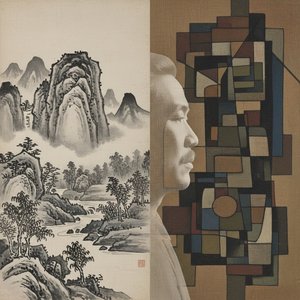 Yi Eungro: Bridging East & West in the Landscape of Korean ModernismExplore the captivating world of Yi Eungro (Lee Ungno), a pivotal figure in Korean modernism. Discover his unique fusion of Eastern and Wes…