

 Preview
 Send
Send Share
Share
 Details
 Guide
Guide

 Download
 Similars
 X-Ray
X-Ray Diaporama
 Stats
StatsThe Table
 Oil On Canvas
- WallArt
- Contemporary Realism
 1932
1932 91.0 x 71.0 cm
 Bristol Museum - Art Gallery
 Read More
The artwork displayed on this page is protected by copyright law, which means we cannot legally create or sell an identical reproduction. This protection is enforced under international agreements such as the Berne Convention and by national laws, including those outlined by the U.S. Copyright Law - Title 17.
This method fully complies with copyright regulations because it does not involve copying or duplicating the protected artwork. Instead, it is a creative reinterpretation - a new painting that is influenced by the original but not identical to it.
Giclée / Art Print
Museum-quality giclée or canvas print with fast production and flexible finish options. ( Buy Hand Made Painting Switch to Digital Image)




P118B $10

P118H $10

P118W $10

P438Z $10

P508JH $12

P508YH $12

P805H $10

P805Z $10

P919BZ $10

P919G $10

P919XJ $10

P959ZH $10

P968JZ $12

W106C $8

W218G $10

W218JH $8

W218Y $10

W307PJ $10

W316G $10

W316PJ $8

W316Y $10

W398PJ $8

W4111J $10

W500HY $15

W500JH $15

W692G $12

W849H $8

W940BG $15

W953PJ $8




Pick from our preset sizes that match the artwork's original proportions.

Type the width and the height you need, to fit your frame or your wall. A print can only be cut, never made bigger than the picture, so a size with a different shape loses a part of the image. We send you a digital mockup to approve before we print anything. The picture shown on this page does not show the real cut — only the mockup does.
Worldwide Delivery () in 2 weeks instead of standard 4/5 weeks. (27 October)

Free Worldwide Express Shipping

High-Quality Linen Canvas

Full Shipping Insurance

Customs Tax Refund Guarantee

True Color Matching Guarantee

100-Day Return Policy (Defects Only)

100% Money-Back Guarantee

Bulk Discount Offer
 Glass option is only available in size under 110 CM

The Table
Giclée / Art Print
Reproduction Size
-


Total Price
$ 81
William Menzies Coldstream: A Visionary of Observation
Sir William Menzies Coldstream (1908–1987) stands as a singular figure in British art history—not merely a painter, but an impassioned advocate for perceiving the world with unwavering scrutiny. Born in Belford, Northumberland, amidst the quiet beauty of rural England, his formative years were marked by a privileged education before embarking on formal artistic training at the Slade School of Fine Art from 1926 to 1929. This foundational period instilled within him not just technical prowess but an enduring commitment to direct observation—a principle that would permeate every subsequent canvas he undertook and define his entire career trajectory. Coldstream’s path diverged significantly from conventional artistic pursuits; he embraced documentary filmmaking, championed progressive social movements, served valiantly during wartime, and ultimately exerted a profound influence on art education within Britain, embodying an extraordinary blend of creative dedication and institutional leadership. His legacy continues to resonate today as a testament to the transformative power of attentive artistry.The Table: A Study in Minimalism and Light
“The Table,” completed in 1932, exemplifies Coldstream’s distinctive approach—a masterful distillation of observation into a deceptively simple composition. Executed in oil on canvas, the artwork presents a meticulously rendered depiction of a tabletop adorned with unassuming objects: a vase brimming with blossoms, a delicate cup resting upon its surface, and a bottle positioned strategically nearby. Two books are thoughtfully placed alongside these elements, creating a balanced visual arrangement that speaks volumes about Coldstream’s artistic sensibility. The muted palette—dominated by shades of grey and beige—further enhances the painting's atmospheric quality, conveying a sense of stillness and contemplative reflection. Light plays a crucial role in shaping the scene, casting subtle shadows that illuminate the textures of the tabletop and imbue the artwork with an ethereal luminescence.A Slade Legacy: Influencing Art Education
Coldstream’s influence extended far beyond his artistic output; he served as Principal of the Slade School of Fine Art from 1931 to 1945, shaping the intellectual landscape of British art education for decades to come. Recognizing the importance of fostering a rigorous approach to visual representation—rooted in careful measurement and detailed analysis—he championed the establishment of the Euston Road School alongside fellow artists Graham Bell, Victor Pasmore, and Claude Rogers. This collaborative endeavor aimed to cultivate a new Diploma in Art and Design (Dip.A.D.), reflecting Coldstream’s conviction that artistic training should prioritize observation as its cornerstone. His groundbreaking “Coldstream Report,” published in 1960, articulated these principles with unwavering clarity—establishing the Slade School as a beacon of realist painting and inspiring generations of artists to embrace a similar commitment to analytical practice.Exploring Symbolism Through Still Life
Despite its apparent simplicity, "The Table" is laden with symbolic resonance. The vase represents beauty and fragility—a reminder of the ephemeral nature of life itself—while the cup symbolizes hospitality and communion. The books symbolize knowledge and contemplation—inviting viewers to engage in intellectual inquiry alongside aesthetic appreciation. Coldstream’s meticulous rendering of these objects underscores his belief that art can illuminate profound truths about human experience, prompting us to consider not only what we see but also why it matters.A Masterpiece Revisited: Recent Scholarship
Recent scholarly research has reaffirmed Coldstream's position as a pivotal figure in British realist painting. Critics have lauded “The Table” for its masterful use of light and texture—highlighting the artist’s ability to convey emotion through subtle visual cues. Furthermore, investigations into Coldstream’s artistic process revealed his unwavering dedication to direct observation—a method that continues to inspire artists today. As evidenced by reproductions in prominent museums and galleries across Europe and North America, “The Table” remains a celebrated exemplar of British art from the interwar period—a testament to Coldstream's enduring legacy as an artist who championed both visual precision and intellectual depth.Questions & Answers
How does the subject of "The Table" relate to William Menzies Coldstream's usual themes?
Among William Menzies Coldstream's recorded themes - observation, analytical approach, documentary filmmaking, social movements, art education legacy - "The Table" brings its own focus on tabletop objects, domestic scene, interior composition, british art deco, analytical painting, quiet landscape.
Where should a reproduction of "The Table" by William Menzies Coldstream be hung?
Format (portrait) and recommended space (living room) are the two placement facts recorded for "The Table" by William Menzies Coldstream.
How old was William Menzies Coldstream when creating "The Table" in 1932?
William Menzies Coldstream was 24 years old when creating "The Table" in 1932. The age is computed from the artist's birth year, 1908.
Artist Biography
A Life Dedicated to Observation: The World of William Menzies Coldstream
Sir William Menzies Coldstream, a pivotal figure in 20th-century British art, wasn’t merely a painter; he was an advocate for seeing—for a rigorous, analytical approach to representing the world around us. Born in the quiet Northumberland village of Belford in 1908, his early life shifted towards the bustling energy of London, where he received a private education before embarking on formal artistic training at the Slade School of Fine Art from 1926 to 1929. This foundational period instilled within him not just technical skill, but a commitment to direct observation that would define his entire career. Coldstream’s path wasn't confined to the easel; it was interwoven with documentary filmmaking, progressive social movements, wartime service, and ultimately, a profound influence on art education in Britain. He embodied a rare combination of artistic dedication and institutional leadership, leaving an indelible mark on the landscape of British art.From Documentary Film to Euston Road Realism
The 1930s proved to be a period of intense exploration for Coldstream. After his time at the Slade, he became involved with various artistic circles, joining both the London Artists' Association in 1931 and the London Group two years later—demonstrating an eagerness to engage with contemporary art discourse. A brief but significant stint with the GPO Film Unit (1934-1937), working alongside luminaries like John Grierson, W. H. Auden, Benjamin Britten, and Barnett Freedman, exposed him to the power of visual storytelling and a broader cultural landscape. This experience undoubtedly informed his later artistic practice, sharpening his eye for detail and composition. However, it was the co-founding of the Euston Road School in 1937 with Graham Bell, Victor Pasmore, and Claude Rogers that truly solidified Coldstream’s artistic direction. Initially flirting with objective abstraction, the school quickly pivoted towards a renewed emphasis on realism—a return to painting directly from life, rejecting the prevailing abstract trends. This commitment is powerfully exemplified in his portrait of Inez Spender (later Inez Pearn), a work requiring an astonishing forty sittings. The resulting canvas isn’t simply a likeness; it's a meticulous study of form and character, lauded as a “masterpiece of analytical realism” for its precision and unwavering dedication to capturing the subject with unflinching honesty. Coldstream’s socialist ideals also played a role during this period, supporting the Mass Observation social survey of Britain and participating in their 1938 painting trip to Bolton—a testament to his desire for art that engaged with and represented everyday life.Wartime Service and the Analytical Eye
The outbreak of World War II dramatically altered Coldstream’s trajectory, as it did for so many artists of his generation. He enlisted in the Royal Artillery before transferring to the Royal Engineers, finding himself employed as a camouflage officer from 1940-1943. This role, while practical, proved surprisingly relevant to his artistic practice. The need for precise observation and representation of form—skills honed through years of dedicated study—were directly applicable to the task of deceiving the enemy. In 1943, he accepted a full-time commission from the War Artists' Advisory Committee (WAAC), taking him to Cairo and Italy. There, he produced portraits of individuals within an Indian transport unit and documented architectural subjects in Capua, Rimini, and Florence. However, Coldstream’s methodical approach meant that his wartime output was relatively small—only nine pictures were completed during this period. This wasn't a matter of lack of effort, but rather a reflection of his unwavering commitment to quality over quantity, to ensuring each work possessed the analytical rigor he demanded of himself.Shaping Future Generations: A Legacy in Art Education
Following the war, Coldstream transitioned into a prominent role in art education, becoming a transformative force in shaping future generations of artists. He served as a visiting teacher at Camberwell School of Arts and Crafts before ascending to the position of Professor there, and then, in 1949, he became Principal and Professor of Fine Art at the Slade School—the very institution that had nurtured his own talent decades earlier. His leadership was marked by an unwavering belief in the importance of direct observation and rigorous training. Perhaps his most significant contribution to art education came as Chairman of the National Advisory Council on Art Education (1958-1971), where he spearheaded the creation of the “Coldstream Report” (1960). This landmark document outlined requirements for a new Diploma in Art and Design (Dip.A.D.), leading to increased recognition and degree status for art school courses—a pivotal moment in elevating the standing of artistic education within Britain. Beyond this, he held significant administrative positions, including Vice Chairman of the Arts Council, director of the Royal Opera House, Covent Garden, and trustee of the National Gallery, further solidifying his influence on the cultural landscape.The Enduring Power of Direct Observation
William Menzies Coldstream’s artistic style was characterized by a relentless pursuit of accuracy and an unwavering commitment to painting directly from life. He famously stated, “I lose interest unless I let myself be ruled by what I see.” His technique involved precise measurement—using a brush held at arm's length to record proportions and spatial relationships—and the meticulous application of paint. The surfaces of his paintings are often marked with small horizontal and vertical markings—coordinates used for verification against reality, demonstrating the scientific rigor underpinning his artistic process. His subjects ranged from still-life and landscapes (often featuring architectural elements) to portraits and the female nude, all approached with a dedication to analytical representation. Coldstream’s legacy rests not only on his own body of work but also on his profound influence as an educator and administrator. He championed a method of seeing—a way of engaging with the world through careful observation and precise rendering—that continues to resonate with artists today. He remains an essential figure for understanding the evolution of both realist painting and art pedagogy in Britain, a testament to the enduring power of dedication, discipline, and a commitment to truthfulness in art.
William Menzies Coldstream
1908 - 1987 , United Kingdom
Quick Facts
- Full Name: William Menzies Coldstream
- Nationality: British
- Date Of Birth: 1908
- Date Of Death: 1987
- Place Of Birth: Belford, United Kingdom
- Notable Artworks:
- Inez Spender portrait
- Rimini, Italy
- Helen Darbishire
- Artistic Movement Or Style: Realism
- Artists Or Movements Influenced By This Artist: ['Euston Road School']
Related Articles

Romantic Realism's Finest: 10 Masterpieces for Your Home | OriginalUniqueArt
Explore 10 defining masterpieces of Romantic Realism! Discover Courbet, Millet & Daumier's powerful paintings—capturing emotion and social realities. Find museum-quality reproductions for your home at OriginalUniqueArt.com.

Evocations of Place: A Historical Journey Through Landscape Art
Explore the rich history of landscape art with OriginalUniqueArt. Discover renowned artists, movements like Impressionism & tonalism, and expert guidance for collecting timeless pieces. Find your perfect serene escape today!

Evocations of Place: A Historical Journey Through Landscape Art
Explore the rich history of landscape art with OriginalUniqueArt. Discover renowned artists, movements like Impressionism & Romanticism, and expert guidance for collecting timeless pieces. Find your perfect serene escape today!
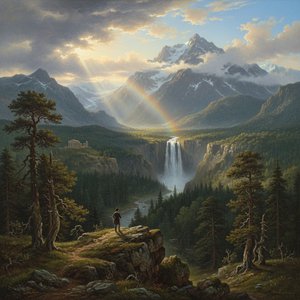
Evoking Nature's Sublime: A Comprehensive Exploration of 19th-Century Landscape Painting
Explore the captivating world of 19th-century landscape painting! Discover renowned artists like Friedrich & Monet, key movements, and find the perfect artwork to bring nature's serenity into your home. Expert insights at OriginalUniqueArt.

Cézanne's Masterpieces: 25 Iconic Artworks to Transform Your Space
Journey through 25 iconic artworks by Paul Cézanne – a master of Impressionism and Post-Impressionism. Explore his landscapes, still lifes, and the stories behind these timeless masterpieces. Discover museum-quality reproductions & curated decor at OriginalUniqueArt.com.


