Preview
 Send
Send Share
Share
 Details
 Guide
Guide

 Download
 Similars
 X-Ray
X-Ray Diaporama
 Stats
StatsThe Hireling Shepherd
 Oil On Canvas
- WallArt
- Pre-Raphaelite
 1851
1851- 19th Century
 76.0 x 110.0 cm
 Manchester Art Gallery
 Read More
Giclée / Art Print
Museum-quality giclée or canvas print with fast production and flexible finish options. ( Buy Hand Made Painting Switch to Digital Image)




P118B $10

P118H $10

P118W $10

P438Z $10

P508JH $12

P508YH $12

P805H $10

P805Z $10

P919BZ $10

P919G $10

P919XJ $10

P959ZH $10

P968JZ $12

W106C $8

W218G $10

W218JH $8

W218Y $10

W307PJ $10

W316G $10

W316PJ $8

W316Y $10

W398PJ $8

W4111J $10

W500HY $15

W500JH $15

W692G $12

W849H $8

W940BG $15

W953PJ $8




Pick from our preset sizes that match the artwork's original proportions.

Type the width and the height you need, to fit your frame or your wall. A print can only be cut, never made bigger than the picture, so a size with a different shape loses a part of the image. We send you a digital mockup to approve before we print anything. The picture shown on this page does not show the real cut — only the mockup does.
Worldwide Delivery () in 2 weeks instead of standard 4/5 weeks. (25 October)

Free Worldwide Express Shipping

High-Quality Linen Canvas

Full Shipping Insurance

Customs Tax Refund Guarantee

True Color Matching Guarantee

100-Day Return Policy (Defects Only)

100% Money-Back Guarantee

Bulk Discount Offer
 Glass option is only available in size under 110 CM

The Hireling Shepherd
Giclée / Art Print
Reproduction Size
-


Total Price
$ 81
The Hireling Shepherd: A Pre-Raphaelite Masterpiece
Immerse yourself in the enchanting world of William Holman Hunt's "The Hireling Shepherd," a captivating work that epitomizes the Pre-Raphaelite Brotherhood's dedication to naturalism and symbolic depth. This 1851 masterpiece invites viewers into a pastoral scene teeming with intricate details, vibrant colors, and profound narrative layers.
A Pastoral Scene of Intrigue
The painting depicts a young shepherd and a maiden in a lush countryside setting. The shepherd, neglecting his flock, is engrossed in showing the woman a death's-head hawkmoth. This seemingly innocent interaction is set against a backdrop of wandering sheep, a wheat field, and a serene landscape, creating a sense of harmony disrupted by subtle tensions.
Pre-Raphaelite Style and Technique
Hunt's meticulous attention to detail and vivid color palette are hallmarks of the Pre-Raphaelite style. The earthy tones of greens, browns, and reds blend seamlessly with softer hues like blues and whites, creating a rich and textured visual experience. The smooth, blended brushstrokes bring a lifelike quality to the figures and natural elements, showcasing Hunt's mastery of oil painting.
Historical Context and Symbolism
Painted during a time of artistic rebellion against the academic traditions of the Royal Academy, "The Hireling Shepherd" reflects the Pre-Raphaelites' desire to return to the purity and detail of medieval art. The painting's symbolism is multifaceted: the shepherd's neglect of his flock can be seen as a metaphor for spiritual negligence, while the death's-head hawkmoth may represent mortality or temptation. Hunt's use of biblical allusions adds layers of meaning, inviting viewers to ponder the deeper themes of responsibility and moral guidance.
Emotional Impact and Legacy
The emotional resonance of "The Hireling Shepherd" lies in its ability to evoke a sense of tranquility and romance while subtly hinting at underlying tensions. The pastoral idyll is both inviting and thought-provoking, making it a compelling piece for art lovers and collectors alike. Hunt's work has left an indelible mark on the art world, inspiring generations of artists and continuing to captivate audiences with its beauty and depth.
Why Choose This Reproduction?
For interior designers and art enthusiasts seeking to add a touch of Pre-Raphaelite elegance to their spaces, a high-quality reproduction of "The Hireling Shepherd" offers an exquisite blend of historical significance and aesthetic appeal. The painting's rich colors and detailed composition make it a striking centerpiece in any setting, from traditional homes to contemporary galleries.
Experience the timeless allure of William Holman Hunt's masterpiece and bring a piece of Pre-Raphaelite artistry into your world with this stunning reproduction.
Questions & Answers
Do the colors of "The Hireling Shepherd" appear strong or soft?
The color intensity of "The Hireling Shepherd" is vivid. Intensity describes how strong the colors appear.
Is "The Hireling Shepherd" by William Holman Hunt recommended as a gift, and for whom?
"The Hireling Shepherd" is suggested for anniversary as a present, with focal in mind.
Is "The Hireling Shepherd" by William Holman Hunt a bright or a dark artwork?
Overall, "The Hireling Shepherd" is recorded as balanced. Perceived brightness describes how light or dark the work appears.
Artist Biography
A Life Devoted to Vision
William Holman Hunt, born in Cheapside, London on April 2, 1827, was more than simply a painter; he was a philosophical and spiritual seeker who translated his deepest convictions onto canvas. His early life, though rooted in the bustling commercial world of his father’s warehouse business, held within it an artistic inclination that would ultimately defy expectations. Initially destined for a career mirroring his father's, Hunt found solace and purpose in art, beginning with surreptitious sketching and later, after some struggle, formal training at the Royal Academy Schools. This period of apprenticeship, however, proved restrictive. He yearned for an artistic expression that transcended prevailing academic conventions—a desire that would soon propel him toward revolutionary change. He felt stifled by what he perceived as the artificiality of contemporary art and sought a return to the sincerity and detail found in pre-Renaissance masters, a sentiment central to the formation of the Pre-Raphaelite Brotherhood. Hunt’s journey wasn't merely about aesthetics; it was a quest for truth, morality, and spiritual resonance within the realm of visual representation.The Genesis of a Revolutionary Brotherhood
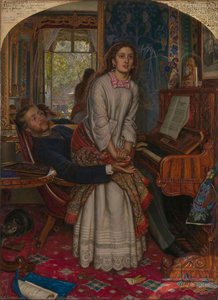
In 1848, alongside Dante Gabriel Rossetti and John Everett Millais, Hunt established the Pre-Raphaelite Brotherhood (PRB). This collective wasn’t just an artistic movement; it was a rebellion against what they saw as the decline of art since Raphael. The PRB advocated for a return to meticulous detail, vibrant colors, and sincere subject matter characteristic of early Italian painting—before the perceived artificiality of High Renaissance ideals took hold. Hunt's commitment to this philosophy remained unwavering throughout his career. Early works like The Hireling Shepherd, painted in 1851, exemplify this dedication. The painting’s painstaking realism – from the texture of the sheep’s wool to each individual blade of grass – was revolutionary for its time. It wasn't merely a depiction of rural life; it was an attempt to convey moral and symbolic meaning through precise observation of nature. The Awakening Conscience, also from this period, further solidified Hunt’s reputation for intensely naturalistic scenes imbued with psychological depth and moral weight. These paintings weren’t just visually striking; they were statements about the artist's belief in art as a vehicle for truth and spiritual awakening. The Brotherhood sought to challenge the established norms of artistic production, rejecting what they perceived as formulaic academic painting in favor of a more direct and honest engagement with the world around them.A Pilgrimage of Faith and Symbolic Depth
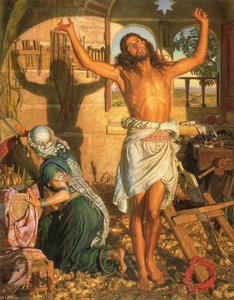
Hunt’s artistic journey took an extraordinary turn with his travels to the Holy Land in the 1850s and 60s. Driven by a desire for historical and topographical accuracy, he embarked on a pilgrimage to Palestine and Syria, meticulously documenting landscapes, costumes, and customs. This dedication to authenticity profoundly influenced his later works, imbuing them with an unparalleled sense of realism and spiritual resonance. The Shadow of Death, painted during this period, stands as a powerful example. The painting depicts the scene of Christ’s sacrifice in a way that was both visually arresting and deeply symbolic, reflecting Hunt's profound religious convictions. Perhaps his most iconic work, The Light of the World, begun in 1851 and completed in 1853, encapsulates this synthesis of faith and artistic skill. The image of Christ knocking at a door, offering salvation to those who open their hearts, became immensely popular and remains one of the most recognizable religious paintings of the Victorian era. Hunt’s commitment extended beyond mere representation; he sought to imbue his works with layers of symbolic meaning, drawing upon biblical texts, medieval allegory, and contemporary social commentary. He believed that art had a moral purpose—to uplift, inspire, and guide viewers toward spiritual enlightenment.Enduring Legacy and Later Years
Despite facing failing eyesight in his later years – a devastating blow for a painter so dedicated to detail – Hunt continued to create art, often relying on the assistance of his assistant, Edward Robert Hughes. He published an autobiography in 1905, offering invaluable insights into his artistic philosophy and personal life. His dedication was recognized with appointment to the Order of Merit by King Edward VII that same year. Hunt’s personal life was marked by both joy and sorrow; he married twice, first to Fanny Waugh, who served as a model for several of his works, and later to her sister Edith, after navigating legal complexities surrounding British laws regarding marriage to a deceased wife's sibling. He passed away on September 7, 1910, and was honored with burial in St Paul’s Cathedral—a testament to his significant contribution to British art and culture. William Holman Hunt’s legacy extends far beyond the beauty of his paintings. He revolutionized Victorian art by championing realism, symbolism, and spiritual depth, leaving an indelible mark on generations of artists and viewers alike. His works continue to inspire awe and contemplation, reminding us of the power of art to illuminate the human condition and explore the mysteries of faith.Key Influences & Themes
- Influences: John Ruskin’s writings on art and morality; Early Italian Renaissance painting (pre-Raphael); Biblical texts and medieval allegory.
- Major Themes: Religious faith, moral awakening, the beauty of nature, social commentary, symbolism. Hunt consistently explored themes of redemption, sacrifice, and the search for spiritual truth in his work.
- Key Dates: April 2, 1827: Born in Cheapside, London; 1851-1853: Painted The Light of the World; September 7, 1910: Passed away and buried in St Paul's Cathedral, London.

William Holman Hunt
1827 - 1910 , United Kingdom
Quick Facts
- Full Name: William Holman Hunt
- Nationality: British
- Date Of Birth: 1827
- Date Of Death: 1910
- Place Of Birth: Cheapside, United Kingdom
- Notable Artworks:
- The Light of the World
- The Awakening Conscience
- The Hireling Shepherd
- The Shadow of Death
- Artistic Movement Or Style: Pre-Raphaelitism
- Artists Who Influenced This Artist:
- John Ruskin
- Early Italian Masters
- Artists Or Movements Influenced By This Artist: Pre-Raphaelite Brotherhood
Related Articles

Dante Gabriel Rossetti's 25 Masterpieces: A Journey Through Victorian Art & Symbolism | OriginalUniqueArt
Explore 25 iconic artworks by Dante Gabriel Rossetti, a leading Pre-Raphaelite artist. Discover the stories behind masterpieces like 'Proserpine' & 'Beata Beatrix'. Find museum-quality art reproductions and elevate your home decor with OriginalUniqueArt.com.

Sir John Everett Millais: Pre-Raphaelite Rebellion & Victorian Narrative Detail
Explore the revolutionary art of Sir John Everett Millais & the Pre-Raphaelite Brotherhood. Discover their radical realism, symbolic narratives, and lasting impact on Victorian aesthetics. A deep dive into 19th-century masterpieces.

John William Waterhouse: Pre-Raphaelite Mythmaker & Poetic Depictions of Female Identity
Explore the captivating world of John William Waterhouse, a master of Pre-Raphaelite painting. Discover his iconic depictions of mythology and female identity in this expert guide.
The Pre-Raphaelite Brotherhood: Rebellion, Romance & Medieval Revival
Explore the captivating world of the Pre-Raphaelite Brotherhood! Discover their rebellious spirit, iconic masterpieces & lasting influence on art history. Learn about Rossetti, Millais & more.

Arthur Hughes: Pre-Raphaelite Visions of Beauty & Melancholy
Explore the captivating world of Arthur Hughes (1832-1915), a leading Pre-Raphaelite painter. Discover his dreamy landscapes, poetic narratives & iconic Victorian artworks. Learn about his life, style & collecting today.