Menu
Text size

() ·

A painting made for you, by hand

Self Portrait

Hand Made Oil Reproduction

Hand-painted oil on canvas in your size and frame, made to order by our artists. ( Switch to Print Switch to Digital Image)

Collectible Description

William Holman Hunt’s intense self-portrait captures the Pre-Raphaelite Brotherhood's realism and moral focus. This 1845 painting showcases youthful dedication with meticulous detail, reflecting Victorian artistic ideals – discover this iconic artwork.

Artist Biography

Discover William Holman Hunt (1827-1910), a Pre-Raphaelite master renowned for detailed realism, vivid symbolism & iconic works like 'The Light of the World'. Explore his spiritual and nature-focused Victorian art.

from ·

Chapter 1

How large should it be?

Slide to change the size; the picture on the left shows the frame at its real width. The proportions of the original are kept.

Standard
custom
CM
INCH

Pick from our preset sizes that match the artwork's original proportions.

width
height

Type the width and the height you need, to fit your frame or your wall. This is hand-painted, so for a size with a different shape the artist can paint a bit more around the picture, or cut a bit — you choose. We send you a digital mockup to approve before the painting starts. The picture shown on this page does not show the real result — only the mockup does.

Chapter 2

How should it arrive?

Choose the edges of the stretched canvas

Choose your frame

Corner sample of the WhiteWrap canvas edge finish, stretched on solid wood bars
White $1
Corner sample of the BlurSideWrap canvas edge finish, stretched on solid wood bars
Blurside $1
Corner sample of the ExtendedWrap canvas edge finish, stretched on solid wood bars
Extended $1
Corner sample of the P118B picture frame: moulded polystyrene, 5 cm wide and 3 cm thick
P118B $10
Corner sample of the P118H picture frame: moulded polystyrene, 5 cm wide and 3 cm thick
P118H $10
Corner sample of the P118W picture frame: moulded polystyrene, 5 cm wide and 3 cm thick
P118W $10
Corner sample of the P438Z picture frame: moulded polystyrene, 5.5 cm wide and 3.5 cm thick
P438Z $10
Corner sample of the P508JH picture frame: moulded polystyrene, 7 cm wide and 3.5 cm thick
P508JH $12
Corner sample of the P508YH picture frame: moulded polystyrene, 7 cm wide and 3.5 cm thick
P508YH $12
Corner sample of the P805H picture frame: moulded polystyrene, 5 cm wide and 3.5 cm thick
P805H $10
Corner sample of the P805Z picture frame: moulded polystyrene, 5 cm wide and 3.5 cm thick
P805Z $10
Corner sample of the P919BZ picture frame: moulded polystyrene, 7 cm wide and 3.5 cm thick
P919BZ $10
Corner sample of the P919G picture frame: moulded polystyrene, 7 cm wide and 3.5 cm thick
P919G $10
Corner sample of the P919XJ picture frame: moulded polystyrene, 7 cm wide and 3.5 cm thick
P919XJ $10
Corner sample of the P959ZH picture frame: moulded polystyrene, 5 cm wide and 3 cm thick
P959ZH $10
Corner sample of the P968JZ picture frame: moulded polystyrene, 6 cm wide and 4 cm thick
P968JZ $12
Corner sample of the W106C picture frame: solid wood, 5 cm wide and 3 cm thick
W106C $8
Corner sample of the W218G picture frame: solid wood, 5 cm wide and 3 cm thick
W218G $10
Corner sample of the W218JH picture frame: solid wood, 5 cm wide and 3 cm thick
W218JH $8
Corner sample of the W218Y picture frame: solid wood, 5 cm wide and 3 cm thick
W218Y $10
Corner sample of the W307PJ picture frame: solid wood, 6 cm wide and 3 cm thick
W307PJ $10
Corner sample of the W316G picture frame: solid wood, 6 cm wide and 3 cm thick
W316G $10
Corner sample of the W316PJ picture frame: solid wood, 6 cm wide and 3 cm thick
W316PJ $8
Corner sample of the W316Y picture frame: solid wood, 6 cm wide and 3 cm thick
W316Y $10
Corner sample of the W398PJ picture frame: solid wood, 5 cm wide and 3 cm thick
W398PJ $8
Corner sample of the W4111J picture frame: solid wood, 6.5 cm wide and 3.5 cm thick
W4111J $10
Corner sample of the W500HY picture frame: solid wood, 7 cm wide and 5 cm thick
W500HY $15
Corner sample of the W500JH picture frame: solid wood, 7 cm wide and 5 cm thick
W500JH $15
Corner sample of the W692G picture frame: solid wood, 8 cm wide and 4 cm thick
W692G $12
Corner sample of the W849H picture frame: solid wood, 5 cm wide and 3 cm thick
W849H $8
Corner sample of the W940BG picture frame: solid wood, 7.5 cm wide and 4.5 cm thick
W940BG $15
Corner sample of the W953PJ picture frame: solid wood, 6 cm wide and 3.5 cm thick
W953PJ $8
Corner sample of the H24-GOLD picture frame: carved wood with gesso, 10 cm wide and 6 cm thick
H24-GOLD $30
Corner sample of the H24-SILVER picture frame: carved wood with gesso, 10 cm wide and 6 cm thick
H24-SILVER $30
Corner sample of the H36-GOLD picture frame: carved wood with gesso, 15 cm wide and 6.5 cm thick
H36-GOLD $45
Corner sample of the H36-SILVER picture frame: carved wood with gesso, 15 cm wide and 6.5 cm thick
H36-SILVER $45
Frame preview
Framed

Moulding: . Overall size with the frame: .

Chapter 3

Who paints it, and should anything change?

Examples of what can be changed: Replace face with customer photo; Add pet (e.g., replace cat with dog); Include hidden message in background; Change background landscape or elements.
After order, OriginalUniqueArt.com team will email client for instructions and provide a mockup preview

Worldwide Delivery () in 3/4 weeks instead of standard 5 weeks. (31 October). No compromise on quality.

Chapter 4

The finishing touches

A nameplate, as in a museum?

Engraved Bronze Plaque Details

This elegant plaque features the artist's name and the title of the artwork, finely engraved for a timeless presentation.

It is made from bronze with a refined, elegant finish. The text is precisely laser-engraved for a sharp and permanent result. Measuring 9x2 cm, the plaque is compact yet easy to read. It's built to be durable and scratch-resistant, offering a professional, museum-quality look. Mounting is simple thanks to the included adhesive backing.

Transparent Acrylic Plaque Details

The plaque includes essential engraved details such as the artist's name, the title of the artwork, the date it was created, the type of media used-like oil on canvas or watercolor-a brief description of the piece, and a QR code that links to the complete artwork information.

It is crafted from clear acrylic, offering a sleek, modern appearance. The text is UV-engraved in black to ensure strong visual contrast. With a size of 10x15 cm, it ensures optimal readability. It comes equipped with two metal hooks for secure wall mounting. The plaque is designed to be weather-resistant, making it suitable for various environments, and it includes interactive features that work seamlessly with smartphone scanning.

Black Acrylic Plaque Details

This elegant plaque includes engraved information such as the artist's name, the title of the artwork, the date it was created, the type of media used (like oil on canvas or watercolor), a short description of the artwork, and a QR code for quick access to more information.

The plaque itself is made from refined black acrylic with a premium finish. The text is laser-engraved in white for high contrast and readability. Its size is 10x15 cm, designed to be easy to read. It comes with two metal hooks for professional mounting. The design is sleek and fits any interior style. It is also weather-resistant and durable, with built-in digital integration for mobile compatibility.

A protective varnish?

When do you need it?

Chapter 5

Your painting, as you ordered it

Self Portrait

Reproduction Medium

Reproduction Size

-

Elite Senior Artist

More detail, finesse, and extra production time

-

Reproduction Frame

-

-

For artworks or reproductions larger than 105 cm (approximately 41 inches) on any side, the frame will be shipped as a kit, disassembled. This method ensures safe delivery and prevents damage during transport.

Professional assembly required - this is not a DIY product.
The kit must be assembled and the canvas stretched by an experienced professional framer, using wood glue (not supplied), a canvas stretching plier and clamps to hold the bars square while the glue dries. Incorrect assembly or uneven canvas tension can permanently damage the artwork and is not covered by our warranty.

  • All solid wood bars are included, precisely cut to size.

  • Assembled with the screws provided, plus wood glue for the corner joints, which is not supplied and must be sourced by your framer.

  • Professional tools are required and not included: a canvas stretching plier (tensioner) and clamps to hold the bars square while the glue dries.

Important:
The corner joints require wood glue, the bars must be held with clamps until the glue is fully dry, and tightening the canvas on the assembled frame requires a canvas stretching plier. None of these are included in the kit. Please arrange an experienced professional framer before ordering this size.

Nameplate

-

-

Protective Varnish

Glossy Varnish (enhances colors, protects against light/moisture)

-

Customize My Artwork

Examples of what can be changed: Replace face with customer photo; Add pet (e.g., replace cat with dog); Include hidden message in background; Change background landscape or elements.

-

Urgent

Worldwide Delivery () in 3/4 weeks instead of standard 5 weeks. (31 October). No compromise on quality.

-

Express Shipping

Worldwide Delivery () in 5 weeks. (7 November).

Included

Total Price

$ 300

Total Price $ 300

Glass option is only available in size under 110 CM

Included with every order

  • Free Worldwide Express Shipping
  • High-Quality Linen Canvas
  • Full Shipping Insurance
  • Customs Tax Refund Guarantee
  • True Color Matching Guarantee
  • 100-Day Return Policy (Defects Only)
  • 100% Money-Back Guarantee
  • Bulk Discount Offer

William Holman Hunt's 'Self Portrait': A Window into Victorian Vision

The year is 1845. William Holman Hunt, a young artist wrestling with the burgeoning realities of Victorian England, presents us with a remarkably intimate and profoundly significant work – his self-portrait. More than just a likeness, this painting embodies the spirit of a movement: the Pre-Raphaelite Brotherhood’s audacious challenge to artistic convention and their fervent belief in the power of art to convey moral truth. Housed within the Birmingham Museum and Art Gallery, it remains a potent symbol of Hunt's dedication and a crucial document illuminating the era’s artistic anxieties and aspirations.

  • Subject & Composition: The portrait depicts Hunt himself in his youth, meticulously rendered with a formal suit and tie. His direct gaze, unwavering and intense, immediately establishes a connection with the viewer – an unprecedented level of engagement for the time. The simple brown background serves not as a distraction but to amplify the subject’s presence, drawing all attention to his thoughtful expression.
  • Pre-Raphaelite Influence: Hunt's adherence to Pre-Raphaelite principles is immediately apparent. The meticulous detail, the almost photographic realism, and the deliberate avoidance of idealized beauty are hallmarks of this revolutionary style. This was a reaction against the perceived artificiality of academic art, a yearning for sincerity and a return to the clarity and emotional depth found in the works of artists before Raphael.

A Study in Detail: Technique and Materials

Hunt’s technique is characterized by an extraordinary level of observation and painstaking execution. He employed oil paints with a remarkable sensitivity, layering thin glazes to achieve subtle gradations of tone and texture. The rendering of his clothing – the fabric's folds, the sheen of the silk, the precise stitching – demonstrates a dedication to realism rarely seen in contemporary portraiture. The use of brown pigments, carefully chosen for their depth and richness, contributes significantly to the painting’s somber yet dignified atmosphere. It is evident that Hunt spent considerable time studying his own features, striving not merely to capture a likeness but to convey something deeper – his intellectual curiosity and artistic commitment.

  • Color Palette: The restrained color palette—primarily browns, blacks, and subtle variations of grey—reflects the Pre-Raphaelites’ preference for naturalism and their rejection of bright, artificial colors.
  • Brushwork: Hunt's brushwork is remarkably smooth and controlled, contributing to the painting's polished appearance.

Symbolism and Context – A Victorian Soul

Beyond its technical merits, ‘Self Portrait’ offers a fascinating glimpse into the intellectual and spiritual climate of Victorian England. The Pre-Raphaelites were deeply concerned with moral questions and sought to use art as a vehicle for social commentary. Hunt's serious demeanor and direct gaze suggest a man grappling with profound ideas – perhaps reflecting his involvement in religious contemplation or his engagement with contemporary philosophical debates. The painting’s creation coincided with the rise of industrialization, a period marked by both immense progress and significant social upheaval. Hunt’s work can be seen as a quiet resistance to this rapid transformation, a reaffirmation of traditional values and a plea for beauty amidst the encroaching darkness.

  • Historical Context: Created during Queen Victoria's reign (1837–1901), the painting reflects the Victorian era’s fascination with morality, spirituality, and detailed observation.
  • Symbolic Elements: While seemingly straightforward, the portrait can be interpreted as a meditation on identity, purpose, and the artist’s role in society.

Legacy and Resonance – An Enduring Masterpiece

William Holman Hunt's ‘Self Portrait’ is more than just a historical artifact; it remains a powerful testament to the enduring human desire for beauty, truth, and meaning. Its influence extended far beyond the Pre-Raphaelite Brotherhood, shaping the course of British art and inspiring generations of artists. Today, this remarkable painting continues to captivate viewers with its technical brilliance, emotional depth, and profound reflection on the human condition. A hand-painted reproduction offers a unique opportunity to experience the full impact of Hunt’s vision – a window into a pivotal moment in artistic history.

Questions & Answers

Where is "Self Portrait" by William Holman Hunt on display today?

You can see the original "Self Portrait" at the Birmingham Museum and Art Gallery, Birmingham, United Kingdom.

Where and for what purpose is "Self Portrait" recommended?

Use (accent) and space (living room) are the two recommendations recorded for "Self Portrait" by William Holman Hunt.

What mood would "Self Portrait" bring to a space?

With its calm mood, "Self Portrait" is suggested for a living room.

More about this painting

Preview AR preview Switch to Print Switch to Digital Image Send
Details Guide Add to favorites Download Similars X-Ray Diaporama Q&A Stats

In numbers

  • 1845the year it was painted
  • 29frames to choose from
  • standard sizes, in its own proportions
  • 5weeks to paint and deliver it
William Holman Hunt

William Holman Hunt

1827 - 1910, United Kingdom

Quick facts about William Holman Hunt

  • Full Name: William Holman Hunt
  • Nationality: British
  • Date Of Birth: 1827
  • Date Of Death: 1910
  • Place Of Birth: Cheapside, United Kingdom
  • Notable Artworks:
    • The Light of the World
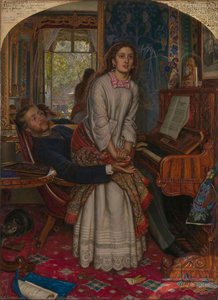
    • The Awakening Conscience
    • The Hireling Shepherd
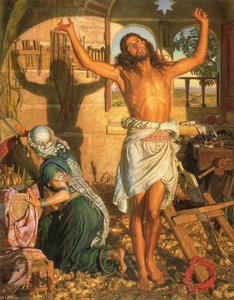
    • The Shadow of Death
  • Artistic Movement Or Style: Pre-Raphaelitism
  • Artists Who Influenced This Artist:
    • John Ruskin
    • Early Italian Masters
  • Artists Or Movements Influenced By This Artist: Pre-Raphaelite Brotherhood

Artist Biography

A Life Devoted to Vision

William Holman Hunt, born in Cheapside, London on April 2, 1827, was more than simply a painter; he was a philosophical and spiritual seeker who translated his deepest convictions onto canvas. His early life, though rooted in the bustling commercial world of his father’s warehouse business, held within it an artistic inclination that would ultimately defy expectations. Initially destined for a career mirroring his father's, Hunt found solace and purpose in art, beginning with surreptitious sketching and later, after some struggle, formal training at the Royal Academy Schools. This period of apprenticeship, however, proved restrictive. He yearned for an artistic expression that transcended prevailing academic conventions—a desire that would soon propel him toward revolutionary change. He felt stifled by what he perceived as the artificiality of contemporary art and sought a return to the sincerity and detail found in pre-Renaissance masters, a sentiment central to the formation of the Pre-Raphaelite Brotherhood. Hunt’s journey wasn't merely about aesthetics; it was a quest for truth, morality, and spiritual resonance within the realm of visual representation.

The Genesis of a Revolutionary Brotherhood

In 1848, alongside Dante Gabriel Rossetti and John Everett Millais, Hunt established the Pre-Raphaelite Brotherhood (PRB). This collective wasn’t just an artistic movement; it was a rebellion against what they saw as the decline of art since Raphael. The PRB advocated for a return to meticulous detail, vibrant colors, and sincere subject matter characteristic of early Italian painting—before the perceived artificiality of High Renaissance ideals took hold. Hunt's commitment to this philosophy remained unwavering throughout his career. Early works like The Hireling Shepherd, painted in 1851, exemplify this dedication. The painting’s painstaking realism – from the texture of the sheep’s wool to each individual blade of grass – was revolutionary for its time. It wasn't merely a depiction of rural life; it was an attempt to convey moral and symbolic meaning through precise observation of nature. The Awakening Conscience, also from this period, further solidified Hunt’s reputation for intensely naturalistic scenes imbued with psychological depth and moral weight. These paintings weren’t just visually striking; they were statements about the artist's belief in art as a vehicle for truth and spiritual awakening. The Brotherhood sought to challenge the established norms of artistic production, rejecting what they perceived as formulaic academic painting in favor of a more direct and honest engagement with the world around them.

A Pilgrimage of Faith and Symbolic Depth

Hunt’s artistic journey took an extraordinary turn with his travels to the Holy Land in the 1850s and 60s. Driven by a desire for historical and topographical accuracy, he embarked on a pilgrimage to Palestine and Syria, meticulously documenting landscapes, costumes, and customs. This dedication to authenticity profoundly influenced his later works, imbuing them with an unparalleled sense of realism and spiritual resonance. The Shadow of Death, painted during this period, stands as a powerful example. The painting depicts the scene of Christ’s sacrifice in a way that was both visually arresting and deeply symbolic, reflecting Hunt's profound religious convictions. Perhaps his most iconic work, The Light of the World, begun in 1851 and completed in 1853, encapsulates this synthesis of faith and artistic skill. The image of Christ knocking at a door, offering salvation to those who open their hearts, became immensely popular and remains one of the most recognizable religious paintings of the Victorian era. Hunt’s commitment extended beyond mere representation; he sought to imbue his works with layers of symbolic meaning, drawing upon biblical texts, medieval allegory, and contemporary social commentary. He believed that art had a moral purpose—to uplift, inspire, and guide viewers toward spiritual enlightenment.

Enduring Legacy and Later Years

Despite facing failing eyesight in his later years – a devastating blow for a painter so dedicated to detail – Hunt continued to create art, often relying on the assistance of his assistant, Edward Robert Hughes. He published an autobiography in 1905, offering invaluable insights into his artistic philosophy and personal life. His dedication was recognized with appointment to the Order of Merit by King Edward VII that same year. Hunt’s personal life was marked by both joy and sorrow; he married twice, first to Fanny Waugh, who served as a model for several of his works, and later to her sister Edith, after navigating legal complexities surrounding British laws regarding marriage to a deceased wife's sibling. He passed away on September 7, 1910, and was honored with burial in St Paul’s Cathedral—a testament to his significant contribution to British art and culture. William Holman Hunt’s legacy extends far beyond the beauty of his paintings. He revolutionized Victorian art by championing realism, symbolism, and spiritual depth, leaving an indelible mark on generations of artists and viewers alike. His works continue to inspire awe and contemplation, reminding us of the power of art to illuminate the human condition and explore the mysteries of faith.

Key Influences & Themes

  • Influences: John Ruskin’s writings on art and morality; Early Italian Renaissance painting (pre-Raphael); Biblical texts and medieval allegory.
  • Major Themes: Religious faith, moral awakening, the beauty of nature, social commentary, symbolism. Hunt consistently explored themes of redemption, sacrifice, and the search for spiritual truth in his work.
  • Key Dates: April 2, 1827: Born in Cheapside, London; 1851-1853: Painted The Light of the World; September 7, 1910: Passed away and buried in St Paul's Cathedral, London.

Quick Facts

  • Influences: Pre-Raphaelites
  • Title: Self Portrait
  • Medium: Oil on canvas
  • Notable elements: Detailed realism, gaze
  • Artist: William Hunt