The Rise of Pre-Raphaelitism: A Rejection of Convention
 Wikipedia: Pre-Raphaelite Brotherhood
The Pre-Raphaelite Brotherhood (PRB), later known as the Pre-Raphaelites, was a group of English painters, poets, and art critics, founded in 1848 by William Holman Hunt, John Everett Millais, Dante Gabriel Rossetti, William Michael Rossetti, James ...
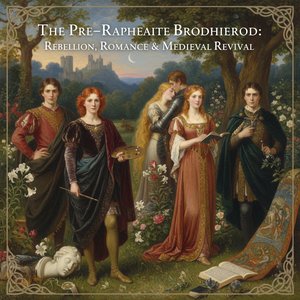
The mid-19th century witnessed a seismic shift in the art world, a rebellion against the perceived artificiality and academic rigidity that had come to define British painting. This was the birth of the Pre-Raphaelite Brotherhood (PRB), a group of artists who sought to return to the purity and detail they found in the works of Italian masters predating Raphael – hence the name. It wasn’t merely a stylistic preference; it was a philosophical stance, a rejection of what they saw as the mechanistic reproduction of art divorced from genuine feeling and observation. The Royal Academy, with its emphasis on historical grandeur and polished technique, felt stifling to these young artists who yearned for authenticity and emotional resonance. They believed that true art lay in meticulous study of nature, honest depiction of human experience, and a revival of medieval romanticism – a period they saw as possessing a spiritual depth lost in the modern age.
While not all became formal members, figures like Arthur Hughes were deeply sympathetic to their ideals. He absorbed the Brotherhood’s principles after encountering their magazine, *The Germ*, in 1850, and quickly aligned himself with artists such as William Holman Hunt and Dante Gabriel Rossetti. The Pre-Raphaelites weren't simply copying old masters; they were attempting to recapture a spirit – an intensity of color, a commitment to detail, and a narrative power that resonated with the burgeoning Victorian imagination.
Arthur Hughes’ Early Life & Artistic Formation
Born in London in 1832, Arthur Hughes's path to artistic prominence wasn’t paved with immediate acclaim. He initially trained as a wood engraver, a discipline that instilled in him a remarkable precision and attention to detail – qualities that would become hallmarks of his style. This early experience also fostered an appreciation for line and form, crucial elements in his later paintings. Unlike some of his Pre-Raphaelite contemporaries who received formal academic training, Hughes’s artistic development was largely self-directed, fueled by a voracious appetite for learning and a keen eye for beauty.
His meeting with William Holman Hunt in 1850 proved pivotal. Hunt introduced him to the core tenets of Pre-Raphaelitism, encouraging him to study nature directly and embrace a more truthful approach to representation. Hughes’s first foray into the Pre-Raphaelite aesthetic came with *Ophelia* (1852), demonstrating his immediate grasp of the movement's principles – vibrant colors, meticulous detail, and a poignant narrative drawn from literature.
Dreamy Landscapes & Poetic Narratives: Defining Hughes' Style
Arthur Hughes (27 January 1832 – 22 December 1915) was an English painter and illustrator associated with the Pre-Raphaelite Brotherhood.
Arthur Hughes carved out a unique niche within the Pre-Raphaelite landscape. While Millais excelled at capturing dramatic realism and Rossetti delved into symbolic complexity, Hughes’s work is characterized by a delicate lyricism and an ethereal quality. His paintings often depict scenes imbued with a sense of wistful melancholy, populated by graceful figures set against lush, verdant backgrounds. He possessed a remarkable ability to evoke atmosphere, creating worlds that feel both real and dreamlike.
Hughes frequently drew inspiration from poetry, particularly the works of Tennyson and Christina Rossetti (with whom he maintained a close professional relationship through numerous illustrations). *April Love* (1855-6) is perhaps his most iconic work, capturing a tender moment of courtship with exquisite detail. The painting’s enduring appeal lies not only in its technical brilliance but also in its evocative portrayal of youthful romance and the subtle anxieties that accompany it. His use of color – particularly rich purples and greens – contributes to the painting's overall sense of enchantment.
Themes of Love, Loss, and the Victorian Woman in Hughes’ Work
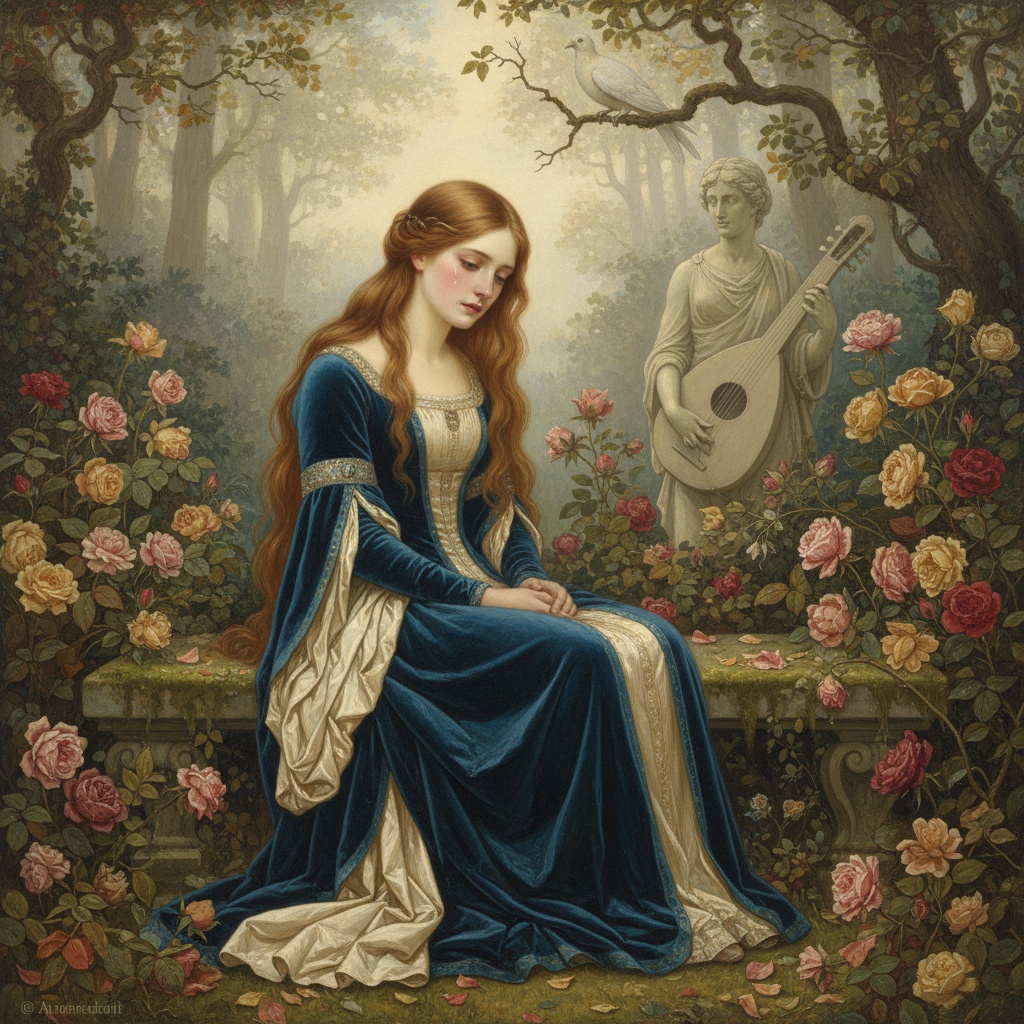
Recurring themes in Hughes’s oeuvre include the complexities of love, the fleeting nature of beauty, and the often-constrained lives of Victorian women. His depictions of female figures are particularly compelling – they are rarely idealized but rather portrayed with a nuanced sensitivity that acknowledges their inner lives and emotional vulnerabilities. Paintings like *Amy* (1853-59) explore themes of longing and unfulfilled desire, hinting at the societal pressures faced by women during this period.
While his canvases often depict romantic encounters, they are rarely straightforward celebrations of love. A sense of melancholy pervades many of his works, suggesting a recognition of the transience of happiness and the inevitability of loss. The contrast between the enduring beauty of nature – represented by ancient trees and resilient ivy – and the fragility of human emotions is a recurring motif.
Hughes’ Illustrative Career & Legacy Beyond Painting
Although celebrated for his paintings, Arthur Hughes enjoyed a remarkably successful career as an illustrator. From the 1850s onwards, he produced numerous illustrations for works by Thomas Hughes (no relation), George Macdonald, and Christina Rossetti, bringing his distinctive style to a wider audience. This work provided him with financial stability and allowed him to explore narrative themes in greater depth.
His dedication to illustration didn’t diminish his painting output, but it did shape his artistic approach, emphasizing clarity of line and meticulous attention to detail. While he never achieved the same level of fame as some of his Pre-Raphaelite contemporaries, Hughes left behind a significant body of work that continues to captivate audiences today. His paintings offer a unique window into the Victorian imagination – a world of beauty, melancholy, and poetic longing.
Collecting Arthur Hughes Today: A Guide for Enthusiasts
For those seeking to acquire works by Arthur Hughes, opportunities range from smaller watercolors and drawings to larger oil paintings. Prices vary considerably depending on size, subject matter, and provenance. While major museums like the Tate hold examples of his work, private collections remain a significant source for acquiring pieces.
When considering a purchase, it’s essential to authenticate the artwork thoroughly. Consulting with art experts and researching the painting's history are crucial steps. Hughes’s paintings are increasingly sought after by collectors who appreciate their delicate lyricism and evocative power. OriginalUniqueArt.com offers high-quality reproductions of his most iconic works, allowing enthusiasts to experience the beauty of Hughes’s art in their own homes. Explore our collection today and discover the enchanting world of this remarkable Pre-Raphaelite painter.