Menu
Text size

() ·

A painting made for you, by hand

Still-Life

Hand Made Oil Reproduction

Hand-painted oil on canvas in your size and frame, made to order by our artists. ( Switch to Print Switch to Digital Image)

Collectible Description

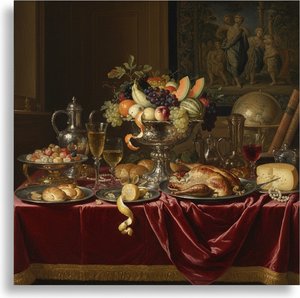
Exquisite 1653 Still-Life by Willem Kalf! Opulent fruit & tableware in dramatic chiaroscuro. Baroque realism, detailed texture, & luxurious dark palette. A Dutch Golden Age masterpiece.

Artist Biography

Discover Willem Kalf (1619-1693), Dutch Golden Age master of luxurious still lifes ('pronkstilleven'). Explore his opulent compositions & masterful light on OriginalUniqueArt!

from ·

Chapter 1

How large should it be?

Slide to change the size; the picture on the left shows the frame at its real width. The proportions of the original are kept.

Standard
custom
CM
INCH

Pick from our preset sizes that match the artwork's original proportions.

width
height

Type the width and the height you need, to fit your frame or your wall. This is hand-painted, so for a size with a different shape the artist can paint a bit more around the picture, or cut a bit — you choose. We send you a digital mockup to approve before the painting starts. The picture shown on this page does not show the real result — only the mockup does.

Chapter 2

How should it arrive?

Choose the edges of the stretched canvas

Choose your frame

Corner sample of the WhiteWrap canvas edge finish, stretched on solid wood bars
White $1
Corner sample of the BlurSideWrap canvas edge finish, stretched on solid wood bars
Blurside $1
Corner sample of the ExtendedWrap canvas edge finish, stretched on solid wood bars
Extended $1
Corner sample of the P118B picture frame: moulded polystyrene, 5 cm wide and 3 cm thick
P118B $10
Corner sample of the P118H picture frame: moulded polystyrene, 5 cm wide and 3 cm thick
P118H $10
Corner sample of the P118W picture frame: moulded polystyrene, 5 cm wide and 3 cm thick
P118W $10
Corner sample of the P438Z picture frame: moulded polystyrene, 5.5 cm wide and 3.5 cm thick
P438Z $10
Corner sample of the P508JH picture frame: moulded polystyrene, 7 cm wide and 3.5 cm thick
P508JH $12
Corner sample of the P508YH picture frame: moulded polystyrene, 7 cm wide and 3.5 cm thick
P508YH $12
Corner sample of the P805H picture frame: moulded polystyrene, 5 cm wide and 3.5 cm thick
P805H $10
Corner sample of the P805Z picture frame: moulded polystyrene, 5 cm wide and 3.5 cm thick
P805Z $10
Corner sample of the P919BZ picture frame: moulded polystyrene, 7 cm wide and 3.5 cm thick
P919BZ $10
Corner sample of the P919G picture frame: moulded polystyrene, 7 cm wide and 3.5 cm thick
P919G $10
Corner sample of the P919XJ picture frame: moulded polystyrene, 7 cm wide and 3.5 cm thick
P919XJ $10
Corner sample of the P959ZH picture frame: moulded polystyrene, 5 cm wide and 3 cm thick
P959ZH $10
Corner sample of the P968JZ picture frame: moulded polystyrene, 6 cm wide and 4 cm thick
P968JZ $12
Corner sample of the W106C picture frame: solid wood, 5 cm wide and 3 cm thick
W106C $8
Corner sample of the W218G picture frame: solid wood, 5 cm wide and 3 cm thick
W218G $10
Corner sample of the W218JH picture frame: solid wood, 5 cm wide and 3 cm thick
W218JH $8
Corner sample of the W218Y picture frame: solid wood, 5 cm wide and 3 cm thick
W218Y $10
Corner sample of the W307PJ picture frame: solid wood, 6 cm wide and 3 cm thick
W307PJ $10
Corner sample of the W316G picture frame: solid wood, 6 cm wide and 3 cm thick
W316G $10
Corner sample of the W316PJ picture frame: solid wood, 6 cm wide and 3 cm thick
W316PJ $8
Corner sample of the W316Y picture frame: solid wood, 6 cm wide and 3 cm thick
W316Y $10
Corner sample of the W398PJ picture frame: solid wood, 5 cm wide and 3 cm thick
W398PJ $8
Corner sample of the W4111J picture frame: solid wood, 6.5 cm wide and 3.5 cm thick
W4111J $10
Corner sample of the W500HY picture frame: solid wood, 7 cm wide and 5 cm thick
W500HY $15
Corner sample of the W500JH picture frame: solid wood, 7 cm wide and 5 cm thick
W500JH $15
Corner sample of the W692G picture frame: solid wood, 8 cm wide and 4 cm thick
W692G $12
Corner sample of the W849H picture frame: solid wood, 5 cm wide and 3 cm thick
W849H $8
Corner sample of the W940BG picture frame: solid wood, 7.5 cm wide and 4.5 cm thick
W940BG $15
Corner sample of the W953PJ picture frame: solid wood, 6 cm wide and 3.5 cm thick
W953PJ $8
Corner sample of the H24-GOLD picture frame: carved wood with gesso, 10 cm wide and 6 cm thick
H24-GOLD $30
Corner sample of the H24-SILVER picture frame: carved wood with gesso, 10 cm wide and 6 cm thick
H24-SILVER $30
Corner sample of the H36-GOLD picture frame: carved wood with gesso, 15 cm wide and 6.5 cm thick
H36-GOLD $45
Corner sample of the H36-SILVER picture frame: carved wood with gesso, 15 cm wide and 6.5 cm thick
H36-SILVER $45
Frame preview
Framed

Moulding: . Overall size with the frame: .

Chapter 3

Who paints it, and should anything change?

Examples of what can be changed: Replace face with customer photo; Add pet (e.g., replace cat with dog); Include hidden message in background; Change background landscape or elements.
After order, OriginalUniqueArt.com team will email client for instructions and provide a mockup preview

Worldwide Delivery () in 3/4 weeks instead of standard 5 weeks. (30 October). No compromise on quality.

Chapter 4

The finishing touches

A nameplate, as in a museum?

Engraved Bronze Plaque Details

This elegant plaque features the artist's name and the title of the artwork, finely engraved for a timeless presentation.

It is made from bronze with a refined, elegant finish. The text is precisely laser-engraved for a sharp and permanent result. Measuring 9x2 cm, the plaque is compact yet easy to read. It's built to be durable and scratch-resistant, offering a professional, museum-quality look. Mounting is simple thanks to the included adhesive backing.

Transparent Acrylic Plaque Details

The plaque includes essential engraved details such as the artist's name, the title of the artwork, the date it was created, the type of media used-like oil on canvas or watercolor-a brief description of the piece, and a QR code that links to the complete artwork information.

It is crafted from clear acrylic, offering a sleek, modern appearance. The text is UV-engraved in black to ensure strong visual contrast. With a size of 10x15 cm, it ensures optimal readability. It comes equipped with two metal hooks for secure wall mounting. The plaque is designed to be weather-resistant, making it suitable for various environments, and it includes interactive features that work seamlessly with smartphone scanning.

Black Acrylic Plaque Details

This elegant plaque includes engraved information such as the artist's name, the title of the artwork, the date it was created, the type of media used (like oil on canvas or watercolor), a short description of the artwork, and a QR code for quick access to more information.

The plaque itself is made from refined black acrylic with a premium finish. The text is laser-engraved in white for high contrast and readability. Its size is 10x15 cm, designed to be easy to read. It comes with two metal hooks for professional mounting. The design is sleek and fits any interior style. It is also weather-resistant and durable, with built-in digital integration for mobile compatibility.

A protective varnish?

When do you need it?

Chapter 5

Your painting, as you ordered it

Still-Life

Reproduction Medium

Reproduction Size

-

Elite Senior Artist

More detail, finesse, and extra production time

-

Reproduction Frame

-

-

For artworks or reproductions larger than 105 cm (approximately 41 inches) on any side, the frame will be shipped as a kit, disassembled. This method ensures safe delivery and prevents damage during transport.

Professional assembly required - this is not a DIY product.
The kit must be assembled and the canvas stretched by an experienced professional framer, using wood glue (not supplied), a canvas stretching plier and clamps to hold the bars square while the glue dries. Incorrect assembly or uneven canvas tension can permanently damage the artwork and is not covered by our warranty.

  • All solid wood bars are included, precisely cut to size.

  • Assembled with the screws provided, plus wood glue for the corner joints, which is not supplied and must be sourced by your framer.

  • Professional tools are required and not included: a canvas stretching plier (tensioner) and clamps to hold the bars square while the glue dries.

Important:
The corner joints require wood glue, the bars must be held with clamps until the glue is fully dry, and tightening the canvas on the assembled frame requires a canvas stretching plier. None of these are included in the kit. Please arrange an experienced professional framer before ordering this size.

Nameplate

-

-

Protective Varnish

Glossy Varnish (enhances colors, protects against light/moisture)

-

Customize My Artwork

Examples of what can be changed: Replace face with customer photo; Add pet (e.g., replace cat with dog); Include hidden message in background; Change background landscape or elements.

-

Urgent

Worldwide Delivery () in 3/4 weeks instead of standard 5 weeks. (30 October). No compromise on quality.

-

Express Shipping

Worldwide Delivery () in 5 weeks. (6 November).

Included

Total Price

$ 300

Total Price $ 300

Glass option is only available in size under 110 CM

Included with every order

  • Free Worldwide Express Shipping
  • High-Quality Linen Canvas
  • Full Shipping Insurance
  • Customs Tax Refund Guarantee
  • True Color Matching Guarantee
  • 100-Day Return Policy (Defects Only)
  • 100% Money-Back Guarantee
  • Bulk Discount Offer

A Symphony of Light and Luxury

In the quiet, shadowed corners of the Dutch Golden Age, few masters could command the stage with as much dramatic flair as Willem Kalf. His 1653 masterpiece, Still Life with Lobster, Drinking Horn and Glasses, is not merely a painting of objects; it is a carefully orchestrated performance of light, texture, and prestige. As one gazes upon this canvas, they are immediately transported into an era of unprecedented maritime prosperity, where the spoils of global trade were celebrated through the meticulous brushstrokes of the pronkstilleven—the grand, opulent still life. The composition serves as a window into a world of sensory indulgence, where every glint of silver and every dewdrop on a peach tells a story of wealth, discovery, and the fleeting nature of earthly delights.

The artwork captures a moment of suspended animation, presenting an arrangement that feels both bountiful and profoundly intimate. A vibrant lobster, its shell a testament to Kalf’s ability to render organic complexity, rests amidst the soft, velvety skins of peaches and pears. These natural elements are juxtaposed against the hard, reflective surfaces of man-made treasures: a gleaming silver goblet, a sturdy drinking horn, and delicate glassware that catches the light with ethereal precision. This interplay between the perishable fruit and the enduring precious metals creates a tension that is central to the Baroque experience, inviting the viewer to linger on the exquisite details of each meticulously rendered form.

The Mastery of Chiaroscuro and Texture

Technically, Kalf’s work represents the pinnacle of seventeenth-century Dutch realism. He employs chiaroscuro—the dramatic use of intense light and deep shadow—to sculpt his subjects out of the darkness. This technique does more than provide depth; it breathes life into the inanimate. The way light spills across a silver vessel or pierces through a glass, casting long, evocative shadows across a richly patterned tablecloth, creates a palpable sense of three-dimensionality. For the discerning collector or interior designer, this mastery of contrast offers a profound visual weight that can anchor a room, providing a focal point that changes character as the ambient light of a space shifts throughout the day.

Beyond the play of light, Kalf’s true genius lies in his tactile virtuosity. He possesses an uncanny ability to translate the language of touch into oil on canvas. One can almost feel the cool, smooth surface of the bronze candlestick, the rougher texture of the drinking horn, and the soft, yielding flesh of the ripening fruit. This commitment to hyper-realistic detail ensures that a high-quality reproduction of this piece retains its soul, offering an immersive experience that celebrates the beauty of material existence. It is this level of craftsmanship that makes Kalf’s work eternally relevant for those seeking to infuse their environments with a sense of historical grandeur and sophisticated elegance.

Symbolism and the Soul of the Baroque

To look closely at Kalf’s arrangement is to read a silent poem about the human condition. In the seventeenth century, nothing was purely decorative; every element carried a weight of meaning. The lobster, often associated with luxury and abundance, serves as a symbol of the era's economic triumphs. Meanwhile, the drinking horn alludes to conviviality and social standing, reminding the viewer of the communal joys of the Dutch mercantile class. Yet, beneath this layer of opulence lies a subtle memento mori—a gentle reminder of mortality. The very ripeness of the fruit suggests an approaching decay, a poignant contrast to the enduring brilliance of the silver and gold.

This duality—the celebration of life’s richness alongside a contemplation of its transience—is what gives the painting its profound emotional resonance. It evokes a sense of quiet melancholy wrapped in a cloak of splendor. For those looking to decorate with art that possesses depth and narrative, Kalf’s work offers an unparalleled opportunity. A reproduction of this still life does not just adorn a wall; it invites conversation, stimulates the intellect, and brings a touch of timeless, scholarly prestige to any curated collection or thoughtfully designed interior.

Questions & Answers

What does the 1653 date of "Still-Life" correspond to in Willem Kalf's career?

The 1653 date places "Still-Life" in the Mature Period of Willem Kalf's development.

When was "Still-Life" created, and to which movement does it belong?

"Still-Life" was created in 1653 as a work of the Baroque movement. Date and movement anchor the artwork in art history.

What are the medium and date of "Still-Life" by Willem Kalf?

The medium of "Still-Life" by Willem Kalf is oil on canvas, and the work is dated 1653.

More about this painting

Preview AR preview Switch to Print Switch to Digital Image Send
Details Guide Add to favorites Download Similars X-Ray Diaporama Q&A Stats

In numbers

  • 1653the year it was painted
  • 29frames to choose from
  • standard sizes, in its own proportions
  • 5weeks to paint and deliver it
Willem Kalf

Willem Kalf

1619 - 1693, Netherlands

Quick facts about Willem Kalf

  • Artistic Movement Or Style: Dutch Golden Age, Still Life
  • Artists Or Movements Influenced By This Artist:
    • French art
    • Le Nain brothers
  • Artists Who Influenced This Artist:
    • Simon Luttichuys
    • Pieter Claesz
    • Willem Claeszoon Heda
  • Date Of Birth: 1619
  • Date Of Death: 1693
  • Full Name: Willem Kalf
  • Nationality: Dutch
  • Notable Artworks:
    • Still-Life with a Nautilus Cup
    • Le vieux puits
    • Silver Jug & Porcelain Bowl
  • Place Of Birth: Rotterdam, Netherlands

Artist Biography

A Life Immersed in Opulence: The World of Willem Kalf

Willem Kalf, a name synonymous with the lavish still lifes of the Dutch Golden Age, was born in Rotterdam in 1619 into a family of comfortable means. His father, Jan Jansz Calff, held positions within the municipal government, providing young Willem with an upbringing that fostered both security and exposure to the burgeoning mercantile world that would later so profoundly influence his art. Though details surrounding Kalf’s early training remain somewhat elusive, it is known he experienced a period of artistic development in Paris during the 1630s, immersing himself within the vibrant community of Flemish artists working in Saint-Germain-des-Prés. This formative experience initially steered him towards smaller-scale rustic interiors and still lifes—modest beginnings that would eventually blossom into the grand pronkstilleven for which he is celebrated today. The loss of both parents by 1638 prompted a return to the Netherlands, setting the stage for his mature artistic period.

From Humble Beginnings to Masterful Display

Kalf’s early Parisian works reveal an artist finding his footing. These paintings often depicted simple arrangements—vegetables, commonplace kitchen utensils like buckets and pans—set against dimly lit backgrounds where figures were suggested rather than fully realized. This style echoed the pictorial traditions prevalent in Flanders during the early 17th century, particularly the work of artists such as David Teniers the Younger. However, Kalf’s ambition soon outgrew these modest compositions. Upon his return to the Netherlands, he began a remarkable evolution towards what would become his signature style: the pronkstilleven, or “ostentatious still life.” These were not merely depictions of objects; they were carefully constructed displays of wealth and sophistication, showcasing luxurious items like silver vessels, delicate porcelain, exotic fruits, and shimmering glassware.

The Art of Illusion and Symbolic Resonance

What truly distinguished Kalf’s pronkstilleven was his unparalleled mastery of light and texture. He possessed an extraordinary ability to render the reflective qualities of silver, the translucence of glass, and the velvety surfaces of fruit with breathtaking realism. His compositions weren't haphazard arrangements; they were meticulously planned orchestrations designed to capture the interplay of light and shadow, creating a sense of depth and drama. While the basic structure of his paintings—the arrangement of objects—remained relatively consistent, each work was a testament to Kalf’s skill in varying textures and capturing nuanced lighting effects. Beyond mere technical brilliance, however, lay a subtle symbolic dimension. The opulent objects he depicted weren't simply beautiful; they alluded to themes of transience, wealth, and the fleeting nature of earthly pleasures—a nod to the vanitas tradition prevalent in Dutch painting.

Legacy and Influence

Willem Kalf’s impact extended beyond his own prolific output. His semi-monochrome still lifes exerted a notable influence on French art, particularly within the circle of the Le Nain brothers, who admired his sophisticated use of light and shadow. Though individual works may not be as widely recognized as those of some of his contemporaries, Kalf's contribution to the genre is undeniable. He helped define the pronkstilleven, capturing the spirit of 17th-century Dutch society—a period marked by unprecedented economic prosperity and a burgeoning merchant class eager to display their wealth and refinement. Today, his paintings grace prestigious museum collections worldwide, including the Museum Boijmans Van Beuningen in Rotterdam, the National Gallery of Art in Washington D.C., and the Getty Museum, ensuring that his legacy as a master of Dutch still life continues to inspire awe and admiration. His meticulous attention to detail and masterful use of light remain hallmarks of artistic excellence.

Exploring Further

Quick Facts

  • Location: Private Collection
  • Movement: Dutch Golden Age
  • Dimensions: 105 x 88 cm
  • Title: Still-Life
  • Notable elements or techniques: Chiaroscuro, Detailed Rendering
  • Year: 1653