Preview
 Send
Send Share
Share
 Details
 Guide
Guide

 Download
 Similars
 X-Ray
X-Ray Diaporama
 Stats
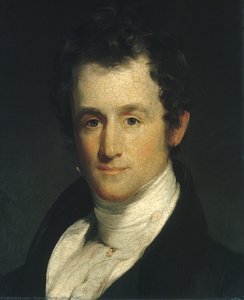
StatsDr. Edward Hudson


 Read More
Giclée / Art Print
Museum-quality giclée or canvas print with fast production and flexible finish options. ( Buy Hand Made Painting Switch to Digital Image)




P118B $10

P118H $10

P118W $10

P438Z $10

P508JH $12

P508YH $12

P805H $10

P805Z $10

P919BZ $10

P919G $10

P919XJ $10

P959ZH $10

P968JZ $12

W106C $8

W218G $10

W218JH $8

W218Y $10

W307PJ $10

W316G $10

W316PJ $8

W316Y $10

W398PJ $8

W4111J $10

W500HY $15

W500JH $15

W692G $12

W849H $8

W940BG $15

W953PJ $8




Pick from our preset sizes that match the artwork's original proportions.

Type the width and the height you need, to fit your frame or your wall. A print can only be cut, never made bigger than the picture, so a size with a different shape loses a part of the image. We send you a digital mockup to approve before we print anything. The picture shown on this page does not show the real cut — only the mockup does.
Worldwide Delivery () in 2 weeks instead of standard 4/5 weeks. (22 October)

Free Worldwide Express Shipping

High-Quality Linen Canvas

Full Shipping Insurance

Customs Tax Refund Guarantee

True Color Matching Guarantee

100-Day Return Policy (Defects Only)

100% Money-Back Guarantee

Bulk Discount Offer
 Glass option is only available in size under 110 CM

Dr. Edward Hudson
Giclée / Art Print
Reproduction Size
-


Total Price
$ 81
Dr. Edward Hudson: A Portrait of Victorian Patronage
Thomas Sully’s “Mrs. Edward Hudson,” completed in 1814, stands as an emblem of the Victorian era's fascination with portraiture and its celebration of aristocratic status. More than just a likeness of Dr. Edward Hudson—a prominent physician and influential figure within London society—the painting embodies the ideals of refinement, intellect, and moral virtue that defined the period’s artistic sensibilities.
- Subject Matter: The portrait depicts Dr. Hudson seated in a richly upholstered armchair, gazing calmly outwards. His wife accompanies him, presenting an aura of serene dignity alongside her husband.
- Style & Technique: Sully employed the “Grand Manner,” championed by Joshua Reynolds and favored by the Royal Academy during this time. This style prioritized idealized beauty and meticulous detail, striving to capture not merely physical appearance but also inner character. The artist skillfully utilized soft brushstrokes and subtle tonal gradations to achieve a luminous effect, conveying both realism and an emotional depth that transcends mere representation.
- Historical Context: Hudson’s patronage of the arts—particularly sculpture—was instrumental in fostering artistic innovation during his lifetime. “Mrs. Edward Hudson” reflects this cultural milieu, aligning with the broader Victorian preoccupation with moral seriousness and the pursuit of excellence in all endeavors.
Composition & Color Palette: Orchestrating Light and Emotion
Sully’s compositional choices contribute significantly to the painting's impact. The central positioning of Hudson and his wife establishes a formal balance, while the slight turn of his head introduces dynamism and directs the viewer’s gaze outwards—suggesting contemplation and engagement with ideas beyond the immediate frame. The color palette is dominated by muted browns and blacks, punctuated by highlights of white – primarily in the collar – and a striking crimson envelope held by Hudson's hand.
- Color Harmony: The reddish hue serves as a focal point, symbolizing passion or perhaps representing Hudson’s scholarly pursuits.
- Lighting: Soft, diffused light emanates from the left side, sculpting Hudson’s face and creating gentle shadows that accentuate his features—enhancing both realism and conveying an atmosphere of quiet contemplation.
Symbolism & Artistic Legacy
"Mrs. Edward Hudson" transcends its surface appearance to communicate profound symbolic meanings. The opulent furnishings underscore Hudson's wealth and social standing, while the envelope symbolizes correspondence – perhaps representing his intellectual engagement with fellow scholars or conveying a message of refined thoughtfulness. Sully’s masterful technique—characterized by meticulous brushwork and subtle tonal variations—established him as one of the foremost portraitists of his era, influencing generations of artists who followed.
- Influence: Hudson's work continues to inspire admiration for its elegance, psychological insight, and unwavering commitment to artistic excellence.
Provenance & Reproduction Considerations
This remarkable portrait has traversed time and ownership, culminating in its current residence at the Detroit Institute of Arts. Its journey underscores the enduring value of art history—and the importance of preserving cultural treasures for future generations.
- Reproductions: High-quality reproductions offer an accessible pathway to experiencing Sully’s artistic vision – allowing viewers to appreciate the painting's beauty and nuance without incurring the expense or logistical challenges associated with acquiring original artwork.
Questions & Answers
What stage of Thomas Sully's development does "Dr. Edward Hudson" represent?
Within Thomas Sully's career, "Dr. Edward Hudson" falls in the Mature Romanticism. The phase helps compare it with the artist's other works.
Why is the copyright status of "Dr. Edward Hudson" what it is?
The copyright status of "Dr. Edward Hudson" - in the public domain - its copyright has expired - follows from the artist's death in 1872.
What technique and style characterize "Dr. Edward Hudson" by Thomas Sully?
"Dr. Edward Hudson" is made in oil on canvas, in the Romantic British Portraiture style.
Artist Biography
A Transatlantic Brushstroke: The Life and Art of Thomas Sully
Born under the skies of Horncastle, Lincolnshire in 1783, Thomas Sully’s journey was one of remarkable transatlantic passage – not merely geographical, but artistic and cultural. His story isn't simply that of a painter; it is a reflection of the burgeoning American identity finding its voice through portraiture. The son of actors, Matthew and Sarah Chester Sully, young Thomas experienced an itinerant childhood when his family emigrated to Charleston, South Carolina in 1792, seeking new opportunities on the American stage. This early exposure to performance, to capturing fleeting expressions and embodying character, would profoundly shape his artistic sensibility. Initially drawn into the world of theatre himself as a tumbler, Sully’s innate talent soon found expression through a different medium: paint. An apprenticeship with an insurance broker revealed an aptitude for detail, but it was the guidance of Charles Fraser, a local artist, and later his brother-in-law Jean Belzons, that truly ignited his passion for miniature painting – a foundation upon which he would build a distinguished career.From Miniature to Monumental: Forging an American Style
Sully’s artistic development wasn't confined by geographical boundaries. A period of study in London with the esteemed Benjamin West, beginning in 1808, proved pivotal. While West was a significant figure in his own right, it was the influence of Thomas Lawrence that truly captivated Sully. Lawrence’s elegant style, his mastery of light and texture, and his ability to capture both likeness and character resonated deeply with the young American artist. He returned to the United States imbued with this aesthetic, earning him the moniker “the Sir Thomas Lawrence of America.” However, Sully didn't merely imitate; he adapted and refined these influences, forging a distinctly American style that blended European sophistication with a uniquely New World sensibility. His portraits weren’t simply representations of wealth or status; they were explorations of personality, imbued with psychological depth and emotional resonance. He quickly established himself in Philadelphia, becoming a leading portraitist and capturing the likenesses of prominent figures like Thomas Jefferson, John Quincy Adams, and Andrew Jackson – men who shaped the nation's destiny.Beyond Likeness: Historical Narratives and Artistic Legacy
While celebrated for his portraits, Sully’s artistic ambition extended beyond capturing individual faces. He ventured into historical painting with works like *The Passage of the Delaware* (1819), a grand depiction of Washington's iconic crossing – a piece that demonstrated his ability to handle large-scale compositions and imbue them with dramatic power. This willingness to engage with historical narratives broadened his appeal and cemented his place in the American art world. His prolific output—over 2,300 paintings over seven decades—testifies to both his skill and his relentless dedication. He wasn’t merely a painter of the elite; he documented an era, preserving the faces and stories of a nation undergoing rapid transformation. Sully's influence extended beyond his own canvases. He was a dedicated teacher, mentoring numerous artists including Marcus Aurelius Root, who would later become a pioneer in photography.A Patron of Culture: Music, Society, and Enduring Influence
Sully’s contributions weren’t limited to the visual arts. As a founding member of Philadelphia's Musical Fund Society, he demonstrated a deep commitment to fostering cultural life within his community. This involvement speaks to a broader artistic sensibility – an understanding that art in all its forms enriches society and elevates the human spirit. His work was even adapted for use on United States coinage, further solidifying his place in the national consciousness. Though Romanticism and Neoclassicism were dominant movements during his lifetime, Sully’s style transcended easy categorization. He skillfully blended elements of both, creating a unique aesthetic that prioritized emotional depth, technical precision, and psychological insight. Today, Thomas Sully's paintings hang in prestigious museums across the country, continuing to captivate audiences with their beauty, elegance, and enduring power. His legacy remains as a testament to the transformative potential of art and the enduring allure of the human face.
Thomas Sully
1783 - 1872 , United Kingdom
Quick Facts
- Full Name: Thomas Sully
- Nationality: British-American
- Date Of Birth: 1783
- Date Of Death: 1872
- Place Of Birth: Horncastle, United Kingdom
- Notable Artworks:
- Passage of the Delaware
- Portraits of Jefferson
- Portraits of Adams
- Portraits of Lafayette
- Artistic Movement Or Style: Romanticism, Neoclassicism
- Artists Who Influenced This Artist:
- Benjamin West
- Thomas Lawrence
- Artists Or Movements Influenced By This Artist: ['American portraiture']
Related Articles
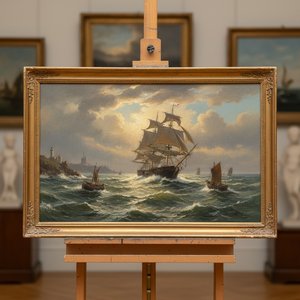
Henry Thomas Dawson: Navigating Light, Sea & Sentiment in Victorian Marine Painting
Explore the captivating world of Henry Thomas Dawson (1811-1878), a master of Victorian marine painting. Discover his evocative coastal scenes, landscapes & lasting artistic legacy. Learn about collecting Dawson's work and find reproductions at OriginalUniqueArt.
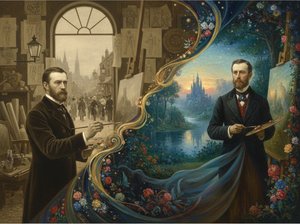
Thomas Edwin Mostyn: A Victorian Genre Painter's Journey from Realism to Romantic Enchantment
Discover the captivating world of Thomas Edwin Mostyn (1864-1930), a Victorian artist renowned for his romantic garden scenes and evocative portraits. Explore his artistic journey, legacy & find high-quality reproductions at OriginalUniqueArt.
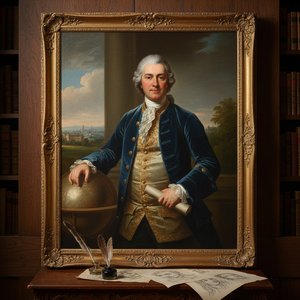
Thomas Hudson: A Study in 18th-Century Portraiture & British Artistic Identity
Explore the life & work of Thomas Hudson, a leading 18th-century British portraitist. Discover his mastery of the 'Grand Manner,' influential style, and lasting impact on British art. Learn about his notable portraits like Judge William Noel & Alexander Van Aken.

Thomas Stuart Smith: A Study in British Impressionism & the Poetic Landscape
Explore the captivating world of Thomas Stuart Smith (1815-1869), a Scottish painter bridging Romantic realism and British Impressionism. Discover his genre scenes, philanthropic legacy & stunning interiors.

The Hudson River School: A Definitive Guide to America's Romantic Landscape Tradition
Explore the profound legacy of the Hudson River School. Discover how masters like Thomas Cole captured the American sublime through Romanticism and Luminism. A definitive guide for art historians and collectors seeking to understand America's wild beauty.