Text size

() ·

A painting made for you, by hand

CONVERSATION DANS UN PARC

Hand Made Oil Reproduction

Hand-painted oil on canvas in your size and frame, made to order by our artists. ( Switch to Print Switch to Digital Image)

Collectible Description

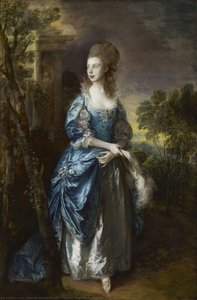
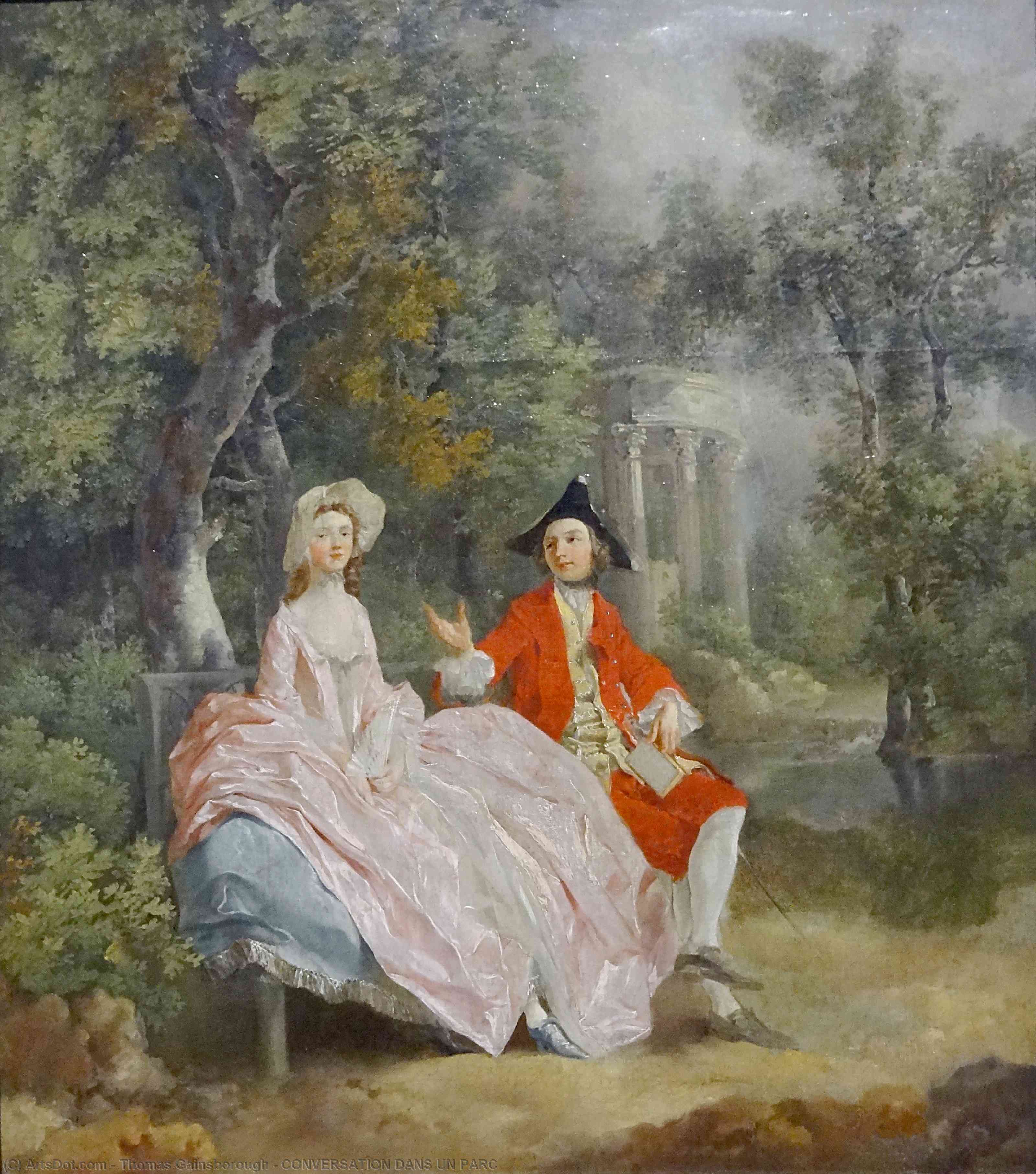
A serene moment of Enlightenment elegance unfolds in Thomas Gainsborough's Conversation Dans Un Parc as a couple rests amidst dappled woodland light, inviting you to bring this timeless piece of British history into your home.

Artist Biography

A master of Rococo portraiture and landscapes like The Blue Boy. Discover the timeless beauty of his works today.

from ·

Chapter 1

How large should it be?

Slide to change the size; the picture on the left shows the frame at its real width. The proportions of the original are kept.

Standard
custom
CM
INCH

Pick from our preset sizes that match the artwork's original proportions.

width
height

Type the width and the height you need, to fit your frame or your wall. This is hand-painted, so for a size with a different shape the artist can paint a bit more around the picture, or cut a bit — you choose. We send you a digital mockup to approve before the painting starts. The picture shown on this page does not show the real result — only the mockup does.

Chapter 2

How should it arrive?

Choose the edges of the stretched canvas

Choose your frame

Corner sample of the WhiteWrap canvas edge finish, stretched on solid wood bars
White $1
Corner sample of the BlurSideWrap canvas edge finish, stretched on solid wood bars
Blurside $1
Corner sample of the ExtendedWrap canvas edge finish, stretched on solid wood bars
Extended $1
Corner sample of the P118B picture frame: moulded polystyrene, 5 cm wide and 3 cm thick
P118B $10
Corner sample of the P118H picture frame: moulded polystyrene, 5 cm wide and 3 cm thick
P118H $10
Corner sample of the P118W picture frame: moulded polystyrene, 5 cm wide and 3 cm thick
P118W $10
Corner sample of the P438Z picture frame: moulded polystyrene, 5.5 cm wide and 3.5 cm thick
P438Z $10
Corner sample of the P508JH picture frame: moulded polystyrene, 7 cm wide and 3.5 cm thick
P508JH $12
Corner sample of the P508YH picture frame: moulded polystyrene, 7 cm wide and 3.5 cm thick
P508YH $12
Corner sample of the P805H picture frame: moulded polystyrene, 5 cm wide and 3.5 cm thick
P805H $10
Corner sample of the P805Z picture frame: moulded polystyrene, 5 cm wide and 3.5 cm thick
P805Z $10
Corner sample of the P919BZ picture frame: moulded polystyrene, 7 cm wide and 3.5 cm thick
P919BZ $10
Corner sample of the P919G picture frame: moulded polystyrene, 7 cm wide and 3.5 cm thick
P919G $10
Corner sample of the P919XJ picture frame: moulded polystyrene, 7 cm wide and 3.5 cm thick
P919XJ $10
Corner sample of the P959ZH picture frame: moulded polystyrene, 5 cm wide and 3 cm thick
P959ZH $10
Corner sample of the P968JZ picture frame: moulded polystyrene, 6 cm wide and 4 cm thick
P968JZ $12
Corner sample of the W106C picture frame: solid wood, 5 cm wide and 3 cm thick
W106C $8
Corner sample of the W218G picture frame: solid wood, 5 cm wide and 3 cm thick
W218G $10
Corner sample of the W218JH picture frame: solid wood, 5 cm wide and 3 cm thick
W218JH $8
Corner sample of the W218Y picture frame: solid wood, 5 cm wide and 3 cm thick
W218Y $10
Corner sample of the W307PJ picture frame: solid wood, 6 cm wide and 3 cm thick
W307PJ $10
Corner sample of the W316G picture frame: solid wood, 6 cm wide and 3 cm thick
W316G $10
Corner sample of the W316PJ picture frame: solid wood, 6 cm wide and 3 cm thick
W316PJ $8
Corner sample of the W316Y picture frame: solid wood, 6 cm wide and 3 cm thick
W316Y $10
Corner sample of the W398PJ picture frame: solid wood, 5 cm wide and 3 cm thick
W398PJ $8
Corner sample of the W4111J picture frame: solid wood, 6.5 cm wide and 3.5 cm thick
W4111J $10
Corner sample of the W500HY picture frame: solid wood, 7 cm wide and 5 cm thick
W500HY $15
Corner sample of the W500JH picture frame: solid wood, 7 cm wide and 5 cm thick
W500JH $15
Corner sample of the W692G picture frame: solid wood, 8 cm wide and 4 cm thick
W692G $12
Corner sample of the W849H picture frame: solid wood, 5 cm wide and 3 cm thick
W849H $8
Corner sample of the W940BG picture frame: solid wood, 7.5 cm wide and 4.5 cm thick
W940BG $15
Corner sample of the W953PJ picture frame: solid wood, 6 cm wide and 3.5 cm thick
W953PJ $8
Corner sample of the H24-GOLD picture frame: carved wood with gesso, 10 cm wide and 6 cm thick
H24-GOLD $30
Corner sample of the H24-SILVER picture frame: carved wood with gesso, 10 cm wide and 6 cm thick
H24-SILVER $30
Corner sample of the H36-GOLD picture frame: carved wood with gesso, 15 cm wide and 6.5 cm thick
H36-GOLD $45
Corner sample of the H36-SILVER picture frame: carved wood with gesso, 15 cm wide and 6.5 cm thick
H36-SILVER $45
Frame preview
Framed

Moulding: . Overall size with the frame: .

Chapter 3

Who paints it, and should anything change?

Examples of what can be changed: Replace face with customer photo; Add pet (e.g., replace cat with dog); Include hidden message in background; Change background landscape or elements.
After order, OriginalUniqueArt.com team will email client for instructions and provide a mockup preview

Worldwide Delivery () in 3/4 weeks instead of standard 5 weeks. (9 November). No compromise on quality.

Chapter 4

The finishing touches

A nameplate, as in a museum?

Engraved Bronze Plaque Details

This elegant plaque features the artist's name and the title of the artwork, finely engraved for a timeless presentation.

It is made from bronze with a refined, elegant finish. The text is precisely laser-engraved for a sharp and permanent result. Measuring 9x2 cm, the plaque is compact yet easy to read. It's built to be durable and scratch-resistant, offering a professional, museum-quality look. Mounting is simple thanks to the included adhesive backing.

Transparent Acrylic Plaque Details

The plaque includes essential engraved details such as the artist's name, the title of the artwork, the date it was created, the type of media used-like oil on canvas or watercolor-a brief description of the piece, and a QR code that links to the complete artwork information.

It is crafted from clear acrylic, offering a sleek, modern appearance. The text is UV-engraved in black to ensure strong visual contrast. With a size of 10x15 cm, it ensures optimal readability. It comes equipped with two metal hooks for secure wall mounting. The plaque is designed to be weather-resistant, making it suitable for various environments, and it includes interactive features that work seamlessly with smartphone scanning.

Black Acrylic Plaque Details

This elegant plaque includes engraved information such as the artist's name, the title of the artwork, the date it was created, the type of media used (like oil on canvas or watercolor), a short description of the artwork, and a QR code for quick access to more information.

The plaque itself is made from refined black acrylic with a premium finish. The text is laser-engraved in white for high contrast and readability. Its size is 10x15 cm, designed to be easy to read. It comes with two metal hooks for professional mounting. The design is sleek and fits any interior style. It is also weather-resistant and durable, with built-in digital integration for mobile compatibility.

A protective varnish?

When do you need it?

Chapter 5

Your painting, as you ordered it

CONVERSATION DANS UN PARC

Reproduction Medium

Reproduction Size

-

Elite Senior Artist

More detail, finesse, and extra production time

-

Reproduction Frame

-

-

For artworks or reproductions larger than 105 cm (approximately 41 inches) on any side, the frame will be shipped as a kit, disassembled. This method ensures safe delivery and prevents damage during transport.

Professional assembly required - this is not a DIY product.
The kit must be assembled and the canvas stretched by an experienced professional framer, using wood glue (not supplied), a canvas stretching plier and clamps to hold the bars square while the glue dries. Incorrect assembly or uneven canvas tension can permanently damage the artwork and is not covered by our warranty.

  • All solid wood bars are included, precisely cut to size.

  • Assembled with the screws provided, plus wood glue for the corner joints, which is not supplied and must be sourced by your framer.

  • Professional tools are required and not included: a canvas stretching plier (tensioner) and clamps to hold the bars square while the glue dries.

Important:
The corner joints require wood glue, the bars must be held with clamps until the glue is fully dry, and tightening the canvas on the assembled frame requires a canvas stretching plier. None of these are included in the kit. Please arrange an experienced professional framer before ordering this size.

Nameplate

-

-

Protective Varnish

Glossy Varnish (enhances colors, protects against light/moisture)

-

Customize My Artwork

Examples of what can be changed: Replace face with customer photo; Add pet (e.g., replace cat with dog); Include hidden message in background; Change background landscape or elements.

-

Urgent

Worldwide Delivery () in 3/4 weeks instead of standard 5 weeks. (9 November). No compromise on quality.

-

Express Shipping

Worldwide Delivery () in 5 weeks. (16 November).

Included

Total Price

$ 300

Total Price $ 300

Glass option is only available in size under 110 CM

Included with every order

  • Free Worldwide Express Shipping
  • High-Quality Linen Canvas
  • Full Shipping Insurance
  • Customs Tax Refund Guarantee
  • True Color Matching Guarantee
  • 100-Day Return Policy (Defects Only)
  • 100% Money-Back Guarantee
  • Bulk Discount Offer

A Serene Encounter Beneath the Canopy

In the quiet, dappled light of an English woodland, time seems to pause within Thomas Gainsborough’s “Conversation Dans Un Parc.” This exquisite tableau is far more than a mere portrait of two figures; it is a window into the refined elegance of Enlightenment-era Britain. As the viewer gazes upon the scene, they are immediately drawn into an intimate moment between a man and a woman, seated peacefully upon a bench. The gentleman, draped in a striking red coat, and the lady, delicate in her pink attire, appear lost in a gentle exchange, their connection mirrored by the harmonious balance of the surrounding nature. This piece captures that fleeting, precious essence of leisure—a moment of quietude amidst the sprawling grandeur of a landed estate.

The setting itself acts as a silent protagonist in this narrative. The lush, verdant trees frame the subjects with a protective embrace, their leaves filtering the sunlight to create a rhythmic play of light and shadow across the forest floor. For the art lover or the collector looking to infuse a space with tranquility, this painting offers a profound sense of peace. It evokes the feeling of a summer afternoon where the only sounds are the rustle of leaves and the soft murmur of conversation, making it an ideal centerpiece for an interior designed to inspire reflection and calm.

Mastery of Light and Impressionistic Spirit

Gainsborough was a pioneer of a style that whispered of Impressionism long before the movement formally took flight. His technique in “Conversation Dans Un Parc” demonstrates a masterful command over atmosphere and texture. Rather than relying on the rigid, meticulous lines favored by many of his contemporaries, Gainsborough employed loose, fluid brushstrokes that breathe life into the canvas. This approach allows the light to appear as if it is truly dancing across the surfaces, imbuing the greenery with a luminous, vibrating quality.

The artist’s ability to layer thin, translucent glazes over his underpainting creates a depth that invites the eye to wander through the woods. One can almost feel the humidity of the shaded grove and the warmth of the sun-drenched patches. For interior designers, this painterly quality provides a sophisticated texture that complements both classical and contemporary decor. The subtle gradations of color—from the deep, earthy tones of the woodland floor to the soft, ethereal pinks of the lady's dress—create a tonal harmony that can anchor a room, providing a sense of luxury and historical weight without overwhelming the surrounding aesthetic.

A Legacy of Elegance and Aspiration

To understand this work is to understand the social aspirations of 18th-century Britain. Gainsborough, though born into a family of merchants in Suffolk, possessed an artistic vision that sought to capture the idealized beauty of the landed gentry. This painting serves as a "conversation piece," a genre specifically designed to showcase the grace, status, and refined sensibilities of its subjects. There is a subtle symbolism in the way the figures are integrated into the landscape; they are not merely visitors to nature, but an integral part of its cultivated beauty, representing a harmonious coexistence between civilization and the wild.

Owning a high-quality reproduction of such a masterpiece allows one to bring this historical grandeur into the modern home. It is an invitation to celebrate the enduring power of the English landscape school and the romantic spirit of Gainsborough’s brush. Whether placed in a sunlit study or a grand dining hall, “Conversation Dans Un Parc” serves as a continuous dialogue between the past and the present, offering every viewer a chance to step into a world of timeless grace and everlasting beauty.

Questions & Answers

Where do the visitors of "CONVERSATION DANS UN PARC" by Thomas Gainsborough come from?

A Stats page exists for "CONVERSATION DANS UN PARC". It charts the monthly visits of the artwork and of the artist's other works, with country and language breakdowns.

What atmosphere does "CONVERSATION DANS UN PARC" have?

The overall mood of "CONVERSATION DANS UN PARC" by Thomas Gainsborough is romantic. The mood describes the general atmosphere of the work.

What subject and atmosphere does "CONVERSATION DANS UN PARC" by Thomas Gainsborough combine?

"CONVERSATION DANS UN PARC" by Thomas Gainsborough combines portraiture, conversation, parkscene, britishart, landscapepainting, romanticism, gentlemen with a romantic atmosphere.

More about this painting

Preview AR preview Switch to Print Switch to Digital Image Send
Details Guide Add to favorites Download Similars X-Ray Diaporama Q&A Stats

In numbers

  • 29frames to choose from
  • standard sizes, in its own proportions
  • 5weeks to paint and deliver it
Thomas Gainsborough

Thomas Gainsborough

1727 - 1788, United Kingdom

Quick facts about Thomas Gainsborough

  • Artistic Movement Or Style: Rococo, Romanticism
  • Artists Or Movements Influenced By This Artist:
    • Impressionists
    • John Constable
  • Artists Who Influenced This Artist:
    • Hubert Gravelot
    • William Hogarth
  • Full Name: Thomas Gainsborough
  • Nationality: British
  • Notable Artworks:
    • Conversation in a Park
    • Mr and Mrs Andrews
    • The Blue Boy
    • Mrs. Thomas Gainsborough
  • Place Of Birth: Sudbury, United Kingdom
  • Date Of Birth: 1727
  • Date Of Death: 1788

Artist Biography

Early Life, Family and Training

In the quiet market town of Sudbury, United Kingdom, the story of Thomas Gainsborough began on 14 May 1727. He was the youngest son of John Gainsborough, a man who made his living as a weaver and wool merchant. While the family trade required a different kind of precision, young Thomas found himself drawn toward a different sort of creation. From a remarkably early age, he displayed an innate artistic sensibility that seemed to pull at him from within. He did not merely observe the world around him; he felt a deep, burgeoning need to capture it through drawing and painting.

This natural inclination did not remain a mere childhood pastime for long. By the age of thirteen, the pull of the capital became too strong to ignore, and he left the familiarity of Suffolk for the bustling streets of London in 1740. It was there that he sought the structure of formal training, eventually studying under the French painter Hubert-François Gravelot. This period of instruction provided him with the technical foundation necessary to transform his raw talent into a disciplined craft. The elegance of the French style would eventually mingle with his own developing vision, helping him move beyond the simple sketches of his youth toward a more sophisticated command of his medium.

The Formative Years in Ipswich and Bath

After leaving the familiarity of his childhood home, Gainsborough moved to Ipswich following 1748. It was during these years that his reputation began to grow beyond the local circles of his youth. He was no longer merely a young man with a talent for sketching, but a professional finding his footing among the merchants and squires of the region. This period of transition allowed him to refine his ability to capture the character of his sitters, a skill that would become a cornerstone of his career.

In 1759, a significant change arrived when he moved to Bath. He settled at number 17 The Circus, a location that placed him at the heart of a bustling, fashionable society. The city was a magnet for the wealthy and the influential, and Gainsborough found himself capable of attracting these high-status clients. His presence in Bath allowed him to move within circles that demanded both elegance and a certain social standing, pushing his art toward the sophisticated tastes of the era. He began to balance the demands of his portrait commissions with his private devotion to the landscape, a duality that defined his professional life in the city.

The London Years and Royal Patronage

By 1774, the pull of the capital became too strong to resist, and Gainsborough moved to London to seek his ultimate fortune. He established a studio on Pall Mall, a location that placed him at the very heart of the city's social and artistic life. It was during this period that he helped shape the future of British art by becoming a founding member of the Royal Academy. His presence in the city ensured that his name was spoken in the same breath as the most influential figures of the age.

Success in the capital brought him into the inner circles of power. He became a favorite painter of King George III and the royal family, securing a level of patronage that few could claim. This connection to the throne provided him with a steady stream of prestigious commissions, allowing him to refine his ability to capture the dignity and status of the highest levels of society. Even as he navigated the complexities of the London art scene, his preference for the quietude of the countryside remained a constant, even if he was now painting for the most powerful people in the kingdom.

Technique and Artistic Style

The brush moved with a certain restless energy across his canvases, favoring quick brushstrokes that suggested form rather than laboriously defining it. He favored a light palette, often marrying soft tones with deep, grounding browns to create a sense of naturalism. This approach allowed for a remarkable fluidity, as if the paint itself were still in motion. He did not merely seek to record a face, but to capture the subtle interplay between human emotion and the splendor of the natural world. In his hands, the sitter and the environment were never truly separate entities.

This connection became most apparent in his habit of seamlessly integrating landscapes into his portraits. He would place his subjects within the wide, open air of the English countryside, allowing the atmosphere of the sky and the texture of the trees to inform the character of the person depicted. This method allowed him to bridge the gap between the formal requirements of portraiture and his own deep-seated passion for the landscape. His work often relied on the diaphaneity of his strokes, using summary marks to suggest the delicate texture of silk or the fleeting light upon a field.

Key Works and Masterpieces

His brush often sought to marry the dignity of the sitter with the sprawling life of the land. In Mr and Mrs Andrews, he did more than capture a couple; he depicted the very landscape the sitters owned, rooting their social standing in the soil itself. This connection between person and place became a recurring theme as he moved through the circles of the gentry. Even his more intimate studies carried a sense of character, such as the portrait of Mrs. Sarah Siddons, which he painted in 1785.

There are works that seem to possess a life of their own, existing beyond the frame of a traditional gallery. The Blue Boy, an oil painting on canvas, is thought to be a portrait of Jonathan Buttall, yet it has achieved a presence that transcends its original purpose. It is a work that lingers in the mind long after the viewer has turned away. Even a piece like The Gravenor Family has found an unexpected afterlife, having been cut and pasted into the sleeve of a 1983 book.

  • The Blue Boy
  • Mr and Mrs Andrews
  • Mrs. Sarah Siddons
  • The Gravenor Family

Where to See the Works Today

To walk through the rooms of Gainsborough’s House in Sudbury is to step into the very environment that nurtured his early vision. This house-museum preserves the atmosphere of his childhood, offering a tangible connection to the Suffolk landscape that so often appeared in his paintings. It remains a quiet place where the rhythms of his formative years are still felt within the walls of his birthplace.

The legacy of his brushwork travels far beyond the borders of Suffolk. In Ipswich, the Christchurch Mansion holds a significant collection of his paintings, placing his refined portraiture alongside the works of other great masters. For those seeking his most celebrated achievements, the National Gallery in London provides a space to encounter his skill in person. His reach extends across the Atlantic to the Metropolitan Museum of Art in New York, where his canvases continue to be held and admired by those far from the English countryside.

  • The Blue Boy (about 1770)
  • Mr and Mrs Andrews (about 1750)
  • Mrs. Thomas Gainsborough, nee Margaret Burr (1778)

Quick Facts

  • Artist: Thomas Gainsborough
  • Medium: Oil on canvas
  • Subject or theme: Outdoor social scene
  • Location: Musée du Louvre Département Des Peintures, Paris
  • Influences: Dutch Landscape Painting