Menu
Text size

() ·

A painting made for you, by hand

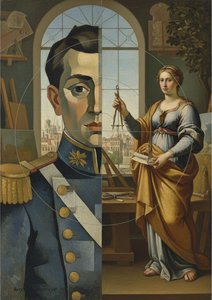
Etude de têtes (Titre d'usage)

Hand Made Oil Reproduction

Hand-painted oil on canvas in your size and frame, made to order by our artists. ( Switch to Print Switch to Digital Image)

Collectible Description

Explore "Etude de têtes" by Thomas Couture – a captivating portrait reflecting Romanticism's influence and the artist’s innovative approach to painting. Discover its historical context and artistic significance.

Artist Biography

Thomas Couture (1815-1879) was a pivotal French Romantic & Realist painter renowned for historical scenes like 'Romans During the Decadence.' Influential teacher of Manet, Fantin-Latour & Puvis de Chavannes. Explore his art & legacy!

from ·

Chapter 1

How large should it be?

Slide to change the size; the picture on the left shows the frame at its real width. The proportions of the original are kept.

Standard
custom
CM
INCH

Pick from our preset sizes that match the artwork's original proportions.

width
height

Type the width and the height you need, to fit your frame or your wall. This is hand-painted, so for a size with a different shape the artist can paint a bit more around the picture, or cut a bit — you choose. We send you a digital mockup to approve before the painting starts. The picture shown on this page does not show the real result — only the mockup does.

Chapter 2

How should it arrive?

Choose the edges of the stretched canvas

Choose your frame

Corner sample of the WhiteWrap canvas edge finish, stretched on solid wood bars
White $1
Corner sample of the BlurSideWrap canvas edge finish, stretched on solid wood bars
Blurside $1
Corner sample of the ExtendedWrap canvas edge finish, stretched on solid wood bars
Extended $1
Corner sample of the P118B picture frame: moulded polystyrene, 5 cm wide and 3 cm thick
P118B $10
Corner sample of the P118H picture frame: moulded polystyrene, 5 cm wide and 3 cm thick
P118H $10
Corner sample of the P118W picture frame: moulded polystyrene, 5 cm wide and 3 cm thick
P118W $10
Corner sample of the P438Z picture frame: moulded polystyrene, 5.5 cm wide and 3.5 cm thick
P438Z $10
Corner sample of the P508JH picture frame: moulded polystyrene, 7 cm wide and 3.5 cm thick
P508JH $12
Corner sample of the P508YH picture frame: moulded polystyrene, 7 cm wide and 3.5 cm thick
P508YH $12
Corner sample of the P805H picture frame: moulded polystyrene, 5 cm wide and 3.5 cm thick
P805H $10
Corner sample of the P805Z picture frame: moulded polystyrene, 5 cm wide and 3.5 cm thick
P805Z $10
Corner sample of the P919BZ picture frame: moulded polystyrene, 7 cm wide and 3.5 cm thick
P919BZ $10
Corner sample of the P919G picture frame: moulded polystyrene, 7 cm wide and 3.5 cm thick
P919G $10
Corner sample of the P919XJ picture frame: moulded polystyrene, 7 cm wide and 3.5 cm thick
P919XJ $10
Corner sample of the P959ZH picture frame: moulded polystyrene, 5 cm wide and 3 cm thick
P959ZH $10
Corner sample of the P968JZ picture frame: moulded polystyrene, 6 cm wide and 4 cm thick
P968JZ $12
Corner sample of the W106C picture frame: solid wood, 5 cm wide and 3 cm thick
W106C $8
Corner sample of the W218G picture frame: solid wood, 5 cm wide and 3 cm thick
W218G $10
Corner sample of the W218JH picture frame: solid wood, 5 cm wide and 3 cm thick
W218JH $8
Corner sample of the W218Y picture frame: solid wood, 5 cm wide and 3 cm thick
W218Y $10
Corner sample of the W307PJ picture frame: solid wood, 6 cm wide and 3 cm thick
W307PJ $10
Corner sample of the W316G picture frame: solid wood, 6 cm wide and 3 cm thick
W316G $10
Corner sample of the W316PJ picture frame: solid wood, 6 cm wide and 3 cm thick
W316PJ $8
Corner sample of the W316Y picture frame: solid wood, 6 cm wide and 3 cm thick
W316Y $10
Corner sample of the W398PJ picture frame: solid wood, 5 cm wide and 3 cm thick
W398PJ $8
Corner sample of the W4111J picture frame: solid wood, 6.5 cm wide and 3.5 cm thick
W4111J $10
Corner sample of the W500HY picture frame: solid wood, 7 cm wide and 5 cm thick
W500HY $15
Corner sample of the W500JH picture frame: solid wood, 7 cm wide and 5 cm thick
W500JH $15
Corner sample of the W692G picture frame: solid wood, 8 cm wide and 4 cm thick
W692G $12
Corner sample of the W849H picture frame: solid wood, 5 cm wide and 3 cm thick
W849H $8
Corner sample of the W940BG picture frame: solid wood, 7.5 cm wide and 4.5 cm thick
W940BG $15
Corner sample of the W953PJ picture frame: solid wood, 6 cm wide and 3.5 cm thick
W953PJ $8
Corner sample of the H24-GOLD picture frame: carved wood with gesso, 10 cm wide and 6 cm thick
H24-GOLD $30
Corner sample of the H24-SILVER picture frame: carved wood with gesso, 10 cm wide and 6 cm thick
H24-SILVER $30
Corner sample of the H36-GOLD picture frame: carved wood with gesso, 15 cm wide and 6.5 cm thick
H36-GOLD $45
Corner sample of the H36-SILVER picture frame: carved wood with gesso, 15 cm wide and 6.5 cm thick
H36-SILVER $45
Frame preview
Framed

Moulding: . Overall size with the frame: .

Chapter 3

Who paints it, and should anything change?

Examples of what can be changed: Replace face with customer photo; Add pet (e.g., replace cat with dog); Include hidden message in background; Change background landscape or elements.
After order, OriginalUniqueArt.com team will email client for instructions and provide a mockup preview

Worldwide Delivery () in 3/4 weeks instead of standard 5 weeks. (29 October). No compromise on quality.

Chapter 4

The finishing touches

A nameplate, as in a museum?

Engraved Bronze Plaque Details

This elegant plaque features the artist's name and the title of the artwork, finely engraved for a timeless presentation.

It is made from bronze with a refined, elegant finish. The text is precisely laser-engraved for a sharp and permanent result. Measuring 9x2 cm, the plaque is compact yet easy to read. It's built to be durable and scratch-resistant, offering a professional, museum-quality look. Mounting is simple thanks to the included adhesive backing.

Transparent Acrylic Plaque Details

The plaque includes essential engraved details such as the artist's name, the title of the artwork, the date it was created, the type of media used-like oil on canvas or watercolor-a brief description of the piece, and a QR code that links to the complete artwork information.

It is crafted from clear acrylic, offering a sleek, modern appearance. The text is UV-engraved in black to ensure strong visual contrast. With a size of 10x15 cm, it ensures optimal readability. It comes equipped with two metal hooks for secure wall mounting. The plaque is designed to be weather-resistant, making it suitable for various environments, and it includes interactive features that work seamlessly with smartphone scanning.

Black Acrylic Plaque Details

This elegant plaque includes engraved information such as the artist's name, the title of the artwork, the date it was created, the type of media used (like oil on canvas or watercolor), a short description of the artwork, and a QR code for quick access to more information.

The plaque itself is made from refined black acrylic with a premium finish. The text is laser-engraved in white for high contrast and readability. Its size is 10x15 cm, designed to be easy to read. It comes with two metal hooks for professional mounting. The design is sleek and fits any interior style. It is also weather-resistant and durable, with built-in digital integration for mobile compatibility.

A protective varnish?

When do you need it?

Chapter 5

Your painting, as you ordered it

Etude de têtes (Titre d'usage)

Reproduction Medium

Reproduction Size

-

Elite Senior Artist

More detail, finesse, and extra production time

-

Reproduction Frame

-

-

For artworks or reproductions larger than 105 cm (approximately 41 inches) on any side, the frame will be shipped as a kit, disassembled. This method ensures safe delivery and prevents damage during transport.

Professional assembly required - this is not a DIY product.
The kit must be assembled and the canvas stretched by an experienced professional framer, using wood glue (not supplied), a canvas stretching plier and clamps to hold the bars square while the glue dries. Incorrect assembly or uneven canvas tension can permanently damage the artwork and is not covered by our warranty.

  • All solid wood bars are included, precisely cut to size.

  • Assembled with the screws provided, plus wood glue for the corner joints, which is not supplied and must be sourced by your framer.

  • Professional tools are required and not included: a canvas stretching plier (tensioner) and clamps to hold the bars square while the glue dries.

Important:
The corner joints require wood glue, the bars must be held with clamps until the glue is fully dry, and tightening the canvas on the assembled frame requires a canvas stretching plier. None of these are included in the kit. Please arrange an experienced professional framer before ordering this size.

Nameplate

-

-

Protective Varnish

Glossy Varnish (enhances colors, protects against light/moisture)

-

Customize My Artwork

Examples of what can be changed: Replace face with customer photo; Add pet (e.g., replace cat with dog); Include hidden message in background; Change background landscape or elements.

-

Urgent

Worldwide Delivery () in 3/4 weeks instead of standard 5 weeks. (29 October). No compromise on quality.

-

Express Shipping

Worldwide Delivery () in 5 weeks. (5 November).

Included

Total Price

$ 300

Total Price $ 300

Glass option is only available in size under 110 CM

Included with every order

  • Free Worldwide Express Shipping
  • High-Quality Linen Canvas
  • Full Shipping Insurance
  • Customs Tax Refund Guarantee
  • True Color Matching Guarantee
  • 100-Day Return Policy (Defects Only)
  • 100% Money-Back Guarantee
  • Bulk Discount Offer

A Portrait of Contemplation: Unveiling the Layers of “Etude de têtes”

Thomas Couture’s “Etude de têtes,” a captivating study in portraiture, transcends mere likeness to become a profound meditation on identity and the complexities of human interaction. Painted circa 1850-1855 during the twilight years of the French Empire, this work embodies the burgeoning Realism that was challenging the dominance of Romanticism within the Parisian art world. It’s not simply a depiction of two men; it's an exploration of gaze, gesture, and the subtle dance between subject and observer – a visual poem brimming with quiet intensity.

The painting immediately draws the eye to the pair seated before us. Dressed in meticulously rendered 17th-century costumes—a rich velvet doublet for one man, a more subdued brocade robe for the other—they are presented as figures emerging from a bygone era. Their attire isn’t merely decorative; it's a deliberate choice that anchors them within a specific historical context, hinting at courtly intrigue and perhaps even a shared secret. The details of their clothing – the lace collars, the elaborate hats, the carefully positioned swords – speak volumes about status, profession, and the conventions of their time.

The Brushstroke and the Atelier: Couture’s Innovative Technique

Couture was a revolutionary figure in 19th-century painting. He deliberately rejected the rigid rules of the École des Beaux-Arts, establishing his own independent atelier—a space dedicated to fostering artistic freedom and experimentation. This commitment is vividly reflected in “Etude de têtes.” Couture’s brushwork is remarkably fluid and expressive, eschewing the smooth, polished surfaces favored by academic painters. Notice the loose, gestural strokes that define the contours of their faces, particularly the subtle shifts in light and shadow that capture the nuances of their expressions. He employed a technique he called “pointillé,” using small, distinct brushstrokes to build up color and texture—a method borrowed from Japanese prints, reflecting his fascination with Eastern art.

The composition itself is carefully constructed. The figures are positioned in a triangular arrangement, creating a sense of balance and stability while simultaneously suggesting a dynamic tension. Their eyes meet across the canvas, establishing a direct connection between the viewer and the subjects—a deliberate invitation to contemplate their shared moment. Couture’s use of color is equally restrained yet effective. He favors muted earth tones – browns, ochres, and grays – which lend the painting an air of solemnity and timelessness.

Symbolism and the Weight of Conversation

Beyond its technical merits, “Etude de têtes” resonates with layers of symbolic meaning. The act of conversation itself is laden with significance. What are these men discussing? Are they sharing a secret, debating an important matter, or simply enjoying each other’s company? Couture deliberately leaves the narrative ambiguous, allowing the viewer to project their own interpretations onto the scene. The slight furrow in one man's brow and the subtle turn of his head suggest a moment of contemplation—a pause within the flow of dialogue.

The painting can also be interpreted as an exploration of masculinity and social roles. The two men represent different facets of male identity – perhaps representing intellect and action, or formality and intimacy. Their attire and posture subtly reinforce these distinctions, inviting us to consider the complexities of gender dynamics within 19th-century society.

A Legacy of Innovation: Couture’s Enduring Influence

Thomas Couture's “Etude de têtes” stands as a testament to his artistic vision and his willingness to challenge convention. His work paved the way for later Realist painters, such as Manet, and helped to usher in a new era of artistic expression. Today, this captivating portrait continues to fascinate viewers with its quiet intensity, masterful technique, and profound exploration of human nature. It’s a piece that rewards careful observation and invites us to lose ourselves in the subtle nuances of a timeless conversation.

Questions & Answers

Where can I buy a hand-painted reproduction of "Etude de têtes (Titre d'usage)" by Thomas Couture?

"Etude de têtes (Titre d'usage)" is available as a hand-painted oil reproduction on linen canvas. The order can be placed on its Hand-Painted Reproduction page, with a choice of sizes.

Where can I find artworks similar to "Etude de têtes (Titre d'usage)" by Thomas Couture?

Works similar to "Etude de têtes (Titre d'usage)" are listed on the artwork's Similars page.

How strong is the contrast in "Etude de têtes (Titre d'usage)" by Thomas Couture?

The light-dark contrast of "Etude de têtes (Titre d'usage)" is recorded as balanced. Contrast describes how strongly light and dark areas differ.

More about this painting

Preview AR preview Switch to Print Switch to Digital Image Send
Details Guide Add to favorites Download Similars X-Ray Diaporama Q&A Stats

In numbers

  • 29frames to choose from
  • standard sizes, in its own proportions
  • 5weeks to paint and deliver it
Thomas Couture

Thomas Couture

1815 - 1879, France

Quick facts about Thomas Couture

  • Full Name: Thomas Couture
  • Nationality: French
  • Date Of Birth: 1815
  • Date Of Death: 1879
  • Place Of Birth: Senlis, France
  • Notable Artworks:
    • Romans During the Decadence
    • The Duel After Masked Ball
    • A Lawyer Going to Court
  • Artistic Movement Or Style: Romanticism & Realism
  • Artists Who Influenced This Artist:
    • Antoine-Jean Gros
    • Paul Delaroche
  • Artists Or Movements Influenced By This Artist:
    • Édouard Manet
    • Henri Fantin-Latour
    • Pierre Puvis de Chavannes

Artist Biography

A Rebel in the Atelier: The Life and Legacy of Thomas Couture

Born in 1815 in Senlis, France, Thomas Couture emerged as a pivotal figure bridging Romanticism and Realism—a painter who dared to challenge academic convention while simultaneously mastering its techniques. His early life saw a relocation to Paris with his family, where he initially pursued studies at the École des Arts et Métiers before gravitating towards the prestigious École des Beaux-Arts. However, Couture’s path wasn't paved with immediate acceptance; he faced repeated rejection in the competition for the Prix de Rome, an honor that would have secured a coveted residency at the Académie de France in Rome. Rather than accepting defeat, these setbacks fueled his conviction that the established system itself was flawed, prompting him to forge his own artistic path and eventually establish an independent atelier—a haven for those seeking an alternative to traditional instruction.

The Decadence of Empires and a New Artistic Vision

Couture’s breakthrough arrived with *Romans During the Decadence* (1847), a monumental work that ignited both praise and controversy at the Paris Salon. This painting wasn't merely a historical depiction; it was a scathing social commentary, inspired by the satirical writings of Juvenal, portraying the moral decay and opulent excess within Roman society. The scene pulsates with a sense of unrestrained indulgence, figures draped in luxurious fabrics amidst classical ruins—a deliberate juxtaposition meant to mirror the perceived decadence of contemporary French society under the Second Republic. Couture’s masterful use of tonal contrasts, employing rich dark hues punctuated by striking highlights, further intensified the dramatic impact and symbolic weight of the composition. The painting's success cemented his reputation as a leading artist and established him as a formidable force within the art world. It was more than just technical skill; it was a bold statement about the state of civilization itself.

A Teacher of Titans: Shaping Future Generations

Beyond his own artistic achievements, Couture’s influence extended profoundly through his role as an educator. He opened his atelier to a diverse group of aspiring artists, rejecting the rigid constraints of the École des Beaux-Arts and fostering an environment of experimentation and critical thinking. Among his most celebrated pupils were names that would become synonymous with modern art: Édouard Manet, whose revolutionary approach to painting owed much to Couture’s emphasis on tonal values and expressive brushwork; Henri Fantin-Latour, renowned for his still lifes and portraits of fellow artists; Pierre Puvis de Chavannes, a pioneer of Symbolism; and John La Farge, an innovator in stained glass. Couture’s teaching methods were unconventional, encouraging students to develop their individual voices while grounding them in the fundamentals of draftsmanship and composition. He championed “quick painting,” anticipating techniques later embraced by the Impressionists, and stressed the importance of direct observation from life.

Later Years and Enduring Influence

In 1860, disillusioned with the Parisian art scene, Couture retreated to his hometown of Senlis, where he continued to teach and paint. He codified his artistic philosophy in *Méthode et entretiens d'atelier* (Method and Workshop Interviews), published in 1867—a treatise that offered a radical critique of academic dogma and advocated for a more intuitive and expressive approach to art-making. This work, later translated into English as *Conversations on Art Methods*, provided invaluable insights into his pedagogical principles and artistic beliefs. Though he faced criticism throughout his career for challenging established norms, Couture’s impact on the development of modern art is undeniable. He fostered a generation of artists who dared to break free from convention, paving the way for the radical innovations that would define the late 19th and early 20th centuries. His legacy endures not only through his own compelling paintings but also through the enduring influence he exerted on some of the most important figures in art history.

Quick Facts

  • Influences: Couture
  • Title: Etude de têtes
  • Artist: Thomas Couture
  • Subject or theme: Portraiture
  • Location: Musée d'Orsay

Art Quiz

There is only one correct answer for each question.

Question 1:
What is the primary subject matter depicted in ‘Etude de têtes’?
Question 2:
Which artistic movement is Thomas Couture most associated with?
Question 3:
What historical period are the two men in ‘Etude de têtes’ depicted as representing?
Question 4:
What is a notable characteristic of Thomas Couture's artistic approach, as highlighted in the provided text?
Question 5:
Based on the image description, what is a prominent feature of the painting’s presentation?