Text size

() ·

A painting made for you, by hand

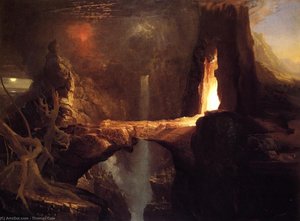
The Architect's Dream (detail)

Hand Made Oil Reproduction

Hand-painted oil on canvas in your size and frame, made to order by our artists. ( Switch to Print Switch to Digital Image)

Collectible Description

Thomas Cole's "The Architect’s Dream" (1840) is a monumental oil painting blending classical & Gothic architecture, reflecting Romantic ideals and American artistic innovation.

Artist Biography

Discover Thomas Cole (1801-1848), founder of the Hudson River School! Explore his romantic landscapes, allegorical works like 'The Course of Empire,' and lasting influence on American art.

from ·

Chapter 1

How large should it be?

Slide to change the size; the picture on the left shows the frame at its real width. The proportions of the original are kept.

Standard
custom
CM
INCH

Pick from our preset sizes that match the artwork's original proportions.

width
height

Type the width and the height you need, to fit your frame or your wall. This is hand-painted, so for a size with a different shape the artist can paint a bit more around the picture, or cut a bit — you choose. We send you a digital mockup to approve before the painting starts. The picture shown on this page does not show the real result — only the mockup does.

Chapter 2

How should it arrive?

Choose the edges of the stretched canvas

Choose your frame

Corner sample of the WhiteWrap canvas edge finish, stretched on solid wood bars
White $1
Corner sample of the BlurSideWrap canvas edge finish, stretched on solid wood bars
Blurside $1
Corner sample of the ExtendedWrap canvas edge finish, stretched on solid wood bars
Extended $1
Corner sample of the P118B picture frame: moulded polystyrene, 5 cm wide and 3 cm thick
P118B $10
Corner sample of the P118H picture frame: moulded polystyrene, 5 cm wide and 3 cm thick
P118H $10
Corner sample of the P118W picture frame: moulded polystyrene, 5 cm wide and 3 cm thick
P118W $10
Corner sample of the P438Z picture frame: moulded polystyrene, 5.5 cm wide and 3.5 cm thick
P438Z $10
Corner sample of the P508JH picture frame: moulded polystyrene, 7 cm wide and 3.5 cm thick
P508JH $12
Corner sample of the P508YH picture frame: moulded polystyrene, 7 cm wide and 3.5 cm thick
P508YH $12
Corner sample of the P805H picture frame: moulded polystyrene, 5 cm wide and 3.5 cm thick
P805H $10
Corner sample of the P805Z picture frame: moulded polystyrene, 5 cm wide and 3.5 cm thick
P805Z $10
Corner sample of the P919BZ picture frame: moulded polystyrene, 7 cm wide and 3.5 cm thick
P919BZ $10
Corner sample of the P919G picture frame: moulded polystyrene, 7 cm wide and 3.5 cm thick
P919G $10
Corner sample of the P919XJ picture frame: moulded polystyrene, 7 cm wide and 3.5 cm thick
P919XJ $10
Corner sample of the P959ZH picture frame: moulded polystyrene, 5 cm wide and 3 cm thick
P959ZH $10
Corner sample of the P968JZ picture frame: moulded polystyrene, 6 cm wide and 4 cm thick
P968JZ $12
Corner sample of the W106C picture frame: solid wood, 5 cm wide and 3 cm thick
W106C $8
Corner sample of the W218G picture frame: solid wood, 5 cm wide and 3 cm thick
W218G $10
Corner sample of the W218JH picture frame: solid wood, 5 cm wide and 3 cm thick
W218JH $8
Corner sample of the W218Y picture frame: solid wood, 5 cm wide and 3 cm thick
W218Y $10
Corner sample of the W307PJ picture frame: solid wood, 6 cm wide and 3 cm thick
W307PJ $10
Corner sample of the W316G picture frame: solid wood, 6 cm wide and 3 cm thick
W316G $10
Corner sample of the W316PJ picture frame: solid wood, 6 cm wide and 3 cm thick
W316PJ $8
Corner sample of the W316Y picture frame: solid wood, 6 cm wide and 3 cm thick
W316Y $10
Corner sample of the W398PJ picture frame: solid wood, 5 cm wide and 3 cm thick
W398PJ $8
Corner sample of the W4111J picture frame: solid wood, 6.5 cm wide and 3.5 cm thick
W4111J $10
Corner sample of the W500HY picture frame: solid wood, 7 cm wide and 5 cm thick
W500HY $15
Corner sample of the W500JH picture frame: solid wood, 7 cm wide and 5 cm thick
W500JH $15
Corner sample of the W692G picture frame: solid wood, 8 cm wide and 4 cm thick
W692G $12
Corner sample of the W849H picture frame: solid wood, 5 cm wide and 3 cm thick
W849H $8
Corner sample of the W940BG picture frame: solid wood, 7.5 cm wide and 4.5 cm thick
W940BG $15
Corner sample of the W953PJ picture frame: solid wood, 6 cm wide and 3.5 cm thick
W953PJ $8
Corner sample of the H24-GOLD picture frame: carved wood with gesso, 10 cm wide and 6 cm thick
H24-GOLD $30
Corner sample of the H24-SILVER picture frame: carved wood with gesso, 10 cm wide and 6 cm thick
H24-SILVER $30
Corner sample of the H36-GOLD picture frame: carved wood with gesso, 15 cm wide and 6.5 cm thick
H36-GOLD $45
Corner sample of the H36-SILVER picture frame: carved wood with gesso, 15 cm wide and 6.5 cm thick
H36-SILVER $45
Frame preview
Framed

Moulding: . Overall size with the frame: .

Chapter 3

Who paints it, and should anything change?

Examples of what can be changed: Replace face with customer photo; Add pet (e.g., replace cat with dog); Include hidden message in background; Change background landscape or elements.
After order, OriginalUniqueArt.com team will email client for instructions and provide a mockup preview

Worldwide Delivery () in 3/4 weeks instead of standard 5 weeks. (5 November). No compromise on quality.

Chapter 4

The finishing touches

A nameplate, as in a museum?

Engraved Bronze Plaque Details

This elegant plaque features the artist's name and the title of the artwork, finely engraved for a timeless presentation.

It is made from bronze with a refined, elegant finish. The text is precisely laser-engraved for a sharp and permanent result. Measuring 9x2 cm, the plaque is compact yet easy to read. It's built to be durable and scratch-resistant, offering a professional, museum-quality look. Mounting is simple thanks to the included adhesive backing.

Transparent Acrylic Plaque Details

The plaque includes essential engraved details such as the artist's name, the title of the artwork, the date it was created, the type of media used-like oil on canvas or watercolor-a brief description of the piece, and a QR code that links to the complete artwork information.

It is crafted from clear acrylic, offering a sleek, modern appearance. The text is UV-engraved in black to ensure strong visual contrast. With a size of 10x15 cm, it ensures optimal readability. It comes equipped with two metal hooks for secure wall mounting. The plaque is designed to be weather-resistant, making it suitable for various environments, and it includes interactive features that work seamlessly with smartphone scanning.

Black Acrylic Plaque Details

This elegant plaque includes engraved information such as the artist's name, the title of the artwork, the date it was created, the type of media used (like oil on canvas or watercolor), a short description of the artwork, and a QR code for quick access to more information.

The plaque itself is made from refined black acrylic with a premium finish. The text is laser-engraved in white for high contrast and readability. Its size is 10x15 cm, designed to be easy to read. It comes with two metal hooks for professional mounting. The design is sleek and fits any interior style. It is also weather-resistant and durable, with built-in digital integration for mobile compatibility.

A protective varnish?

When do you need it?

Chapter 5

Your painting, as you ordered it

The Architect's Dream (detail)

Reproduction Medium

Reproduction Size

-

Elite Senior Artist

More detail, finesse, and extra production time

-

Reproduction Frame

-

-

For artworks or reproductions larger than 105 cm (approximately 41 inches) on any side, the frame will be shipped as a kit, disassembled. This method ensures safe delivery and prevents damage during transport.

Professional assembly required - this is not a DIY product.
The kit must be assembled and the canvas stretched by an experienced professional framer, using wood glue (not supplied), a canvas stretching plier and clamps to hold the bars square while the glue dries. Incorrect assembly or uneven canvas tension can permanently damage the artwork and is not covered by our warranty.

  • All solid wood bars are included, precisely cut to size.

  • Assembled with the screws provided, plus wood glue for the corner joints, which is not supplied and must be sourced by your framer.

  • Professional tools are required and not included: a canvas stretching plier (tensioner) and clamps to hold the bars square while the glue dries.

Important:
The corner joints require wood glue, the bars must be held with clamps until the glue is fully dry, and tightening the canvas on the assembled frame requires a canvas stretching plier. None of these are included in the kit. Please arrange an experienced professional framer before ordering this size.

Nameplate

-

-

Protective Varnish

Glossy Varnish (enhances colors, protects against light/moisture)

-

Customize My Artwork

Examples of what can be changed: Replace face with customer photo; Add pet (e.g., replace cat with dog); Include hidden message in background; Change background landscape or elements.

-

Urgent

Worldwide Delivery () in 3/4 weeks instead of standard 5 weeks. (5 November). No compromise on quality.

-

Express Shipping

Worldwide Delivery () in 5 weeks. (12 November).

Included

Total Price

$ 300

Total Price $ 300

Glass option is only available in size under 110 CM

Included with every order

  • Free Worldwide Express Shipping
  • High-Quality Linen Canvas
  • Full Shipping Insurance
  • Customs Tax Refund Guarantee
  • True Color Matching Guarantee
  • 100-Day Return Policy (Defects Only)
  • 100% Money-Back Guarantee
  • Bulk Discount Offer

A Vision of Architectural Grandeur

Thomas Cole's “The Architect’s Dream,” painted in 1840, isn’t merely a landscape; it’s an immersive architectural fantasy—a testament to the artist’s profound understanding of Western artistic history and his own creative vision. This monumental oil on canvas, now residing within the Toledo Museum of Art, immediately captivates with its sheer scale and meticulously rendered details, transporting the viewer into a realm where classical temples, Roman arches, and Gothic cathedrals coexist in an improbable yet strangely harmonious tableau.

At first glance, the painting appears to depict a serene vista—a tranquil harbor dotted with boats. However, closer inspection reveals a complex layering of architectural styles spanning millennia. Egyptian pyramids rise majestically alongside Doric Greek temples, Roman aqueducts stretch across the landscape, and Gothic arches frame the scene. This deliberate juxtaposition wasn’t simply an artistic flourish; it reflected the 19th-century fascination with classical antiquity and the revival of interest in ancient building techniques that was sweeping through Europe and America.

The Romantic Spirit and Cole's Artistic Journey

“The Architect’s Dream” is a quintessential example of the Hudson River School, an artistic movement characterized by its romanticized depictions of American landscapes. Unlike earlier European landscape painting, which often focused on historical or mythological subjects, the Hudson River School sought to capture the sublime beauty and spiritual essence of the American wilderness. Cole, deeply influenced by his travels in Europe—particularly Italy—brought this sensibility back to America, infusing it with a uniquely American perspective.

Cole’s artistic journey was marked by a deliberate rejection of academic conventions. He eschewed the polished techniques favored by established artists and instead developed a distinctive style characterized by loose brushwork, vibrant colors, and an emphasis on capturing atmospheric effects. This approach, combined with his deep knowledge of architecture and history, allowed him to create a painting that is both visually stunning and intellectually stimulating.

Symbolism and the Architect’s Dream

The central figure in “The Architect’s Dream”—a young man reclining on a stack of books—represents the architect himself. He embodies not just the profession but also the pursuit of knowledge, imagination, and artistic creation. His pose suggests contemplation and a deep connection to the past, while his hand holding a blueprint symbolizes the act of design and construction. The setting itself is laden with symbolism; the ruins evoke the decline of empires, while the vibrant colors and dynamic composition suggest the potential for renewal and rebirth.

The painting’s title—“The Architect’s Dream”—hints at its underlying theme: the power of imagination to transcend time and create enduring works of art. Cole wasn't simply depicting a collection of buildings; he was exploring the very nature of architectural history, questioning how past styles could inform and inspire future designs. The inclusion of Gothic elements, often associated with spiritual aspiration, subtly contrasts with the more secular grandeur of classical architecture, suggesting a broader vision of human creativity.

A Legacy of Vision

“The Architect’s Dream” remains one of Thomas Cole's most ambitious and captivating works. It is a testament to his artistic skill, intellectual curiosity, and profound understanding of the relationship between art, architecture, and history. More than just a beautiful painting, it offers a glimpse into the mind of an artist who dared to dream beyond the confines of his time—a dream that continues to resonate with viewers today.

Questions & Answers

Which artist is "The Architect's Dream (detail)" attributed to?

"The Architect's Dream (detail)" is attributed to Thomas Cole.

How well known is "The Architect's Dream (detail)" by Thomas Cole?

The popularity level recorded for "The Architect's Dream (detail)" by Thomas Cole is iconic.

What is the creation date of "The Architect's Dream (detail)" by Thomas Cole?

"The Architect's Dream (detail)" by Thomas Cole was created in 1840.

More about this painting

Preview AR preview Switch to Print Switch to Digital Image Send
Details Guide Add to favorites Download Similars X-Ray Diaporama Q&A Stats

In numbers

  • 1840the year it was painted
  • 29frames to choose from
  • standard sizes, in its own proportions
  • 5weeks to paint and deliver it
Thomas Cole

Thomas Cole

1801 - 1848, United Kingdom

Quick facts about Thomas Cole

  • Full Name: Thomas Cole
  • Nationality: American
  • Date Of Birth: 1801
  • Date Of Death: 1848
  • Place Of Birth: Bolton, United Kingdom
  • Notable Artworks:
    • The Course of Empire
    • The Oxbow
    • A View from Mount Etna
    • The Voyage of Life
  • Artistic Movement Or Style: Hudson River School
  • Artists Or Movements Influenced By This Artist:
    • Asher B. Durand
    • Frederic Edwin Church

Artist Biography

A Pioneer of American Landscape Painting

Thomas Cole, a name synonymous with the birth of distinctly American art, stands as a pivotal figure in 19th-century painting. Born in Bolton le Moors, Lancashire, England, in 1801, his early life offered little indication of the profound impact he would have on the artistic landscape. Emigrating to the United States with his family in 1818 and settling in Ohio, Cole’s journey was one of self-discovery and artistic awakening. Initially working as an itinerant portrait painter—a common trade at the time—he soon found himself drawn to the untamed beauty of the American wilderness. This shift wasn't merely a change in subject matter; it represented a fundamental divergence from European artistic traditions, which often focused on historical or mythological narratives. Cole’s landscapes weren’t simply depictions of scenery; they were imbued with a spiritual and allegorical depth that resonated deeply with a nation forging its own identity. His move to Catskill, New York, in 1825 proved transformative, providing him with both inspiration and a permanent base from which to explore the surrounding Hudson River Valley—a region that would become inextricably linked with his artistic legacy.

The Hudson River School and Romantic Ideals

Cole is rightfully regarded as the founder of the Hudson River School, an art movement characterized by its romantic portrayal of the American landscape. However, to label him simply a “landscape painter” feels inadequate. His work transcended mere representation; it was deeply philosophical, often exploring themes of humanity’s relationship with nature, the passage of time, and the rise and fall of civilizations. Influenced by European Romanticism—particularly the works of Claude Lorrain and J.M.W. Turner—Cole adapted these sensibilities to an American context. Where European Romantics often depicted dramatic, sublime landscapes as a reflection of inner turmoil, Cole’s paintings frequently conveyed a sense of optimism and divine presence within the natural world. He saw in the vastness of the American wilderness a symbol of national potential and spiritual renewal. The Oxbow (1836), perhaps his most iconic work, exemplifies this perfectly—a sweeping vista that contrasts the wild, untamed river valley with the cultivated farmlands, representing both the promise and the challenges of westward expansion.

Allegory and The Course of Empire

While celebrated for his realistic depictions of nature, Cole’s artistic ambition extended beyond pure landscape painting. He frequently employed allegory to convey complex moral and philosophical ideas. This is most powerfully demonstrated in his monumental series The Course of Empire, created between 1833 and 1836. Comprising five canvases—"Savage State," "Pastoral State," "Arcadian State," "Consummation," and "Destruction"—the series traces the cyclical history of a civilization, from its pristine origins to its inevitable decline. The paintings are not merely historical narratives; they serve as cautionary tales about the dangers of unchecked ambition and the fragility of human achievement. The Course of Empire resonated deeply with contemporary audiences, reflecting anxieties about the rapid industrialization and westward expansion that were transforming the American landscape. It cemented Cole’s reputation as a visionary artist capable of addressing profound societal concerns through his art.

Legacy and Enduring Influence

Thomas Cole's untimely death in 1848 at the age of 47 marked a significant loss for the American art world. However, his influence continued to reverberate through generations of artists. He directly mentored Frederic Edwin Church, who would become one of the leading figures of the second generation of Hudson River School painters. His emphasis on observation from nature, combined with a deeply personal and symbolic approach to landscape painting, laid the foundation for a distinctly American artistic tradition.
  • Cole’s work continues to be exhibited in major museums across the United States, including the New-York Historical Society, the National Gallery of Art in Washington D.C., and the Smithsonian American Art Museum.
  • His paintings are not merely historical artifacts; they remain powerfully evocative and relevant today, prompting viewers to contemplate their own relationship with nature and the enduring questions about humanity’s place in the world.
  • The Thomas Cole National Historic Site in Catskill, New York, preserves his home and studio, offering visitors a glimpse into the life and work of this remarkable artist.
Cole's legacy extends beyond painting. He was also a prolific writer and thinker, articulating a compelling vision for American art that emphasized originality, spirituality, and a deep connection to the natural world. His writings, along with his paintings, continue to inspire artists, scholars, and nature enthusiasts alike, ensuring that his contribution to American culture will endure for generations to come.

Quick Facts

  • Subject or theme: Architecture history
  • Artistic style: Romanticism, Allegory
  • Year: 1840
  • Title: The Architect’s Dream
  • Influences:
    • Greek
    • Roman
    • Egyptian
  • Location: Toledo Museum of Art

Art Quiz

There is only one correct answer for each question.

Question 1:
What architectural style is prominently featured in Thomas Cole’s ‘The Architect’s Dream’?
Question 2:
The figure reclining on the books in ‘The Architect’s Dream’ likely represents:
Question 3:
What was a key reason why Ithiel Town initially rejected ‘The Architect’s Dream’?
Question 4:
‘The Architect’s Dream’ is considered significant within the context of the Hudson River School because it:
Question 5:
The trompe l'oeil archway in ‘The Architect’s Dream’ creates the illusion of: