Rococo · 1727
The Approach (Peter Angellis, 1727)
Peter Angellis (1685–1734) made The Approach. It dates from 1727. It belongs to the Rococo movement. It is made in oil. It is kept at Gemäldegalerie in Berlin, Germany. It measures 35 × 43 cm.
- 1727
- Oil
- 35 × 43 cm
- Gemäldegalerie, Berlin

 Preview

 Hand Made Oil Painting
 Send
 Share
 Fact sheet


 Download
 Similars
 X-Ray
 Diaporama
 Q&A

 Stats
The Approach, in brief
- Title
- The Approach
- Artist
- Peter Angellis (1685–1734)
- Artist born in
- Dunkirk, France
- Date
- 1727
- Medium
- Oil
- Dimensions
- 35 × 43 cm
- Where to see it
- Gemäldegalerie, Berlin, Germany
- Movement
- Rococo
- Period
- Early Modern
- Subject
- people, figures, cottage, trees, woodland, grass
What does The Approach depict?
A Quietude of Rural Life
In this 1727 oil painting, we find ourselves drawn into a tranquil, pastoral scene that captures the very essence of eighteenth-century rural existence. The composition centers on a group of figures in the foreground, their presence grounding the work in a sense of lived experience. Behind them, a large, thatched-roof cottage sits nestled against a backdrop of lush woodland, creating a layered perspective that leads the eye from the immediate human interaction toward the receding trees. The atmosphere is one of profound stillness, a moment caught in the gentle rhythms of nature and community.
The color palette is composed of earthy tones—shades of brown, ochre, muted greens, and cream—which lend the scene a warm, nostalgic quality. Light appears to filter from the upper left, casting soft shadows and catching the white garments of the central figures. This careful handling of light and shadow gives the figures a tangible presence, highlighting the folds in their clothing and the subtle expressions on their faces. It is a scene of simplicity, where the subject matter focuses on the unadorned movements of everyday peasant life.
Technical Nuance and Composition
The artist employs a painterly technique, where visible brushstrokes add a sense of depth to the foliage and the textures of the fabric. The organic lines defining the landscape and the varied shapes of the cottage and trees create a naturalistic harmony. To understand the structural elements of this work, consider the following details:
- The triangular silhouette of the cottage roof provides a geometric anchor to the organic landscape.
- The layering of the foreground, mid-ground, and background establishes a clear sense of spatial depth.
- The use of light to highlight specific textures, such as the fabric of the garments and the leaves of the trees.
The Artist's Hand
Peter Angellis, who was active across Flanders, Germany, Italy, England, and France, brings a specific sensibility to this genre scene. His training in Antwerp and his later studies in Düsseldorf informed a style that favored the observation of the natural world over grandiosity. This work reflects his ability to organize social interactions within a landscape, a skill he refined during his many years in England and his subsequent time in Italy and France. There is a certain directness here, a preference for the quiet details of a rustic setting that avoids the need for ostentation. The painting remains rooted in the observation of the simple, unadorned movements of people within their environment.
Which museum holds The Approach?
Gemäldegalerie
Berlin, Germany
A Sanctuary of European Vision The Gemäldegalerie is an art museum located in Berlin, Germany. Situated within the Kulturforum museum district west of Potsdamer Platz, the institution maintains a collection of European paintings spanning the 13th to the 18th centuries. The museum first opened in 1830, and the current building was completed in 1998.

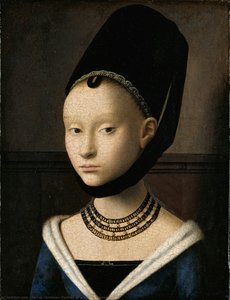

High-resolution images of The Approach

Peter Angellis, The Approach (1727), Gemäldegalerie. Public domain.
Questions on The Approach, answered
Where is "The Approach" by Peter Angellis on display today?
The original "The Approach" by Peter Angellis is held at the Gemäldegalerie, Berlin, Germany. A reproduction allows the work to be displayed at home.
When was "The Approach" made?
"The Approach" by Peter Angellis was created in 1727.
What technique was used for "The Approach" by Peter Angellis?
"The Approach" is executed in oil.
What are the dimensions of the original "The Approach" by Peter Angellis?
The original "The Approach" by Peter Angellis measures 35.0 x 43.0cm.
What is "The Approach" about?
"The Approach" by Peter Angellis depicts: people, figures, cottage, trees, woodland, grass, brown, green.
Is "The Approach" free of copyright?
The copyright answer for "The Approach" by Peter Angellis: the work is in the public domain - its copyright has expired. This determines whether reproductions of the image may be freely made.
Who created "The Approach"?
The artist behind "The Approach" is Peter Angellis. The work is catalogued under Peter Angellis's name.
What style does "The Approach" belong to?
"The Approach" is a work of Rococo. The movement indicates the artistic tradition the work is part of.
What stage of Peter Angellis's development does "The Approach" represent?
"The Approach" belongs to the Mature Period of Peter Angellis's career. This classification relates the work to the artist's development.
About the artist, Peter Angellis

1685–1734, France
Peter Angellis
Early Life and Artistic Training Peter Angellis began his life in Dunkirk in 1685. He spent his earliest years in this native town, where he first commenced his studies in art. These early lessons provided the foundation for a career that would eventually take him across many borders, but his beginnings were rooted in the local traditions of his birthplace. Seeking to refine his hand, he traveled to Antwerp.
Also by Peter Angellis
 Queen Anne and the Knights of the Garter1725
 A Sculptor's Studio1716
 Fairground1717
 Conversation Piece1715

Essays around The Approach
 25 Masterpieces by Jean-François Millet: The Soul of Rural RealismImmerse yourself in the soul of French Realism with our curated guide to Jean-François Millet's top 25 masterpieces. Explore the profound b…
 The Golden Harvest: Monet, Gauguin, and the Art of the HaystackExplore the evolution of the haystack motif from Monet to Gauguin. Discover how masters captured light and texture in this deep study.
 Rococo vs. Neoclassicism: Understanding the Shift from Pleasure to VirtueMaster the visual shift from Rococo pleasure to Neoclassical virtue. Learn to distinguish these 18th-century styles like an expert today.