Preview
 Send
Send Share
Share
 Details
 Guide
Guide

 Download
 Similars
 X-Ray
X-Ray Diaporama
 Stats
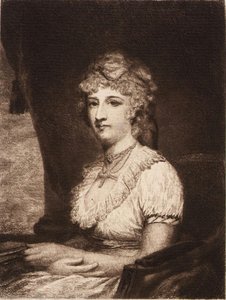
StatsMrs. Philip Nicklin


 Read More
Giclée / Art Print
Museum-quality giclée or canvas print with fast production and flexible finish options. ( Buy Hand Made Painting Switch to Digital Image)




P118B $10

P118H $10

P118W $10

P438Z $10

P508JH $12

P508YH $12

P805H $10

P805Z $10

P919BZ $10

P919G $10

P919XJ $10

P959ZH $10

P968JZ $12

W106C $8

W218G $10

W218JH $8

W218Y $10

W307PJ $10

W316G $10

W316PJ $8

W316Y $10

W398PJ $8

W4111J $10

W500HY $15

W500JH $15

W692G $12

W849H $8

W940BG $15

W953PJ $8




Pick from our preset sizes that match the artwork's original proportions.

You may enter your own dimensions to fit a specific frame or space. If your selected size does not match the original image's proportions, we will either crop the artwork or extend the image with a mirrored or solid-fill edge. A digital mockup will be sent for your approval before production begins.
Please note that the on-screen preview does not reflect the actual cropping or extension. Only the mockup will accurately show the final composition.
While custom sizes are available, we recommend selecting a dimension from the predefined list to preserve the original proportions.
Worldwide Delivery () in 2 weeks instead of standard 4/5 weeks. (5 October)

Free Worldwide Express Shipping

High-Quality Linen Canvas

Full Shipping Insurance

Customs Tax Refund Guarantee

True Color Matching Guarantee

100-Day Return Policy (Defects Only)

100% Money-Back Guarantee

Bulk Discount Offer
 Glass option is only available in size under 110 CM

Mrs. Philip Nicklin
Giclée / Art Print
Reproduction Size
-


Total Price
$ 81
A Masterful Echo of Stuart’s Genius
Stephen James Ferris's etching, “Mrs. Philip Nicklin,” stands as a testament to the enduring influence of Gilbert Stuart—a figure whose portraiture style captivated the Victorian era and continues to inspire artists today. Executed sometime after 1880, this artwork captures Julianna Chew’s likeness with remarkable precision and sensitivity, embodying the aesthetic ideals prevalent during Queen Victoria's reign.
- Subject Matter: The portrait depicts Julianna Chew, a prominent American socialite known for her philanthropic endeavors.
- Style: Ferris adheres to Stuart’s signature style—characterized by idealized realism and meticulous attention to detail—resulting in an image that transcends mere likeness.
Technique & Material Considerations
Ferris skillfully employs etching techniques, utilizing acid resistance on a copper plate to transfer tonal variations onto paper. This process allows for nuanced shading and texture, mirroring Stuart’s masterful manipulation of light and shadow—a hallmark of his approach to portraiture. The resulting print showcases exceptional clarity and depth, reflecting the artist's dedication to capturing the essence of his subject.
- Medium: Etching on paper
- Process: Multi-plate etching – Ferris utilized multiple plates to achieve complex tonal gradations.
Historical Context & Stuart’s Legacy
Gilbert Stuart's portraits dominated the American art scene during the mid-19th century, establishing him as the foremost portraitist of his time. Stuart championed a humanist ideal—celebrating dignity and character rather than superficial beauty—a philosophy that profoundly influenced subsequent artists like Ferris. “Mrs. Nicklin” embodies this legacy, presenting Chew not merely as an individual but as a woman imbued with grace and intellect.
Provenance: The artwork originates from the National Gallery of Art’s collection, transferred in 1971. It represents a significant contribution to American art history.Emotional Resonance & Artistic Impact
"Mrs. Philip Nicklin" transcends its formal representation, conveying an atmosphere of quiet contemplation and understated elegance. Ferris's meticulous rendering captures Chew’s gaze—a subtle expression of inner reflection—inviting viewers to contemplate the complexities of human experience. Like Stuart before him, Ferris elevates portraiture beyond mere likeness, transforming it into a vehicle for exploring themes of identity and social standing.
Questions & Answers
Who is the artist behind "Mrs. Philip Nicklin"?
The artist behind "Mrs. Philip Nicklin" is Stephen James Ferris. The work is catalogued under Stephen James Ferris's name.
What emotional tone accompanies the Impressionist Landscape style of "Mrs. Philip Nicklin"?
"Mrs. Philip Nicklin" carries a calm emotional tone within the Impressionist Landscape movement.
Who sells hand-painted copies of "Mrs. Philip Nicklin" by Stephen James Ferris?
Hand-painted copies of "Mrs. Philip Nicklin" by Stephen James Ferris are sold on this website: a hand-painted oil reproduction on linen canvas, ordered from this page.
Which palette and lead color define "Mrs. Philip Nicklin"?
"Mrs. Philip Nicklin" is defined by an earthy palette led by phthalo green (#32251e).
Is "Mrs. Philip Nicklin" by Stephen James Ferris among the sought-after Impressionist Landscape artworks?
"Mrs. Philip Nicklin" is recorded as recognized among the Impressionist Landscape works in the catalog.
How can I get a print of "Mrs. Philip Nicklin" by Stephen James Ferris?
A print of "Mrs. Philip Nicklin" by Stephen James Ferris can be ordered directly on this page: a fine art print on cotton canvas or archival canvas paper.
What atmosphere does "Mrs. Philip Nicklin" have?
The overall mood of "Mrs. Philip Nicklin" by Stephen James Ferris is elegant. The mood describes the general atmosphere of the work.
Artist Biography
A Legacy of Precision and Portraiture
Stephen James Ferris stands as a distinguished figure in the landscape of American art, particularly within the vibrant artistic community of Philadelphia. An influential painter and etcher, his work is characterized by a profound dedication to portraiture and figure studies. His artistic journey was shaped by rigorous training, having studied at the Pennsylvania Academy and later refining his craft in Paris under the guidance of Jean Leon Gerome. This exposure to European traditions allowed him to bring a sophisticated level of technical mastery back to the United States, where he established a considerable reputation for his ability to capture both the physical likeness and the inner character of his subjects.
The essence of Ferris's work often lies in its delicate execution and its connection to the aesthetic ideals of his era. As an etcher, he possessed a remarkable ability to manipulate light and shadow, utilizing techniques such as multi-plate etching on copper to achieve complex tonal gradations. His etchings, such as the Portrait of Mrs. J. Coleman Drayton, demonstrate a masterful command of texture and atmosphere, echoing the subtle influences of Impressionism while maintaining a sense of Victorian elegance. Through his meticulous use of acid resistance and fine lines, he could render the soft glow of skin or the intricate details of floral arrangements with an almost poetic sensitivity.
Artistic Influences and Technical Mastery
The development of Ferris's style was deeply intertwined with the masters who preceded him. In his portraiture, one can observe a profound reverence for the legacy of Gilbert Stuart, particularly in his pursuit of idealized realism. Much like Stuart, Ferris sought to transcend mere superficial likeness, aiming instead to imbue his subjects with a sense of dignity and grace. This approach is evident in works like Mrs. Philip Nicklin, where the artist employs precise etching techniques to capture a subject that feels both present and timeless, embodying the refined aesthetic values prevalent during the reign of Queen Victoria.
Beyond his technical skill, Ferris's life was deeply embedded in the fabric of the American art world. His contributions extended beyond the studio; for many years, he shared his expertise as a teacher at the Philadelphia School of Design for Women. This role as an educator highlights his commitment to the continuity of artistic excellence and his broader interest in the cultivation of design and fine art. His work remains a significant contribution to American art history, preserved in esteemed institutions such as the Smithsonian American Art Museum and the National Gallery of Art, serving as a testament to his enduring impact on the portraiture tradition.

Stephen James Ferris
1835 - 1915 , United States of America
Quick Facts
- Artistic Movement Or Style: Portrait painter and etcher
- Artists Who Influenced This Artist: ['Jean-Léon Gérôme']
- Full Name: Stephen James Ferris
- Notable Artworks:
- Portrait of Mrs. J. Coleman Drayton
- Mrs. Philip Nicklin
- Place Of Birth: Plattsburgh, United States of America
- Date Of Birth: 1835
- Date Of Death: 1915
Related Articles

The Intricate World of Etching: A Historical Survey of Technique, Aesthetic Evolution, and Enduring Artistic Impact
Explore the rich history of etching, from its origins to modern practice. Discover techniques, key artists like Rembrandt, and insights for collectors. A comprehensive guide by OriginalUniqueArt.

Sir Alfred Munnings' Masterpieces: 25 Paintings That Define Equine Art | OriginalUniqueArt
Explore 25 iconic Sir Alfred Munnings paintings! Discover the beauty of British Impressionism, equine art & rural England. Find museum-quality reproductions and elevate your home decor with OriginalUniqueArt. Explore the full collection online.

Whistler's Masterpieces: Explore 25 Iconic Paintings & Aesthetic Art for Your Home
Journey through 25 iconic James Abbott McNeill Whistler paintings! Explore his masterpieces of Aestheticism, from 'Nocturne in Black and Gold' to captivating portraits. Find museum-quality art reproductions & elevate your home decor with OriginalUniqueArt.com. Discover the full collection online.

Etching: A Historical Survey of Technique, Aesthetic Qualities & Enduring Artistic Significance
Explore the rich history of etching, from its origins to Rembrandt's masterful innovations. Discover the technique, aesthetic qualities & enduring legacy of this captivating art form. Expert insights for collectors and enthusiasts.

Etching Masters: 10 Legendary Prints That Revolutionized Art | OriginalUniqueArt
Journey through 10 legendary etching masterpieces by Rembrandt, Dürer & Goya. Explore the history of printmaking and discover timeless art for your home. Find museum-quality reproductions at OriginalUniqueArt.com.