A Legacy of Precision and Portraiture
Stephen James Ferris stands as a distinguished figure in the landscape of American art, particularly within the vibrant artistic community of Philadelphia. An influential painter and etcher, his work is characterized by a profound dedication to portraiture and figure studies. His artistic journey was shaped by rigorous training, having studied at the Pennsylvania Academy and later refining his craft in Paris under the guidance of Jean Leon Gerome. This exposure to European traditions allowed him to bring a sophisticated level of technical mastery back to the United States, where he established a considerable reputation for his ability to capture both the physical likeness and the inner character of his subjects.
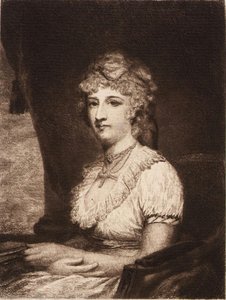
The essence of Ferris's work often lies in its delicate execution and its connection to the aesthetic ideals of his era. As an etcher, he possessed a remarkable ability to manipulate light and shadow, utilizing techniques such as multi-plate etching on copper to achieve complex tonal gradations. His etchings, such as the Portrait of Mrs. J. Coleman Drayton, demonstrate a masterful command of texture and atmosphere, echoing the subtle influences of Impressionism while maintaining a sense of Victorian elegance. Through his meticulous use of acid resistance and fine lines, he could render the soft glow of skin or the intricate details of floral arrangements with an almost poetic sensitivity.
Artistic Influences and Technical Mastery
The development of Ferris's style was deeply intertwined with the masters who preceded him. In his portraiture, one can observe a profound reverence for the legacy of Gilbert Stuart, particularly in his pursuit of idealized realism. Much like Stuart, Ferris sought to transcend mere superficial likeness, aiming instead to imbue his subjects with a sense of dignity and grace. This approach is evident in works like Mrs. Philip Nicklin, where the artist employs precise etching techniques to capture a subject that feels both present and timeless, embodying the refined aesthetic values prevalent during the reign of Queen Victoria.
Beyond his technical skill, Ferris's life was deeply embedded in the fabric of the American art world. His contributions extended beyond the studio; for many years, he shared his expertise as a teacher at the Philadelphia School of Design for Women. This role as an educator highlights his commitment to the continuity of artistic excellence and his broader interest in the cultivation of design and fine art. His work remains a significant contribution to American art history, preserved in esteemed institutions such as the Smithsonian American Art Museum and the National Gallery of Art, serving as a testament to his enduring impact on the portraiture tradition.
Questions & Answers
How did Stephen James Ferris's art evolve over time?
Stephen James Ferris's career unfolds period by period on the artist's Chronicle page: a horizontal timeline of the artworks, grouped into career-period chapters.
In which movements did Stephen James Ferris work?
The movements Stephen James Ferris worked in can be seen on the artist's All Movements page, which groups the artworks by movement.
Where is Stephen James Ferris from?
Stephen James Ferris was born in United States of America.
What are the birthplace and birth year of Stephen James Ferris?
Stephen James Ferris was born in Plattsburgh in 1835.
Can I browse Stephen James Ferris's works by medium?
Stephen James Ferris's works can be browsed by medium on the artist's All Medium page.
Can I study Stephen James Ferris's use of color across all works?
The Palette Genome of Stephen James Ferris is a page that presents the color profile of the artist's body of work.
What are the birth city and country of Stephen James Ferris?
Stephen James Ferris was born in Plattsburgh, in United States of America.