Switch to Print
 Read More







































 For artworks or reproductions larger than 105 cm (approximately 41 inches) on any side, the frame will be shipped as a kit, disassembled. This method ensures safe delivery and prevents damage during transport.


A Portrait of Grace and Power: Unveiling Jacqueline van Caestre by Anthony van Dyck
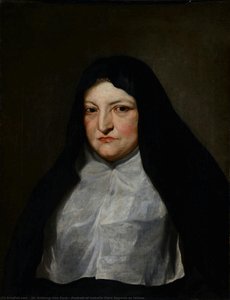
The portrait of Jacqueline van Caestre, painted in 1622 by the masterful Sir Anthony van Dyck, is more than a mere likeness; it’s a carefully constructed tableau of wealth, status, and burgeoning domesticity. Within its richly layered composition lies a captivating story of a noblewoman navigating the complexities of marriage and courtly life in 17th-century Antwerp. Van Dyck, already establishing his signature style—characterized by an almost sensual realism and a profound understanding of light’s transformative power—crafted this piece not just as a representation of a woman, but as a statement about her position within a world of privilege.
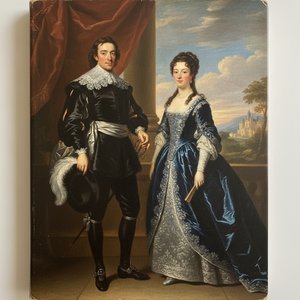
The painting immediately draws the eye to Jacqueline herself. Dressed in a sumptuous black gown, adorned with intricate gold embroidery and delicate lace trim, she embodies the opulence of her patrician family. The fabric’s sheen is rendered with exquisite detail—a testament to Van Dyck's meticulous technique—while the subtle variations in texture suggest the weight and richness of the material. Her hands, resting gracefully in her lap, are a study in poise and control, hinting at the composure expected of a woman of her station. Her gaze, direct and engaging, invites the viewer into her world, creating an intimate connection despite the formality of the portrait.
The Baroque Dance of Light and Shadow
Van Dyck’s genius lies not only in his ability to capture likeness but also in his masterful manipulation of light. The scene is bathed in a diffused, almost ethereal glow emanating from the left side of the canvas—a technique known as chiaroscuro—that dramatically sculpts Jacqueline's form and highlights the intricate details of her attire. This strategic use of light creates a sense of depth and volume, imbuing the portrait with a palpable three-dimensionality. The subtle gradations of tone – from the deep shadows that define the folds of her gown to the luminous highlights on her skin—are executed with breathtaking precision, showcasing Van Dyck’s unparalleled skill as a colorist.
The muted blue background serves as a sophisticated counterpoint to the richness of Jacqueline's dress. It doesn’t compete for attention but rather provides a subtle yet crucial backdrop, emphasizing the subject and contributing to the overall sense of harmony. The simplicity of the setting allows the viewer to focus entirely on the figure, reinforcing her importance within the composition.
A Window into a World of Aristocracy
The portrait’s historical context is equally compelling. Jacqueline van Caestre was married to Jean-Charles de Cordes, a member of one of Antwerp's wealthiest noble families. The painting likely commemorates their union, capturing her in the height of her beauty and social standing. Research reveals that she came from a family deeply rooted in municipal authority, adding another layer of significance to her portrait – a representation not just of personal wealth but also of familial influence.
Interestingly, this particular painting is believed to be a copy after an original lost prototype created around 1618 by either Rubens or a young Van Dyck. The existence of this earlier version—a full-length portrait—suggests that Jacqueline’s image held considerable artistic value and was deemed worthy of multiple iterations. The Brussels replica, alongside its pendant depicting her husband, provides invaluable insight into the evolution of Van Dyck's style and his relationship with his influential patron, Rubens.
Symbolism and Enduring Appeal
Beyond its technical brilliance, the portrait is rich in symbolism. Jacqueline’s composed expression speaks to her dignity and grace—qualities highly valued within aristocratic circles. The pearl necklace she wears, a symbol of purity and wealth, further reinforces her status. The overall effect is one of understated elegance and quiet power – a testament to Van Dyck's ability to capture not just the outward appearance but also the inner essence of his subject.
Today, this portrait continues to captivate viewers with its timeless beauty and masterful execution. It stands as a remarkable example of Baroque portraiture—a window into a world of privilege, power, and enduring artistic legacy. Reproductions offer an accessible way to appreciate the artistry of Van Dyck’s masterpiece, bringing its grace and sophistication into any space.
Questions & Answers
Is "Jacqueline van Caestre" free of copyright?
The copyright answer for "Jacqueline van Caestre" by Sir Anthony van Dyck: the work is in the public domain - its copyright has expired. This determines whether reproductions of the image may be freely made.
Which print setup is suggested for "Jacqueline van Caestre" by Sir Anthony van Dyck?
For "Jacqueline van Caestre", the recommended print setup is a medium size and a portrait orientation.
Where does "Jacqueline van Caestre" stand among Sir Anthony van Dyck's recurring subjects?
Sir Anthony van Dyck's recurring themes include rubens’ dynamic influence, courtly aristocratic portraiture, wealth, status symbolism, van dyck’s stylistic peak, english court patronage”; "Jacqueline van Caestre" focuses on jacqueline van caestre, jean-charles de cordes, anthony van dyck, baroque, portraiture, wealth, status.
More about this painting
 Preview
 Send
Send Share
Share
 Details
 Guide
Guide

 Download
 Similars
 X-Ray
X-Ray Diaporama
 Q&A
Q&A Stats
Stats