Switch to Print
 Read More







































 For artworks or reproductions larger than 105 cm (approximately 41 inches) on any side, the frame will be shipped as a kit, disassembled. This method ensures safe delivery and prevents damage during transport.


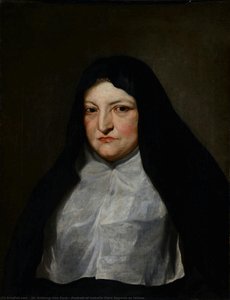
A Portrait of Scholarly Grace: Ottaviano Canevari by Sir Anthony van Dyck
Sir Anthony van Dyck’s 1627 portrait of Ottaviano Canevari is more than simply a likeness; it's a carefully constructed tableau of intellect, status, and the quiet dignity of Renaissance learning. This oval composition, rendered in the rich, dramatic style characteristic of the Baroque era, offers a captivating glimpse into the world of a 17th-century scholar, inviting us to contemplate his thoughts and observe the subtle details that reveal his character.
The painting immediately draws the eye with its deep, saturated palette dominated by dark browns, blacks, and a commanding red – a color traditionally associated with power, wealth, and scholarly pursuits. The background, rendered with meticulous brushwork and impasto, creates an atmosphere of profound depth, suggesting both the vastness of knowledge and the private world within Canevari’s study. The use of light is masterfully controlled; it's soft and diffused, highlighting the subject’s face and clothing while leaving the background partially obscured, fostering a sense of intimacy and drawing our focus entirely onto the figure before us.
Baroque Mastery: Technique and Composition
Van Dyck’s skill as a painter is evident in every brushstroke. The texture of the fabrics – the folds of Canevari's cloak, the velvet of his sleeves – are rendered with astonishing realism, achieved through layers of paint and careful attention to detail. The horizontal lines established by the open book and the man’s posture provide a sense of stability and balance, while vertical elements in the background subtly introduce dynamism. The composition itself is carefully considered; the shallow perspective creates an intimate feel, as if we are privy to a private moment of contemplation.
The technique employed is undeniably oil on canvas, with visible impasto – thick applications of paint that add considerable tactile richness and visual interest. This technique not only enhances the sense of texture but also contributes to the painting’s overall dramatic effect, particularly in the background where the red hues seem to vibrate with intensity.
Symbolism and Context: Knowledge and Status
Beyond its aesthetic qualities, the portrait is laden with symbolic meaning. The open book, supported by two bound volumes, immediately signifies knowledge, learning, and intellectual engagement – a central theme of the Renaissance and early Baroque periods. Canevari’s pose, leaning slightly forward and resting his hand on the book, suggests an active pursuit of wisdom, a man deeply immersed in scholarly pursuits. His attire—dark clothing indicative of wealth and status—underscores his position within society.
Considering the date (1627), this portrait reflects the cultural values of the time. The emphasis on learning and intellectualism was particularly strong during this period, fueled by the rediscovery of classical texts and a renewed interest in human potential. Van Dyck’s work served not only to document individuals but also to elevate their status and project an image of refined elegance – a hallmark of courtly portraiture.
A Timeless Masterpiece: Reproduction Possibilities
OriginalUniqueArt offers exquisite, hand-painted reproductions of this remarkable artwork. Each reproduction meticulously captures the nuances of Van Dyck’s technique, from the rich textures to the subtle play of light and shadow. Whether you're an art collector, interior designer seeking a statement piece, or simply an admirer of Baroque artistry, our high-quality reproductions provide a beautiful and authentic way to experience this timeless masterpiece in your own home.
Explore the full details and dimensions of Ottaviano Canevari by Sir Anthony van Dyck on our website: https://www.OriginalUniqueArt.com/en/art/sir-anthony-van-dyck-ottaviano-canevari-D3XTBE-en/
Questions & Answers
What stage of Sir Anthony van Dyck's development does "Ottaviano Canevari" represent?
Within Sir Anthony van Dyck's career, "Ottaviano Canevari" falls in the Mature Period. The phase helps compare it with the artist's other works.
Can I examine "Ottaviano Canevari" in more detail?
The X-Ray view of "Ottaviano Canevari" by Sir Anthony van Dyck is on the artwork's X-Ray page: an interactive examination of the image through eleven optical layers.
What feeling do the colors of "Ottaviano Canevari" by Sir Anthony van Dyck create?
In "Ottaviano Canevari", earthy colors accompany a reflective feeling.
More about this painting
 Preview
 Send
Send Share
Share
 Details
 Guide
Guide

 Download
 Similars
 X-Ray
X-Ray Diaporama
 Q&A
Q&A Stats
Stats