Preview
 Send
Send Share
Share
 Details
 Guide
Guide

 Download
 Similars
 X-Ray
X-Ray Diaporama
 Stats
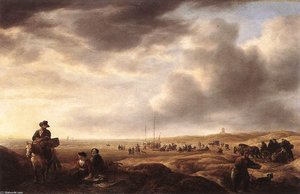
StatsSeashore
 Oil On Panel
- Dutch Golden Age
 1630
1630- Renaissance
 38.0 x 39.0 cm
 Hermitage Museum
 Read More
Giclée / Art Print
Museum-quality giclée or canvas print with fast production and flexible finish options. ( Buy Hand Made Painting Switch to Digital Image)




P118B $10

P118H $10

P118W $10

P438Z $10

P508JH $12

P508YH $12

P805H $10

P805Z $10

P919BZ $10

P919G $10

P919XJ $10

P959ZH $10

P968JZ $12

W106C $8

W218G $10

W218JH $8

W218Y $10

W307PJ $10

W316G $10

W316PJ $8

W316Y $10

W398PJ $8

W4111J $10

W500HY $15

W500JH $15

W692G $12

W849H $8

W940BG $15

W953PJ $8




Pick from our preset sizes that match the artwork's original proportions.

Type the width and the height you need, to fit your frame or your wall. A print can only be cut, never made bigger than the picture, so a size with a different shape loses a part of the image. We send you a digital mockup to approve before we print anything. The picture shown on this page does not show the real cut — only the mockup does.
Worldwide Delivery () in 2 weeks instead of standard 4/5 weeks. (22 October)

Free Worldwide Express Shipping

High-Quality Linen Canvas

Full Shipping Insurance

Customs Tax Refund Guarantee

True Color Matching Guarantee

100-Day Return Policy (Defects Only)

100% Money-Back Guarantee

Bulk Discount Offer
 Glass option is only available in size under 110 CM

Seashore
Giclée / Art Print
Reproduction Size
-


Total Price
$ 81
A Moment Frozen in Time: Deconstructing “Seashore”
Simon de Vlieger’s “Seashore,” painted around 1630, isn't merely a depiction of a coastal scene; it’s a meticulously crafted window into the Dutch Golden Age. This oil-on-panel masterpiece captures a fleeting moment along the North Sea coast, imbued with a palpable sense of both tranquility and latent energy. The painting immediately draws the eye to a small, bustling harbor – a microcosm of maritime activity—where several ships are anchored amidst a flurry of smaller boats engaged in fishing and unloading their catch. These vessels, rendered with astonishing detail in de Vlieger’s signature style, speak volumes about the economic importance of the sea to the burgeoning Dutch Republic.
However, the true heart of “Seashore” lies not solely in its harbor scene but in the foreground. Here, a group of figures—men and women alike—are immersed in everyday coastal life. Some are actively engaged in fishing, their movements suggesting both labor and leisure; others appear to be simply enjoying the sun-drenched beach, perhaps families seeking respite from domestic duties. The clothing worn by these individuals – ruffs, lace collars, and modest fabrics – provides a clear indication of their social standing, hinting at a prosperity that underpinned the Dutch economic miracle. De Vlieger’s skill isn't just in capturing likenesses; he subtly conveys character and atmosphere through posture, gesture, and expression.
The Realism of the Golden Age
De Vlieger’s approach to marine painting represented a significant departure from the monochrome style favored by earlier artists like Jan Porcellis and Willem van de Velde the Elder. He embraced a more nuanced use of color, employing subtle gradations of blues, grays, and browns to create a remarkably realistic portrayal of light and shadow on water and sky. The artist’s attention to detail is breathtaking – from the intricate rigging of the ships to the individual folds in the clothing—demonstrating a deep understanding of maritime construction and human anatomy. This commitment to accuracy was not merely aesthetic; it reflected a growing interest in scientific observation and empirical knowledge that characterized the Dutch Golden Age.
Furthermore, de Vlieger’s work moved beyond simple depictions of ships at sea. He skillfully integrated elements of landscape painting, creating a cohesive composition that seamlessly blends maritime activity with the natural environment. The cloudy sky, rendered with a sense of depth and movement, adds to the overall atmosphere of the scene, suggesting an impending storm or simply the changeable nature of coastal weather. This integration of subject matter—the sea, ships, and human life—was a hallmark of de Vlieger’s style and contributed significantly to his reputation as one of the most accomplished maritime painters of his time.
Symbolism and Emotional Resonance
Beyond its technical merits, “Seashore” resonates with viewers on an emotional level. The painting evokes a sense of nostalgia for a simpler time, a connection to the rhythms of nature, and a contemplation of human existence. The figures in the foreground are not merely subjects; they represent a microcosm of Dutch society—a community bound together by their shared relationship with the sea. The scene’s tranquility is subtly undercut by the presence of the ships, reminding us of the constant interplay between prosperity and uncertainty that defined the era.
The painting's composition, with its balanced arrangement of figures and elements, creates a sense of harmony and stability. Yet, there’s also an underlying tension—a suggestion of movement and change—that keeps the viewer engaged. “Seashore” is not just a beautiful image; it’s a powerful testament to de Vlieger's artistic skill and his ability to capture the essence of a bygone era. It remains a captivating work, inviting us to lose ourselves in its details and contemplate the enduring allure of the sea.
Questions & Answers
How was "Seashore" made, and how big is it?
The original "Seashore" by Simon De Vlieger is an oil on panel work measuring 38 x 39 cm. Technique and size describe the original object.
Which period of Simon De Vlieger's career does "Seashore" belong to?
Within Simon De Vlieger's career, "Seashore" falls in the Mature Period. The phase helps compare it with the artist's other works.
What emotion does the Dutch Golden Age work "Seashore" convey?
"Seashore" carries a reflective emotional tone within the Dutch Golden Age movement.
Artist Biography
Early Life and Apprenticeship in the Dutch Golden Age
Simon de Vlieger, born in Rotterdam around 1601, emerged during the zenith of the Dutch Golden Age—a period defined by unprecedented prosperity, maritime dominance, and artistic flourishing. While specific details regarding his early training remain elusive, it’s understood he began his artistic journey within the vibrant milieu of his hometown. The bustling port city provided an immediate and compelling subject matter for a budding painter: ships. Unlike many artists who initially diversified their skills through genre scenes or portraiture, de Vlieger seems to have focused almost exclusively on marine subjects from a relatively young age, suggesting an early fascination with the sea and its vessels.
His initial style likely drew inspiration from earlier maritime painters like Jan Porcellis, whose work often featured dramatic, turbulent seascapes. However, de Vlieger quickly began to distinguish himself by moving away from the more monochrome palettes favored by his predecessors. He sought a greater degree of realism and luminosity in his depictions, aiming for an accurate representation of light reflecting on water and the intricate details of ship construction.
A Career Navigating Delft and Amsterdam
De Vlieger’s career unfolded across several key Dutch cities, each contributing to his artistic development. In 1627, he married Anna Gerridts van Willige, a union that provided stability as he established himself professionally. He joined the Guild of Saint Luke in Delft in 1634, signifying his acceptance into the established art community. This period saw him honing his skills and building a reputation for capturing the essence of Dutch maritime life.
Around 1638, de Vlieger relocated to Amsterdam, the heart of the Dutch art market and a major center for shipbuilding and trade. Here, he encountered a wider audience and greater opportunities. Despite maintaining a residence in Rotterdam until 1650—when he finally settled in Weesp, a smaller town near Amsterdam—Amsterdam became his primary base of operations. It was during this time that de Vlieger truly solidified his position as one of the leading maritime painters of the era.
Innovation and Artistic Style
De Vlieger’s artistic innovation lay in his meticulous attention to detail and his masterful use of color. He moved beyond simply depicting ships at sea; he sought to capture the *feeling* of being on the water—the spray of the waves, the glint of sunlight on sails, the complex rigging of a vessel. His paintings are characterized by their highly detailed representations of ship construction, reflecting a deep understanding of naval architecture.
He wasn’t merely a recorder of ships; he was an interpreter of maritime life. He painted scenes of ships in harbor, at sea during calm weather, and caught in the throes of violent storms. His storm seascapes are particularly compelling, conveying both the power of nature and the vulnerability of human endeavor. Beyond painting, de Vlieger demonstrated a remarkable versatility, designing tapestries, etchings, and even stained glass windows for Amsterdam’s Nieuwe Kerk and the organ screen for Rotterdam's St. Laurenskerk.
Legacy and Influence on Maritime Painting
Simon de Vlieger’s influence on subsequent generations of maritime painters was profound. He trained several pupils, including Willem van de Velde the Younger, Adriaen van de Velde, and Jan van der Cappelle—all of whom went on to achieve significant recognition in their own right. Van der Cappelle, in particular, held de Vlieger in high esteem, owning nine original paintings and over 1300 prints by his master.
Even after de Vlieger’s death in 1653, his work continued to circulate and inspire. Numerous unfinished works remained in his studio, testament to the constant demand for his art. One such painting—depicting fishermen dragging nets ashore—was sold by Van der Cappelle to Joanna Six, wife of Simon van der Stel, and shipped to the Cape of Good Hope, where it was displayed at Groot Constantia, the Van der Stel family estate. This act underscores the enduring appeal of de Vlieger’s work and its connection to the broader Dutch colonial enterprise.
De Vlieger's legacy extends beyond his technical skill; he captured a crucial aspect of Dutch identity—its relationship with the sea. His paintings are not simply beautiful depictions of ships; they are windows into a world defined by trade, exploration, and the constant interplay between humanity and nature. He remains a pivotal figure in the history of maritime art, celebrated for his realism, luminosity, and enduring ability to evoke the spirit of the Dutch Golden Age.

Simon De Vlieger
1601 - 1653 , Netherlands
Quick Facts
- Full Name: Guido Cagnacci
- Nationality: Italian
- Date Of Birth: 1601
- Date Of Death: 1653
- Place Of Birth: Rotterdam, Netherlands
- Notable Artworks:
- Repentant Magdalene
- Various religious paintings
- Artistic Movement Or Style: Baroque
- Artists Who Influenced This Artist:
- Guercino
- Guido Reni
- Artists Or Movements Influenced By This Artist: ['None known']
Related Articles

Willem van de Velde the Elder: Master of Maritime Painting & Chronicler of the Dutch Golden Age
Discover the captivating maritime paintings of Willem van de Velde the Elder, a master chronicler of the Dutch Golden Age. Explore his unparalleled realism and lasting influence on naval art history.

Goya's Masterpieces: Explore 25 Iconic Paintings & Art Prints | OriginalUniqueArt
Delve into the world of Francisco Goya with OriginalUniqueArt. Explore 25 iconic paintings – from 'The Third of May' to his haunting Black Paintings. Discover the stories, techniques & emotions behind these Spanish masterpieces. Find museum-quality art reproductions for your home at OriginalUniqueArt.com!
Pieter de Hooch: Illuminating Dutch Domestic Life & Golden Age Charm
Explore the captivating world of Pieter de Hooch, a master of Dutch Golden Age painting. Discover his innovative use of light, intimate domestic scenes, and lasting influence on art history. Learn more at OriginalUniqueArt.
The Allure of the Horizon: A Comprehensive Exploration of Seascape Art Through History & Emotion
Explore the captivating world of seascape art! Discover its history, key artists & movements – from Dutch Masters to Impressionism. Expert insights for collectors and enthusiasts at OriginalUniqueArt.

About Us
Discover our story! We bring world-class art into your life through expert curation, personalized creations, and free previews. Trusted by individuals and businesses since 2000.