
 Preview
 Send
Send Share
Share
 Details

 Download
 Similars
 X-Ray
X-Ray Diaporama
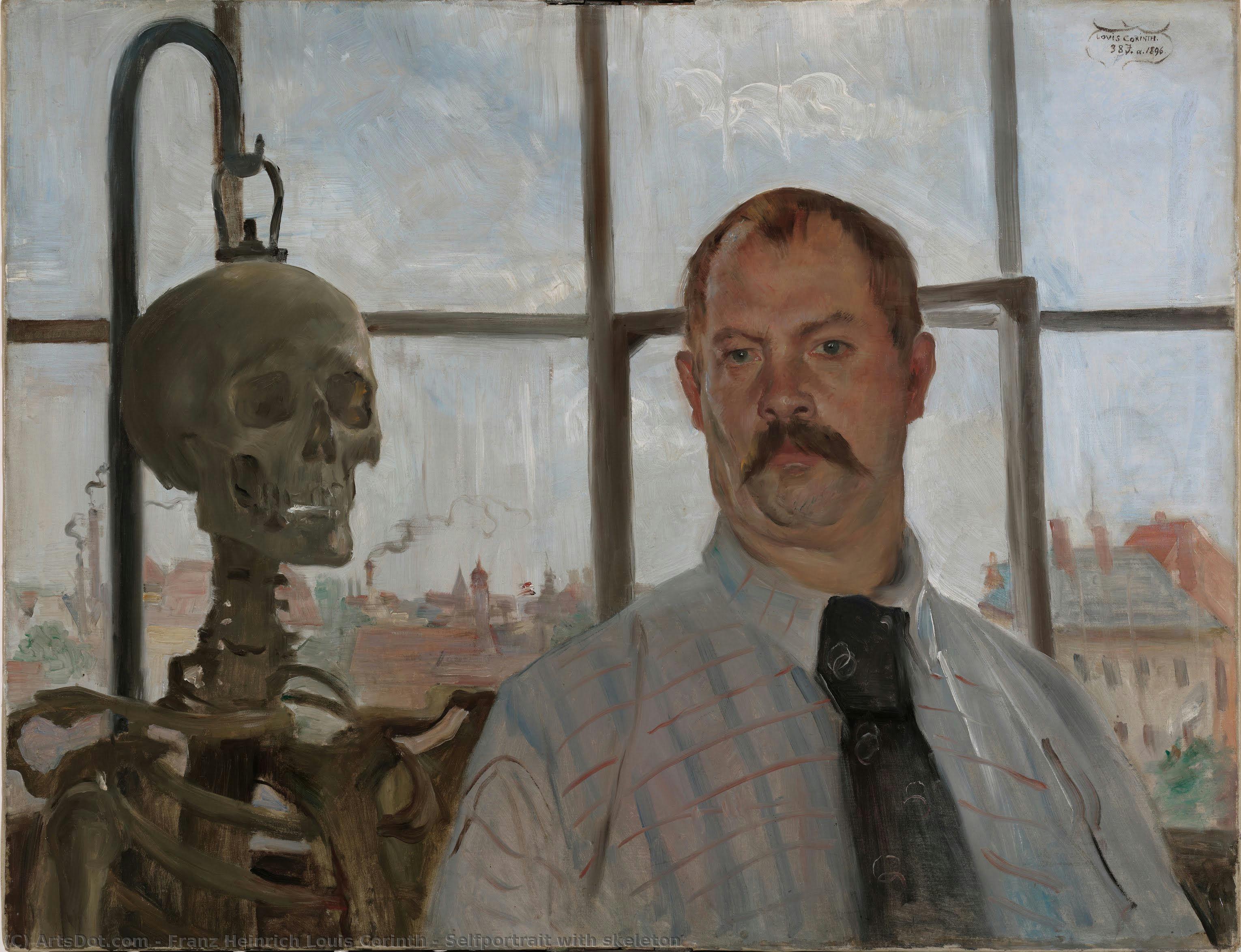
Selfportrait with skeleton
 Oil On Canvas
- WallArt
- Expressionism
 1896
1896 88.0 x 68.0 cm
 Lenbachhaus
 Read More
Hand Made Oil Reproduction
Hand-painted oil on canvas in your size and frame, made to order by our artists. ( Buy Print Buy Image)




P118B $10

P118H $10

P118W $10

P438Z $10

P508JH $12

P508YH $12

P805H $10

P805Z $10

P919BZ $10

P919G $10

P919XJ $10

P959ZH $10

P968JZ $12

W106C $8

W218G $10

W218JH $8

W218Y $10

W307PJ $10

W316G $10

W316PJ $8

W316Y $10

W398PJ $8

W4111J $10

W500HY $15

W500JH $15

W692G $12

W849H $8

W940BG $15

W953PJ $8




Pick from our preset sizes that match the artwork's original proportions.

You may enter your own dimensions to fit a specific frame or space. If your selected size does not match the original image's proportions, we will either crop the artwork or extend the painting with additional hand-painted elements. A digital mockup will be sent for your approval before production begins.
Please note that the on-screen preview does not reflect the actual cropping or extension. Only the mockup will accurately show the final composition.
While custom sizes are available, we recommend selecting a dimension from the predefined list to preserve the original proportions.
After order, OriginalUniqueArt.com team will email client for instructions and provide a mockup preview
Worldwide Delivery () in 3/4 weeks instead of standard 5 weeks. (17 August). No compromise on quality.

Free Worldwide Express Shipping

High-Quality Linen Canvas

Full Shipping Insurance

Customs Tax Refund Guarantee

True Color Matching Guarantee

60-Day Return Policy (Defects Only)

100% Money-Back Guarantee

Bulk Discount Offer
 Glass option is only available in size under 110 CM

Selfportrait with skeleton
Reproduction Medium
Reproduction Size
-


Total Price
$ 300
Artwork Description
Selfportrait with skeleton
Franz Heinrich Louis Corinth’s “Selfportrait with Skeleton,” completed in 1896, stands as a haunting meditation on mortality and artistic introspection—a cornerstone of Expressionist art that continues to resonate with viewers today. Painted during Corinth’s formative years amidst the burgeoning Berlin Secession movement, this artwork transcends mere representation; it delves into profound psychological themes interwoven with meticulous stylistic considerations.
- Artist: Lovis Corinth (1858 – 1925)
- Date: 1896
- Size: 88 x 68 cm
- Location: Lenbachhaus, Munich, Germany
Corinth’s artistic journey began with a naturalistic approach influenced by Parisian and Munich academies. However, he swiftly embraced Expressionism, rejecting Impressionist conventions in favor of conveying emotion and inner turmoil—a stylistic shift powerfully exemplified in “Selfportrait with Skeleton.” The painting's genesis can be traced back to Arnold Böcklin’s “Death Playing the Violin,” a work that profoundly impacted Corinth’s artistic sensibilities. Böcklin’s depiction of death as an active participant, rather than a passive specter, served as inspiration for Corinth’s own exploration of existential anxieties.
The composition itself is strikingly deliberate. Corinth presents himself in profile against a backdrop dominated by a skeletal figure positioned behind him—a direct reference to the *Memento mori* tradition prevalent throughout European art history. The skeleton holds aloft a skull, symbolizing decay and inevitable death, yet simultaneously embodies artistic contemplation. Corinth’s gaze directs towards the viewer, establishing an unsettling dialogue between artist and observer about the fragility of life.
Technically, “Selfportrait with Skeleton” showcases Corinth's mastery of oil paint on canvas. The brushstrokes are loose and textured, conveying a palpable sense of urgency and emotional intensity—characteristic of Expressionist painting. Corinth utilizes muted colors—primarily blues and browns—to create an atmosphere of melancholy and introspection. Light plays across the figure’s face and torso, highlighting his features while casting shadows that deepen the psychological impact of the scene. The studio window provides illumination from outside, emphasizing the artist's isolation and confronting him with the inescapable reality of mortality.
Beyond its formal qualities, “Selfportrait with Skeleton” carries significant symbolic weight. It speaks to Corinth’s preoccupation with themes of death, decay, and artistic legacy—questions that preoccupied many artists of his era. The inclusion of a violin symbolizes beauty and harmony juxtaposed against the bleakness of mortality, prompting viewers to contemplate the transient nature of existence. Corinth's signature on the upper right corner reinforces this connection to artistic tradition and underscores the painting’s enduring relevance as a testament to the human condition.
Today, “Selfportrait with Skeleton” resides in the Lenbachhaus museum in Munich, where it continues to captivate audiences with its haunting beauty and intellectual depth. Its masterful execution—combined with its evocative symbolism—solidifies Corinth's place among the most influential figures of Expressionist art.
Artist Biography
early life and education
franz heinrich louis corinth, a german artist and writer, was born on july 21, 1858, in tappergart, prussia. corinth's early work was naturalistic in approach, reflecting his studies in paris and munich. he later joined the berlin secession group, succeeding max liebermann as the group's president.artistic style and evolution
corinth's mature work realized a synthesis of impressionism and expressionism. after a stroke in 1911, his style loosened, taking on many expressionistic qualities. his use of color became more vibrant, and he created portraits and landscapes of extraordinary vitality and power.- his subject matter included nudes, biblical scenes, and portraits, such as lovis corinth: female semi-nude with hat (283 x 383 cm, kunstpalast, düsseldorf, germany).
- corinth's work can be found in various museums, including the kunstsalon franke schenk (munich, germany), which showcases his oil paintings on canvas and copper.
- the museum collection hugo fischer (bühl, germany) also features corinth's work, highlighting his contribution to the evolution of german and european painting.
legacy and influence
corinth's unique blend of impressionism and expressionism has influenced generations of artists. his work can be seen in various exhibitions, including those at the stadtische kunstsammlungen darmstadt (darmstadt, germany), which features an impressive collection of artworks from romanticism to contemporary art. key works: * lovis corinth: female semi-nude with hat (kunstpalast, düsseldorf, germany) * corinth's landscapes and portraits, showcasing his use of vibrant colors and extraordinary vitalityrelated artists and movements:
* max liebermann (1847-1935), a german painter and printmaker, and one of the leading proponents of impressionism in germany. * expressionism, an art movement that emerged in the early 20th century, primarily in germany and austria.- explore more of corinth's work on OriginalUniqueArt.com.
- discover the kunstsalon franke schenk (munich, germany) and its collection of german expressionist art.
- read more about max liebermann on wikipedia.

franz heinrich louis corinth
1858 - 1925 , Germany
Quick Facts
- Artistic Movement Or Style: Post-Impressionism
- Artists Or Movements Influenced By This Artist: ['George Henry']
- Artists Who Influenced This Artist:
- Lovis Corinth
- Henry Bayley Snell
- Date Of Birth: 1858
- Date Of Death: 1925
- Full Name: Maurice Prendergast
- Nationality: American
- Notable Artworks:
- Landscape with Figures
- Figures on a Beach
- Gloucester
- Three Nudes
- Summer Day, New England
- Central Park
- Place Of Birth: St. John's, Newfoundland
Related Articles

Lovis Corinth: Bridging Impressionism & Expressionism – A Study of Artistic Evolution
Explore the fascinating artistic journey of Lovis Corinth, a pivotal figure bridging Impressionism & Expressionism. Discover his evolution, key works, and lasting impact on modern art with OriginalUniqueArt.

German Expressionism's 10 Defining Masterpieces | Art for Your Home
Explore 10 defining German Expressionism masterpieces – from Munch's 'The Scream' to Kandinsky’s abstracts. Discover the artists, stories & bold colors behind this powerful art movement. Find museum-quality reproductions at OriginalUniqueArt.com.

Unmasking Emotion: A Journey Through the Raw Power and Visceral Beauty of German Expressionism
Explore the raw emotional power of German Expressionism. From Kirchner to Die Brücke, discover how artists used distortion and vibrant color to unmask the human psyche. A deep dive into art history for the discerning collector and enthusiast.
The Visceral Cry of a Nation: Exploring Emotion & Distortion in German Expressionism
Explore the powerful world of German Expressionism with OriginalUniqueArt. Discover Kirchner, Nolde & Die Brücke's emotive masterpieces. Learn about this pivotal art movement and its lasting impact on modern art.

Reflecting the Self: A History of Portraiture & Psychological Insight
Explore the fascinating history of self-portraiture from Renaissance masters like Dürer & Rembrandt to modern interpretations. Discover the psychological insights and artistic techniques behind these iconic works. Expert analysis for art enthusiasts.


