Introduction
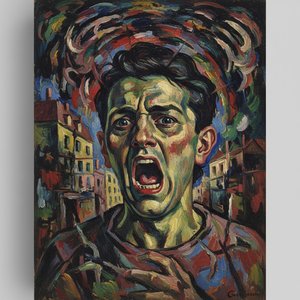
To gaze upon the canvases born from the heart of German Expressionism is to encounter a raw, visceral echo of a world on the brink. These weren’t paintings merely depicting reality; they were reality – or rather, the tumultuous inner landscape of a generation grappling with rapid industrialization, societal upheaval, and the looming shadow of war.
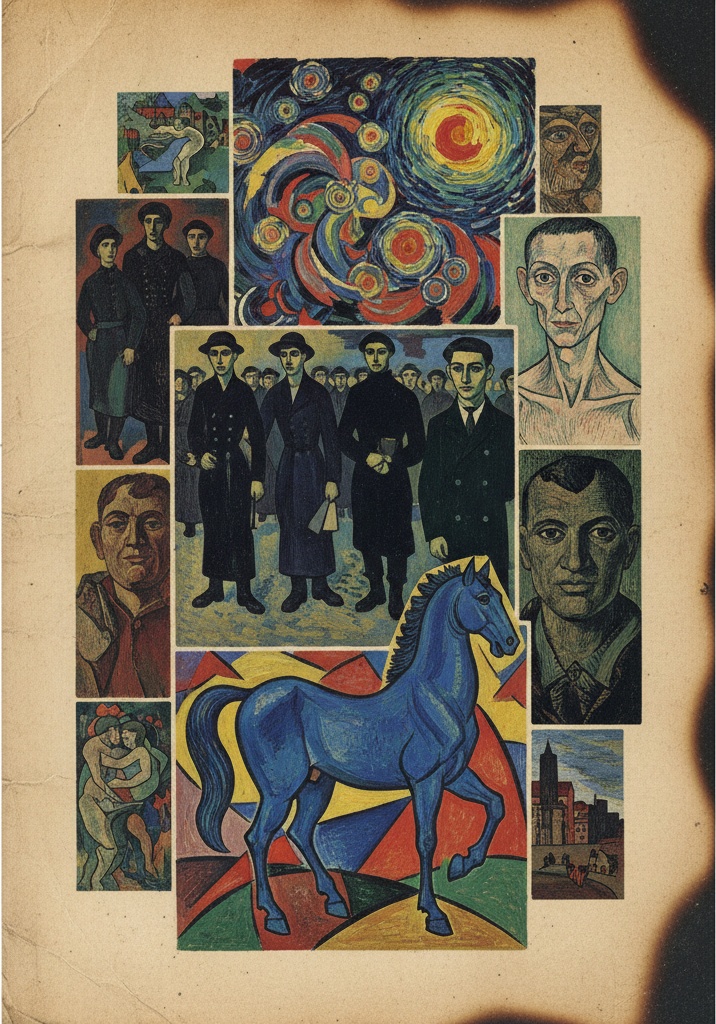
Emerging in the early 20th century, German Expressionism wasn't a unified style but a chorus of voices—artists like Kirchner, Munch, Heckel, Nolde, and Schmidt-Rottluff—each wrestling with alienation, anxiety, and the fragility of the human condition. Rejecting traditional academic painting, they embraced distortion, jarring color palettes, and bold, often unsettling imagery to convey emotional experience rather than objective truth. The movement flourished in two primary groups: Die Brücke (The Bridge), formed in Dresden, and Der Blaue Reiter (The Blue Rider), centered in Munich, though their paths diverged in approach.
This period—roughly 1905 to the early 1920s—witnessed a seismic shift in artistic priorities. The comfortable Victorian world was crumbling, replaced by a sense of fragmentation and uncertainty. Expressionist artists sought to capture this feeling, often turning inward, exploring themes of urban isolation, psychological torment, and spiritual longing. Their work wasn’t meant to be beautiful in the conventional sense; it was meant to provoke, to disturb, to force a confrontation with uncomfortable truths.
But why do these intensely personal works continue to resonate so powerfully today? Perhaps because those anxieties—the feeling of being disconnected, overwhelmed by modernity, haunted by existential questions—haven’t disappeared. These paintings offer a timeless glimpse into the universal human struggle for meaning and connection in a chaotic world. They remind us that art can be a powerful tool for confronting darkness, expressing vulnerability, and ultimately, forging empathy.
Over the following pages, we will embark on a journey through ten masterpieces that define this pivotal movement—works that not only captured a moment in history but continue to speak with startling urgency across generations. Prepare to be challenged, moved, and perhaps even transformed by the raw power of German Expressionism.
The Large Blue Horses - Franz Marc
 The Large Blue Horses - Franz Marc
To stand before Franz Marc’s “The Large Blue Horses” is to be enveloped by a wave of serenity, yet also touched by an undercurrent of melancholy. Painted in 1911, this work isn't simply a depiction of animals; it’s a profound meditation on the spiritual connection between humanity and nature, rendered with a boldness that shattered artistic conventions.
Why does this painting endure as one of the defining masterpieces of German Expressionism? Marc wasn’t interested in replicating reality. He sought to express the essence of his subjects—in this case, horses—through color and form. The intense cobalt blue, a hue he associated with masculinity and spirituality, imbues these creatures with an almost otherworldly presence. The vibrant red hills and lush greenery create a dynamic backdrop, amplifying the emotional resonance of the scene.
“The Large Blue Horses” exemplifies the core tenets of Der Blaue Reiter—a rejection of materialism in favor of inner experience. The visible brushstrokes, thick impasto, and simplified forms aren’t flaws; they are deliberate choices that convey a sense of raw energy and emotional truth. It's a painting that invites contemplation, urging us to look beyond the surface and connect with something deeper.
At OriginalUniqueArt, we understand this desire to bring such powerful artistry into your home. Our faithful reproductions capture not only the vibrant colors and dynamic composition of Marc’s original but also the very texture and emotion that make “The Large Blue Horses” a timeless masterpiece. Experience the spiritual depth of German Expressionism—a connection to nature, a moment of tranquility—with a piece that will resonate for generations.
Women in the street - Ernst Ludwig Kirchner
 Women in the street - Ernst Ludwig Kirchner
Imagine a fleeting moment on a Berlin street—the rustle of coats, the click of heels against cobblestones, a sense of both anonymity and vibrant energy. Ernst Ludwig Kirchner’s “Women in the Street” doesn't simply depict this scene; it embodies it, capturing the restless spirit of a city undergoing radical transformation.
This painting is a cornerstone of German Expressionism for its daring use of color and form. The bold yellows, oranges, and greens aren’t meant to mimic reality but to amplify emotion—a sense of unease, excitement, and the burgeoning independence of modern women. Kirchner's figures, though simplified, possess an undeniable presence, their forward gaze suggesting a newfound confidence in a rapidly changing world.
The expressive brushstrokes and flattened perspective create a dynamic composition that draws you into the scene. It’s not about precise detail; it’s about conveying the feeling of being immersed in the city's pulse—the hurried pace, the sensory overload, the subtle undercurrent of alienation. Kirchner wasn’t merely observing life; he was translating its raw energy onto canvas.
At OriginalUniqueArt, we believe art should resonate with your own emotional landscape. A reproduction of “Women in the Street” isn't just a beautiful addition to your home; it’s an invitation to connect with a pivotal moment in history—a celebration of modernity and the enduring power of human expression. Bring this iconic piece into your space and experience the vibrant energy of early 20th-century Berlin.
The Iron Bridge (View of Frankfurt) - Max Beckmann
 The Iron Bridge (View of Frankfurt) - Max Beckmann
Close your eyes and imagine the clang of metal, the hiss of steam, the distant murmur of a city rebuilding itself after unimaginable loss. Max Beckmann’s “The Iron Bridge (View of Frankfurt),” painted in 1922, isn't merely a cityscape; it’s a visceral embodiment of post-war Germany—a world grappling with trauma and striving for renewal.
What sets this masterpiece apart is its unique blend of realism and Expressionist fervor. Beckmann doesn’t shy away from depicting the gritty details of industrial life, but he infuses them with an emotional intensity that transcends mere observation. The bridge itself—a symbol of connection and progress—looms large, bisecting a scene teeming with activity.
The painting's dynamic composition, bold colors, and textured brushwork create a sense of restless energy. Warm earth tones contrast with cooler blues and greens, while the rough impasto technique adds depth and physicality to the canvas. Beckmann’s use of perspective—deliberately distorted—heightens the emotional impact, drawing you into the heart of the bustling city.
At OriginalUniqueArt, we believe art has the power to transform a space—to evoke emotion, spark conversation, and connect us with moments in history. A reproduction of “The Iron Bridge” isn’t just a beautiful addition to your home; it's an invitation to contemplate the complexities of modern life and the enduring spirit of human resilience. Experience the raw energy of German Expressionism and bring this iconic artwork into your world.
Portrait of Hans Frisch - Ernst Ludwig Kirchner
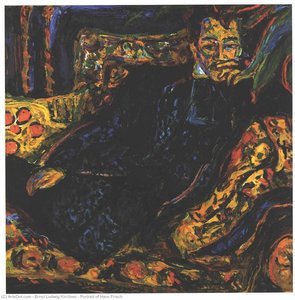 Portrait of Hans Frisch - Ernst Ludwig Kirchner
Gaze into the eyes of Hans Frisch in Ernst Ludwig Kirchner’s 1917 portrait, and you're not simply looking at a face—you’re encountering a soul laid bare. This isn’t about capturing likeness; it’s about conveying the raw emotional weight of existence during a period of profound upheaval.
“Portrait of Hans Frisch” stands as a pivotal work within German Expressionism, showcasing Kirchner's mastery of color and form to express inner turmoil. The bold blues, blacks, and yellows aren’t merely aesthetic choices; they are the visual language of anxiety and introspection. Thick impasto brushstrokes add texture and depth, creating a sense of restless energy that mirrors the subject’s troubled gaze.
The painting's distorted forms and flattened perspective deliberately reject traditional portraiture conventions, prioritizing emotional impact over realistic representation. It’s a powerful example of Die Brücke’s commitment to breaking boundaries and exploring new ways of conveying human experience.
Today, the expressive power of Kirchner’s work continues to resonate. The painting's dynamic composition and vibrant palette find echoes in contemporary design—from bold color blocking in interiors to the emotional intensity of modern fashion. A reproduction of “Portrait of Hans Frisch” isn’t just a piece of art; it’s an invitation to embrace vulnerability, contemplate the human condition, and infuse your space with a sense of raw, authentic emotion.
Grazing Horses IV (also known as The Red Horses) - Franz Marc
 Grazing Horses IV (also known as The Red Horses) - Franz Marc
To encounter Franz Marc’s “Grazing Horses IV” (The Red Horses) is to witness a primal energy unleashed—a vibrant explosion of color and form that transcends mere representation. Painted in 1911, this work isn't simply about horses; it’s a spiritual invocation of nature’s power and the interconnectedness of all living things.
Its place among the Top 10 masterpieces of German Expressionism is assured by its radical departure from convention. Marc sought to express the inner essence of his subjects—horses, in this case—through bold color symbolism and dynamic composition. The intense red hue isn’t arbitrary; it represents masculinity, passion, and a vital life force.
The painting's flattened perspective and expressive brushwork create a sense of unrestrained movement, drawing you into the scene. It’s an invitation to feel—to connect with the raw energy of nature and contemplate the spiritual dimension of existence. Marc believed animals were closer to this divine source than humans, and “The Red Horses” is his attempt to capture that purity.
At OriginalUniqueArt, we believe art should inspire contemplation and elevate your surroundings. A reproduction of “Grazing Horses IV” isn’t just a beautiful addition to your home; it's a window into the soul of German Expressionism—a timeless reminder of the power of nature and the enduring search for meaning.
Dreaming Horse - Franz Marc
 Dreaming Horse - Franz Marc
Franz Marc’s “Dreaming Horse,” painted in 1912, isn't simply a depiction of an animal; it’s a window into the soul—a profound meditation on nature’s sacredness and our own yearning for spiritual connection. This work embodies the core tenets of German Expressionism: prioritizing inner experience over objective reality.
Its inclusion among the Top 10 masterpieces is testament to Marc's unique ability to translate complex philosophical ideas into a visually arresting form. The horse, rendered in reddish-brown hues against a serene blue backdrop, isn’t merely observed; it’s *felt*. Thick impasto brushstrokes create a textured surface that pulsates with energy, inviting contemplation.
The painting's symbolism is rich and layered. Horses represent strength and nobility, but here they embody something more—a connection to the subconscious mind and a longing for unity with the natural world. The inclusion of blue birds further reinforces this theme of spiritual aspiration. Marc believed animals possessed an innate wisdom that humans had lost.
At OriginalUniqueArt, we believe art should resonate on a deeper level. A reproduction of “Dreaming Horse” isn’t just a beautiful addition to your home; it's an invitation to embrace tranquility, contemplate the mysteries of existence, and infuse your space with a sense of peace and harmony—a timeless echo of German Expressionism’s spiritual quest.
Horse in a Landscape - Franz Marc
 Horse in a Landscape - Franz Marc
To stand before Franz Marc’s “Horse in a Landscape” is to be enveloped by a sense of serene vitality—a quiet communion with nature that transcends mere observation. Painted in 1910, this work isn't simply about depicting an animal; it’s about capturing its ‘inner life,’ believing horses possessed a purity and majesty untouched by human anxieties.
Its inclusion among the Top 10 masterpieces of German Expressionism is testament to Marc’s radical vision. He deliberately abandoned academic realism in favor of bold color palettes and simplified geometric forms—a conscious effort to distill the essence of life itself. The vibrant yellows, reds, and greens aren't merely decorative; they represent vitality, passion, and harmony.
The horse, positioned prominently within a sprawling meadow, isn’t rendered with anatomical precision but rather as an embodiment of energy and grace. Thick brushstrokes create a textured surface that pulsates with life, inviting contemplation. Marc believed color held the key to unlocking spiritual understanding, and this painting is his attempt to translate that belief into visual form.
At OriginalUniqueArt, we believe art should elevate your surroundings—to inspire connection, foster tranquility, and infuse your space with a sense of beauty. A reproduction of “Horse in a Landscape” isn’t just a beautiful addition to your home; it's an invitation to embrace the spirit of German Expressionism and reconnect with the primal power of nature.
Mountain Goats - Franz Marc
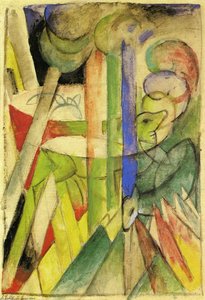 Mountain Goats - Franz Marc
A silent hymn to the primal forces of nature—that’s what resonates within Franz Marc’s “Mountain Goats,” painted in 1913. This work isn't merely a depiction of alpine scenery; it’s an embodiment of German Expressionism’s spiritual quest, a yearning for connection with something beyond the rational world.
Its place among the Top 10 masterpieces is assured by its unique blend of vibrant color and symbolic depth. The bold palette—earthy reds, yellows, and blues—reflects Marc's fascination with animal life and his belief in the transformative power of art. Thick impasto brushstrokes create a textured surface that pulsates with energy, conveying a palpable sense of movement.
The central figure—a man adorned with horns and wings—is undeniably evocative of mythological imagery, hinting at archetypal representations of humanity wrestling with spiritual struggle. The trumpet he holds symbolizes aspiration and divine communication, while the presence of a bird reinforces themes of freedom and insight.
At OriginalUniqueArt, we believe art should elevate your surroundings—to inspire contemplation and foster a sense of tranquility. A reproduction of “Mountain Goats” isn’t just a beautiful addition to your home; it's an invitation to embrace the spirit of German Expressionism and reconnect with the primal beauty of nature.
Tiger - Franz Marc
 Tiger - Franz Marc
A primal energy captured in stark relief—that’s the enduring power of Franz Marc’s “Tiger,” a woodcut print from 1912. This isn't simply an image of an animal; it’s a profound meditation on the interconnectedness of nature and the spiritual realm, embodying German Expressionism’s quest to reveal inner truths.
Its inclusion among the Top 10 masterpieces stems from Marc’s masterful manipulation of line and form. The bold graphic lines delineate the tiger’s muscular body with an almost brutal honesty, yet they are softened by his expressive hand. This technique isn't about replication; it’s about conveying the *essence* of the tiger—its power, its wildness, its vital energy.
The monochrome palette—black ink on cream paper—strips away distractions, focusing solely on form and emotion. Marc viewed animals as embodiments of divine qualities, and the tiger represents primal instinct and untamed spirit. Surrounding elements—birds and snakes—amplify this symbolism, creating a microcosm of life.
At OriginalUniqueArt, we believe art should resonate deeply within your space. A reproduction of “Tiger” isn’t just a beautiful addition to your home; it's an invitation to embrace the spirit of German Expressionism and reconnect with the raw beauty and untamed power of nature—a timeless echo of Marc’s visionary artistry.
Forms at Play - Franz Marc
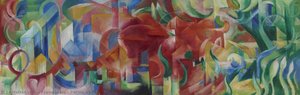 Forms at Play - Franz Marc
Imagine a world distilled to its purest essence—a symphony of color and form vibrating with energy. That’s the experience offered by Franz Marc’s “Forms at Play,” painted in 1914, a pivotal work within German Expressionism.
Its inclusion among the Top 10 masterpieces reflects Marc’s profound exploration of artistic philosophy and spiritual contemplation. Produced during a period of growing anxiety, he sought solace in nature, mirroring a broader trend toward simplification and emotional resonance. Influenced by Robert Delaunay, Marc embarked on a journey to distill art down to its purest form—a conscious rejection of ornate conventions.
The painting unfolds in a spiraling trajectory of reds, blues, yellows, greens, and oranges, interwoven with black and white. Bold brushstrokes create luminous effects and textural nuances, prioritizing expressive gesture over precise representation. The striking red hue anchors the composition, grounding its energetic dynamism.
At OriginalUniqueArt, we believe art should elevate your surroundings—to inspire contemplation and foster a sense of tranquility. A reproduction of “Forms at Play” isn’t just a beautiful addition to your home; it's an invitation to embrace the spirit of German Expressionism and reconnect with the fundamental questions about existence that Marc so eloquently explored.
Conclusion
As we conclude our journey through these ten defining works of German Expressionism, it’s important to remember that these paintings are more than just historical treasures—they are living presences. Each canvas pulsates with the raw emotion, spiritual yearning, and innovative spirit of a generation grappling with profound change.
To stand before a Kirchner street scene is to feel the alienation of modern life; to gaze into a Marc landscape is to reconnect with the primal beauty of nature. These artworks don’t simply depict reality—they *transform* it, inviting us to see the world through new eyes and feel emotions we didn't know we possessed.
At OriginalUniqueArt, we believe that art should be a part of everyday life—a source of inspiration, contemplation, and joy. We’re honored to offer hand-painted reproductions of these masterpieces, allowing you to bring their light, texture, and emotion into your own spaces as daily reminders of human creativity and grace.
We invite you to explore our full collection of German Expressionist works—and discover the painting that speaks most deeply to your soul. May these timeless images continue to move hearts, shape interiors, and inspire creativity for generations to come.