Preview
 Send
Send Share
Share
 Details
 Guide
Guide

 Download
 Similars
 X-Ray
X-Ray Diaporama
 Q&A
Q&A Stats
StatsSalome

- 54.0 x 44.0 cm


 Read More
Giclée / Art Print
Museum-quality giclée or canvas print with fast production and flexible finish options. ( Buy Hand Made Painting Switch to Digital Image)




P118B $10

P118H $10

P118W $10

P438Z $10

P508JH $12

P508YH $12

P805H $10

P805Z $10

P919BZ $10

P919G $10

P919XJ $10

P959ZH $10

P968JZ $12

W106C $8

W218G $10

W218JH $8

W218Y $10

W307PJ $10

W316G $10

W316PJ $8

W316Y $10

W398PJ $8

W4111J $10

W500HY $15

W500JH $15

W692G $12

W849H $8

W940BG $15

W953PJ $8




Pick from our preset sizes that match the artwork's original proportions.

Type the width and the height you need, to fit your frame or your wall. A print can only be cut, never made bigger than the picture, so a size with a different shape loses a part of the image. We send you a digital mockup to approve before we print anything. The picture shown on this page does not show the real cut — only the mockup does.
Worldwide Delivery () in 2 weeks instead of standard 4/5 weeks. (2 November)

Free Worldwide Express Shipping

High-Quality Linen Canvas

Full Shipping Insurance

Customs Tax Refund Guarantee

True Color Matching Guarantee

100-Day Return Policy (Defects Only)

100% Money-Back Guarantee

Bulk Discount Offer
 Glass option is only available in size under 110 CM

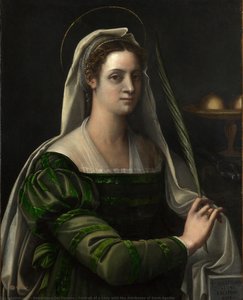
Salome
Giclée / Art Print
Reproduction Size
-


Total Price
$ 81
A Haunting Synthesis of Venetian Light and Roman Form
In the quiet intensity of Sebastiano del Piombo’s Salome, painted around 1510, we encounter a masterpiece that serves as a profound bridge between two of the most influential artistic worlds of the High Renaissance. This work is not merely a portrait but a visceral meditation on the duality of existence—the vibrant pulse of life set against the chilling stillness of death. As one gazes upon the luminous blue of Salome’s attire, there is an unmistakable echo of Venice, the artist's birthplace. Here, the influence of his mentor, Giorgione, breathes through the canvas in the form of atmospheric perspective and a rich, emotive palette that softens the edges of reality, inviting the viewer into a dreamlike, melancholic landscape.
Yet, as the eye moves from the soft, misty mountains in the distance to the central figure, a different energy emerges. Del Piombo, having transitioned toward the Roman school, imbues the composition with a sculptural gravity and a formal dignity that commands respect. This stylistic tension—the fluid, colorful grace of Venice meeting the monumental, structured strength of Rome—is what makes this piece so captivating for the modern collector. It is a painting that possesses both a poetic soul and an architectural backbone, making it a commanding presence in any curated space.
The Symbolism of Mortality and Beauty
The narrative depth of Salome lies in its unsettling confrontation with the macabre. The subject, the daughter of Herodias, is depicted not with the frantic energy of a biblical executioner, but with a detached, contemplative grace. She holds the severed head of John the Baptist upon a platter, yet her gaze drifts away from the gruesome spectacle toward the far-off peaks. This visual redirection creates a profound psychological distance; she seems lost in thought, perhaps contemplating the heavy cost of desire and the inescapable nature of fate. The skull held within her grasp serves as a potent memento mori, a stark reminder that even amidst the splendor of silk and the beauty of youth, decay is an ever-present shadow.
For the interior designer or art enthusiast, this painting offers more than just visual beauty; it offers a conversation. The interplay between the delicate features of the woman and the grim reality of the skull creates an intellectual tension that draws the viewer in, demanding reflection. It is a piece that rewards long periods of observation, revealing new layers of meaning with every glance at the way light hits the fabric or how the shadows deepen within the distant valleys.
A Timeless Masterpiece for the Discerning Collector
To possess a reproduction of this caliber is to bring a fragment of Renaissance history into the contemporary home. The technique employed by del Piombo—the masterful blending of oil pigments to create skin that seems to glow from within and landscapes that feel infinitely deep—is captured with breathtaking precision in high-quality hand-painted recreations. This artwork is particularly suited for spaces that seek to evoke a sense of drama, history, and sophisticated introspection.
Whether placed in a grand library, a formal dining room, or a modern gallery-style living area, Salome acts as an anchor of cultural significance. It provides a focal point that is both aesthetically pleasing and intellectually stimulating, bridging the gap between the classical past and the aesthetic sensibilities of the present. For those seeking to decorate with intention, this painting offers an unparalleled opportunity to surround oneself with the enduring mystery and unmatched artistry of the High Renaissance.
Questions & Answers
What technique and style characterize "Salome" by Sebastiano del Piombo?
"Salome" by Sebastiano del Piombo combines the oil on panel technique with the Italian Mannerism style. Technique and movement describe the making and the style of the work.
Does "Salome" by Sebastiano del Piombo use strong contrasts or soft harmonies?
The color composition of "Salome" by Sebastiano del Piombo combines a bold contrast with a discordant palette harmony.
Can I see "Salome" by Sebastiano del Piombo on my own wall before buying?
"Salome" by Sebastiano del Piombo can be previewed on your own wall with the artwork's AR Preview page, using augmented reality on a compatible device.
Artist Biography
A Venetian Soul in Roman Splendor
Sebastiano del Piombo, born Sebastiano Luciani around 1485 in the radiant heart of Venice, occupies a unique and often enigmatic position within the High Renaissance. His story is not one of immediate artistic recognition, but rather a compelling journey of adaptation, migration, and ultimately, a distinctive synthesis of Venetian colorism with the imposing gravity of Roman form. Unlike many contemporaries whose paths were clearly defined from youth, Sebastiano’s entry into painting was somewhat delayed; initially drawn to music – he possessed considerable skill as a lutenist – it wasn't until his late teens or early twenties that he seriously embraced the canvas. This formative period in Venice instilled within him an enduring love for rich hues, atmospheric perspective, and a poetic sensibility that would remain hallmarks of his style even after relocating to Rome. The profound influence of Giorgione is particularly palpable in early attributions like the unfinished *Judgement of Solomon*, a work steeped in dramatic narrative and showcasing an innovative approach to composition, hinting at the artistic potential about to unfold.From Venice to the Heart of Roman Artistic Life
The year 1511 marked a pivotal moment in Sebastiano’s career as he journeyed to Rome, a city then pulsating with artistic energy under the patronage of Popes Julius II and Leo X. This move placed him directly into the orbit of Raphael, whose workshop was at its zenith, and soon after, into the complex world surrounding Michelangelo. Remarkably, unlike some artists who found themselves overshadowed by these titans, Sebastiano managed to carve out his own niche, even earning the respect – and occasional encouragement – of the notoriously critical Michelangelo himself. The two masters recognized a kindred spirit in each other’s pursuit of grandeur and anatomical precision; Michelangelo actively championed Sebastiano's work, urging him to compete with Raphael for prestigious commissions. This rivalry, though perhaps exaggerated by Vasari, undoubtedly fueled Sebastiano’s ambition and contributed to his growing reputation. His early Roman works, such as the frescoes in the Villa Farnesina – notably *Polyphemus* – demonstrate a masterful assimilation of classical motifs and a burgeoning confidence in handling large-scale compositions. He was quickly becoming a force within the Roman art scene, blending Venetian sensibilities with the demands of his new environment.The Synthesis of Styles: A Unique Artistic Vision
Sebastiano del Piombo’s artistic genius lay in his ability to reconcile the seemingly disparate traditions of Venice and Rome. While firmly rooted in the Venetian school's emphasis on color, light, and texture – a legacy inherited from Giorgione and Titian – he embraced the Roman preoccupation with monumental forms, anatomical accuracy, and dramatic narrative. This fusion is strikingly evident in *The Raising of Lazarus*, a powerful altarpiece commissioned for Narbonne Cathedral and now residing in London’s National Gallery. The painting showcases his command of oil paint to create luminous flesh tones and rich draperies, while the figures themselves possess a sculptural solidity reminiscent of Michelangelo's work. This unique blend set him apart from his contemporaries and established him as a leading figure in Roman art after Raphael’s untimely death in 1520. He wasn’t merely imitating; he was forging a new path, demonstrating that Venetian sensuality and Roman gravitas could coexist harmoniously on the same canvas. The Raising of Lazarus stands as a testament to his ability to synthesize these seemingly opposing forces into a cohesive and emotionally resonant whole.Later Life and Enduring Legacy
The latter part of Sebastiano's life took an unexpected turn in 1531 when he was appointed *piombatore*, Keeper of the Seals for the Papacy. This prestigious, yet demanding, position required him to attend to the Pope’s administrative duties and curtailed his artistic output considerably. Though financially secure, the responsibilities of office drew him away from painting, and his later works became fewer in number. He continued to receive commissions, primarily portraits, but the fervor and innovation of his earlier period seemed somewhat subdued. Despite this decline in productivity, Sebastiano remained a respected figure within Roman artistic circles until his death in 1547. His influence, however, proved less pervasive than that of Raphael or Michelangelo. This was partly due to a lack of numerous pupils and limited dissemination of his work through prints – a common practice for promoting an artist’s style during the Renaissance. Nevertheless, Sebastiano del Piombo's legacy endures as a testament to the power of artistic synthesis and the enduring allure of Venetian color combined with Roman monumentality.Notable Works
- The Three Philosophers (with Giorgione): A collaborative masterpiece showcasing early influences.
- Polyphemus: A fresco in Villa Farnesina, demonstrating classical style and masterful detail.
- Moses Receiving the Tables of the Law: Demonstrates mastery of oil on canvas and dramatic composition.
- The Raising of Lazarus: A powerful altarpiece blending Venetian color with Roman form.
- San Sebastiano: An evocative depiction of the saint, showcasing his skill in portraying human emotion.

Sebastiano del Piombo
1485 - 1547 , Italy
Quick Facts
- Full Name: Sebastiano del Piombo
- Nationality: Italian
- Date Of Birth: 1485
- Date Of Death: 1547
- Place Of Birth: Venice, Italy
- Notable Artworks:
- The Raising of Lazarus
- Polyphemus
- Moses Receiving the Law
- Three Philosophers
- Artistic Movement Or Style: High Renaissance, Mannerism
- Artists Who Influenced This Artist:
- Giovanni Bellini
- Giorgione
- Raphael
- Michelangelo
Related Articles

Master of Drama: The 25 Greatest Artworks by Jacopo Tintoretto
Explore 25 dramatic Tintoretto masterpieces of the Venetian Renaissance. Discover museum-quality art on OriginalUniqueArt.com.

Venetian Renaissance: The Mastery of Color, Light, and the Art of Colorito
Explore the luminous mastery of the Venetian Renaissance. Discover how masters like Titian and Giorgione revolutionized art through colorito, light, and atmosphere. An expert guide to the golden age of Italian painting for collectors and enthusiasts.

John Singer Sargent's 25 Masterpieces: Portraits & Beyond | OriginalUniqueArt
Explore 25 iconic John Singer Sargent paintings – from dazzling portraits to Impressionist landscapes. Discover the stories behind Madame X, El Jaleo & more! Find museum-quality art reproductions and elevate your home decor with OriginalUniqueArt.com.

Sebastiano del Piombo: Bridging Venetian Colorism & Roman Grand Manner Portraiture
Explore the captivating art of Sebastiano del Piombo, a Renaissance master bridging Venetian colorism & Roman grandeur. Discover his iconic portraits and lasting influence on art history. Learn more at OriginalUniqueArt.

Mastering the English Landscape: The Top 25 John Constable Artworks
Experience the soul of English landscapes through John Constable's top 25 works. Explore the full collection online at OriginalUniqueArt.com.