Text size

() ·

A painting made for you, by hand

Mystic Nativity

Hand Made Oil Reproduction

Hand-painted oil on canvas in your size and frame, made to order by our artists. ( Switch to Print Switch to Digital Image)

Collectible Description

Botticelli’s Mystic Nativity captures the serene beauty of the nativity scene with intricate detail and graceful figures, showcasing the artist's signature style from the Early Renaissance period – a timeless masterpiece to cherish and own.

Artist Biography

An Early Renaissance master of lyrical grace and The Birth of Venus. Explore his iconic mythological and religious masterpieces today.

from ·

Chapter 1

How large should it be?

Slide to change the size; the picture on the left shows the frame at its real width. The proportions of the original are kept.

Standard
custom
CM
INCH

Pick from our preset sizes that match the artwork's original proportions.

width
height

Type the width and the height you need, to fit your frame or your wall. This is hand-painted, so for a size with a different shape the artist can paint a bit more around the picture, or cut a bit — you choose. We send you a digital mockup to approve before the painting starts. The picture shown on this page does not show the real result — only the mockup does.

Chapter 2

How should it arrive?

Choose the edges of the stretched canvas

Choose your frame

Corner sample of the WhiteWrap canvas edge finish, stretched on solid wood bars
White $1
Corner sample of the BlurSideWrap canvas edge finish, stretched on solid wood bars
Blurside $1
Corner sample of the ExtendedWrap canvas edge finish, stretched on solid wood bars
Extended $1
Corner sample of the P118B picture frame: moulded polystyrene, 5 cm wide and 3 cm thick
P118B $10
Corner sample of the P118H picture frame: moulded polystyrene, 5 cm wide and 3 cm thick
P118H $10
Corner sample of the P118W picture frame: moulded polystyrene, 5 cm wide and 3 cm thick
P118W $10
Corner sample of the P438Z picture frame: moulded polystyrene, 5.5 cm wide and 3.5 cm thick
P438Z $10
Corner sample of the P508JH picture frame: moulded polystyrene, 7 cm wide and 3.5 cm thick
P508JH $12
Corner sample of the P508YH picture frame: moulded polystyrene, 7 cm wide and 3.5 cm thick
P508YH $12
Corner sample of the P805H picture frame: moulded polystyrene, 5 cm wide and 3.5 cm thick
P805H $10
Corner sample of the P805Z picture frame: moulded polystyrene, 5 cm wide and 3.5 cm thick
P805Z $10
Corner sample of the P919BZ picture frame: moulded polystyrene, 7 cm wide and 3.5 cm thick
P919BZ $10
Corner sample of the P919G picture frame: moulded polystyrene, 7 cm wide and 3.5 cm thick
P919G $10
Corner sample of the P919XJ picture frame: moulded polystyrene, 7 cm wide and 3.5 cm thick
P919XJ $10
Corner sample of the P959ZH picture frame: moulded polystyrene, 5 cm wide and 3 cm thick
P959ZH $10
Corner sample of the P968JZ picture frame: moulded polystyrene, 6 cm wide and 4 cm thick
P968JZ $12
Corner sample of the W106C picture frame: solid wood, 5 cm wide and 3 cm thick
W106C $8
Corner sample of the W218G picture frame: solid wood, 5 cm wide and 3 cm thick
W218G $10
Corner sample of the W218JH picture frame: solid wood, 5 cm wide and 3 cm thick
W218JH $8
Corner sample of the W218Y picture frame: solid wood, 5 cm wide and 3 cm thick
W218Y $10
Corner sample of the W307PJ picture frame: solid wood, 6 cm wide and 3 cm thick
W307PJ $10
Corner sample of the W316G picture frame: solid wood, 6 cm wide and 3 cm thick
W316G $10
Corner sample of the W316PJ picture frame: solid wood, 6 cm wide and 3 cm thick
W316PJ $8
Corner sample of the W316Y picture frame: solid wood, 6 cm wide and 3 cm thick
W316Y $10
Corner sample of the W398PJ picture frame: solid wood, 5 cm wide and 3 cm thick
W398PJ $8
Corner sample of the W4111J picture frame: solid wood, 6.5 cm wide and 3.5 cm thick
W4111J $10
Corner sample of the W500HY picture frame: solid wood, 7 cm wide and 5 cm thick
W500HY $15
Corner sample of the W500JH picture frame: solid wood, 7 cm wide and 5 cm thick
W500JH $15
Corner sample of the W692G picture frame: solid wood, 8 cm wide and 4 cm thick
W692G $12
Corner sample of the W849H picture frame: solid wood, 5 cm wide and 3 cm thick
W849H $8
Corner sample of the W940BG picture frame: solid wood, 7.5 cm wide and 4.5 cm thick
W940BG $15
Corner sample of the W953PJ picture frame: solid wood, 6 cm wide and 3.5 cm thick
W953PJ $8
Corner sample of the H24-GOLD picture frame: carved wood with gesso, 10 cm wide and 6 cm thick
H24-GOLD $30
Corner sample of the H24-SILVER picture frame: carved wood with gesso, 10 cm wide and 6 cm thick
H24-SILVER $30
Corner sample of the H36-GOLD picture frame: carved wood with gesso, 15 cm wide and 6.5 cm thick
H36-GOLD $45
Corner sample of the H36-SILVER picture frame: carved wood with gesso, 15 cm wide and 6.5 cm thick
H36-SILVER $45
Frame preview
Framed

Moulding: . Overall size with the frame: .

Chapter 3

Who paints it, and should anything change?

Examples of what can be changed: Replace face with customer photo; Add pet (e.g., replace cat with dog); Include hidden message in background; Change background landscape or elements.
After order, OriginalUniqueArt.com team will email client for instructions and provide a mockup preview

Worldwide Delivery () in 3/4 weeks instead of standard 5 weeks. (9 November). No compromise on quality.

Chapter 4

The finishing touches

A nameplate, as in a museum?

Engraved Bronze Plaque Details

This elegant plaque features the artist's name and the title of the artwork, finely engraved for a timeless presentation.

It is made from bronze with a refined, elegant finish. The text is precisely laser-engraved for a sharp and permanent result. Measuring 9x2 cm, the plaque is compact yet easy to read. It's built to be durable and scratch-resistant, offering a professional, museum-quality look. Mounting is simple thanks to the included adhesive backing.

Transparent Acrylic Plaque Details

The plaque includes essential engraved details such as the artist's name, the title of the artwork, the date it was created, the type of media used-like oil on canvas or watercolor-a brief description of the piece, and a QR code that links to the complete artwork information.

It is crafted from clear acrylic, offering a sleek, modern appearance. The text is UV-engraved in black to ensure strong visual contrast. With a size of 10x15 cm, it ensures optimal readability. It comes equipped with two metal hooks for secure wall mounting. The plaque is designed to be weather-resistant, making it suitable for various environments, and it includes interactive features that work seamlessly with smartphone scanning.

Black Acrylic Plaque Details

This elegant plaque includes engraved information such as the artist's name, the title of the artwork, the date it was created, the type of media used (like oil on canvas or watercolor), a short description of the artwork, and a QR code for quick access to more information.

The plaque itself is made from refined black acrylic with a premium finish. The text is laser-engraved in white for high contrast and readability. Its size is 10x15 cm, designed to be easy to read. It comes with two metal hooks for professional mounting. The design is sleek and fits any interior style. It is also weather-resistant and durable, with built-in digital integration for mobile compatibility.

A protective varnish?

When do you need it?

Chapter 5

Your painting, as you ordered it

Mystic Nativity

Reproduction Medium

Reproduction Size

-

Elite Senior Artist

More detail, finesse, and extra production time

-

Reproduction Frame

-

-

For artworks or reproductions larger than 105 cm (approximately 41 inches) on any side, the frame will be shipped as a kit, disassembled. This method ensures safe delivery and prevents damage during transport.

Professional assembly required - this is not a DIY product.
The kit must be assembled and the canvas stretched by an experienced professional framer, using wood glue (not supplied), a canvas stretching plier and clamps to hold the bars square while the glue dries. Incorrect assembly or uneven canvas tension can permanently damage the artwork and is not covered by our warranty.

  • All solid wood bars are included, precisely cut to size.

  • Assembled with the screws provided, plus wood glue for the corner joints, which is not supplied and must be sourced by your framer.

  • Professional tools are required and not included: a canvas stretching plier (tensioner) and clamps to hold the bars square while the glue dries.

Important:
The corner joints require wood glue, the bars must be held with clamps until the glue is fully dry, and tightening the canvas on the assembled frame requires a canvas stretching plier. None of these are included in the kit. Please arrange an experienced professional framer before ordering this size.

Nameplate

-

-

Protective Varnish

Glossy Varnish (enhances colors, protects against light/moisture)

-

Customize My Artwork

Examples of what can be changed: Replace face with customer photo; Add pet (e.g., replace cat with dog); Include hidden message in background; Change background landscape or elements.

-

Urgent

Worldwide Delivery () in 3/4 weeks instead of standard 5 weeks. (9 November). No compromise on quality.

-

Express Shipping

Worldwide Delivery () in 5 weeks. (16 November).

Included

Total Price

$ 300

Total Price $ 300

Glass option is only available in size under 110 CM

Included with every order

  • Free Worldwide Express Shipping
  • High-Quality Linen Canvas
  • Full Shipping Insurance
  • Customs Tax Refund Guarantee
  • True Color Matching Guarantee
  • 100-Day Return Policy (Defects Only)
  • 100% Money-Back Guarantee
  • Bulk Discount Offer

A Celestial Vision Amidst Earthly Turmoil

In the twilight of the Quattrocento, as the political landscape of Italy fractured under the weight of papal ambitions and dynastic strife, Sandro Botticelli captured something far more profound than a mere religious milestone. His Mystic Nativity serves as an eloquent distillation of Renaissance ideals interwoven with the palpable anxieties of a world in flux. At first glance, the painting presents the serene, familiar scene of the Nativity—Mary cradling the infant Jesus amidst a pastoral landscape—yet the work breathes with a much deeper, more unsettling spiritual energy. It is not merely a depiction of a birth, but a complex theological vision that bridges the gap between the historical event of Christ's arrival and the apocalyptic prophecies of the Book of Revelation.

The composition guides the viewer’s eye upward through multiple narrative layers, emphasizing the sacredness of the moment while inviting contemplation of divine intervention and human humility. The central figures of Mary, Joseph, and the infant Jesus radiate divine grace, surrounded by celestial angels and humble earthly witnesses. There is a shimmering brilliance to the hues that seems to emanate from within the panel itself, creating a sense of divine light that transcends the physical medium. This luminosity serves to elevate the scene from a rustic outdoor setting into a celestial realm, where the boundaries between the earthly and the divine become beautifully blurred.

Symbolism, Technique, and the Divine Order

To gaze upon the Mystic Nativity is to engage in a silent dialogue with a dense web of symbolism. Botticelli meticulously constructed the composition to reflect a cosmic order. At the top of the work, a celestial dome of twelve angels encircles the heavens, representing both the twelve hours of the day and the twelve months of the year, acting as divine guardians over the unfolding drama. These angelic figures, draped in robes of white, red, and green, embody the virtues of faith, hope, and charity. Below this heavenly host, the landscape is punctuated by olive branches entwined with scrolls—symbols of peace and wisdom that stand in poignant contrast to the darker elements lurking in the shadows.

The emotional depth of the piece lies in its tension between salvation and peril. Beneath the rocky outcrops, demons emerge, embodying the evil forces that threaten the world. The painting employs a fascinating blend of styles; while it utilizes the emerging Renaissance naturalism, it also retains the earlier medieval convention of showing the Virgin Mary and infant Jesus on a larger scale than other figures. This deliberate distortion creates a powerful effect, emphasizing their importance above all else. Botticelli’s technical mastery is evident in his ability to manipulate oil on canvas to achieve an ethereal, luminous quality, capturing intricate textures—from flowing fabrics to natural foliage—that bring this biblical story to life.

For the discerning collector or interior designer, this masterpiece offers a profound sense of spiritual reverence and historical weight. Whether placed in a sacred space or an elegant, contemplative interior, the Mystic Nativity acts as a captivating focal point, inviting viewers to contemplate the sacred mystery of Christ’s birth and the enduring promise of peace amidst the darkness of the world.

Questions & Answers

How is the color composition of "Mystic Nativity" by Sandro Botticelli built?

The color analysis of "Mystic Nativity" by Sandro Botticelli records a statement contrast and a strong color unity harmony.

What feeling does "Mystic Nativity" by Sandro Botticelli convey?

"Mystic Nativity" by Sandro Botticelli conveys a mysterious feeling within an overall mystical mood.

What is the dominant color of "Mystic Nativity" by Sandro Botticelli?

The color that stands out most in "Mystic Nativity" is rosy brown (#cdb799). The dominant color is useful when matching an artwork to an interior.

More about this painting

Preview AR preview Switch to Print Switch to Digital Image Send
Details Guide Add to favorites Download Similars X-Ray Diaporama Q&A Stats

In numbers

  • 29frames to choose from
  • standard sizes, in its own proportions
  • 5weeks to paint and deliver it
Sandro Botticelli

Sandro Botticelli

1445 - 1510, Italy

Quick facts about Sandro Botticelli

  • Artistic Movement Or Style: Early Renaissance
  • Artists Or Movements Influenced By This Artist: ['Pre-Raphaelite Brotherhood']
  • Artists Who Influenced This Artist:
    • Fra Filippo Lippi
    • Fra Angelico
    • Paolo Uccello
  • Full Name: Alessandro di Mariano di Vanni Filipepi
  • Nationality: Italian
  • Notable Artworks:
    • The Birth of Venus
    • Primavera
    • Adoration of the Magi
    • Mystic Nativity
  • Place Of Birth: Florence, Italy
  • Date Of Birth: 1445
  • Date Of Death: 1510

Artist Biography

The Life of Sandro Botticelli

Sandro Botticelli lived his life within the narrow, busy streets of Florence, Italy. Born Alessandro di Mariano di Vanni Filipepi around 1445, he was the son of a tanner. His family lived in the neighborhood of Ognissanti, a place he remained close to throughout his years. He eventually became known by the name Botticelli, a nickname taken from the word botticello, which refers to a small wine cask or little barrel.

His presence in the city was constant. He moved through the same Florentine air for decades, working from his early training until his death on May 17, 1510. His work emerged during the Early Renaissance, a time when the city was a center of intense creative activity. He was an Italian painter who focused his hands on the wood and plaster of his home city.

His life was tied to the local rhythms of trade and faith. He was a man of the Florentine streets, from his early days as an apprentice to his final years. His existence was defined by the light and the shadows of the Italian Renaissance.

Early Life, Family and Training

Born Alessandro di Mariano di Vanni Filipepi, he was the youngest of four surviving children. His father, Mariano Filipepi, worked as a goldsmith and later as a tanner. This background in craftsmanship likely shaped the way he approached the fine details of his later work. Before finding his way into painting, he was thought to have first trained with Maso Finiguerra, a goldsmith. This early exposure to the precision of metalwork provided a foundation for the meticulous lines that would define his hand.

Around 1460, he entered the studio of Fra Filippo Lippi. This apprenticeship was the most significant period of his formation, where he learned the specific techniques of the Florentine school. He studied the way to handle panel painting and the application of fresco. He remained under Lippi's guidance for several years, likely leaving the workshop by April 1467. During these years, he absorbed the ability to create intimate compositions and a certain way of rendering figures that felt both graceful and slightly melancholic.

Patrons, Workshop and Commissions

The circles of Florence provided much of the work that filled his studio. He worked closely with the Medici family, including Lorenzo de' Medici and Giuliano de' Medici, whose influence shaped much of his professional life. Beyond the Medici, the Vespucci family commissioned his fresco Saint Augustine in his Study. His reach extended to the religious and civic centers of Italy as well. In Rome, he was invited by Pope Sixtus IV to paint frescoes for the Sistine Chapel. Back in Florence, he completed the Adoration of the Magi for the altar in the funerary chapel of Gaspare di Zanobi del Lama.

His workshop functioned as a place of continuity and shared skill. He employed Filippino Lippi, the son of his former teacher, as an apprentice. This connection kept the traditions of his training alive within his own space. The studio was a place of steady production, where the demands of patrons dictated the rhythm of the day. He moved between the private commissions of wealthy families and the large-scale requirements of the church, often working within the established social structures of the city.

Artistic Technique and Style

His hand moved with a specific, rhythmic grace. There is a lyrical quality to the way he defines a shape, using elegant linearity and flowing contours to guide the eye across the panel. He often began his compositions with a silverpoint drawing, a method that required a steady, controlled touch to lay down the initial underpainting. This precision allowed him to build up layers of tempera paint, which provided a way to render fine details and maintain a clear, bright color palette. He did not rely on heavy shadows to create form; instead, he used the strength of the line itself to define the presence of his subjects.

The figures he painted possess an ethereal quality. They often feature elongated proportions and graceful, almost weightless poses that suggest a sense of movement without the need for heavy physical mass. He found a way to marry the decorative use of line with the classical traditions of his time, creating a visual language that felt both ancient and uniquely his own. This approach allowed him to depict complex mythological scenes with a sense of calm and poetic rhythm.

Key Works and Masterpieces

The Birth of Venus captures a goddess emerging from a seashell, a scene that embodies the Renaissance ideals of beauty. In Primavera, the subject turns to a complex and enigmatic celebration of spring and love, populated by figures from classical mythology. These works show a focus on the rhythmic movement of lines and the grace of the human form.

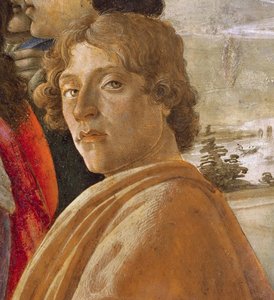
Earlier in his career, his brush moved toward different subjects. He painted Saint Sebastian before January 1474. Around 1475, he produced the Adoration of the Magi, which includes members of the Medici family and a self-portrait. As his interests shifted, his work took on a different tone. The Mystic Nativity, created in 1501, reflects this change in focus.

  • The Birth of Venus
  • Primavera
  • Adoration of the Magi
  • Mystic Nativity
  • Saint Sebastian

Later Years and Spiritual Shift

The 1490s brought a change to the way he approached the panel. The ornamental charm that defined his earlier years began to fade. He moved away from the decorative grace of his youth, opting instead for a more simplistic approach. This shift was not merely a change in technique but a response to the changing atmosphere in Florence. He became a follower of the Dominican friar Savonarola, whose fervent preaching influenced the city's spiritual direction. This connection marked a departure from the humanist interests that had previously guided his brush.

His work during this period took on a different character. The figures lost some of their rhythmic, flowing quality, moving instead toward a more archaic or Gothic style. The compositions became more austere, reflecting a growing spiritual intensity. This period of his life shows a man turning inward, trading the lightness of mythological scenes for a more heavy-handed, religious focus. The paintings from these years carry a different weight, stripped of the previous elegance in favor of something more direct and emotionally charged.

  • Mystic Nativity (1501)

Legacy and Artistic Rediscovery

After his death in 1510, the name Botticelli largely slipped from the public eye. For nearly three centuries, his paintings sat in quiet corners, overshadowed by the heavy presence of High Renaissance figures. The specific, rhythmic lines and the way he handled color were left to the dust of history, forgotten by a world moving toward different ideals of form and perspective.

This silence ended in the late 19th century. A group known as the Pre-Raphaelite Brotherhood began looking backward, seeking a different kind of clarity. They found it in his work. They were drawn to the way his figures moved with a certain linear grace and the specific, bright quality of his colors. This interest sparked a slow, steady reassessment of his place in history. What was once obscured began to emerge again, moving from the shadows of obscurity back into the light of the Florentine tradition.

Today, he is recognized as a central figure of the Early Renaissance. His ability to blend classical myth with a sense of spiritual longing remains a key part of his identity. His influence persists in the way later generations approached the intersection of beauty and emotion.

Where to See His Works Today

Walking through the halls of the Galleria degli Uffizi in Florence, one finds his most famous subjects. The Birth of Venus and Primavera occupy space here, alongside the Adoration of the Magi. These works show the way he handled color and the way figures move through a garden or across a sea shell.

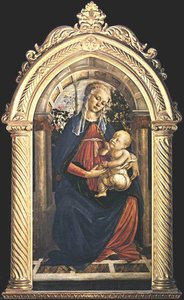
His presence extends beyond the borders of Italy. In France, the Musée du Petit Palais in Avignon holds a Madonna and Child. The painting shows the Virgin Mary with the infant Jesus, a quiet scene that reflects his earlier training. In Berlin, the Gemäldegalerie houses his Saint Sebastian, a work that captures a sense of repose in the figure.

  • The Birth of Venus (Uffizi, Florence)
  • Primavera (Uffizi, Florence)
  • Adoration of the Magi (Uffizi, Florence)
  • Saint Sebastian (Gemäldegalerie, Berlin)
  • Madonna and Child (Musée du Petit Palais, Avignon)

Quick Facts

  • Movement: Early Renaissance
  • Artist: Sandro Botticelli
  • Subject or theme: Nativity scene

Art Quiz

There is only one correct answer for each question.

Question 1:
What is the central theme depicted in the artwork 'Mystic Nativity'?
Question 2:
Which famous Renaissance artist is associated with the style and period suggested by this artwork's context?
Question 3:
Besides Mary, Joseph, and the baby Jesus, what animals are specifically mentioned as being present in the scene?
Question 4:
The setting of the painting includes what natural element, adding depth to the composition?
Question 5:
Botticelli's early life and artistic development were deeply rooted in which Italian city?