Switch to Print
 Read More







































 For artworks or reproductions larger than 105 cm (approximately 41 inches) on any side, the frame will be shipped as a kit, disassembled. This method ensures safe delivery and prevents damage during transport.


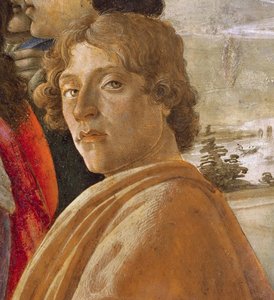
A Moment of Divine Revelation: Botticelli’s Cestello Annunciation
Botticelli's “Cestello Annunciation,” painted in 1489, stands as a testament to the burgeoning humanist spirit and artistic brilliance of Florence during its golden age. Commissioned by Benedetto di ser Francesco Guardi for his family chapel within Santa Maria Maddalena church, this tempera on wood panel transcends mere depiction; it embodies an idealized vision of faith and beauty—a reflection of Botticelli’s profound understanding of both theological concepts and visual artistry.- Subject Matter: The painting captures the pivotal biblical narrative of the Annunciation – Gabriel informing Mary that she will conceive Jesus Christ. This scene is rendered with meticulous detail, focusing on the serene expressions of Mary and Gabriel amidst a lush garden setting.
- Style & Technique: Botticelli’s signature style—characterized by graceful lines, delicate coloration, and an emphasis on idealized forms—is evident throughout “Cestello Annunciation.” He employs linear perspective subtly to create depth within the enclosed space of the Cestello (fruit orchard), enhancing the sense of tranquility and spiritual contemplation. The artist's masterful brushwork contributes to a velvety texture that captures the luminescence of the light filtering through the blossoms.
Historical Context: Renaissance Florence & Patronage
Florence in 1489 was at the epicenter of artistic innovation, fueled by the patronage of influential families like the Medici. Sandro Botticelli benefited immensely from this environment, allowing him to explore ambitious projects and push the boundaries of artistic convention. The commission itself speaks volumes about the importance placed on religious iconography during the Renaissance—a period marked by a renewed interest in classical ideals alongside devout Christian faith. This painting exemplifies the humanist preoccupation with portraying human figures with dignity and grace, reflecting the broader cultural shift away from medieval formalism.Symbolism & Visual Language
The Cestello orchard serves as more than just a picturesque backdrop; it symbolizes Paradise—the Garden of Eden—representing Mary’s virginity and purity before conception. The book held by Mary signifies her intellectuality and devotion to God's word, highlighting the theological significance of the event. Gabriel’s outstretched hand embodies divine grace and communication, conveying the message of salvation. Botticelli skillfully employs color palettes – predominantly pale greens and blues – to evoke feelings of serenity and spiritual illumination.Emotional Impact & Legacy
“Cestello Annunciation” continues to resonate with viewers centuries later due to its ability to convey profound emotion—a sense of awe, reverence, and tenderness for the sacred narrative. Botticelli’s meticulous attention to detail and his masterful use of color contribute to an enduring visual experience that captures the essence of Renaissance spirituality. Its influence can be seen in subsequent artistic endeavors, cementing its place as one of the most celebrated paintings of the Early Renaissance—a timeless masterpiece embodying beauty, grace, and divine revelation.Questions & Answers
In what year was "Cestello Annunciation (detail)" by Sandro Botticelli created?
"Cestello Annunciation (detail)" dates from 1489. The date places the work within Sandro Botticelli's career and its era.
Is "Cestello Annunciation (detail)" more bright or more dark overall?
"Cestello Annunciation (detail)" is deep_shadow overall, and its luminance is dark.
Where can I see a preview of "Cestello Annunciation (detail)"?
A preview of "Cestello Annunciation (detail)" by Sandro Botticelli is available on the artwork's Preview page.
More about this painting
 Preview
 Send
Send Share
Share
 Details
 Guide
Guide

 Download
 Similars
 X-Ray
X-Ray Diaporama
 Q&A
Q&A Stats
Stats