Preview
 Send
Send Share
Share
 Details

 Download
 Similars
 X-Ray
X-Ray Diaporama
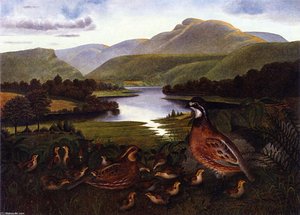
Two Ruffed Grouse


 Read More
Hand Made Oil Reproduction
Hand-painted oil on canvas in your size and frame, made to order by our artists. ( Buy Print Buy Image)




P118B $10

P118H $10

P118W $10

P438Z $10

P508JH $12

P508YH $12

P805H $10

P805Z $10

P919BZ $10

P919G $10

P919XJ $10

P959ZH $10

P968JZ $12

W106C $8

W218G $10

W218JH $8

W218Y $10

W307PJ $10

W316G $10

W316PJ $8

W316Y $10

W398PJ $8

W4111J $10

W500HY $15

W500JH $15

W692G $12

W849H $8

W940BG $15

W953PJ $8




Pick from our preset sizes that match the artwork's original proportions.

You may enter your own dimensions to fit a specific frame or space. If your selected size does not match the original image's proportions, we will either crop the artwork or extend the painting with additional hand-painted elements. A digital mockup will be sent for your approval before production begins.
Please note that the on-screen preview does not reflect the actual cropping or extension. Only the mockup will accurately show the final composition.
While custom sizes are available, we recommend selecting a dimension from the predefined list to preserve the original proportions.
After order, OriginalUniqueArt.com team will email client for instructions and provide a mockup preview
Worldwide Delivery () in 3/4 weeks instead of standard 5 weeks. (29 August). No compromise on quality.

Free Worldwide Express Shipping

High-Quality Linen Canvas

Full Shipping Insurance

Customs Tax Refund Guarantee

True Color Matching Guarantee

60-Day Return Policy (Defects Only)

100% Money-Back Guarantee

Bulk Discount Offer
 Glass option is only available in size under 110 CM

Two Ruffed Grouse
Reproduction Medium
Reproduction Size
-


Total Price
$ 300
A Moment of Woodland Serenity: Unpacking the Depths of Peale’s “Two Ruffed Grouse”
Rubens Peale's "Two Ruffed Grouse in Underbrush," painted in 1864, isn’t merely a depiction of two birds; it’s a carefully constructed tableau of American naturalism and the burgeoning spirit of scientific observation that defined the mid-19th century. The painting immediately draws the eye with its intimate portrayal of these elusive creatures nestled within a dense undergrowth—a scene brimming with quiet drama and subtle detail. Peale, a key figure in Philadelphia’s vibrant artistic and scientific community, masterfully blends elements of realism with an almost painterly softness, creating an image that feels both meticulously observed and deeply imbued with feeling.

The Painter’s Process: Observation and the Pursuit of Natural Truth
Peale's approach to this work is particularly fascinating when considered within the context of his career. He wasn’t primarily a painter of grand landscapes or heroic figures; instead, he dedicated himself to documenting the natural world through meticulous observation and scientific illustration – a practice deeply rooted in his family history, tracing back to his father, Charles Willson Peale, a renowned naturalist and museum curator. “Two Ruffed Grouse” exemplifies this dedication. The painting’s realism is remarkable, achieved not through idealized representation but by painstakingly rendering the textures of feathers, foliage, and earth. Notice the subtle variations in color—the mottled browns and greys of the birds' plumage blending seamlessly with the muted tones of the underbrush. Peale employed a technique that prioritized capturing the essence of the subject rather than imposing an artistic interpretation, a hallmark of the Hudson River School movement but executed with a distinctly American sensibility.
Symbolism Woven into the Woodland Scene
Beyond its straightforward depiction of two ruffed grouse, the painting is rich in symbolic layers. The inclusion of the geranium—a vibrant splash of red against the predominantly earthy palette—introduces an element of unexpected beauty and perhaps even a touch of melancholy. Some art historians suggest that this deliberate juxtaposition highlights the delicate balance between nature’s raw beauty and the human desire to capture and preserve it. Furthermore, the birds themselves hold symbolic weight; in American folklore, grouse were often associated with good fortune and prosperity. The placement of the birds within the dense undergrowth also speaks to themes of concealment, resilience, and the quiet dignity of the natural world—a sentiment increasingly valued during a period of rapid industrialization and westward expansion.
A Legacy of Observation: Peale’s Influence and Enduring Appeal
Rubens Peale's "Two Ruffed Grouse in Underbrush" stands as a testament to the power of observation and the evolving role of art in documenting the natural world. It reflects a shift away from purely decorative painting towards a more scientific and nuanced understanding of nature—a trend that would profoundly influence American art throughout the 19th century. The painting’s quiet intimacy, coupled with its meticulous detail and subtle symbolism, continues to resonate with viewers today, offering a glimpse into a bygone era and reminding us of the enduring beauty and complexity of the American wilderness. Its inclusion in the Detroit Institute of Arts collection underscores its significance as a pivotal work in American art history.
Artist Biography
A Life Bridging Art, Science, and Museums
Rubens Peale emerged from a uniquely fertile ground – the renowned Peale family of Philadelphia – a lineage synonymous with artistic talent and scientific curiosity in early America. Born on May 4th, 1784, his life was destined to be interwoven with the burgeoning cultural landscape of a new nation. While not achieving the same widespread recognition as his father, Charles Willson Peale, or brothers Raphaelle and Rembrandt, Rubens carved out a significant, if multifaceted, path for himself, one that blended museum administration, entrepreneurial ventures, and ultimately, a late-blooming artistic practice. His story is a testament to adapting to circumstance and finding creative expression even in the face of personal challenges. Unlike his siblings who readily embraced painting, Rubens struggled with impaired vision from an early age, initially hindering any serious pursuit of art. He received a formal education, attending classes at the University of Pennsylvania in 1803, suggesting a broader intellectual curiosity that would define much of his career. Early travels with his family to Europe in 1802 were cut short by political unrest, preventing an extended immersion in European artistic traditions.From Museum Director to Entrepreneur
Despite the limitations imposed by his eyesight, Rubens Peale quickly demonstrated a remarkable aptitude for organization and public engagement, skills that would become central to his professional life. He began his career deeply involved with the family’s most ambitious project: the Peale Museum in Philadelphia. Succeeding his father as director from 1810 to 1821, he skillfully managed this pioneering institution, a veritable cabinet of curiosities dedicated to natural history and art. This experience instilled in him a deep understanding of museum operations and the importance of making knowledge accessible to the public. His ambition didn’t stop there. He co-managed the Peale Museum in Baltimore with his brother Rembrandt, implementing innovative strategies like gas lighting – a revolutionary addition at the time – to attract evening visitors and enhance the viewing experience. This forward-thinking approach underscored his commitment to modernizing the museum experience. In 1825, Rubens ventured out on his own, establishing the New York Museum of Natural History and Science. However, this independent endeavor proved more challenging. Fierce competition from P.T. Barnum’s sensational American Museum, coupled with the economic hardships brought on by the Panic of 1837, ultimately led to financial difficulties and the forced sale of his collection in 1843. This period marked a turning point, prompting a retreat from the bustling world of museum management.A Late Flowering: The Artist Emerges
Following the closure of his New York Museum, Rubens Peale sought solace and a new direction at Woodland Farm near Schuylkill Haven, Pennsylvania. It was here, in retirement, that he unexpectedly rediscovered his artistic inclinations. Having largely abandoned painting due to his vision problems, he now embraced still life as a medium perfectly suited to his capabilities and interests. This late-life artistic awakening was profoundly influenced by the Peale family’s enduring fascination with natural history. His canvases began to blossom with meticulously rendered depictions of fruits, vegetables, and flowers – subjects that allowed him to exercise his keen observational skills and celebrate the beauty of the natural world. He even sought guidance from renowned landscape artist Edward Moran, further refining his technique and expanding his artistic horizons. Remarkably, in just the last ten years of his life (1864-1865), Rubens produced approximately 130 paintings, a testament to his newfound passion and dedication. These works, while not widely known during his lifetime, offer a unique glimpse into the mind of an artist who found his voice late in life.Legacy and Historical Significance
Rubens Peale’s legacy extends far beyond his artistic output. He was a true pioneer in museum management, contributing significantly to the development of public institutions dedicated to science and art education. His innovative use of gas lighting transformed the museum experience, making it more inviting and accessible to a wider audience. While he may not have achieved the same level of fame as his artist brothers, his contributions were vital in shaping the cultural landscape of early America. The substantial price paid for Rembrandt Peale’s portrait of Rubens with a geranium – $4.07 million in 1985 – underscores the growing appreciation for early American art and the enduring fascination with the Peale family. Rubens Peale represents a fascinating intersection of artistic ambition, scientific curiosity, and entrepreneurial spirit. He embodies the multifaceted nature of intellectual life in the young United States, demonstrating that success can take many forms and that creative expression can flourish even under challenging circumstances. His story serves as a reminder that it is never too late to pursue one’s passions and leave a lasting mark on the world.Family Influence
- Charles Willson Peale: Rubens' father, a prominent portrait painter and naturalist who founded Philadelphia's Peale Museum.
- Raphaelle Peale & Rembrandt Peale: His brothers, both accomplished artists in their own right.
- Titian Ramsay Peale: A younger brother distinguished as an explorer and naturalist.
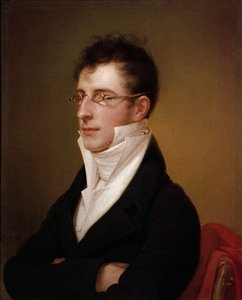
Rubens Peale
1784 - 1865 , United States of America
Quick Facts
- Artistic Movement Or Style: Still Life, Portraiture
- Artists Who Influenced This Artist: ['Charles Willson Peale']
- Date Of Birth: May 4, 1784
- Date Of Death: July 17, 1865
- Full Name: Rubens Peale
- Nationality: American
- Place Of Birth: Philadelphia, USA
Related Articles
Feathered Visions: A Historical & Artistic Exploration of Birds in Painting
Explore the rich history of birds in painting! Discover symbolism, artistic movements & master artists like Audubon. High-quality reproductions available at OriginalUniqueArt.
The Enchanted Canopy: Exploring Forests in Art History – From Romantic Idealization to Ecological Consciousness
Explore the rich history of forests in art! Discover Romantic masterpieces by Friedrich & Monet, Symbolist depths, and contemporary visions. Find inspiration & quality reproductions at OriginalUniqueArt.
Nature’s Sanctuary: Curating Enchanting Forest Artworks to Transform Your Home into a Serene Woodland Retreat
Transform your home into a serene woodland retreat with enchanting forest artworks. Discover museum-quality oil reproductions and custom landscape commissions designed to bring the peaceful beauty of nature indoors.

Wild Majesty: The Collector's Guide to Capturing the Spirit of Nature Through Masterful Wildlife Art
Discover the profound beauty of wildlife art through a curated journey of masterworks. From classical naturalism to bespoke oil commissions, explore how premium textures and expert craftsmanship capture nature's untamed spirit for the discerning collector.
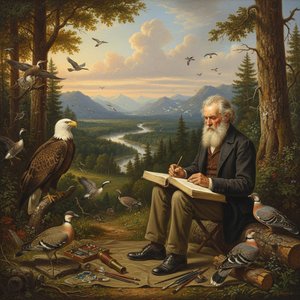
John James Audubon: A Life Immersed in Ornithological Art & the American Wilderness
Explore the life & art of John James Audubon, pioneer of ornithological illustration! Discover his stunning 'Birds of America' watercolors and complex legacy. Hand-painted reproductions available at OriginalUniqueArt.