
 Preview
 Send
Send Share
Share
 Details
 Guide
Guide

 Download
 Similars
 X-Ray
X-Ray Diaporama
 Q&A
Q&A Stats
StatsThe Last Judgment (detail) (12)


 Read More
Giclée / Art Print
Museum-quality giclée or canvas print with fast production and flexible finish options. ( Buy Hand Made Painting Switch to Digital Image)




P118B $10

P118H $10

P118W $10

P438Z $10

P508JH $12

P508YH $12

P805H $10

P805Z $10

P919BZ $10

P919G $10

P919XJ $10

P959ZH $10

P968JZ $12

W106C $8

W218G $10

W218JH $8

W218Y $10

W307PJ $10

W316G $10

W316PJ $8

W316Y $10

W398PJ $8

W4111J $10

W500HY $15

W500JH $15

W692G $12

W849H $8

W940BG $15

W953PJ $8




Pick from our preset sizes that match the artwork's original proportions.

Type the width and the height you need, to fit your frame or your wall. A print can only be cut, never made bigger than the picture, so a size with a different shape loses a part of the image. We send you a digital mockup to approve before we print anything. The picture shown on this page does not show the real cut — only the mockup does.
Worldwide Delivery () in 2 weeks instead of standard 4/5 weeks. (8 November)

Free Worldwide Express Shipping

High-Quality Linen Canvas

Full Shipping Insurance

Customs Tax Refund Guarantee

True Color Matching Guarantee

100-Day Return Policy (Defects Only)

100% Money-Back Guarantee

Bulk Discount Offer
 Glass option is only available in size under 110 CM

The Last Judgment (detail) (12)
Giclée / Art Print
Reproduction Size
-


Total Price
$ 81
A Moment Frozen in Time: Examining Rogier van der Weyden’s ‘The Last Judgment’ Detail
Rogier van der Weyden, a titan of Early Netherlandish painting (c. 1399 – 1464), stands as an unparalleled master of emotional expression and meticulous craftsmanship—qualities that resonate powerfully within his monumental work, “The Last Judgment.” This particular detail from the polyptych, housed in St John’s Cathedral in Basel, Switzerland, offers a glimpse into the artist's revolutionary approach to portraying religious fervor and human suffering. More than just an illustration of biblical scripture, it embodies a profound psychological exploration that distinguishes van der Weyden from his contemporaries.- Subject Matter & Composition: The image depicts a woman adorned in opulent crimson robes, clutching a golden ball—a symbol often interpreted as representing the Virgin Mary’s womb and divine grace. Her gaze is fixed upward, conveying unwavering faith and acceptance of God's judgment. Surrounding her are figures embodying various stages of purgatory, rendered with astonishing realism and imbued with palpable anguish.
- Style & Technique: Van der Weyden’s style is characterized by its sculptural quality—a hallmark of Flemish painting during the Burgundian Renaissance. He achieved this effect through painstaking layering of thin glazes over a meticulously prepared gesso ground, resulting in surfaces that appear to glow with internal luminescence. The artist's mastery of chiaroscuro – dramatic contrasts between light and dark – amplifies the emotional intensity of the scene.
Historical Context & Artistic Innovation
Painted circa 1446, “The Last Judgment” reflects the anxieties surrounding mortality and divine retribution prevalent in fifteenth-century Europe. However, van der Weyden transcends mere historical representation; he elevates it to an artistic statement of unparalleled depth. Unlike many artists of his time who prioritized stylized depictions, he insisted on portraying human anatomy with anatomical accuracy—a daring move that challenged prevailing conventions and foreshadowed the burgeoning humanist movement. This commitment to realism wasn’t simply about replicating what was seen; it was about conveying the inner turmoil experienced by individuals confronting their own mortality.- Color Palette & Symbolism: The dominant color scheme—a harmonious blend of orange and blue—creates a sense of ethereal grandeur, mirroring the celestial realm. The crimson robes symbolize Mary’s purity and divine compassion, while the golden ball reinforces her role as bearer of salvation. Each figure is meticulously rendered with subtle variations in skin tone and drapery folds, demonstrating van der Weyden's unparalleled attention to detail.
- Emotional Impact: “The Last Judgment” compels viewers to confront uncomfortable truths about human existence—the inevitability of death and the judgment of God. Yet, amidst the despair depicted on many faces, there’s also a glimmer of hope—represented by Mary's serene countenance and the radiant glow emanating from her crown. Van der Weyden’s ability to capture such profound emotion solidified his legacy as one of the greatest painters of his era.
Why Choose a Reproduction?
A high-quality reproduction of “The Last Judgment” allows you to bring this iconic masterpiece into your home or workspace. Utilizing archival inks and canvas stretched taut on museum-grade stretcher bars ensures that the vibrancy and nuance of van der Weyden’s original vision are faithfully preserved. Explore OriginalUniqueArt.com today and discover a stunning representation of artistic brilliance—a testament to Rogier van der Weyden's enduring influence on Western art history.Questions & Answers
What feeling is "The Last Judgment (detail) (12)" associated with?
"The Last Judgment (detail) (12)" by Rogier van der Weyden conveys a dramatic emotional tone.
What is the recommended use of a print of "The Last Judgment (detail) (12)"?
The suggested use for "The Last Judgment (detail) (12)" by Rogier van der Weyden is statement. It can serve other purposes as well.
What stage of Rogier van der Weyden's development does "The Last Judgment (detail) (12)" represent?
"The Last Judgment (detail) (12)" belongs to the Mature Period of Rogier van der Weyden's career. This classification relates the work to the artist's development.
Artist Biography
A Master of Emotion: The Life and Legacy of Rogier van der Weyden
Born around 1400 in the vibrant city of Tournai, nestled within what is now Belgium, Rogier de la Pasture – known to history as Rogier van der Weyden – emerged as a pivotal figure in the blossoming world of Early Netherlandish painting. While details surrounding his early life remain somewhat elusive, it’s believed he initially honed his skills not with brush and pigment, but as a goldsmith. This formative training instilled within him an unwavering dedication to meticulous detail and a refined sensibility for craftsmanship – qualities that would become hallmarks of his artistic style. The precision demanded by working with precious metals undoubtedly translated into the exquisite rendering of textures, fabrics, and expressions that define his masterpieces. He wasn’t merely depicting reality; he was recreating it with painstaking accuracy, imbued with an almost reverent attention to detail.
From Tournai to Brussels: A Rising Star
By 1427, van der Weyden had ascended to the rank of master within the Guild of Saint Luke in Tournai, a testament to his burgeoning talent and skill. This marked a significant turning point, solidifying his position as a professional artist and opening doors to important commissions. His ascent continued when he entered the service of Philip the Good, Duke of Burgundy, in 1435 – a patronage that would profoundly shape his career for the remainder of his life. Serving as court painter afforded him not only financial security but also access to an elite circle of influence and exposure to some of the most discerning eyes of the era. It was during this period that van der Weyden’s artistic vision truly began to mature, moving away from the somewhat rigid conventions of earlier Netherlandish painters towards a more emotionally resonant and naturalistic approach. He wasn't simply painting religious scenes; he was striving to evoke genuine feeling in the viewer, to create an experience that transcended mere observation.
The Language of Feeling: Style and Technique
Rogier van der Weyden’s artistic signature is immediately recognizable through several defining characteristics. His palette was remarkably rich and diverse, a vibrant tapestry of colors carefully chosen to avoid repetition and create depth and complexity within his compositions. He possessed an extraordinary ability to convey profound emotion – *pathos* – particularly in depictions of religious subjects like the Lamentation, where grief and sorrow are palpable. This emotional intensity wasn’t achieved through dramatic gestures or exaggerated expressions; rather, it was subtly woven into the very fabric of the painting, conveyed through delicate nuances of facial expression, body language, and composition. His figures, while adhering to the conventions of the time, demonstrate a growing interest in realistic representation – not just in anatomy and drapery, but also in capturing the psychological states of his subjects. They possess a dignified, almost sculptural quality, particularly evident in his grand triptychs, lending them an air of solemnity and reverence. He masterfully employed oil paint, building up layers of translucent glazes to achieve luminous effects and create a sense of depth and realism that was revolutionary for its time.
Lasting Influence: A Legacy Forged in Paint
Van der Weyden’s influence extended far beyond the borders of his native Flanders. His works were highly sought after throughout Europe, particularly in Italy and Spain, where they introduced a new level of emotional depth and naturalism to local artistic traditions. Although his fame experienced a period of relative decline in the 17th century, a rediscovery during the 19th century cemented his place as one of the most important painters of the 15th century. He stands alongside Jan van Eyck and Robert Campin as one of the “three great” Early Flemish masters, each contributing uniquely to the development of Northern Renaissance art. His innovative techniques and emotionally charged compositions paved the way for future generations of artists, inspiring countless imitators and influencing the course of Western painting for centuries to come. He helped establish oil painting as the dominant medium and elevated the status of the artist within society, transforming them from skilled craftsmen into revered creators. Rogier van der Weyden’s legacy continues to resonate today, a testament to his enduring genius and his profound understanding of the human condition.
Notable Works and Enduring Masterpieces
Throughout his prolific career, van der Weyden produced numerous works that stand as testaments to his artistic prowess. St Luke Drawing a Portrait of the Madonna, housed in the Museum of Fine Arts, Boston, showcases his mastery of oil on panel and meticulous observation. The Lamentation, residing in the Musée des Beaux-Arts Tournai, Belgium, is perhaps his most celebrated work – a powerfully emotive depiction of Christ’s mourning, renowned for its dramatic use of *chiaroscuro* and its ability to evoke profound sorrow in the viewer. Multiple versions of The Deposition exist, each demonstrating his skill in conveying grief and drama with breathtaking sensitivity. The Annunciation, a masterpiece of refined style and attention to detail, exemplifies his ability to imbue even the most traditional subjects with a sense of freshness and vitality. And finally, the intricate and richly detailed Bladelin Triptych stands as a monumental achievement – a complex altarpiece that showcases the full range of van der Weyden’s artistic abilities. These works, and many others, continue to captivate audiences today, solidifying his position as one of the most important painters of the 15th century.
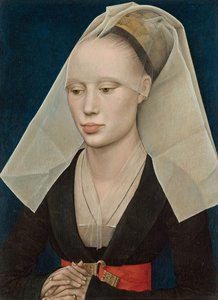
Rogier van der Weyden
1400 - 1464 , Belgium
Quick Facts
- Artistic Movement Or Style: Early Netherlandish art
- Artists Or Movements Influenced By This Artist:
- Antonello da Messina
- Hans Memling
- Albrecht Dürer
- Artists Who Influenced This Artist:
- Jan van Eyck
- Robert Campin
- Full Name: Rogier van der Weyden
- Nationality: Flemish
- Notable Artworks:
- The Descent from the Cross
- Lamentation of Christ
- Portrait of a Lady
- Virgin and Child
- The Magdalene Reading
- Place Of Birth: Tournai, Belgium
- Date Of Birth: 1400
- Date Of Death: 1464
Related Articles

Early Netherlandish Masters: 10 Paintings That Revolutionized Art & Decor
Journey into the Early Netherlandish Renaissance! Explore 10 iconic paintings by Jan van Eyck, Rogier van der Weyden & more. Discover stunning detail, symbolism, and oil painting techniques. Find museum-quality art reproductions for your home at OriginalUniqueArt.com.

Hugo van der Goes: Devotion, Innovation & the Psychological Depth of Early Netherlandish Painting
Explore the revolutionary art of Hugo van der Goes – a master of Early Netherlandish painting renowned for his dramatic realism, psychological depth & profound influence on Renaissance artists. Discover his iconic works and lasting legacy.

Mastering Light and Shadow: The 25 Greatest Artworks by Rembrandt van Rijn
Explore Rembrandt's greatest Baroque masterpieces through light and shadow. Discover the full collection online at OriginalUniqueArt.com.

Rogier van der Weyden: Emotion, Innovation & the Early Netherlandish Renaissance
Explore the revolutionary art of Rogier van der Weyden, a pivotal figure of the Early Netherlandish Renaissance. Discover his emotional realism, innovative compositions, and lasting impact on painting history.

Early Netherlandish Masters: 10 Paintings That Revolutionized Art & Decor
Journey into the world of Early Netherlandish painting! Explore 10 masterpieces by Jan van Eyck, Rogier van der Weyden & more. Discover stunning detail, symbolism & Renaissance art for your home decor. Find museum-quality reproductions on OriginalUniqueArt.com


