The World Before Van der Weyden: International Gothic Influences
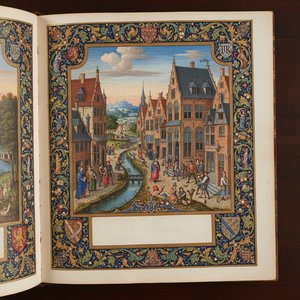
International Gothic is a period of Gothic art that began in Burgundy, France, and northern Italy in the late 14th and early 15th century. It then spread very widely across Western Europe, hence the name for the period, which was introduced by the Fr...
Before the name Rogier van der Weyden resonated through the courts of Europe, a distinct artistic language held sway – that of the International Gothic style. Flourishing in Burgundy and northern Italy during the late 14th and early 15th centuries, this aesthetic prioritized elegance, refined detail, and rich symbolism over strict naturalism. Artists like Gentile da Fabriano cultivated an atmosphere of courtly grace, employing lavish gold leaf, elongated figures draped in sumptuous fabrics, and narratives imbued with a delicate lyricism. While seemingly distant from the profound emotionality that would characterize van der Weyden’s work, the foundations were laid within this tradition. The emphasis on meticulous craftsmanship, the use of vibrant color palettes, and the storytelling power of imagery all served as crucial precursors to his innovations. Van der Weyden didn't emerge in a vacuum; he inherited a sophisticated visual vocabulary that he would then transform with remarkable skill and sensitivity.
A Master Craftsman Emerges: Early Life and Training in Tournai
Born either in 1399 or 1400 in the bustling city of Tournai, Rogier van der Weyden – initially known as Roger de la Pasture – entered a world steeped in artistic tradition. His father, Henri de le Pasture, was a respected knife manufacturer, suggesting a family accustomed to precision and skilled labor. The details surrounding his early training remain somewhat elusive, obscured by the loss of crucial archival records. However, it’s widely believed he began his apprenticeship around 1426 with Robert Campin, another pivotal figure in the development of Early Netherlandish painting. This period was formative, exposing him to a burgeoning naturalism and a growing interest in depicting religious narratives with greater realism. By 1436, van der Weyden had established himself as ‘stadsschilder’ – town painter of Brussels – a testament to his rising reputation and the esteem in which he was held within the artistic community. This appointment placed him at the heart of the Burgundian court, opening doors to commissions from powerful patrons and solidifying his position as one of the most sought-after artists of his time.
Revolutionizing Religious Painting: Emotional Realism & Compositional Innovation
Early Netherlandish painting is the body of work by artists active in the Burgundian and Habsburg Netherlands during the 15th- and 16th-century Northern Renaissance period, once known as the Flemish Primitives. It flourished especially in the cities...
Van der Weyden’s true genius lay in his ability to infuse religious painting with an unprecedented level of emotional realism. Unlike earlier depictions that often prioritized symbolic representation, van der Weyden sought to convey the raw human experience of faith – grief, sorrow, piety, and divine revelation. This is powerfully evident in works like *Christ appears to Mary*, where the Virgin’s reaction to the angel's announcement is rendered with a delicate vulnerability previously unseen in religious art. His compositions were equally groundbreaking. He moved away from the symmetrical arrangements common in earlier Gothic painting, opting instead for dynamic groupings that drew the viewer into the scene and heightened the sense of drama. The use of shallow space, often framed by architectural elements or painted drapery, further intensified this effect, creating a palpable intimacy between the figures and the observer. This innovative approach wasn’t merely about technical skill; it was about forging a deeper connection with the sacred narrative.
Van der Weyden’s Legacy: Impact on the Northern Renaissance and Beyond
By the latter half of the 15th century, Rogier van der Weyden had eclipsed even Jan van Eyck in popularity. His paintings were highly prized by European nobility and aristocrats, finding their way to Italy and Spain – a testament to his widespread influence. Artists across the continent eagerly sought out examples of his work, studying his techniques and absorbing his distinctive style. The impact is particularly noticeable in the works of Italian painters like Domenico Ghirlandaio and Sandro Botticelli, who incorporated elements of van der Weyden’s emotional realism and compositional innovations into their own paintings. His emphasis on naturalism, combined with a profound understanding of human psychology, laid the groundwork for many subsequent developments in Northern Renaissance art. While his fame waned somewhat after the 17th century due to shifting aesthetic tastes, van der Weyden’s rediscovery in the 19th and 20th centuries cemented his place as one of the most important figures in the history of painting.
Key Works and Enduring Symbolism: Exploring Iconic Paintings
The *Descent from the Cross* is arguably van der Weyden’s masterpiece, a poignant depiction of Christ's body being lowered from the cross. The tightly compressed composition, the expressive faces of the mourners, and the masterful use of light and shadow create an overwhelming sense of grief and sorrow. Similarly, the *St Columba Altarpiece (detail)* showcases his meticulous attention to detail and serene compositional balance. Each element – the rich fabrics, the delicate facial features, the symbolic objects – contributes to a deeply moving devotional experience. Even in portraits, such as those commissioned by prominent citizens of Brussels, van der Weyden imbued his subjects with a sense of dignity and inner life. The inclusion of subtle symbols—a rosary, a book, or a specific flower—often alluded to the sitter’s piety or social status, adding layers of meaning to these intimate representations.
- The use of color was also deeply symbolic.
- Reds often represented passion and sacrifice.
- Blues symbolized divinity and purity.
Technical Brilliance and Artistic Process: Materials and Methods
Van der Weyden’s mastery wasn't solely rooted in artistic vision; it was also a product of exceptional technical skill. He worked primarily with oil paints on panel, employing a meticulous layering technique to achieve remarkable depth and luminosity. Unlike tempera painting, which used egg yolk as a binder, oil paint allowed for greater flexibility and blending, enabling him to create subtle gradations of tone and texture. His workshop played a crucial role in the production of his paintings, with assistants often responsible for underpainting and preliminary sketches. However, van der Weyden himself would have been directly involved in the most important aspects of the work – the final details, the faces of the figures, and the overall composition. He is known to have used an unusually broad range of colors, avoiding repetition within a single painting to create a richer, more vibrant effect. This dedication to craftsmanship, combined with his innovative approach to composition and emotional realism, cemented Rogier van der Weyden’s legacy as one of the most influential painters of the Early Netherlandish Renaissance.