The Dawn of a New Vision: Historical Context & Burgundian Influence
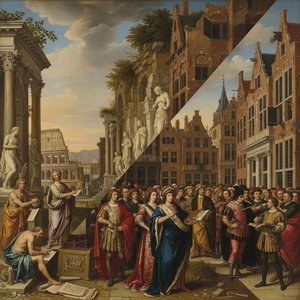
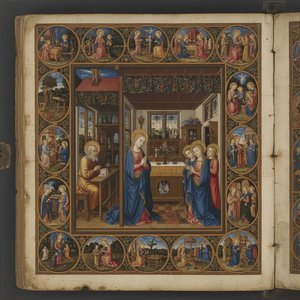
The 15th century witnessed a remarkable flowering of artistic innovation in the Low Countries – what we now know as Early Netherlandish painting. This wasn’t merely a stylistic shift; it was a profound reimagining of how the world could be represented on panel, driven by a unique confluence of historical circumstances and patronage. The region, encompassing modern-day Belgium, parts of France, Germany, and the Netherlands, flourished under the rule of the Dukes of Burgundy, whose court became a beacon of refined taste and lavish display. This environment fostered an unprecedented demand for exquisitely detailed works of art, not just for religious devotion but as symbols of wealth, status, and cultural sophistication. Unlike their Italian contemporaries who drew heavily on classical antiquity, Netherlandish artists looked inward, focusing on the meticulous observation of the natural world and the everyday lives of those around them. The burgeoning merchant class in cities like Bruges, Ghent, and Tournai provided a new source of patronage, eager to commission portraits and devotional pieces that reflected their prosperity and piety. This shift away from purely ecclesiastical commissions allowed for greater experimentation with genre scenes and individual portraiture, laying the groundwork for the artistic revolution that was about to unfold.
Jan van Eyck and the Revolution in Oil Painting Technique
Oil painting is a painting method involving the procedure of painting with pigments combined with a drying oil as the binder. It has been the most common technique for artistic painting on canvas, wood panel, or copper for several centuries. The adva...
Central to understanding this transformation is the figure of Jan van Eyck. While not necessarily the *inventor* of oil painting – evidence suggests its use predates him – Van Eyck perfected the technique, elevating it from a practical medium to an art form capable of breathtaking realism and luminosity. Prior to oil paint, tempera was the dominant method, requiring artists to work quickly and in broad strokes. Oil paint, however, allowed for slow, deliberate layering, enabling van Eyck to build up depth, texture, and subtle gradations of color with unparalleled precision. His masterpiece, The Arnolfini Portrait, (1434) is a testament to this mastery. The sheer detail – from the individual strands of hair on Giovanni Arnolfini’s beard to the reflection in the convex mirror – is astonishing even today. But Van Eyck's innovation wasn’t simply technical; it was conceptual. He understood how oil paint could be used to capture not just *what* things looked like, but also their surface qualities—the sheen of metal, the softness of fur, the weight of fabric. This newfound ability to render reality with such fidelity imbued his paintings with a sense of presence and immediacy that had never been seen before.
Iconography and Symbolism: Deciphering Hidden Meanings in Early Netherlandish Art
 Illuminating Realism: Early Netherlandish Painting (15th-16th Centuries)
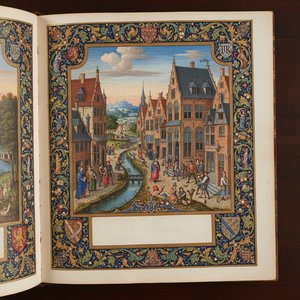
Explore the captivating world of Early Netherlandish painting! Discover Jan van Eyck, Hans Memling & more. Uncover symbolism, techniques & the legacy of these Flemish masters. A comprehensive guide for art enthusiasts.
To fully appreciate Early Netherlandish painting, one must understand its rich tapestry of symbolism. These were not simply portraits or landscapes; they were visual puzzles laden with hidden meanings intended to be deciphered by a knowledgeable audience. Every object, every gesture, every animal held a specific significance rooted in religious belief, folklore, and contemporary customs. For example, the single candle extinguished in The Arnolfini Portrait often interpreted as representing the presence of God, or the dog symbolizing fidelity. The fruit depicted might allude to innocence or temptation, while even the oranges scattered throughout a scene could represent wealth and fertility. Artists like Van Eyck were meticulous in their attention to detail precisely because these details carried such weight. They weren’t merely depicting reality; they were constructing elaborate allegories that spoke to deeper spiritual truths. Understanding this iconography requires careful study and an awareness of the cultural context in which these paintings were created, transforming the act of viewing into a rewarding intellectual pursuit.
Beyond Bruges: Key Artists and Regional Variations (Campin, Weyden, Memling)
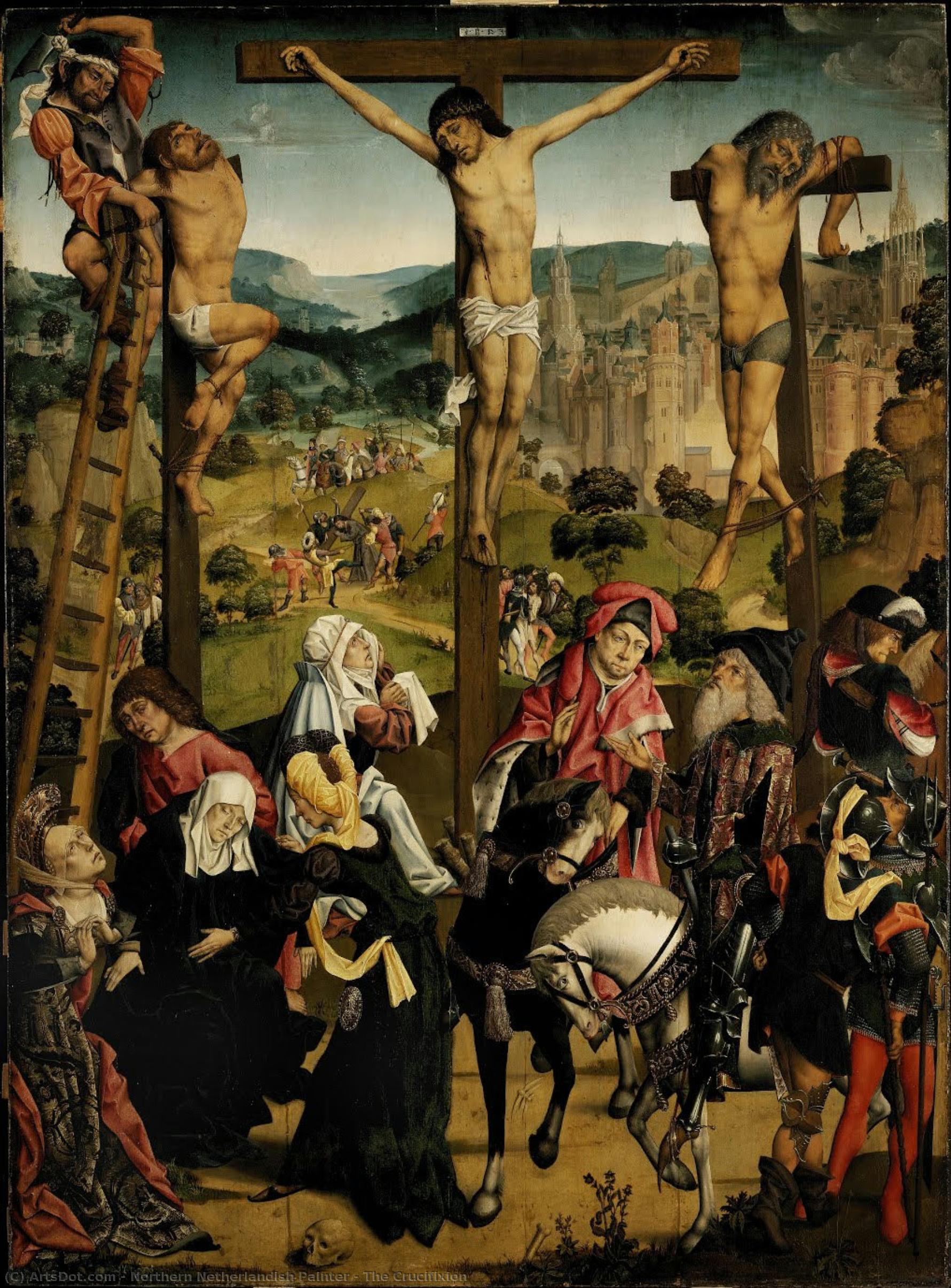 northern netherlandish painter
Explore Northern Netherlandish painting: realistic detail & religious scenes from the 15th-16th centuries. Discover artists like Jan van Eyck & Jacob van Oostsanen.
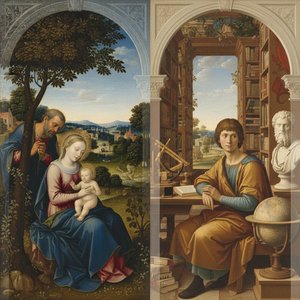
While Jan van Eyck often dominates discussions of Early Netherlandish painting, he was by no means alone. Robert Campin, considered by many to be the pioneer of the style, laid much of the groundwork with his realistic depictions of religious scenes and everyday life. His Mérode Altarpiece, for example, showcases a similar attention to detail and naturalism as Van Eyck’s work, though with a slightly more rustic quality. Rogier van der Weyden, another pivotal figure, brought a new level of emotional intensity to his paintings, particularly in his depictions of the Virgin Mary. His compositions are often characterized by elegant drapery, refined figures, and a heightened sense of pathos. Further afield, Hans Memling flourished in Bruges, developing a distinctive style marked by serene beauty, delicate color palettes, and a focus on portraiture. Each artist brought their own unique sensibility to the movement, resulting in a diverse range of styles that collectively define Early Netherlandish painting. Regional variations also played a role; artists working in Ghent tended towards more elaborate compositions and vibrant colors, while those in Tournai favored a more restrained approach.
The Legacy of Realism: Impact on Subsequent Artistic Movements & Modern Appreciation
The impact of Early Netherlandish painting extended far beyond the 15th century. The techniques developed by Van Eyck and his contemporaries – oil paint, meticulous detail, realistic representation – profoundly influenced subsequent artistic movements across Europe. Artists in Italy, initially dismissive of what they saw as overly detailed and “northern” style, gradually embraced these innovations, incorporating them into their own work. Antonello da Messina, for example, traveled to the Netherlands specifically to study Van Eyck’s techniques, bringing them back to Italy and influencing artists like Leonardo da Vinci and Michelangelo. The emphasis on realism also paved the way for later developments in portraiture and genre painting. Today, Early Netherlandish masters are celebrated as pioneers of modern art, their works admired not only for their technical brilliance but also for their psychological depth and enduring beauty. Their paintings continue to captivate audiences with their ability to transport us back in time, offering a glimpse into a world that is both familiar and profoundly different.
Collecting Early Netherlandish Masters Today: A Guide for Enthusiasts
Acquiring works – or even high-quality reproductions – by Early Netherlandish masters can be a deeply rewarding experience. Original paintings are exceedingly rare and command astronomical prices, making them accessible only to the most established collectors. However, museum-quality reproductions offer an excellent way to appreciate these masterpieces in your own home. OriginalUniqueArt.com specializes in handmade oil paintings created by skilled artists who meticulously recreate the detail and luminosity of the originals. When choosing a reproduction, pay attention to the quality of the canvas, the pigments used, and the artist’s skill in capturing the nuances of the original work. Consider also the framing options available – a carefully chosen frame can enhance the beauty of the painting and complement your décor. Beyond reproductions, exploring the works of contemporary artists inspired by Early Netherlandish techniques is another avenue for enthusiasts. The legacy of these masters continues to resonate today, inspiring new generations of artists to push the boundaries of realism and explore the hidden depths of human experience.