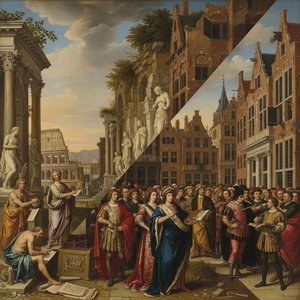
The Dawn of a New Vision: Campin’s Place in Art History
Robert Campin, working in the first quarter of the 15th century, occupies a pivotal yet often enigmatic position in the history of art. While his name may not resonate with the immediate recognition afforded to contemporaries like Jan van Eyck or Rogier van der Weyden, it is increasingly understood that Campin was instrumental in initiating the seismic shift that defined Early Netherlandish painting – a movement that irrevocably altered the course of Western artistic tradition. For decades, he remained known primarily as the “Master of Flémalle,” identified through a group of powerfully evocative paintings attributed to his hand and linked geographically to the small Belgian town. However, archival research has solidified his identity as Robert Campin, a successful painter established in Tournai by 1406, and a figure whose innovations were not merely stylistic but fundamentally representational. He wasn’t simply refining existing techniques; he was forging a new path—one that prioritized observation, detail, and an unprecedented level of realism within a deeply spiritual context.
The art world before Campin was largely dominated by the International Gothic style – characterized by elegant elongation, rich ornamentation, and a focus on idealized forms. While beautiful, it often lacked a tangible connection to the everyday world. Campin’s breakthrough lay in his ability to infuse religious narratives with an almost startling sense of immediacy. He didn't abandon spirituality; rather, he grounded it in the concrete realities of domestic life, creating scenes that felt both sacred and profoundly human. This marked a departure from the stylized conventions of the past and paved the way for the meticulous detail and psychological depth that would become hallmarks of the Northern Renaissance.
Beyond the International Gothic: Naturalism and Detail in Campin's Style
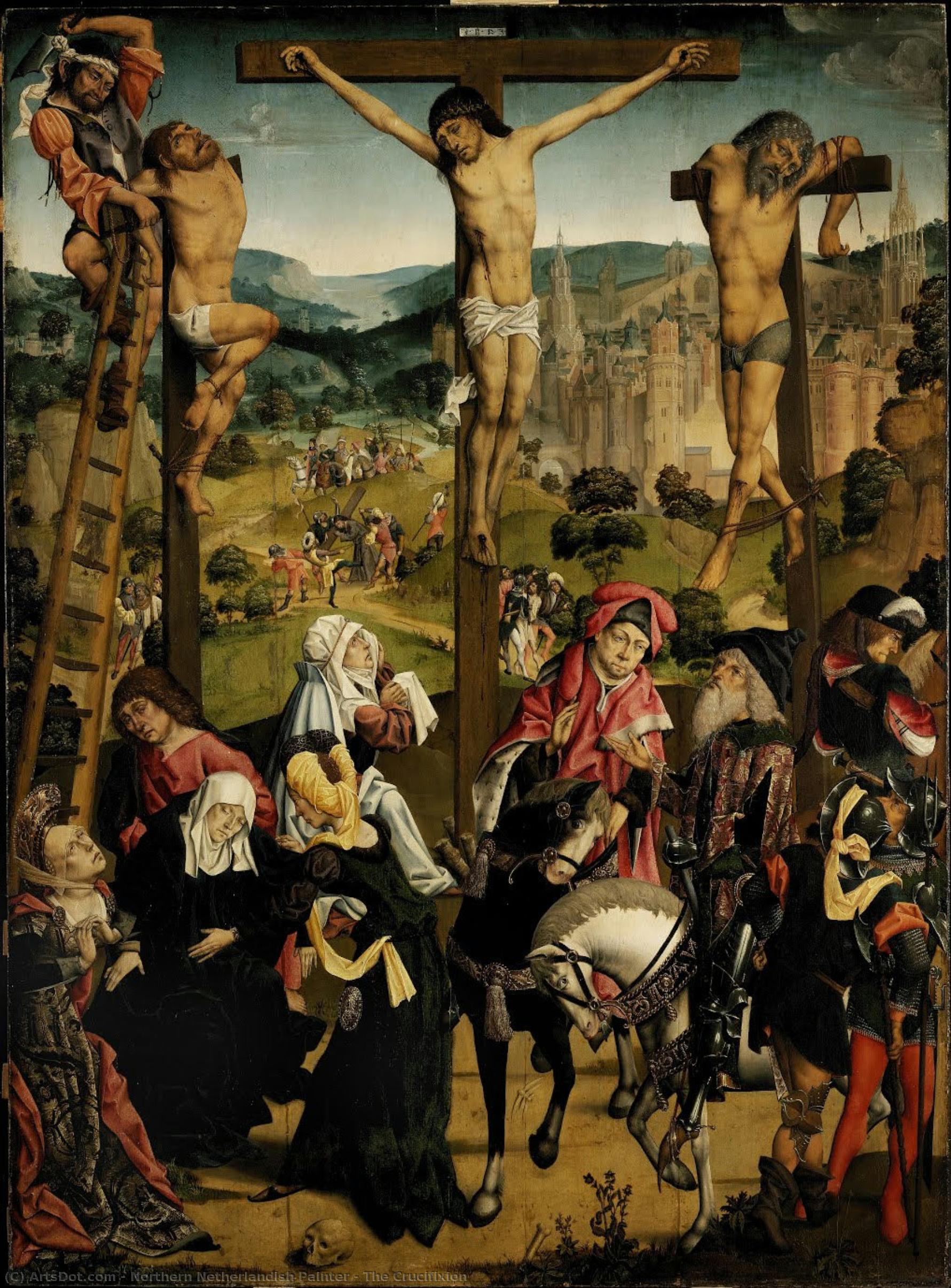 northern netherlandish painter
Explore Northern Netherlandish painting: realistic detail & religious scenes from the 15th-16th centuries. Discover artists like Jan van Eyck & Jacob van Oostsanen.
To truly appreciate Campin’s significance, one must examine the radical nature of his naturalistic approach. Unlike his predecessors who often employed symbolic colors and patterns as primary means of expression, Campin focused on rendering textures, light, and form with an almost scientific precision. The folds of drapery aren't merely suggested; they possess weight and volume, responding to gravity and the contours of the body beneath. Objects within his compositions—from the polished surfaces of pewter jugs to the rough-hewn wood of furniture—are depicted with a loving attention to detail that borders on obsession. This wasn’t simply about technical virtuosity; it was about creating a believable world, one in which religious events could unfold with a palpable sense of presence.
His mastery of oil paint played a crucial role in achieving this effect. While the medium itself wasn't entirely new, Campin exploited its unique properties—its slow drying time, its ability to blend seamlessly, and its capacity for layering—to create luminous surfaces and subtle gradations of tone. This allowed him to capture the play of light on different materials with unprecedented accuracy, further enhancing the realism of his scenes. The use of oil also enabled a level of detail previously unattainable in tempera or fresco, allowing for the depiction of minute textures and intricate patterns.
Decoding the Mérode Altarpiece: Symbolism and Religious Narrative
Early Netherlandish painting is the body of work by artists active in the Burgundian and Habsburg Netherlands during the 15th- and 16th-century Northern Renaissance period, once known as the Flemish Primitives. It flourished especially in the cities...
Perhaps no work embodies Campin’s revolutionary approach more powerfully than the Mérode Altarpiece (c. 1425–28). This triptych, commissioned by a wealthy merchant named Joris van der Paele and his wife, depicts the Annunciation scene unfolding within a remarkably detailed domestic interior. What sets this work apart is its deliberate integration of everyday objects into the religious narrative. The lily in the angel’s hand symbolizes the Virgin Mary's purity; the enclosed garden represents her virginity; even the single candle burning on the table alludes to Christ as the “light of the world.”
However, Campin doesn’t simply present these symbols in a didactic manner. They are woven seamlessly into the fabric of the scene, becoming integral parts of the everyday environment. The inclusion of Joris and his wife as donors within the painting further blurs the boundaries between the sacred and the secular. Their presence isn't merely decorative; it suggests that they too are participants in this divine event, invited to witness—and perhaps even emulate—the Virgin Mary’s humility and devotion. This intimate portrayal of religious experience was a radical departure from the more formal and distant depictions of earlier art.
Campin’s Workshop and Influence on Contemporary Artists
The impact of Campin's innovations extended far beyond his own studio. He maintained a thriving workshop in Tournai, attracting talented apprentices who would go on to become leading artists in their own right. Among them were Rogier van der Weyden, whose serene and emotionally charged compositions owe a clear debt to Campin’s influence, and Jacques Daret, another skilled painter who absorbed Campin's naturalistic style. Records indicate that both artists entered Campin’s workshop in 1427, suggesting a direct transmission of knowledge and technique.
While the precise extent of Campin’s influence remains a subject of scholarly debate, it is undeniable that his emphasis on realism, detail, and psychological depth resonated with a generation of artists eager to break free from the constraints of the International Gothic style. His work served as a catalyst for the development of Early Netherlandish painting, inspiring artists to explore new ways of representing religious narratives and engaging viewers on a more personal level.
The Enduring Legacy of a ‘Primitive’ Master
Despite his pivotal role in art history, Robert Campin remained largely overshadowed by his more celebrated contemporaries for centuries. Often referred to as the “Master of Flémalle,” he was seen as a somewhat provincial figure—a precursor to the true geniuses of the Northern Renaissance. However, recent scholarship has challenged this perception, recognizing Campin not merely as a forerunner but as an innovator in his own right.
His legacy lies not only in his technical achievements but also in his ability to infuse religious art with a profound sense of humanity. He demonstrated that spirituality wasn't confined to the realm of idealized forms and symbolic gestures; it could be found within the everyday realities of domestic life, in the textures of fabric, the play of light, and the faces of ordinary people. Today, Robert Campin is rightly recognized as one of the founding fathers of Early Netherlandish painting—a master whose work continues to inspire awe and admiration.
Explore the world of Renaissance art with OriginalUniqueArt.com, where you can discover high-quality reproductions of masterpieces by Robert Campin and other iconic artists. From custom paintings to museum-quality prints, we bring the beauty of art into your home.