
 Preview
 Send
Send Share
Share
 Details
 Guide
Guide

 Download
 Similars
 X-Ray
X-Ray Diaporama
 Q&A
Q&A Stats
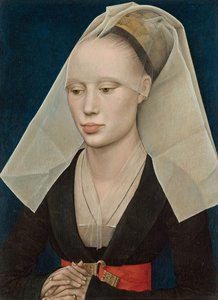
StatsThe Annunciation (detail)


 Read More
Get a print-ready file that goes far beyond the web preview. Every digital image we sell comes from a high-resolution master in our stock database — usually 5,000 to 15,000 pixels wide — so you can print large, crop tightly, or reproduce fine detail with confidence.
No file leaves our studio untouched. A digital expert checks the colors against the original painting and corrects them if needed, then improves clarity and detail with professional retouching tools — always staying faithful to the artist's brushwork and style. The result is an image that looks like the painting, not like a filtered scan.
You approve before you're done: our expert sends the image by e-mail within 72 hours for your review. Not satisfied? Ask for improvements or corrections, or request a refund if the quality falls short.
This is the quality relied on by publishers, design studios, galleries and print shops.
Digital Image
Download a high-resolution file for personal display, printing, and creative projects. ( Switch to Print Buy Hand Made Painting)
Included in Every Digital Image Order
Expert Digital Delivery, Guaranteed
When you choose OriginalUniqueArt.com, you're not just getting an image - you're receiving a professionally enhanced digital artwork, crafted with precision and backed by a satisfaction guarantee. Here's everything that comes with your order, automatically:

Fast Email Delivery
Your high-resolution digital image file will be emailed to you within 72 hours of ordering - ready for immediate use.

AI-Enhanced Digital File
Your artwork is professionally optimized using advanced AI tools and manual editing, ensuring maximum detail, clarity, and color accuracy.

Free Lifetime Re-Delivery
Accidentally deleted or lost your file? No worries - we'll resend it to you anytime, free of charge.

No Import Fees - Ever
Enjoy your artwork instantly with zero customs, duties, or delivery fees - digital downloads are always tax-free.

Color Accuracy Guarantee
We ensure your digital image reflects the original colors as closely as possible using professional tools and color management.

100-Day Satisfaction Guarantee
If you're not satisfied with your digital image, we'll revise it or refund 100% within 100 days - no questions asked.

100% Money-Back Guarantee
Not satisfied? Get a full refund within 100 days of receiving your digital file - no questions asked.

Bulk Order Discounts
Buy 3 images, save 10% - Buy 5, save 15% - Buy 10+, save 20%. Great for creative projects, galleries, and agencies.
A Divine Encounter in Miniature
In the quietude of a fifteenth-century domestic interior, a profound miracle unfolds. Rogier van der Weyden’s The Annunciation captures that breathless, suspended moment when the celestial meets the terrestrial. This exquisite detail invites us into the private sanctuary of the Virgin Mary, where the air seems thick with the weight of divine intention. As the Angel Gabriel delivers his transformative message, we are not merely observers of a religious dogma, but witnesses to a deeply human experience of awe and contemplation. The scene is anchored by a sense of profound stillness, a serene hush that allows the viewer to linger on the subtle interplay of light and shadow, much like the soft glow of a candle in a darkened chapel.
The composition masterfully balances the monumental with the intimate. Through the window, a glimpse of the world beyond suggests a continuity between the sacred event and the everyday life of Flanders. The presence of a simple vase and a solitary cup serves as more than mere domestic ornament; they are vessels of meaning, grounding the supernatural occurrence in a tangible, tactile reality. For the discerning collector or interior designer, this piece offers a window into a world where every object holds a soul, making it an ideal centerpiece for spaces that value quiet elegance and intellectual depth.
The Mastery of Netherlandish Naturalism
To gaze upon Van der Weyden’s work is to witness the pinnacle of Early Netherlandish technique. Having been trained in the meticulous traditions of goldsmithing, the artist brought an unparalleled precision to the canvas. His approach to naturalism transcends simple imitation; he seeks to elevate reality through a sophisticated layering of thin, translucent glazes. This painstaking process creates a luminous surface that seems to radiate from within, capturing the velvety texture of heavy drapery and the delicate, porcelain-like skin of the Virgin with breathtaking fidelity.
The artist’s ability to manipulate light—a technique often compared to the legendary Jan van Eyck—is particularly evident in this detail. The way light catches the edge of a ceramic vessel or illuminates the folds of a silken robe creates a sense of three-dimensional volume that is almost sculptural. This mastery of texture and light does more than showcase technical prowess; it imbues the painting with an atmospheric depth that draws the eye inward, encouraging a meditative state. Such a high level of craftsmanship ensures that a reproduction of this work retains its ability to command attention and evoke wonder in any sophisticated setting.
Symbolism and the Language of Devotion
Every element within this sacred space is imbued with symbolic resonance, designed to guide the faithful through a visual liturgy. The book held by Mary is not merely an object of study but a symbol of her wisdom and the fulfillment of ancient prophecy. The window, through which she gazates, represents the threshold between the known and the unknown, the human and the divine. Even the subtle arrangement of the figures in the background contributes to the narrative tension, suggesting a world that is both watching and waiting for the dawn of a new era.
For those seeking to infuse their homes with art that tells a story, this work provides an endless well of inspiration. The emotional impact of the piece lies in its ability to evoke pathos—a tender, relatable human emotion wrapped in the grandeur of religious history. It is a painting of quiet strength and enduring grace, making it a timeless choice for those who appreciate art that speaks to the spirit as much as it does to the eye. Whether placed in a sunlit library or a moody, contemporary study, this reproduction serves as a profound reminder of the beauty found in moments of absolute stillness.
Questions & Answers
Are there works similar to "The Annunciation (detail)"?
Artworks similar to "The Annunciation (detail)" by Rogier van der Weyden are gathered on the artwork's Similars page.
What mood and emotion come together in "The Annunciation (detail)"?
In "The Annunciation (detail)", a serene mood accompanies a reflective emotion.
Is "The Annunciation (detail)" by Rogier van der Weyden a well-known artwork?
The popularity level recorded for "The Annunciation (detail)" by Rogier van der Weyden is iconic.
Artist Biography
The Life and Identity of Rogier van der Weyden
The name Rogier van der Weyden emerges from the shifting linguistic landscapes of the fifteenth century. Born in Tournai, a Bishopric that is now part of Belgium, around 1399 or 1400, he moved through a world of evolving identities. He was known as Roger de la Pasture and Rogelet de le Pasture before his name was translated to Dutch as Rogier van der Weyden. This transition reflects the complex social and regional textures of the Burgundian Netherlands during his lifetime.
His existence was defined by the transition from a craftsman to a central figure of Early Netherlandish painting. He navigated the high-stakes circles of the Burgundian court, moving between the urban centers of Tournai and Brussels. His life reached its conclusion on 18 June 1464. He left behind a body of work that redefined the capacity for human emotion in Northern Renaissance art, moving away from rigid iconography toward a more visceral, breathing reality.
Early Life, Family and Training
The foundations of Rogier van der Weyden’s precision lie in the workshop of a cutler. His father, Henri de le Pasture, was a prosperous man who died around 1425-26. Alongside his mother, Agnes de Wattrélos—sometimes called demoiselle Agnès de Waterlos—he was raised in a household defined by craftsmanship. Before the brush became his primary tool, Rogier likely honed his technical sensibilities as a goldsmith. This early immersion in the manipulation of precious metals instilled a discipline for minute detail and a refined sense of texture that would later define his approach to oil painting.
A shift in his professional trajectory occurs in the late 1420s. On 5 March 1427, Rogier entered the workshop of Robert Campin as an apprentice. This period marks his transition from the metalworker's bench to the painter's easel. During these formative years, his personal life also took root. He married Elisabeth Goffaert between 1426 and 1427. The couple would go on to have four children: Cornelius, Margaretha, Pieter, and Jan.
Professional Life in Tournai and Brussels
The professional ascent begins in Tournai. By 1427, he has already ascended to the rank of master within the Guild of Saint Luke. This status provides the legal and social standing necessary to operate a formal workshop. He secures the official title of a Master painter on 1 August 1432. His presence in the city marks him as a significant figure in the local guild structure.
The focus shifts toward Brussels. On 2 March 1436, he holds the prestigious title of painter to the town of Brussels. This appointment anchors his career in the political and administrative heart of the region. He maintains active workshops in both Tournai and Brussels, managing the production of art across two major urban centers. Around 1443, his operations expand within the city; he occupies two adjoining houses in the Golden Street, situated near the Coudenberg Palace and the Town Hall.
Patrons, Workshop and Commissions
Success arrives in 1435. Rogier van der Weyden enters the service of Philip the Good, Duke of Burgundy. This appointment secures his status within the most influential court in Europe. His reputation spreads far beyond the borders of the Low Countries. Foreign aristocrats seek his hand, sending commissions across vast distances to secure his specific style. He is a highly successful artist in his lifetime, commanding a presence that reaches into Italy and Spain.
His workshop functions as a center of technical excellence and instruction. Having been a student of Robert Campin, he carries forward a lineage of precision. He does not merely produce works; he shapes the next generation of painters. Hans Memling enters his orbit, learning the methods that will define the next era of Northern art. The workshop operates with a high degree of professional organization, managing the demands of both civic leaders and private patrons.
- Deposition (c. 1435)
- St Luke Drawing a Portrait of the Madonna (c. 1435)
- The Annunciation (c. 1440)
- Seven Sacraments Altarpiece (1445)
- Portrait of a Lady (c. 1460)
Technique and Artistic Style
The brush moves with the precision of a goldsmith. Working from life models, Rogier van der Weyden captures the physical world with a meticulous, detailed realism. He does not merely replicate a face; he sculpts it. While his observations are acute, he often idealises certain facial features, refining the sitter into a version of themselves that possesses a certain Gothic elegance. This tension between the real and the ideal defines his approach to the human form.
Light and shadow act as tools of psychological depth. In his portraiture, he employs dark planes to isolate the subject, forcing the viewer's gaze onto the face and hands. This technique strips away distractions. He builds his images through the careful application of oil paint, layering translucent glazes to achieve luminous effects and a sense of profound depth. His palette is expansive, utilizing an unusually broad range of colours and varied tones to ensure that no two areas of a canvas are identical in hue. This variety creates a sense of living, breathing space.
Emotion is not an afterthought; it is built into the very anatomy of his compositions. He achieves a sense of expressive pathos through subtle gestures and the heavy, sculptural quality of drapery. In scenes of intense sorrow, the grief is palpable in the tilt of a head or the tension in a hand. The technical mastery of his medium allows this emotion to feel visceral rather than merely symbolic.
Key Works and Masterpieces
The emotional weight of his oeuvre often centers on the profound grief of the Passion. In the Lamentation, held at the Musée des Beaux-Arts Tournai, Belgium, sorrow is palpable. This intensity finds a parallel in the Deposition, a panel painting from about 1435. Nearby, the Descent from the Cross in the Museo del Prado, Madrid, captures a similar dramatic tension. These works do not merely depict religious events; they translate human suffering into a visual language of heavy drapery and expressive gestures.
His technical precision extends to the most intimate and the most complex commissions. The Annunciation displays a refined style, while the Bladelin Triptych presents an intricate and detailed composition. In 1445, he completed the Seven Sacraments Altarpiece, a large-scale work that articulates complex theological truths through visual narrative. Even in smaller, more contemplative scenes, the detail remains sharp. The Magdalene Reading, also from 1445, focuses on the quietude of spiritual reflection, while the Virgin and Child in the Museum of Fine Arts, Houston, captures a tender, human moment between mother and child.
- The Deposition, about 1435
- The Magdalene Reading, 1445
- The Seven Sacraments Altarpiece, 1445
Legacy and Influence on Art
Rogier van der Weyden occupies a central position in the history of Northern Renaissance art. He is recognized alongside Jan van Eyck and Robert Campin as one of the three great Early Flemish masters. His reach extends far beyond the borders of the Low Countries; his panels travel across Europe, finding high demand in Italy and Spain. This international presence ensures his stylistic innovations ripple through diverse artistic traditions.
The impact of his work is visible in the evolution of European painting. His technical advancements and specific approach to human emotion influence a lineage of significant artists, including Antonello da Messina, Albrecht Durer, and Martin Schongauer. By moving away from rigid iconography toward a more visceral naturalism, he provides a new visual language for the depiction of the human condition. His methods regarding the use of oil paint and the rendering of psychological depth pave the way for subsequent generations of painters.
Where to See His Works Today
His presence in modern collections spans the major cultural centers of Europe and the Americas. In Madrid, the Museo del Prado holds significant pieces, including the 1435 Deposition. The National Gallery in London preserves his paintings, such as the 1445 The Magdalene Reading. Across the channel, the Musée du Louvre in Paris contains his art, while the Metropolitan Museum of Art in New York maintains a selection of his works. In Brussels, the Royal Museums of Fine Arts houses his paintings, preserving the visual language he helped establish in the Low Countries.
The reach of his influence extends into the great state museums of Germany and Austria. The Staatliche Museen in Berlin holds several works, including details from the 1445 Miraflores Altarpiece. In Vienna, the Kunsthistorisches Museum maintains his paintings, ensuring his technical precision remains accessible to scholars and viewers alike. These institutions act as the primary repositories for his surviving output, where the specific textures of oil glazes and the sculptural quality of his figures remain visible to the modern eye.
- 1435: Deposition - Museo del Prado, Madrid
- 1445: The Magdalene Reading - National Gallery, London
- 1445: Seven Sacraments Altarpiece - Koninklijk Museum voor Schone Kunsten, Antwerp
Rogier van der Weyden
1400 - 1464 , Belgium
Quick Facts
- Artistic Movement Or Style: Early Netherlandish art
- Artists Or Movements Influenced By This Artist: ['Western painting']
- Full Name: Rogier van der Weyden
- Nationality: Belgian
- Notable Artworks:
- St Luke Drawing a Portrait of the Madonna
- The Lamentation
- The Deposition
- The Annunciation
- Bladelin Triptych
- Place Of Birth: Tournai, Belgium
- Date Of Birth: 1400
- Date Of Death: 1464