Preview
 Send
Send Share
Share
 Details
 Guide
Guide

 Download
 Similars
 X-Ray
X-Ray Diaporama
 Stats
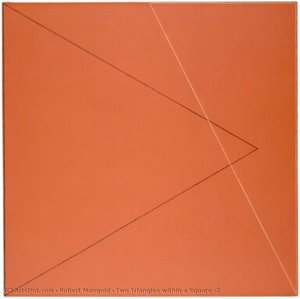
StatsUntitled from Seven Aquatints
 Aquatint
- WallArt
- Minimalist Art
 1973
1973 40.0 x 40.0 cm
 MOMA - Museum of Modern Art
 Read More
The artwork displayed on this page is protected by copyright law, which means we cannot legally create or sell an identical reproduction. This protection is enforced under international agreements such as the Berne Convention and by national laws, including those outlined by the U.S. Copyright Law - Title 17.
As a respectful and legal alternative, we offer custom, hand-painted artworks inspired by the original. Our skilled and professional artists carefully study the original's style, mood, and artistic essence to create a new, unique piece that evokes the same feeling - while remaining an original creation in its own right.
This method fully complies with copyright regulations because it does not involve copying or duplicating the protected artwork. Instead, it is a creative reinterpretation - a new painting that is influenced by the original but not identical to it.
Hand Made Oil Reproduction
Hand-painted oil on canvas in your size and frame, made to order by our artists. ( Switch to Print Switch to Digital Image)




P118B $10

P118H $10

P118W $10

P438Z $10

P508JH $12

P508YH $12

P805H $10

P805Z $10

P919BZ $10

P919G $10

P919XJ $10

P959ZH $10

P968JZ $12

W106C $8

W218G $10

W218JH $8

W218Y $10

W307PJ $10

W316G $10

W316PJ $8

W316Y $10

W398PJ $8

W4111J $10

W500HY $15

W500JH $15

W692G $12

W849H $8

W940BG $15

W953PJ $8




Pick from our preset sizes that match the artwork's original proportions.

Type the width and the height you need, to fit your frame or your wall. This is hand-painted, so for a size with a different shape the artist can paint a bit more around the picture, or cut a bit — you choose. We send you a digital mockup to approve before the painting starts. The picture shown on this page does not show the real result — only the mockup does.
After order, OriginalUniqueArt.com team will email client for instructions and provide a mockup preview
Worldwide Delivery () in 3/4 weeks instead of standard 5 weeks. (22 October). No compromise on quality.

Free Worldwide Express Shipping

High-Quality Linen Canvas

Full Shipping Insurance

Customs Tax Refund Guarantee

True Color Matching Guarantee

100-Day Return Policy (Defects Only)

100% Money-Back Guarantee

Bulk Discount Offer
 Glass option is only available in size under 110 CM

Untitled from Seven Aquatints
Reproduction Medium
Reproduction Size
-


Total Price
$ 300
A Quiet Revolution in Form: Exploring Robert Mangold’s Untitled from Seven Aquatints
Robert Mangold's "Untitled from Seven Aquatints" stands as a testament to the understated brilliance of minimalist art—a deceptively simple composition that speaks volumes about conceptual rigor and perceptual exploration. Created in 1973, this aquatint print embodies Mangold’s core artistic philosophy: rejecting grand gestures for meticulous observation and formal consideration. It's a piece designed not just to be seen but to be felt, inviting contemplation on the fundamental elements of visual art itself.Composition and Visual Harmony
The artwork immediately captivates with its balanced symmetry. Dominating the canvas is a large square positioned centrally within an encompassing circle—a pairing that transcends mere geometric arrangement; it represents a deliberate challenge to traditional perspectival representation. The square’s placement anchors the composition, while the circle envelops it, suggesting wholeness and containment. This careful orchestration of shapes isn't accidental but reflects Mangold’s desire to strip away extraneous detail, focusing instead on the interplay between basic forms.Color Palette and Texture: Subtle Elegance
The color scheme is remarkably restrained—a palette dominated by shades of muted olive-green against a pristine white background. This deliberate limitation serves to heighten the impact of the central square, emphasizing its tonal variations and creating a visual dialogue with the surrounding space. The aquatint technique lends itself beautifully to this aesthetic; it produces a velvety texture that subtly captures the nuances of light and shadow without resorting to dramatic highlights. The surface is remarkably smooth, indicative of Mangold’s meticulous attention to detail—a hallmark of his artistic practice.Technique: Aquatint – A Process of Delicate Gradation
Aquatint is an etching process distinguished by its use of rosin rather than acid, resulting in tonal variations achieved through controlled oxidation. This method allows for a remarkable level of subtlety and nuance, mirroring Mangold’s conceptual approach to painting. The artist carefully applies rosin to the plate surface, creating areas that resist ink penetration—these areas subsequently appear as lighter tones when printed. Subsequent layers of ink build upon these tonal gradations, producing an image rich in texture and depth despite its apparent flatness. This technique underscores Mangold's commitment to exploring the inherent qualities of materials and achieving a profound visual resonance.Symbolism and Conceptual Depth
Beyond its formal beauty, “Untitled from Seven Aquatints” invites interpretation on symbolic levels. The square and circle—ancient emblems representing stability and unity respectively—are presented in harmonious juxtaposition. This pairing could be seen as an exploration of opposing forces reconciled into a single, coherent form – a concept central to Mangold’s artistic vision. Furthermore, the artwork's deliberate absence of representational imagery encourages viewers to engage with it on purely perceptual terms, prompting reflection on how visual elements communicate meaning and emotion.Emotional Resonance: Quiet Contemplation
Ultimately, “Untitled from Seven Aquatints” offers a profound experience of quiet contemplation. Its simplicity is deceptive; within its understated elegance lies an intellectual challenge—a reminder that art can achieve emotional impact through careful consideration of form and color. This piece exemplifies Mangold’s belief in the transformative power of visual art, inviting viewers to pause and appreciate the beauty of reduction and the enduring relevance of fundamental artistic principles.Questions & Answers
Is "Untitled from Seven Aquatints" free of copyright?
The copyright answer for "Untitled from Seven Aquatints" by Robert Mangold: the work is still protected by copyright. This determines whether reproductions of the image may be freely made.
What are the reproduction rights of "Untitled from Seven Aquatints" at the MOMA - Museum of Modern Art?
The copyright status of "Untitled from Seven Aquatints" by Robert Mangold is clear: the work is still protected by copyright. Its presence at the MOMA - Museum of Modern Art does not change that status.
Did "Untitled from Seven Aquatints" stay in its artist's homeland?
Yes - the artwork is kept in the artist's home country. "Untitled from Seven Aquatints" is held in United States of America, while Robert Mangold was born in United States of America.
Artist Biography
A Quiet Revolution in Form: The World of Robert Mangold
Robert Mangold emerged as a pivotal figure in the American art landscape of the 1960s, though his impact wasn’t one of bombast or overt gesture. Instead, it was a quiet revolution—a subtle dismantling of traditional painting conventions that paved the way for new explorations of form, color, and perception. Born in North Tonawanda, New York, in 1937, Mangold's path to becoming a leading minimalist painter wasn’t immediately clear. He initially pursued engineering studies before recognizing the compelling pull of artistic expression, ultimately earning degrees from the University of Buffalo and Yale University School of Art. This early exposure to technical disciplines perhaps informed his later meticulous approach to painting, where precision and conceptual rigor are paramount. Mangold's journey began within the shadow of Abstract Expressionism, but he quickly discerned a desire for something more restrained, more intellectual—a move away from the subjective emotionality toward an objective exploration of the fundamental elements of art.The Influence of Pioneers and the Birth of a Style
Mangold’s artistic development was profoundly shaped by encounters with the giants of abstraction who preceded him. The austere geometries of Kazimir Malevich, the carefully calibrated compositions of Piet Mondrian, and the expansive color fields of Barnett Newman all resonated deeply, providing a foundation for his own unique vision. He wasn’t simply imitating these masters; rather, he was absorbing their core principles—the reduction to essential forms, the emphasis on flatness, the exploration of spatial relationships—and reinterpreting them through a distinctly contemporary lens. This period marked a deliberate rejection of the gestural intensity that characterized Abstract Expressionism. Mangold sought to eliminate any trace of the artist’s hand, striving for a sense of impersonal objectivity. It was in this pursuit that he began experimenting with shaped canvases – a defining characteristic of his mature style. These weren't arbitrary forms; they were carefully considered interventions, challenging the very notion of what a painting *could* be.Shaped Canvases and Conceptual Rigor
The introduction of shaped canvases wasn’t merely an aesthetic choice for Mangold; it was a conceptual one. By abandoning the traditional rectangular format, he disrupted the established relationship between image and support, forcing viewers to confront the physicality of the painting as an object in space. His compositions typically feature geometric abstraction—simplified shapes and lines arranged with meticulous precision. These forms aren’t representational; they don't refer to anything outside themselves. Instead, they exist purely as arrangements of color and line, inviting contemplation of their inherent qualities. Mangold’s palette is often muted, favoring subtle pastel tones that create atmospheric effects without overwhelming the viewer. This restraint extends to his technique: surfaces are smooth and even, devoid of brushstrokes or any other evidence of manual manipulation. The result is a sense of serene detachment—a painting that feels both present and remote, inviting prolonged observation. Major series like the Plane/Figure Series, with its explorations of divided canvas compositions, and the Ring Series, featuring circular forms within rectangular fields, demonstrate his consistent engagement with these core principles.Legacy and Lasting Impact
Robert Mangold’s influence on contemporary art is undeniable. He played a crucial role in shaping the development of minimalist painting, expanding the possibilities of abstract art and challenging conventional notions of representation. Alongside artists like Robert Ryman, he represents the heart of minimalist painting—a commitment to conceptual rigor and formal reduction. His work has been widely exhibited in museums and galleries around the world, finding homes in prominent collections such as The Museum of Modern Art and The Metropolitan Museum of Art in New York, and The Tate Modern in London. Beyond his paintings, Mangold’s explorations extended into wall paintings, large-scale works designed to interact with architectural spaces, and the Column Structure Series, which investigated verticality and spatial relationships. His legacy isn't simply about the specific forms he created; it’s about the questions he raised—questions that continue to resonate with artists today who grapple with the fundamental elements of art and the possibilities of abstraction. He demonstrated that profound artistic expression could emerge not from grand gestures, but from a quiet, persistent exploration of form and color.
Robert Mangold
1937 - , United States of America
Quick Facts
- Full Name: Robert Mangold
- Nationality: American
- Date Of Birth: 1937
- Place Of Birth: North Tonawanda, United States of America
- Notable Artworks:
- Untitled
- 1/2 V Series (Medium Scale)
- Untitled (Skowhegan Suite)
- Artistic Movement Or Style: Minimalism
- Artists Who Influenced This Artist:
- Kazimir Malevich
- Piet Mondrian
- Barnett Newman
- Artists Or Movements Influenced By This Artist:
- Robert Ryman
- Contemporary artists
Related Articles

Kandinsky's Masterpieces: 25 Paintings That Define Abstract Art | OriginalUniqueArt
Journey through Wassily Kandinsky's 25 most iconic abstract paintings. Explore his revolutionary use of color, form & spiritual expressionism. Find museum-quality Kandinsky reproductions and elevate your home decor with OriginalUniqueArt.com. Discover all masterpieces on OriginalUniqueArt.com!

Geometric Abstraction's 10 Defining Masterpieces | Art for Your Home - OriginalUniqueArt
Explore 10 defining masterpieces of Geometric Abstraction! Discover Kandinsky, Mondrian & Malevich’s iconic works. Find museum-quality art reproductions and curated decor ideas to elevate your home at OriginalUniqueArt.com.

Contemporary Abstract Art: A Professional Buyer's Guide to Large-Scale Modern Decor for Hospitality and Corporate Interiors
A professional procurement guide for hotel designers and architects. Discover how to integrate large-scale contemporary abstract art into hospitality projects through high-volume, custom-sized oil reproductions, multi-panel layouts, and reliable global logistics.
Minimalist Masterpieces: 10 Artworks for Serene Home Decor | OriginalUniqueArt
Find serenity with 10 minimalist masterpieces! Explore Agnes Martin, Rothko & more. Discover the stories behind iconic abstract art, neutral palettes & calming designs. Museum-quality reproductions at OriginalUniqueArt.com – elevate your home decor today!
Fernand Léger's Masterpieces: 25 Iconic Paintings & The Machine Age Aesthetic | OriginalUniqueArt
Explore 25 iconic Fernand Léger paintings that defined the Machine Age & Cubism. Discover the stories behind his bold colors, geometric forms & avant-garde style. Find museum-quality art reproductions on OriginalUniqueArt.com.