
 Preview

 Send
 Share
 Details
 Guide


 Download
 Similars
 X-Ray
 Diaporama
 Q&A
 Stats
Bathers


 Read More
Giclée / Art Print
Museum-quality giclée or canvas print with fast production and flexible finish options. ( Buy Hand Made Painting Switch to Digital Image)




P118B $10

P118H $10

P118W $10

P438Z $10

P508JH $12

P508YH $12

P805H $10

P805Z $10

P919BZ $10

P919G $10

P919XJ $10

P959ZH $10

P968JZ $12

W106C $8

W218G $10

W218JH $8

W218Y $10

W307PJ $10

W316G $10

W316PJ $8

W316Y $10

W398PJ $8

W4111J $10

W500HY $15

W500JH $15

W692G $12

W849H $8

W940BG $15

W953PJ $8




Pick from our preset sizes that match the artwork's original proportions.

Type the width and the height you need, to fit your frame or your wall. A print can only be cut, never made bigger than the picture, so a size with a different shape loses a part of the image. We send you a digital mockup to approve before we print anything. The picture shown on this page does not show the real cut — only the mockup does.
Worldwide Delivery () in 2 weeks instead of standard 4/5 weeks. (17 November)

Free Worldwide Express Shipping

High-Quality Linen Canvas

Full Shipping Insurance

Customs Tax Refund Guarantee

True Color Matching Guarantee

100-Day Return Policy (Defects Only)

100% Money-Back Guarantee

Bulk Discount Offer
 Glass option is only available in size under 110 CM

Bathers
Giclée / Art Print
Reproduction Size
-


Total Price
$ 81
A Moment Frozen in Light: Pierre-Auguste Renoir’s Bathers
Pierre-Auguste Renoir's “Bathers,” completed in 1918, isn’t merely a depiction of women enjoying the sun; it’s an immersion into a world of dappled light, languid grace, and the quiet joy of summer. This painting, often considered a culmination of Renoir’s late style, offers a profound meditation on beauty, leisure, and the fleeting nature of experience – qualities that continue to resonate deeply with viewers today. It represents a pivotal shift in his artistic approach, moving away from the more structured realism of his earlier works towards a looser, more impressionistic exploration of color and atmosphere.
The scene unfolds within a lush garden setting, a carefully constructed haven of vibrant greens and blossoming flowers. Four figures dominate the composition: three women reclining in various states of relaxation – one seated gracefully, another leaning against a tree trunk, and a third lying languidly on the grass – alongside a single woman standing, seemingly observing the scene with a gentle smile. Renoir masterfully avoids sharp outlines or dramatic poses, instead favoring soft transitions between form and color, creating an almost dreamlike quality. The figures aren’t idealized; they possess a naturalism that imbues them with a sense of humanity and vulnerability. Notice how Renoir subtly captures the texture of skin, the folds of fabric, and the play of light on water – details rendered with remarkable sensitivity.
Impressionist Techniques and Color Harmony
At its core, “Bathers” is a testament to Renoir’s unwavering commitment to Impressionism. He employs a technique known as *plein air* painting—working directly outdoors—to capture the ephemeral effects of light and atmosphere. The palette is dominated by pastel hues: delicate pinks, blues, greens, and yellows blend seamlessly together, creating an overall sense of warmth and serenity. Renoir’s brushstrokes are loose and visible, contributing to the painting's shimmering quality. He doesn’t attempt to precisely replicate reality; instead, he focuses on conveying the *impression* of light and color, allowing the viewer to participate in the act of seeing.
The strategic use of contrasting colors—particularly in the women’s hats – draws the eye and adds a touch of playful vibrancy to the scene. These splashes of red, pink, and yellow stand out against the softer tones of the landscape, creating a dynamic visual balance. Furthermore, Renoir skillfully utilizes broken color—applying small strokes of pure pigment alongside larger areas of blended color—to create an illusion of depth and luminosity. This technique is particularly evident in the reflections on the water and the dappled sunlight filtering through the trees.
A Reflection of a Changing Era
“Bathers” was painted during a period of significant social and artistic change. The late 19th and early 20th centuries witnessed a growing emphasis on leisure, pleasure, and the celebration of everyday life – values that were increasingly reflected in art. Renoir’s painting captures this spirit perfectly, offering a glimpse into a world where time seems to slow down and beauty is found in simple moments of connection with nature and companionship. It's important to note that this work represents a shift for Renoir; he was moving away from the more overtly social themes of his earlier works, embracing a quieter, more introspective approach.
The painting’s composition also subtly reflects the changing role of women in society at the time. The figures are depicted as independent and self-assured, enjoying their freedom and beauty without seeking validation from external sources. They represent a celebration of female sensuality and grace – qualities that were often idealized or suppressed in traditional art. “Bathers” is not just a beautiful painting; it’s a poignant commentary on the evolving social landscape of its era.
Bringing Renoir's Vision to Life: Reproductions at OriginalUniqueArt.com
OriginalUniqueArt.com offers meticulously crafted, handmade oil reproductions that faithfully capture the essence and detail of Renoir’s “Bathers.” Our skilled artists utilize traditional techniques and archival-quality materials to ensure that each reproduction is a true work of art in its own right. You can experience the shimmering light, the delicate brushstrokes, and the overall atmosphere of the original painting with stunning clarity.
- Pierre-Auguste Renoir: Bathers
- Paul Cézanne: Three Bathers
- Pierre-Auguste Renoir on Wikipedia
- Impressionism on Wikipedia
Whether you’re an art enthusiast, a collector seeking to expand your collection, or simply someone who appreciates the beauty of classic Impressionist art, OriginalUniqueArt.com's “Bathers” reproduction offers a remarkable opportunity to bring this iconic masterpiece into your home.
Questions & Answers
What emotion does "Bathers" by Pierre-Auguste Renoir convey?
"Bathers" by Pierre-Auguste Renoir conveys a joyful emotional tone.
What is the creation date of "Bathers" by Pierre-Auguste Renoir?
The creation of "Bathers" by Pierre-Auguste Renoir is dated 1918.
What feeling does "Bathers" by Pierre-Auguste Renoir convey?
"Bathers" by Pierre-Auguste Renoir conveys a joyful feeling within an overall serene mood.
Artist Biography
The Life of Pierre-Auguste Renoir
Born on February 25, 1841, in Limoges, France, Pierre-Auguste Renoir entered a world of practical craftsmanship. His father, Léonard Renoir, worked as a tailor, while his mother, Marguerite Renoir, was a dressmaker. This domestic background of textiles and fine detail would quietly influence his later sensibilities. In 1845, the family moved to Paris, seeking the opportunities offered by the capital. This transition from the provincial quiet of Limoges to the bustling energy of Paris set the stage for a life defined by the pursuit of light and the human form.
His path was not one of immediate ease. Financial necessity often dictated his early movements, steering him toward the disciplined work of a porcelain painter. Yet, even as a young apprentice, his interests drifted toward the galleries of the Louvre. He was a leading French Impressionist artist, a man who eventually helped redefine the boundaries of modern painting. His work often focused on the joy of everyday social gatherings and the soft glow of outdoor light, finding significance in the simple pleasure of a summer afternoon.
Throughout his career, his focus remained on the interplay of light and the warmth of the human experience. He moved through various stages of development, from the loose brushstrokes of his youth to a more structured, classical method in his later years. Even as physical ailments challenged his ability to hold a brush, his commitment to his vision remained constant. He eventually found a permanent home in Cagnes-sur-Mer, France, where he continued to paint until his death in 1919.
Early Life, Family and Training
Born in Limoges, France, to a tailor and a dressmaker, Renoir’s early years were shaped by the practicalities of a working-class household. When the family moved to Paris in 1845, the necessity of supporting his kin dictated the direction of his youth. At thirteen, he began an apprenticeship as a porcelain painter, a role that required a steady hand and an eye for decorative detail. He eventually found work with Lévy Frères, spending his days applying patterns to fine china. This period of craftsmanship provided a foundation of technical discipline, even as his interests began to drift toward the more expressive possibilities of the canvas.
His formal education began in earnest when he entered the studio of Charles Gleyre. It was here that his artistic sensibilities began to take a more structured shape. While his training was grounded in the academic traditions of the time, Renoir spent much of his free time at the Louvre. He studied the Old Masters with a quiet intensity, absorbing the way they handled light and form. This self-directed study of classical techniques provided a necessary counterweight to his formal instruction, allowing him to develop a personal visual language that was informed by both the precision of his porcelain background and the grandeur of the masters.
His path eventually led him to the Ecole des Beaux-Arts in Paris, where he sought to refine his skills further. This period of study was marked by a tension between the rigid rules of the academy and a growing desire to capture the immediate, fleeting qualities of the world around him. He was a student of the moment, even as he mastered the traditional methods of his predecessors.
The Rise of Impressionism in Paris
By the 1870s, the rigid structures of the art establishment in Paris were beginning to fracture. Renoir was among the group of artists who sought to break away from these academic traditions, eventually becoming a founder of the Impressionist movement. This was not a sudden shift but a steady departure from the formal rules of the time. He sought to capture the immediate sensation of a scene, focusing on the way light and atmosphere interacted with the world around him.
His presence in this new movement was marked by a series of exhibitions that challenged the status quo. In April 1874, he participated in the first Impressionist exhibition, contributing six paintings to the collection. This initial foray was followed by an even larger presence in 1876, when he displayed seventeen paintings and one pastel. By the third exhibition in 1877, his commitment to this new way of seeing was evident as he presented twenty-one paintings to the public.
These years were defined by a shared pursuit of the ephemeral. While the establishment often looked toward grand historical narratives, Renoir and his contemporaries turned their attention to the fleeting moments of modern life. His work during this period focused on the energy of social gatherings and the natural glow of outdoor light, often using broken brushstrokes to mimic the movement of sunlight through leaves.
Technique and Artistic Style
His early years were defined by a preoccupation with the way light interacts with the physical world. He utilized loose brushstrokes and a palette of saturated colors to capture the fleeting atmosphere of a moment. By employing broken brushstrokes, he successfully mimicked the effect of sunlight filtering through leaves, creating a sense of movement across the canvas. This method relied heavily on the use of complementary colors to achieve a sense of luminosity. His focus often turned toward the human form, where he applied a particular sensitivity to the softness of skin and the play of light across a figure.
As his career progressed, his approach underwent a significant transformation. In the 1890s, he moved away from the loose, blurry edges of his youth. This shift saw him embrace a more structured and classical method, emphasizing volume, contour, and clear lines. He sought to reconcile the modern style of painting with more disciplined, formal traditions. Even as rheumatoid arthritis eventually forced him to paint with a brush attached to his hand, his commitment to his evolving vision remained constant.
- Dance at Le Moulin de la Galette, 1876
- Luncheon of the Boating Party, undated
- The Great Bathers, 1884-87
Social Circles and Artistic Peers
The studio of Charles Gleyre provided more than just formal instruction; it offered a gathering place for a generation of artists poised to redefine the visual language of France. Within this creative circle, Renoir formed lasting bonds with fellow students, including Alfred Sisley and Frédéric Bazille. Most significant, however, was his close friendship with Claude Monet. Together, they navigated the shifting tides of the Parisian art scene, often sharing the same landscapes and light-drenched moments that would eventually define the Impressionist movement.
His aesthetic sensibilities were shaped by a dialogue between the immediate present and the weight of tradition. He drew inspiration from the works of Gustave Courbet and Eugène Delacroix, finding a way to reconcile the modern impulse for realism with a more classical sensibility. This tension between the new and the old was a constant presence in his development. He looked toward the masters of the past to inform his understanding of form and grace, finding guidance in the works of Raphael, Titian, and Velázquez. The influence of Rubens and Watteau also left a mark on his approach to the human figure, guiding his hand toward a more sensual and fluid representation of life.
Even as he moved toward a more structured method later in life, the echoes of Ingres remained part of his artistic memory. His ability to balance the spontaneous energy of his peers with the disciplined lines of the Old Masters allowed him to maintain a distinct presence amidst the many voices of the era.
Key Works and Masterpieces
His early output revealed a growing fascination with the interplay of light and the human form. In 1867, Lise with a Parasol demonstrated an emerging interest in the natural world and the soft glow of outdoor light. This period of experimentation led to the lively energy found in Dance at Le Moulin de la Galette, painted in 1876. Here, broken brushstrokes mimic the way sunlight filters through leaves, creating a sense of movement and warmth within a social gathering.
As his reputation grew, Renoir turned his attention toward the intimacy of domestic life and the conviviality of social settings. Madame Georges Charpentier and her Children, from 1878, captured a sense of elegance and family connection. This ability to find beauty in the simple pleasure of a meal or a gathering is perhaps most evident in the undated Luncheon of the Boating Party, which portrays figures bathed in a natural, luminous glow along the Seine.
The final chapter of his career saw a shift toward more structured and classical methods. Even as physical struggle became a constant companion, his dedication to his vision remained. His 1919 work, The Great Bathers (The Nymphs), possesses a sculptural quality that reflects this transition toward volume and contour. This later period emphasized a more disciplined technique, moving away from the loose, blurry edges of his youth toward a more formal style.
- Lise with a Parasol, 1867
- Dance at Le Moulin de la Galette, 1876
- Madame Georges Charpentier and her Children, 1878
- The Great Bathers (The Nymphs), 1919
Later Years and Final Residence
The final chapter of Renoir’s life was defined by a quiet retreat to the south of France. In 1907, he settled at the Domaine des Collettes in Cagnes-sur-Mer, a landscape of olive groves and orange trees that offered a different kind of light than the bustling streets of Paris. This period saw a shift toward a more disciplined, formal technique, moving away from the loose edges of his earlier years toward a style that emphasized volume and clear lines.
Physical hardship arrived in the form of rheumatoid arthritis. The condition eventually became so severe that it restricted his movement, forcing him to adapt his method of working by having a brush attached to his hand. Even as his body faltered, his output remained steady. He continued to produce works, including portraits and landscapes, until his death in 1919. He passed away on December 3, 1919, in Cagnes-sur-Mer at the age of 78.
- The Great Bathers (The Nymphs)
- Cagnes Landscape with Woman and Child
Where to See His Works Today
The distribution of his canvases across the globe reflects the widespread reach of his influence. In Paris, the Musée d'Orsay maintains the largest collection, housing 28 of his works. This concentration allows for a close study of his evolution from early Impressionist scenes to his more structured, classical compositions. Across the Atlantic, the National Gallery of Art in Washington holds 18 works, providing a significant presence in American collections. The Sterling and Francine Clark Art Institute in Williamsburg also maintains a substantial presence with 16 paintings.
Other major institutions hold important pieces that illustrate his varied interests in portraiture and landscape. The Detroit Institute of Arts contains 13 works, while the Metropolitan Museum of Art in New York holds 9. These collections offer glimpses into his different stylistic periods, from the loose brushstrokes of his youth to the more defined forms of his later years. Visitors can find specific subjects such as:
- Dance at Le Moulin de la Galette
- Luncheon of the Boating Party
- The Great Bathers (The Nymphs)
- Madame Georges Charpentier and her Children
- Young Woman at the Piano
His presence in these museums ensures that his specific approach to light and the human form remains accessible to those studying the development of modern painting. Whether observing a quiet portrait or a lively social gathering, the physical reality of his brushwork is preserved within these institutional walls.
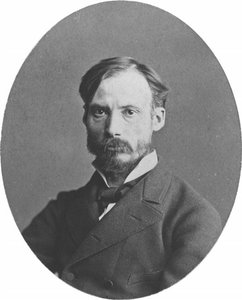
Pierre-Auguste Renoir
1841 - 1919 , France
Quick Facts
- Artistic Movement Or Style: Impressionism
- Artists Who Influenced This Artist:
- Peter Paul Rubens
- Jean-Antoine Watteau
- Raphael
- Titian
- Full Name: Pierre-Auguste Renoir
- Nationality: French
- Notable Artworks:
- Lise with a Parasol
- Dance at Le Moulin de la Galette
- Luncheon of the Boating Party
- The Great Bathers
- Place Of Birth: Limoges, France
- Date Of Birth: 1841
- Date Of Death: 1919
Related Articles

French artworks of the 1880s
French Impressionist masterpieces by Claude Monet, Pierre-Auguste Renoir, and Georges Seurat. Find museum-quality reproductions on OriginalUniqueArt.com.


