Send
Send Share
Share
 Details
 Guide
Guide

 Download
 Similars
 Diaporama
 Stats
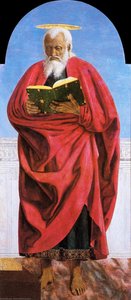
StatsSt Ludovico
 Fresco
- Renaissance
 1460
1460 123.0 x 90.0 cm
 Pinacoteca Comunale
 Read More
Giclée / Art Print
Museum-quality giclée or canvas print with fast production and flexible finish options. ( Buy Hand Made Painting Switch to Digital Image)




































Pick from our preset sizes that match the artwork's original proportions.

Type the width and the height you need, to fit your frame or your wall. A print can only be cut, never made bigger than the picture, so a size with a different shape loses a part of the image. We send you a digital mockup to approve before we print anything. The picture shown on this page does not show the real cut — only the mockup does.
Worldwide Delivery () in 2 weeks instead of standard 4/5 weeks. (23 October)

Free Worldwide Express Shipping

High-Quality Linen Canvas

Full Shipping Insurance

Customs Tax Refund Guarantee

True Color Matching Guarantee

100-Day Return Policy (Defects Only)

100% Money-Back Guarantee

Bulk Discount Offer
 Glass option is only available in size under 110 CM

St Ludovico
Giclée / Art Print
Reproduction Size
-


Total Price
$ 81
A Study in Geometric Harmony: Piero della Francesca’s St Ludovico
Piero della Francesca's ‘St Ludovico,’ completed around 1460, stands as a testament to the Renaissance preoccupation with clarity and precision—a remarkable achievement considering its origins in Umbria, Italy. This fresco fragment, housed within Parma’s Santa Maria della Steccata basilica alongside other masterpieces by Raphael and Parmigianino, transcends mere portraiture; it embodies the humanist ideals of the era and showcases an unparalleled mastery of artistic technique. The artwork depicts Bishop Ludovico Gonzaga, rendered with meticulous anatomical accuracy—a hallmark of Piero's approach—against a subtly textured arched background that contributes to the overall sense of antiquity. The composition is centered, emphasizing the bishop’s face and upper body, illuminated by soft, diffused light that sculpts his features and lends an ethereal quality to the scene. Geometric forms dominate both figure and architecture, reflecting the burgeoning influence of mathematics on Renaissance thought. Rectangular arches frame the backdrop, while oval shapes define Ludovico's visage—a deliberate choice designed to convey dignity and solemnity. Lines delineate clothing folds and architectural elements with remarkable precision, demonstrating Piero’s unwavering commitment to visual realism. Technically speaking, ‘St Ludovico’ exemplifies fresco painting – a technique favored by artists of the period for its durability and ability to achieve luminous colors. The artist skillfully applied pigment (likely tempera or oil-based) onto plaster, resulting in visible brushstrokes that imbue the artwork with texture and depth. These marks aren't merely accidental; they are integral to conveying the materiality of the wall surface and enhancing the impression of age—a deliberate stylistic decision reflecting the artistic conventions of the time. The muted color palette – dominated by earthy browns, beiges, and creams – reinforces this sense of timelessness and contributes to a contemplative mood. Beyond its formal qualities, ‘St Ludovico’ carries profound symbolic weight. The bishop's mitre and crozier—traditional emblems of ecclesiastical authority—underscore his role as spiritual leader. Furthermore, the book held by Ludovico symbolizes knowledge and piety – core tenets of Renaissance humanism. Piero della Francesca’s work isn’t simply a depiction of an individual; it’s an embodiment of humanist ideals and a celebration of artistic excellence. It invites viewers to contemplate themes of faith, dignity, and intellectual rigor—qualities that continue to resonate powerfully today.- Artist: Piero della Francesca (1415-1492)
- Date: c. 1460
- Medium: Fresco
- Location: Santa Maria della Steccata, Parma
Questions & Answers
What color intensity does "St Ludovico" by Piero della Francesca have?
The color intensity of "St Ludovico" is balanced. Intensity describes how strong the colors appear.
How does "St Ludovico" balance light and dark?
"St Ludovico" by Piero della Francesca is recorded as balanced, with a gentle luminance luminance.
What saturation and intensity does "St Ludovico" by Piero della Francesca show?
The color of "St Ludovico" is muted in saturation and balanced in intensity.
Artist Biography
The geometry of a quiet life
In the small, sun-drenched town of Sansepolcro, Piero di Benedetto de’ Franceschi lived a life shaped by the precise lines of his surroundings. His father worked with leather and wool, a trade that required a steady hand and an eye for detail. This early environment, far from the crowded workshops of larger cities, provided a foundation of stillness. He learned to see the world through the lens of order. Around 1439, he moved toward Florence, where the air was thick with new ways of seeing. There, he worked alongside Domenico Veneziano and studied the works of Masaccio in the Brancacci Chapel. He did not simply look at these paintings; he measured them. He took the innovations of Brunelleschi and broke them down into mathematical truths.
His hands moved between the brush and the compass. To him, a figure was as much a product of geometry as it was of anatomy. This way of working meant that light did not just fall upon a surface; it defined the volume of every limb and stone. He understood how a single vanishing point could pull a viewer into a deep, constructed space. His mind occupied the space between art and science, treating the canvas as a field for mathematical exploration.
The weight of the fresco
Much of his work remains fixed to the walls of churches in Tuscany. In the Basilica of San Francesco in Arezzo, he spent years working on the cycle of frescoes known as The History of the True Cross. These scenes are not hurried. Each figure possesses a heavy, quiet dignity. He used light and shadow to give weight to the characters, making them feel as solid as the architecture surrounding them. In other works, like the Baptism of Christ, he used a restrained palette to create an atmosphere of clarity. The colors are not loud, yet they possess a luminous quality that seems to come from within the figures themselves.
His approach to composition relied on strict principles:
- The use of linear perspective to create measurable depth.
- A focus on balanced, symmetrical arrangements.
- The application of geometric forms to human anatomy.
- The use of light to define physical volume and mass.
In the Montefeltro Altarpiece, his skill with oil painting allowed for a meticulous rendering of detail in the portraits of Federico da Montefeltro and Battista Sforza. He captured the texture of skin and the weight of fabric with a scientific precision. Even in his more recent works, such as The Nativity, he placed sacred scenes within a recognizable landscape, using the hills and rivers of the Tuscan countryside to ground the divine in the earthly.
A legacy of measurement
Piero was also a writer, documenting his findings in De Prospectiva Pingendi. This treatise on perspective painting shows that his interest in math was not secondary to his art; it was the core of it. He wrote about how to use geometry to represent the three-dimensional world on a flat surface. His work bridged the gap between the older, more decorative Gothic traditions and the new, rational Renaissance style. He sought beauty through proportion and order.
He died in 1492, leaving behind a body of work that influenced those who followed, including Leonardo da Vinci and Raphael. They looked to his mastery of light and his ability to organize space with mathematical certainty. His paintings remain windows into a world where the spiritual and the rational exist in a state of permanent, quiet balance.

Piero della Francesca
1415 - 1492 , Italy
Quick Facts
- Artistic Movement Or Style: Early Renaissance
- Artists Or Movements Influenced By This Artist:
- Leonardo da Vinci
- Raphael
- Artists Who Influenced This Artist:
- Masaccio
- Brunelleschi
- Full Name: Piero di Benedetto de' Franceschi
- Nationality: Italian
- Notable Artworks:
- The History of the True Cross
- Montefeltro Altarpiece
- Baptism of Christ
- The Resurrection
- The Nativity
- Place Of Birth: San Sepolcro, Italy
- Date Of Birth: 1415
- Date Of Death: 1492
Related Articles

The Enduring Legacy of Fresco: Technique, History & Artistic Expression
Explore the rich history & enduring artistry of fresco painting. Discover techniques from Giotto to Michelangelo, conservation efforts, & modern applications. Learn how OriginalUniqueArt brings this timeless art form to your home.
The Enduring Legacy of Fresco Painting: Techniques, History & Contemporary Relevance
Explore the rich history & enduring artistry of fresco painting – from Giotto to Michelangelo! Discover techniques, conservation efforts, & modern applications. Learn how OriginalUniqueArt brings this timeless art form to your home.
Piero della Francesca: Renaissance Perspective, Divine Proportion & the Pursuit of Ideal Form
Explore the revolutionary art of Piero della Francesca – master of perspective, divine proportion & Renaissance humanism. Discover his iconic paintings & lasting influence on art history.

The Enduring Legacy of Fresco: Technique, History & Artistic Expression Across Cultures
Explore the rich history & enduring legacy of fresco painting! Discover ancient techniques, Giotto's masterpieces, and modern applications. Expert insights for art lovers & professionals.
The Fresco as Family Legacy: Preserving Heritage Through Wall Art
Explore the rich history & enduring legacy of fresco painting. Discover how to preserve family heritage through stunning wall art. Expert insights & restoration guidance.