Preview
 Send
Send Share
Share
 Details
 Guide
Guide

 Download
 Similars
 X-Ray
X-Ray Diaporama
 Stats
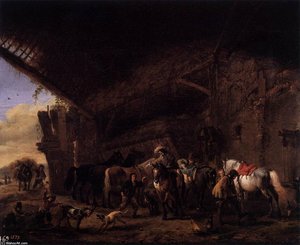
StatsHuntsmen Setting Out
 Oil On Canvas
- WallArt
- Baroque Painting
 55.0 x 80.0 cm
 Hermitage Museum
 Read More
Hand Made Oil Reproduction
Hand-painted oil on canvas in your size and frame, made to order by our artists. ( Switch to Print Switch to Digital Image)




P118B $10

P118H $10

P118W $10

P438Z $10

P508JH $12

P508YH $12

P805H $10

P805Z $10

P919BZ $10

P919G $10

P919XJ $10

P959ZH $10

P968JZ $12

W106C $8

W218G $10

W218JH $8

W218Y $10

W307PJ $10

W316G $10

W316PJ $8

W316Y $10

W398PJ $8

W4111J $10

W500HY $15

W500JH $15

W692G $12

W849H $8

W940BG $15

W953PJ $8




Pick from our preset sizes that match the artwork's original proportions.

You may enter your own dimensions to fit a specific frame or space. If your selected size does not match the original image's proportions, we will either crop the artwork or extend the painting with additional hand-painted elements. A digital mockup will be sent for your approval before production begins.
Please note that the on-screen preview does not reflect the actual cropping or extension. Only the mockup will accurately show the final composition.
While custom sizes are available, we recommend selecting a dimension from the predefined list to preserve the original proportions.
After order, OriginalUniqueArt.com team will email client for instructions and provide a mockup preview
Worldwide Delivery () in 3/4 weeks instead of standard 5 weeks. (26 September). No compromise on quality.

Free Worldwide Express Shipping

High-Quality Linen Canvas

Full Shipping Insurance

Customs Tax Refund Guarantee

True Color Matching Guarantee

100-Day Return Policy (Defects Only)

100% Money-Back Guarantee

Bulk Discount Offer
 Glass option is only available in size under 110 CM

Huntsmen Setting Out
Reproduction Medium
Reproduction Size
-


Total Price
$ 300
Philips Wouwerman’s “Huntsmen Setting Out”: A Dutch Golden Age Masterpiece
“Huntsmen Setting Out,” painted by Philips Wouwerman around 1665, is more than just a hunting scene; it's a meticulously crafted tableau of aristocratic leisure and the vibrant energy of the Dutch Golden Age. This oil on canvas, currently residing in the Hermitage Museum in St. Petersburg, Russia – a testament to its enduring appeal – offers a captivating glimpse into the lives of the wealthy elite and their elaborate pursuits. Wouwerman, a prolific artist known for his dynamic depictions of hunting, landscapes, and battle scenes, masterfully captures a fleeting moment of preparation before the chase, imbuing it with a sense of movement, drama, and subtle social commentary.
A Symphony of Light and Movement
Wouwerman’s technique is immediately striking. The painting pulsates with life through his masterful use of light and shadow – a hallmark of Baroque art that he expertly employs to create depth and drama. Notice how the sunlight, seemingly originating from an unseen source, illuminates the hunters' attire, highlighting the rich textures of their coats and the gleam of their weapons. Conversely, areas in shadow suggest the cool air and impending darkness of the forest. The composition itself is a carefully orchestrated dance of movement; horses gallop forward with powerful strides, hounds strain at their leashes, and riders gesture excitedly, all contributing to an overwhelming sense of kinetic energy. The artist’s attention to detail is remarkable – from the individual strands of hair on the hunters' heads to the intricate patterns on their clothing, every element feels deliberately placed.
Symbolism and Social Commentary
Beyond its technical brilliance, “Huntsmen Setting Out” carries layers of symbolic meaning. The scene depicts a hunt, a pastime deeply intertwined with aristocratic status in 17th-century Holland. The lavish attire of the hunters – their elaborate coats, feathered hats, and finely crafted weapons – clearly signal their wealth and privilege. However, Wouwerman subtly introduces an element of social critique through the inclusion of a beggar at the bottom left corner of the painting. This figure, starkly contrasting with the opulent setting, serves as a poignant reminder of the vast disparity between the wealthy elite and the less fortunate. The hermit on the hillside further emphasizes this contrast, representing a moral counterpoint to the aristocratic pursuit of pleasure.
Historical Context: The Dutch Golden Age
To fully appreciate “Huntsmen Setting Out,” it’s crucial to understand the historical context in which it was created – the Dutch Golden Age. This period, spanning roughly from the mid-16th to the early 18th centuries, witnessed an unprecedented flourishing of art, science, and commerce in the Netherlands. Philips Wouwerman thrived during this era, becoming one of its most celebrated artists. His works reflect the values and sensibilities of the time – a fascination with realism, a celebration of human activity, and a keen awareness of social dynamics. The painting’s presence in the Hermitage Museum underscores its significance as a key example of Dutch Golden Age art, offering a window into the lives and aspirations of a remarkable era.
Bringing Wouwerman Home: High-Quality Reproductions
Experience the timeless beauty of “Huntsmen Setting Out” in stunning detail with our meticulously crafted oil painting reproductions. Each reproduction is hand-painted by skilled artists using archival-quality materials, ensuring that every brushstroke and color nuance faithfully captures the original’s artistry. Available in a range of sizes to suit your space and budget, these reproductions are an exquisite addition to any home or office – a vibrant reminder of the artistic brilliance of Philips Wouwerman and the captivating spirit of the Dutch Golden Age. Explore our collection at OriginalUniqueArt.com and discover how you can bring this masterpiece into your life.
Artist Biography
Philips Wouwerman: A Life in the Dutch Golden Age
- Born: Haarlem, Netherlands (1619)
- Died: 1668
Philips Wouwerman (baptized May 24, 1619 – died May 19, 1668) was a highly prolific and versatile Dutch painter renowned for his depictions of hunting scenes, landscapes, and battle scenes. He stands as a significant figure within the artistic landscape of the Dutch Golden Age.
Early Life and Training
Born in Haarlem, Netherlands, Philips Wouwerman was the son of Pouwels Joostsz Wouwerman, also a painter, though less known than his son. Details regarding his early artistic training are somewhat scarce. However, it is believed that he studied under Frans Hals (1581/85–1666), a prominent Haarlem portraitist. While Hals’s distinctive style did not heavily influence Wouwerman's mature work, the foundational training likely proved invaluable. Early in his career, Wouwerman was influenced by the *bamboccianti* tradition, particularly the works of Pieter van Laer (1592/99–after 1642), adopting their focus on everyday life and genre scenes.
Artistic Development and Style
- Early Influences: Initially emulating *bamboccianti* painters, Wouwerman’s early works featured depictions of daily life.
- Emerging Style (Mid-1640s): A characteristic compositional element emerged – a diagonal slope of land often accompanied by a tree acting as a repoussoir (a device used to create depth). Figures, frequently accompanied by horses, populated these scenes.
- Mature Period (c. 1650-1660): Wouwerman developed his individual style, expanding his subject matter considerably. He painted genre scenes, landscapes with travelers, cavalry battles, military encampments, and festive gatherings of peasants.
- Mastery of the Horse: Wouwerman is particularly celebrated for his exceptional skill in depicting horses of various breeds in dynamic motion. Art historian Frederik J. Duparc has famously called him "undoubtedly the most accomplished and successful 17th-century Dutch painter of horses."
- Characteristic Features: His paintings are characterized by subdued colors, a cool atmosphere, and meticulous attention to detail, creating witty and anecdotal narratives within his scenes. He often combined imaginary southern landscapes with a distinctly Dutch ambiance.
Major Achievements and Legacy
Wouwerman’s works were highly sought after during his lifetime and continued to gain popularity in the 18th century. His paintings found their way into prominent collections across Europe, including those of princely houses in Dresden and St. Petersburg, demonstrating widespread admiration for his artistry.
- Prolific Output: Wouwerman was remarkably prolific; early catalogues listed around 800 works attributed to him, later exceeding 1200. A more recent catalogue raisonné (Schumacher, 2006) identifies approximately 570 authentic works, acknowledging the numerous followers and imitators who produced works in his style.
- Family of Artists: His brothers, Jan (1629–1666) and Pieter (1623–1682), were also painters, often initially attributed to Philips. While Pieter’s work clearly reflected Philips' influence, he developed a distinct style. Jan was recognized as a more autonomous landscape painter.
- Influence on Later Artists: Wouwerman’s style influenced numerous artists, including Jan van Huchtenburgh (1647–1733), the brothers Jan Frans and Joseph van Bredael (1688–1739), and Carel van Falens (1683–1733).
- Guild Membership & Civic Role: He was a member of the Haarlem Guild of St. Luke, holding several official positions within it. Beyond his artistic pursuits, Wouwerman also served as an estate agent in Haarlem, reflecting his involvement in civic life.
Historical Significance
Philips Wouwerman’s contribution to the Dutch Golden Age lies in his ability to capture a wide range of scenes – from bustling marketplaces and hunting expeditions to dramatic battlefields and tranquil landscapes – with remarkable detail and dynamism. His mastery of depicting horses, combined with his keen eye for anecdotal storytelling, solidified his place as one of the most celebrated and influential painters of his time. A retrospective exhibition in Kassel and The Hague (2009/2010) further highlighted his enduring legacy.

Philips Wouwerman
1619 - 1668 , Netherlands
Quick Facts
- Artistic Movement Or Style: Dutch Golden Age
- Artists Or Movements Influenced By This Artist:
- Jan van Huchtenburgh
- Joseph van Bredael
- Carel van Falens
- Artists Who Influenced This Artist:
- Pieter van Laer
- Frans Hals
- Jan Wijnants
- Date Of Birth: May 24, 1619
- Date Of Death: May 19, 1668
- Full Name: Philips Wouwerman
- Nationality: Dutch
- Notable Artworks:
- Two Horses
- Two Horsemen at a Gipsy Encampment
- Dune Landscape with a Signal Post
- A Horse Fair near an Army Camp
- Horsepond near a Boundary Stone
- Place Of Birth: Haarlem, Netherlands
Related Articles

Dutch Baroque Masters: 10 Paintings That Shaped an Era | OriginalUniqueArt
Journey through the Golden Age with our guide to the Top 10 Dutch Baroque masterpieces! Explore iconic paintings by Rembrandt, Vermeer & Frans Hals. Find museum-quality art reproductions and elevate your home decor at OriginalUniqueArt.com.

Golden Age Reflections: Dutch Baroque Painting & Cultural Innovation
Explore the Dutch Golden Age of painting! Discover key artists like Vermeer & ter Borch, their innovative techniques, and the rich cultural context behind these Baroque masterpieces. Learn about collecting & appreciating this iconic art period.

Mastering Light & Shadow: A Journey Through the Dutch Golden Age's Luminous Legacy
Embark on a cultural journey through the Dutch Golden Age. Explore the masterful interplay of light and shadow in 17th-century masterpieces, from Rembrandt to Vermeer, and discover how this era of profound realism continues to inspire fine art collectors today.

Dutch Masters: 10 Golden Age Paintings That Still Inspire |
Journey into the Dutch Golden Age! Explore 10 iconic paintings by Rembrandt, Vermeer & Hals. Discover the stories behind these Baroque masterpieces and find museum-quality art reproductions to elevate your home decor on .

Golden Light & Dutch Skies: The Timeless Magic of Dutch Golden Age Landscapes
Discover the breathtaking beauty of Dutch Golden Age landscapes. Explore the mastery of light, chiaroscuro, and 17th-century realism through an expert art history lens, celebrating the enduring legacy of the Dutch Masters for discerning collectors and art lovers.