

 Preview
 Send
Send Share
Share
 Details
 Guide
Guide

 Download
 Similars
 X-Ray
X-Ray Diaporama
 Stats
StatsFour Bulls
 Acrylic On Canvas
- WallArt
- Romanticism
 57.0 x 67.0 cm
 Galleria Sabauda
 Read More
Hand Made Oil Reproduction
Hand-painted oil on canvas in your size and frame, made to order by our artists. ( Switch to Print Switch to Digital Image)




P118B $10

P118H $10

P118W $10

P438Z $10

P508JH $12

P508YH $12

P805H $10

P805Z $10

P919BZ $10

P919G $10

P919XJ $10

P959ZH $10

P968JZ $12

W106C $8

W218G $10

W218JH $8

W218Y $10

W307PJ $10

W316G $10

W316PJ $8

W316Y $10

W398PJ $8

W4111J $10

W500HY $15

W500JH $15

W692G $12

W849H $8

W940BG $15

W953PJ $8




Pick from our preset sizes that match the artwork's original proportions.

Type the width and the height you need, to fit your frame or your wall. This is hand-painted, so for a size with a different shape the artist can paint a bit more around the picture, or cut a bit — you choose. We send you a digital mockup to approve before the painting starts. The picture shown on this page does not show the real result — only the mockup does.
After order, OriginalUniqueArt.com team will email client for instructions and provide a mockup preview
Worldwide Delivery () in 3/4 weeks instead of standard 5 weeks. (25 October). No compromise on quality.

Free Worldwide Express Shipping

High-Quality Linen Canvas

Full Shipping Insurance

Customs Tax Refund Guarantee

True Color Matching Guarantee

100-Day Return Policy (Defects Only)

100% Money-Back Guarantee

Bulk Discount Offer
 Glass option is only available in size under 110 CM

Four Bulls
Reproduction Medium
Reproduction Size
-


Total Price
$ 300
A Pastoral Vision: Paulus Potter’s “Four Bulls”
Paulus Potter's "Four Bulls," painted around 1647, isn’t merely a depiction of livestock; it’s a profound meditation on the relationship between humanity and nature, rendered with an unprecedented level of realism and imbued with a quiet, contemplative spirit. Housed today within the Galleria Sabauda in Turin, Italy – a testament to its enduring value – this monumental canvas transports us to a serene, almost dreamlike landscape where the rhythms of rural life unfold with deliberate grace. The painting’s impact lies not just in its technical mastery but also in its ability to evoke a sense of timelessness and a deep connection to the earth.
Potter's genius resided in his meticulous observation of animals, a pursuit that set him apart from many of his contemporaries. He eschewed the idealized representations favored by earlier artists, instead choosing to capture the very essence of these creatures – their muscular forms, subtle expressions, and individual personalities. “Four Bulls” exemplifies this approach; each animal is rendered with astonishing detail, from the texture of their hides to the slight furrow in a bull’s brow. The artist's low vantage point, a signature technique, draws the viewer into the scene, fostering an intimate connection with these powerful animals and creating a sense of immersion within the landscape.
The Language of Landscape
Beyond its remarkable realism, “Four Bulls” is deeply rooted in the burgeoning artistic movement known as Dutch Golden Age Naturalism. Potter’s work reflects a shift away from purely decorative or allegorical representations towards a more direct engagement with the observable world. He masterfully employs atmospheric perspective – the subtle blurring of distant elements – to create a sense of depth and space, while carefully modulating light and shadow to define form and texture. The muted palette—dominated by earthy browns, greens, and grays—reinforces the painting’s connection to the land, evoking the quiet dignity of the rural setting.
The composition itself is meticulously balanced, with the four bulls arranged in a loose, natural grouping that suggests both harmony and potential tension. The placement of each animal within the frame – their postures, gazes, and interactions—contributes to this dynamic interplay. Notably, Potter avoids any overt signs of human intervention; there are no fences, buildings, or other elements that disrupt the scene’s inherent tranquility. This deliberate absence underscores the painting's central theme: a celebration of nature in its purest form.
Symbolism and Romantic Undertones
While seemingly straightforward, “Four Bulls” carries subtle symbolic weight. The presence of four bulls—a powerful symbol of fertility, strength, and abundance—suggests a connection to the cycles of life and death, growth and decay. The painting’s low vantage point, reminiscent of early Romantic landscapes, further enhances this sense of connection to nature. It invites us to contemplate our place within the natural world and to appreciate its inherent beauty and power.
Furthermore, Potter's work anticipates the burgeoning interest in animal welfare that would emerge in the centuries following his death. By portraying these animals with such empathy and respect, he challenged conventional artistic representations of livestock, elevating them from mere decorative elements to subjects worthy of profound contemplation. The painting’s quiet dignity and understated beauty resonate powerfully even today, reminding us of the enduring value of nature and the importance of fostering a harmonious relationship between humanity and the environment.
A Legacy of Realism
Paulus Potter's “Four Bulls” stands as a pivotal work in the history of Dutch art. It represents a culmination of his lifelong dedication to observing and depicting the natural world with unparalleled realism and sensitivity. His innovative techniques, combined with his profound understanding of animal behavior, established him as a pioneer of Romanticism and profoundly influenced generations of artists who followed. Today, this magnificent painting continues to captivate viewers with its timeless beauty and its enduring message of reverence for nature—a testament to the genius of Paulus Potter.
Questions & Answers
Where can I find statistics about "Four Bulls" by Paulus Potter?
A Stats page exists for "Four Bulls". It charts the monthly visits of the artwork and of the artist's other works, with country and language breakdowns.
Does "Four Bulls" have an augmented reality preview?
The AR Preview page of "Four Bulls" by Paulus Potter uses augmented reality to show the artwork in your own space, on a compatible device.
What other names is Paulus Potter known by?
Paulus Potter is also known as Paul Potter, Pieter Symonsz Potter.
Artist Biography
A Brief Life Illuminated: The World of Paulus Potter
Paulus Potter, a name synonymous with the Dutch Golden Age’s profound connection to nature, enjoyed a tragically short but remarkably impactful career. Born in Enkhuizen on November 20, 1625, and baptized the same day, his artistic journey began within a family already touched by creative inclination. His father, Pieter Symonsz Potter, was a skilled painter specializing in the intricate craft of gilded leather hangings and charming genre scenes, while his mother, Aaltje Paulusdr Bartsius, boasted familial ties to the esteemed painter Willem Bartsius. This nurturing environment undoubtedly laid the foundation for young Paulus’s artistic sensibilities. The family's relocation first to Leiden in 1628, and then to the bustling metropolis of Amsterdam in 1631, proved pivotal, providing him with access to a wider world of artistic influence and opportunity. It was in Amsterdam that he began his formal training under his father’s guidance, though some scholars suggest potential studies with Claes Moeyaert may have further shaped his early development.From Delft Guilds to Hague Landscapes
Potter's ambition led him to join the prestigious Guild of Saint Luke in Delft, a significant step for any aspiring artist in the Dutch Republic. However, it was his move to The Hague around 1649 that truly began to define his artistic path. Establishing himself near the renowned landscape painter Jan van Goyen proved incredibly influential; Van Goyen’s mastery of atmospheric effects and realistic depictions of nature would subtly permeate Potter's own style. This period also marked a turning point in Potter’s personal life. In July 1650, he married Adriana van Balckeneynde, a union that opened doors to influential circles thanks to her father, a prominent building contractor. Through this connection, Potter found himself introduced to members of Dutch high society, including the esteemed Amalia of Solms-Braunfels, who would become a patron of his work. A brief return to Amsterdam in May 1652, at the invitation of physician and art enthusiast Nicolaes Tulp – who commissioned a portrait of his son Dirck – offered further recognition. Sadly, this period of burgeoning success was cut short by illness; Paulus Potter succumbed to tuberculosis on January 17, 1654, at the young age of twenty-eight.The Pastoral Vision: Style and Major Works
Paulus Potter carved a unique niche for himself within the vibrant landscape of Dutch Golden Age painting. He became celebrated for his captivating depictions of animals – particularly cattle – seamlessly integrated into expansive, meticulously rendered landscapes. His compositions are often characterized by a strikingly low vantage point, an artistic choice that dramatically emphasizes the scale and grandeur of nature, dwarfing even the majestic beasts he portrayed. The Young Bull, created around 1647, remains his most iconic work, now housed in the Mauritshuis in The Hague. Initially met with some critical reservation, it later gained widespread acclaim as a pioneering example of Romanticism’s nascent sensibility – a profound emotional connection to the natural world. Beyond this masterpiece, Potter produced other notable paintings such as Figures with Horses by a Stable (1647), Punishment of a Hunter (circa 1647), Two Pigs in a Sty (1649), and Wolf-hound (approximately 1650–1652). He also demonstrated his versatility through numerous etchings, often focusing on the detailed portrayal of cattle and other animals.Legacy and Lasting Influence
Though his life was tragically brief, Paulus Potter’s artistic legacy endures. His work stands as a testament to his exceptional talent and unique vision. The influence of Jan van Goyen is readily apparent in Potter's landscapes, particularly in the subtle atmospheric effects and commitment to realistic representation. However, Potter transcended mere imitation; he infused his scenes with an emotional depth that resonated deeply with viewers then, and continues to do so today. He is now recognized as a precursor to the Romantic movement, anticipating its emphasis on the sublime power of nature and the emotional response it evokes. Despite producing approximately 100 paintings during his short career, his impact was considerable. His work enjoyed renewed appreciation in the 19th century for its naturalism and profound emotional resonance. Even today, Potter is honored with a statue in his birthplace of Enkhuizen, depicting him sketching a goat – a fitting tribute to an artist who dedicated his life to capturing the beauty and majesty of the natural world.Key Artistic Characteristics
- Low Horizon Lines: Potter consistently employed low horizon lines in his compositions, creating a sense of vastness and emphasizing the scale of the landscape.
- Realistic Animal Depiction: He was renowned for his meticulous attention to detail when rendering animals, capturing their anatomy and behavior with remarkable accuracy.
- Atmospheric Effects: His landscapes frequently feature subtle atmospheric effects – light, shadow, and mist – that contribute significantly to the overall mood and realism of each scene.
- Subtle Color Palette: Potter typically favored a muted color palette dominated by earth tones, reflecting the natural hues of the Dutch countryside. This restrained approach further enhances the sense of authenticity and harmony within his paintings.

Paulus Potter
1625 - 1654 , Netherlands
Quick Facts
- Full Name: Paulus Potter
- Nationality: Dutch
- Date Of Birth: 1625
- Date Of Death: 1654
- Place Of Birth: Enkhuizen, Netherlands
- Notable Artworks:
- The Young Bull
- Figures with Horses...
- Punishment of a Hunter
- Two Pigs in a Sty
- Wolf-hound
- Artistic Movement Or Style: Romanticism
- Artists Who Influenced This Artist: ['Jan van Goyen']
- Artists Or Movements Influenced By This Artist: ['Romanticism']
Related Articles

Golden Light & Dutch Skies: The Timeless Magic of Dutch Golden Age Landscapes
Discover the breathtaking beauty of Dutch Golden Age landscapes. Explore the mastery of light, chiaroscuro, and 17th-century realism through an expert art history lens, celebrating the enduring legacy of the Dutch Masters for discerning collectors and art lovers.

Golden Light & Dutch Skies: Bringing the Magic of Dutch Golden Age Landscapes into Your Home
Transform your home with the breathtaking light of Dutch Golden Age landscapes. Discover how hand-painted oil reproductions of masterworks like Ruisdael and Vermeer bring timeless elegance, atmosphere, and soulful texture to modern interiors. Elevate your space with museum-quality art.
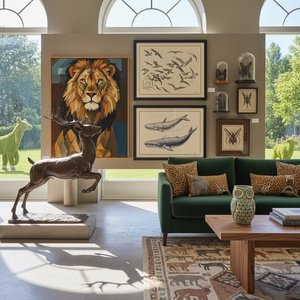
Animalia: Exploring the Enduring Presence of Animals in Art & Interior Design
Explore the rich history of animal symbolism in art, from ancient mythology to modern masterpieces. Discover how animals have inspired artists for centuries and learn how to incorporate these powerful motifs into your home décor.

Jan van Goyen: Master of Dutch Landscape & Atmospheric Perspective
Discover Jan van Goyen, the master of Dutch landscape painting. Explore his subtle technique, atmospheric realism & lasting influence on art history. Learn about this 17th-century pioneer at OriginalUniqueArt.
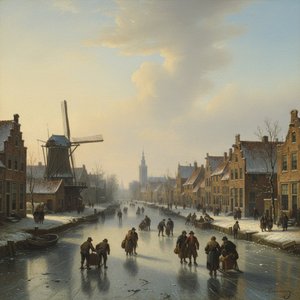
Charles Leickert: Capturing the Dutch Golden Age Light – A Comprehensive Study of Technique, Context, and Legacy
Explore the captivating winter landscapes of Charles Leickert, a master of Dutch Golden Age light & atmosphere. Discover his techniques, symbolism, and lasting legacy – a comprehensive study for art enthusiasts and collectors.


