Preview
 Send
Send Share
Share
 Details

 Download
 Similars
 X-Ray
X-Ray Diaporama
 Stats
StatsInterior
 Oil On Canvas
- WallArt
- Realism
 1888
1888- 19th Century
 92.0 x 73.0 cm
 Read More
Giclée / Art Print
Museum-quality giclée or canvas print with fast production and flexible finish options. ( Buy Hand Made Painting Switch to Digital Image)




P118B $10

P118H $10

P118W $10

P438Z $10

P508JH $12

P508YH $12

P805H $10

P805Z $10

P919BZ $10

P919G $10

P919XJ $10

P959ZH $10

P968JZ $12

W106C $8

W218G $10

W218JH $8

W218Y $10

W307PJ $10

W316G $10

W316PJ $8

W316Y $10

W398PJ $8

W4111J $10

W500HY $15

W500JH $15

W692G $12

W849H $8

W940BG $15

W953PJ $8




Pick from our preset sizes that match the artwork's original proportions.

You may enter your own dimensions to fit a specific frame or space. If your selected size does not match the original image's proportions, we will either crop the artwork or extend the image with a mirrored or solid-fill edge. A digital mockup will be sent for your approval before production begins.
Please note that the on-screen preview does not reflect the actual cropping or extension. Only the mockup will accurately show the final composition.
While custom sizes are available, we recommend selecting a dimension from the predefined list to preserve the original proportions.
Worldwide Delivery () in 2 weeks instead of standard 4/5 weeks. (8 September)

Free Worldwide Express Shipping

High-Quality Linen Canvas

Full Shipping Insurance

Customs Tax Refund Guarantee

True Color Matching Guarantee

100-Day Return Policy (Defects Only)

100% Money-Back Guarantee

Bulk Discount Offer
 Glass option is only available in size under 110 CM

Interior
Giclée / Art Print
Reproduction Size
-


Total Price
$ 81
A Quiet Moment in Time: The Soul of Serusier's Interior
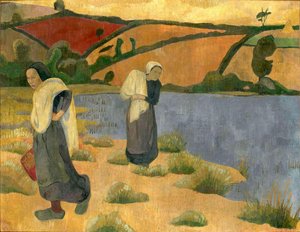
In the quiet corners of art history, certain works possess the unique ability to freeze a moment of profound simplicity, turning the mundane into something eternal. Paul Sérusier’s 1888 masterpiece, Interior, is precisely such a work. This oil on canvas, measuring 92 x 73 cm, invites the viewer into a rustic, domestic sanctuary that feels both intimately personal and universally relatable. At first glance, we encounter a scene of humble labor: a man standing in contemplation, his figure anchored by a white shirt and dark trousers, while a woman sits upon the stone floor, her hands lost in the rhythmic, meditative task of working with yarn or thread. There is no grand drama here, only the soft, heavy pulse of everyday life, captured with a precision that honors the dignity of the working class.
The atmosphere of the painting is thick with a sense of warmth and seclusion. Sérusier utilizes a palette dominated by earthy tones—deep browns, muted ochres, and soft shadows—which wrap the figures in a protective, domestic embrace. The lighting is masterfully subdued, suggesting the gentle, filtered glow of natural light entering a simple rural home. This careful manipulation of light does more than just illuminate the room; it creates a psychological depth, casting soft shadows that lend weight to the wooden walls and the textured stone floor. For the collector or interior designer, this piece offers a grounding presence, providing a sense of stability and historical weight to any curated space.
The Intersection of Realism and the Nabis Movement
While Interior is deeply rooted in the Realist tradition—a movement dedicated to the honest depiction of contemporary life—it also serves as a fascinating precursor to the avant-garde shifts that would soon redefine modern art. Sérusier, a pivotal figure in the Les Nabis group, was a painter who sought to bridge the gap between the tangible world and the symbolic essence of subject matter. In this work, we see the seeds of his later, more experimental styles, such as Cloisonnism and Synthetism. Although the figures are rendered with naturalistic detail, there is an emerging sense of flattened form and a deliberate arrangement of shapes that hints at the artist's growing interest in abstraction.
The composition is a masterclass in balance and harmony. The placement of the man on the left and the woman on the right creates a visual equilibrium that guides the eye through the domestic landscape, from the texture of the wooden walls to the delicate movement of the thread. This structural integrity ensures that the painting remains visually captivating even upon repeated viewings. For those seeking to adorn a home with art that inspires contemplation, this piece acts as a window into a bygone era, offering a sophisticated blend of historical significance and aesthetic grace. It is not merely a depiction of a room; it is an invitation to slow down, to breathe, and to find beauty in the quietest rhythms of existence.
Artist Biography
early life and education
paul sérusier, a french painter, was born on november 9, 1864, in paris. he studied at the académie julian, where he became a monitor in the mid-1880s. this marked the beginning of his artistic journey, which would eventually lead him to pioneer abstract art and inspire the avant-garde nabis movement, synthetism, and cloisonnism.artistic career
in the summer of 1888, sérusier traveled to pont-aven, where he joined a small group of artists centered around paul gauguin. under gauguin's close supervision, sérusier painted "the talisman," an extreme exercise in cloisonnism that approximated pure abstraction. this piece showcased his innovative style and willingness to experiment with new techniques. as a post-impressionist painter, sérusier was part of the group les nabis, alongside pierre bonnard, édouard vuillard, and maurice denis. although not as widely recognized as some of his peers, sérusier's contributions to the development of abstract art are undeniable.notable works and legacy
some of sérusier's notable works include:- l'averse (1893), musée d'orsay, paris
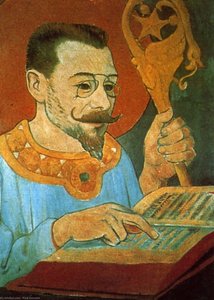
- portrait of paul ranson (1890), musée d'orsay, paris
- melancholy (1890)
- the snake eaters (1894), muzeum narodowe, warsaw
artistic movement and influence
sérusier's work was influenced by cloisonnism, a style characterized by bold and flat forms separated by dark contours. this movement, which emerged in the late 19th century, played a significant role in shaping the development of modern art.- explore more on cloisonnism: the cloisonnism art movement
- discover sérusier's work: paul serusier | OriginalUniqueArt.com
- learn about the nabis movement: the nabis art movement

Paul Sérusier
1864 - 1927 , France
Quick Facts
- Artistic Movement Or Style: Post-Impressionism
- Artists Who Influenced This Artist:
- Paul Gauguin
- Maurice Denis
- Date Of Birth: November 9, 1864
- Full Name: Louis-Paul-Henri Sérusier
- Nationality: French
- Notable Artworks:
- The Talisman
- Landscape at the Bois d’Amour
- Place Of Birth: Paris, France
Related Articles

Cézanne's Masterpieces: 25 Iconic Artworks to Transform Your Space
Journey through 25 iconic artworks by Paul Cézanne – a master of Impressionism and Post-Impressionism. Explore his landscapes, still lifes, and the stories behind these timeless masterpieces. Discover museum-quality reproductions & curated decor at OriginalUniqueArt.com.

Intimate Interiors: Domestic Life & Artistic Representation from Renaissance to Impressionism
Explore the evolution of domestic life in Western art from the Renaissance to Impressionism. Discover symbolism, realism & artistic techniques shaping intimate interior scenes. Learn more with OriginalUniqueArt.
Romantic Realism's Finest: 10 Masterpieces for Your Home | OriginalUniqueArt
Explore 10 defining masterpieces of Romantic Realism! Discover Courbet, Millet & Daumier's powerful paintings—capturing emotion and social realities. Find museum-quality reproductions for your home at OriginalUniqueArt.com.
Paul Klee's Masterpieces: Explore 25 Iconic Paintings & Prints | OriginalUniqueArt
Journey through Paul Klee's 25 most iconic paintings & prints. Explore his abstract style, Bauhaus influence, and vibrant color palettes. Find museum-quality art reproductions & decor ideas at OriginalUniqueArt.com. Discover all masterpieces online.
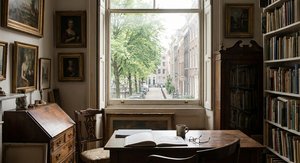
The Interior Gaze: Exploring Representations of Domestic Space in Art History
Explore the fascinating history of domestic interiors in art! From Dutch Masters to Impressionism, discover how artists captured home life & social meaning. Expert analysis and insights at OriginalUniqueArt.