Preview
 Send
Send Share
Share
 Details
 Guide
Guide

 Download
 Similars
 X-Ray
X-Ray Diaporama
 Stats
StatsColour Wheel
 Oil On Canvas
- WallArt
- Post-Impressionism
 41.0 x 32.0 cm
 Musée de Pont-Aven
 Read More
Giclée / Art Print
Museum-quality giclée or canvas print with fast production and flexible finish options. ( Buy Hand Made Painting Switch to Digital Image)




P118B $10

P118H $10

P118W $10

P438Z $10

P508JH $12

P508YH $12

P805H $10

P805Z $10

P919BZ $10

P919G $10

P919XJ $10

P959ZH $10

P968JZ $12

W106C $8

W218G $10

W218JH $8

W218Y $10

W307PJ $10

W316G $10

W316PJ $8

W316Y $10

W398PJ $8

W4111J $10

W500HY $15

W500JH $15

W692G $12

W849H $8

W940BG $15

W953PJ $8




Pick from our preset sizes that match the artwork's original proportions.

Type the width and the height you need, to fit your frame or your wall. A print can only be cut, never made bigger than the picture, so a size with a different shape loses a part of the image. We send you a digital mockup to approve before we print anything. The picture shown on this page does not show the real cut — only the mockup does.
Worldwide Delivery () in 2 weeks instead of standard 4/5 weeks. (24 October)

Free Worldwide Express Shipping

High-Quality Linen Canvas

Full Shipping Insurance

Customs Tax Refund Guarantee

True Color Matching Guarantee

100-Day Return Policy (Defects Only)

100% Money-Back Guarantee

Bulk Discount Offer
 Glass option is only available in size under 110 CM

Colour Wheel
Giclée / Art Print
Reproduction Size
-


Total Price
$ 81
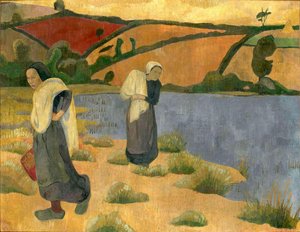
Paul Sérusier’s Colour Wheel: A Pioneer of Abstract Impressionism
The shimmering hues of autumn – crimson, ochre, amber, russet – served as the catalyst for Paul Sérusier's groundbreaking exploration into colour harmony. Born in Paris in 1864 and steeped in the burgeoning artistic fervor of his time, Sérusier embarked on a journey to transcend representational art, driven by an unwavering belief in the expressive potential of pure pigment. This quest culminated in “Colour Wheel,” a deceptively simple composition that nonetheless encapsulates the essence of his revolutionary approach to painting – a cornerstone of the Nabi movement and arguably one of the earliest examples of abstract art.The Nabi Influence: Seeking Harmony Beyond Reality
Sérusier’s artistic trajectory was profoundly shaped by his association with Pierre Bonnard, Maurice Denis, and Édouard Vuillard—the core members of Les Nabis (“The Prophets”), a group dedicated to rejecting academic conventions and embracing spiritual contemplation. Influenced by Japanese prints and Cézanne's geometric explorations, the Nabis sought inspiration in the intangible realm of emotion and intuition, prioritizing color over meticulous detail. “Colour Wheel” embodies this ethos perfectly; it abandons photographic accuracy in favor of conveying an atmosphere of serene contemplation—a deliberate departure from the prevailing artistic trends of the late nineteenth century.Cloisonnism: A Technique Rooted in Byzantine Iconography
Sérusier’s distinctive style, known as cloisonnism, owes its origins to Byzantine iconographic tradition. This technique involves dividing a canvas into rectangular panels delineated by thin black lines—a method that dramatically simplifies form and enhances color saturation. As Sérusier himself eloquently described, “The aim is to make the colours shine.” The resulting effect is akin to peering through stained glass windows, capturing not merely what is seen but also how it feels – an immersive experience designed to evoke a profound emotional response. This meticulous process demanded considerable patience and precision, reflecting the artist’s unwavering commitment to achieving artistic excellence.Symbolism: Capturing Inner Landscapes
Beyond its technical prowess, “Colour Wheel” resonates with symbolic significance. The circular arrangement of colors—red, yellow, blue, green, purple, orange, pink—represents a visual distillation of cosmological concepts prevalent in medieval thought. Each hue embodies specific qualities – passion, intellect, serenity – inviting viewers to contemplate the interconnectedness of existence and the beauty inherent in simplicity. Sérusier’s intention was not merely to depict a landscape but to translate its essence into an internalized experience, mirroring the Nabis' broader preoccupation with spiritual illumination.A Legacy of Innovation: Inspiring Future Generations
“Colour Wheel” stands as a testament to Sérusier’s visionary audacity—a bold assertion that art could transcend representation and communicate directly with the human soul. Its influence extends far beyond the Nabi movement, inspiring subsequent artists who sought to liberate painting from the constraints of realism. Today, reproductions of this iconic artwork continue to captivate audiences worldwide, serving as a poignant reminder of Sérusier’s enduring contribution to the history of art and his unwavering belief in the transformative power of color.- Artist: Paul Sérusier
- Birth Year: 1864
- Death Year: 1927
- Medium: Oil on Wood Panel
- Size: 41 x 32 cm
Questions & Answers
Where can I buy a digital image of "Colour Wheel" by Paul Sérusier?
A digital image of "Colour Wheel" by Paul Sérusier can be purchased on its Digital Image page: a high-resolution digital image download.
Is there a factsheet about "Colour Wheel" by Paul Sérusier for students?
A Guide page is available for "Colour Wheel" by Paul Sérusier: a printable factsheet about the artwork, designed for students and classroom use.
What type of artwork is "Colour Wheel" by Paul Sérusier?
In the catalog, "Colour Wheel" by Paul Sérusier is filed as wall art. The category helps find similar works.
Artist Biography
early life and education
paul sérusier, a french painter, was born on november 9, 1864, in paris. he studied at the académie julian, where he became a monitor in the mid-1880s. this marked the beginning of his artistic journey, which would eventually lead him to pioneer abstract art and inspire the avant-garde nabis movement, synthetism, and cloisonnism.artistic career
in the summer of 1888, sérusier traveled to pont-aven, where he joined a small group of artists centered around paul gauguin. under gauguin's close supervision, sérusier painted "the talisman," an extreme exercise in cloisonnism that approximated pure abstraction. this piece showcased his innovative style and willingness to experiment with new techniques. as a post-impressionist painter, sérusier was part of the group les nabis, alongside pierre bonnard, édouard vuillard, and maurice denis. although not as widely recognized as some of his peers, sérusier's contributions to the development of abstract art are undeniable.notable works and legacy
some of sérusier's notable works include:- l'averse (1893), musée d'orsay, paris
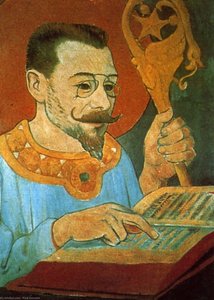
- portrait of paul ranson (1890), musée d'orsay, paris
- melancholy (1890)
- the snake eaters (1894), muzeum narodowe, warsaw
artistic movement and influence
sérusier's work was influenced by cloisonnism, a style characterized by bold and flat forms separated by dark contours. this movement, which emerged in the late 19th century, played a significant role in shaping the development of modern art.- explore more on cloisonnism: the cloisonnism art movement
- discover sérusier's work: paul serusier | OriginalUniqueArt.com
- learn about the nabis movement: the nabis art movement

Paul Sérusier
1864 - 1927 , France
Quick Facts
- Full Name: Louis-Paul-Henri Sérusier
- Nationality: French
- Date Of Birth: 1864
- Date Of Death: 1927
- Place Of Birth: Paris, France
- Notable Artworks:
- The Talisman
- Landscape at the Bois d’Amour
- Artistic Movement Or Style: Post-Impressionism
- Artists Who Influenced This Artist:
- Paul Gauguin
- Maurice Denis
Related Articles

Cézanne's Masterpieces: 25 Iconic Artworks to Transform Your Space
Journey through 25 iconic artworks by Paul Cézanne – a master of Impressionism and Post-Impressionism. Explore his landscapes, still lifes, and the stories behind these timeless masterpieces. Discover museum-quality reproductions & curated decor at OriginalUniqueArt.com.

Beyond Light & Color: Impressionism vs. Post-Impressionism for the Discerning Collector
Explore the nuances of Impressionism & Post-Impressionism with . Expert insights for collectors on style, investment, and acquiring museum-quality reproductions.
Post-Impressionism's 10 Defining Masterpieces: Art for Your Home |
Journey through Post-Impressionism's 10 defining masterpieces – Van Gogh, Monet & more. Explore iconic paintings, art history & find museum-quality reproductions for your home at . Discover all masterpieces online!
Beyond Impressionism: Exploring the Emotional Depth of Post-Impressionist Painting
Explore the profound emotional depth & innovative techniques of Post-Impressionism with OriginalUniqueArt. Discover Cézanne, Van Gogh, Gauguin & more – and their lasting impact on modern art.
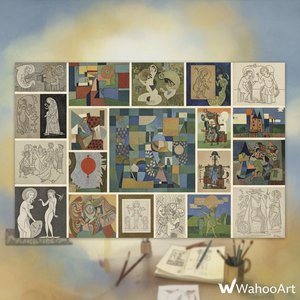
Paul Klee's Masterpieces: Explore 25 Iconic Paintings & Prints | OriginalUniqueArt
Journey through Paul Klee's 25 most iconic paintings & prints. Explore his abstract style, Bauhaus influence, and vibrant color palettes. Find museum-quality art reproductions & decor ideas at OriginalUniqueArt.com. Discover all masterpieces online.