Preview
 Send
Send Share
Share
 Details
 Guide
Guide

 Download
 Similars
 X-Ray
X-Ray Diaporama
 Stats
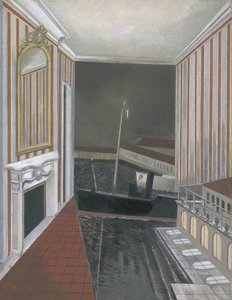
StatsLandscape of Bleached Objects
 Acrylic On Canvas
- WallArt
- Surrealism
 1934
1934 74.0 x 62.0 cm
 Auckland Art Gallery Toi o Tāmaki
 Read More
Hand Made Oil Reproduction
Hand-painted oil on canvas in your size and frame, made to order by our artists. ( Switch to Print Switch to Digital Image)




P118B $10

P118H $10

P118W $10

P438Z $10

P508JH $12

P508YH $12

P805H $10

P805Z $10

P919BZ $10

P919G $10

P919XJ $10

P959ZH $10

P968JZ $12

W106C $8

W218G $10

W218JH $8

W218Y $10

W307PJ $10

W316G $10

W316PJ $8

W316Y $10

W398PJ $8

W4111J $10

W500HY $15

W500JH $15

W692G $12

W849H $8

W940BG $15

W953PJ $8




Pick from our preset sizes that match the artwork's original proportions.

Type the width and the height you need, to fit your frame or your wall. This is hand-painted, so for a size with a different shape the artist can paint a bit more around the picture, or cut a bit — you choose. We send you a digital mockup to approve before the painting starts. The picture shown on this page does not show the real result — only the mockup does.
After order, OriginalUniqueArt.com team will email client for instructions and provide a mockup preview
Worldwide Delivery () in 3/4 weeks instead of standard 5 weeks. (24 October). No compromise on quality.

Free Worldwide Express Shipping

High-Quality Linen Canvas

Full Shipping Insurance

Customs Tax Refund Guarantee

True Color Matching Guarantee

100-Day Return Policy (Defects Only)

100% Money-Back Guarantee

Bulk Discount Offer
 Glass option is only available in size under 110 CM

Landscape of Bleached Objects
Reproduction Medium
Reproduction Size
-


Total Price
$ 300
Landscape of Bleached Objects – An Exploration of Surrealist Vision
Paul Nash’s “Landscape of Bleached Objects,” completed in 1934, stands as a haunting testament to the burgeoning Surrealist movement in British art and a profound meditation on themes of mortality and transformation. Executed in oil paints on canvas measuring 74 x 62 cm, this artwork transcends mere visual representation, immersing the viewer in a dreamlike realm populated by unsettling yet undeniably beautiful forms.Historical Context & The Unit One Group
Nash’s artistic journey coincided with the formation of Unit One, a collective spearheaded by Nash himself and comprised of fellow artists like Henry Moore and Eduardo Paolozzi. This group sought to push the boundaries of British art beyond traditional landscapes, embracing experimentation with abstraction and Surrealist principles – specifically influenced by Sigmund Freud's psychoanalytic theories. The prevailing anxieties of the era—the looming shadow of impending war and a growing disillusionment with rational thought—fueled this desire for artistic innovation, prompting artists to delve into subconscious realms and explore irrational juxtapositions.Composition & Technique: A Flattened Reality
The painting’s composition is deliberately asymmetrical, guiding the eye across a grassy plane dominated by stylized skulls, shells, and amorphous shapes reminiscent of eroded rock formations. Lines are soft and blurred, eschewing linear perspective to create an atmosphere of ethereal stillness. Nash skillfully employs visible brushstrokes—a hallmark of his technique—to build up texture and imbue the canvas with palpable surface quality. The muted color palette – greens, blues, whites, and greys – reinforces this sense of desolation while subtly highlighting the sculptural forms at its core. Layers of paint create an illusion of depth, albeit one that prioritizes mood over precise spatial accuracy.Symbolism & Emotional Resonance: Decay as Beauty
The central motif—the bleached or bone-like objects—immediately evokes associations with death and decay, mirroring the cyclical nature of existence. However, Nash avoids melodrama; instead, he presents these symbols with a quiet dignity, transforming them into emblems of beauty rather than despair. The abstracted shapes – skulls, shells – are not merely depictions but representations of primal forces shaping the landscape. They speak to anxieties about loss and change, inviting contemplation on the fragility of life and the inevitability of transformation. The overall emotional impact is one of melancholic serenity—a recognition that even in ruin, there exists a profound aesthetic truth.Influence & Legacy: Surrealism's Quiet Triumph
“Landscape of Bleached Objects” exemplifies Surrealist art’s commitment to accessing the unconscious mind and disrupting conventional perceptions. It stands apart from more overtly fantastical works within the movement, prioritizing textural detail and subtle tonal shifts to convey its emotional core. Nash’s exploration of form and symbolism continues to resonate with artists today, demonstrating that Surrealism's power resided not in grand spectacle but in a profound engagement with psychological complexities—a legacy cemented by this evocative masterpiece.Questions & Answers
From which country does the Surrealism work "Landscape of Bleached Objects" come?
"Landscape of Bleached Objects" was created by Paul Nash, born in United Kingdom, within the Surrealism movement. The artist's origin links the work to Surrealism as practiced by artists from United Kingdom.
What orientation does "Landscape of Bleached Objects" by Paul Nash have?
The format of "Landscape of Bleached Objects" is landscape. This is useful when planning where a reproduction will be placed.
How do movement and era meet in "Landscape of Bleached Objects" by Paul Nash?
"Landscape of Bleached Objects" belongs to the Surrealism movement, and its creator worked in the Modern era.
Artist Biography
Early Life and Influences
- Born: Kensington, United Kingdom (1889)
- Died: 1946
- Paul Nash was born on May 11, 1889, in London. His father, William Harry Nash, was a barrister, and his mother, Caroline Maude, displayed signs of mental illness from an early age. The family moved to Iver Heath, Buckinghamshire, when Paul was young, a move intended to benefit his mother's health.
- Education: He attended the Parsons School of Art and later the Slade School of Fine Art. While proficient in landscape painting, he struggled with figure drawing.
- Early Influences: Nash was heavily influenced by William Blake and J.M.W. Turner, evident in his early works. He also drew inspiration from landscapes featuring ancient historical elements like burial mounds and Iron Age hill forts.
Artistic Style and Development
- Style: Paul Nash's style blended modernism with traditional techniques. He utilized bold colors, geometric shapes, and abstract forms, distinguishing him from contemporaries.
- Surrealist Leanings: While not strictly a Surrealist, Nash was influenced by the movement, particularly after seeing a Giorgio de Chirico exhibition in 1928. His work incorporated symbolic landscapes with everyday objects.
- War Art: During World War I and II, Nash served as an official war artist. His depictions of battlefields were notable for their haunting beauty and exploration of the impact of conflict on the landscape. Notable works include "The Menin Road."
- "Aerial Creatures": A series produced during WWII featuring anthropomorphic depictions of aircraft crashed in landscapes, demonstrating his evolving style and symbolism.
Major Achievements and Recognition
- Pioneer of British Modernism: Nash played a crucial role in shaping British modern art, bridging traditional landscape painting with modernist aesthetics.
- War Art Legacy: His wartime paintings are considered iconic representations of the conflict's impact on both soldiers and the environment.
- Unit One Group: He co-founded Unit One in 1933 alongside Ben Nicholson and Barbara Hepworth, a significant group within the British art scene.
- Writer and Designer: Beyond painting, Nash was also a respected writer on art and designed applied arts such as stage scenery, fabrics, and posters.
Influences and Legacy
- Influence on Subsequent Artists: Nash's unique style and use of color influenced generations of artists who followed.
- Connection to Romanticism: His work is often linked to the English Romantic tradition, particularly through his connection to William Blake and J.M.W. Turner.
- Exploration of Man vs. Nature: A recurring theme in Nash's later works was the relationship between humanity and nature, explored through symbolic imagery.
- Continued Relevance: His paintings continue to be celebrated for their beauty, symbolism, and historical significance, remaining relevant to contemporary audiences.
Exhibitions and Collections
- Ruskin Gallery: Nash's work has been exhibited at the Ruskin Gallery in the United Kingdom.
- Tate Britain: His pieces can be found within the Tate Britain’s collection.
- Imperial War Museum: Several of his war art pieces are housed in the Imperial War Museum.
- York Art Gallery: His work is also part of the York Art Gallery's collection.
- Government Art Collection: A selection of Nash’s artworks are displayed within the Government Art Collection.

Paul Nash
1889 - 1946 , United Kingdom
Quick Facts
- Full Name: Paul Nash
- Nationality: British
- Date Of Birth: 1889
- Date Of Death: 1946
- Place Of Birth: Kensington, United Kingdom
- Notable Artworks: ['The Menin Road']
- Artistic Movement Or Style: Surrealism, Modernism
- Artists Who Influenced This Artist:
- William Blake
- J.M.W. Turner
- Wolfgang Lettl
- Artists Or Movements Influenced By This Artist: ['Modern artists']
Related Articles

Kandinsky's Masterpieces: 25 Paintings That Define Abstract Art | OriginalUniqueArt
Journey through Wassily Kandinsky's 25 most iconic abstract paintings. Explore his revolutionary use of color, form & spiritual expressionism. Find museum-quality Kandinsky reproductions and elevate your home decor with OriginalUniqueArt.com. Discover all masterpieces on OriginalUniqueArt.com!
Paul Nash: Modernism, Myth & the British Landscape – A Visionary Artist
Explore the evocative landscapes & poignant war art of Paul Nash (1889-1946), a key figure in British Modernism. Discover his unique style and lasting impact on art history with OriginalUniqueArt.

Geometric Abstraction's 10 Defining Masterpieces | Art for Your Home - OriginalUniqueArt
Explore 10 defining masterpieces of Geometric Abstraction! Discover Kandinsky, Mondrian & Malevich’s iconic works. Find museum-quality art reproductions and curated decor ideas to elevate your home at OriginalUniqueArt.com.

Cézanne's Masterpieces: 25 Iconic Artworks to Transform Your Space
Journey through 25 iconic artworks by Paul Cézanne – a master of Impressionism and Post-Impressionism. Explore his landscapes, still lifes, and the stories behind these timeless masterpieces. Discover museum-quality reproductions & curated decor at OriginalUniqueArt.com.
Paul Klee's Masterpieces: Explore 25 Iconic Paintings & Prints | OriginalUniqueArt
Journey through Paul Klee's 25 most iconic paintings & prints. Explore his abstract style, Bauhaus influence, and vibrant color palettes. Find museum-quality art reproductions & decor ideas at OriginalUniqueArt.com. Discover all masterpieces online.