Preview
 Send
Send Share
Share
 Details
 Guide
Guide

 Download
 Similars
 X-Ray
X-Ray Diaporama
 Stats
StatsVisage
 Acrylic On Canvas
- WallArt
- Impressionism
 23.0 x 22.0 cm
 Hammer Museum
 Read More
Giclée / Art Print
Museum-quality giclée or canvas print with fast production and flexible finish options. ( Buy Hand Made Painting Switch to Digital Image)




P118B $10

P118H $10

P118W $10

P438Z $10

P508JH $12

P508YH $12

P805H $10

P805Z $10

P919BZ $10

P919G $10

P919XJ $10

P959ZH $10

P968JZ $12

W106C $8

W218G $10

W218JH $8

W218Y $10

W307PJ $10

W316G $10

W316PJ $8

W316Y $10

W398PJ $8

W4111J $10

W500HY $15

W500JH $15

W692G $12

W849H $8

W940BG $15

W953PJ $8




Pick from our preset sizes that match the artwork's original proportions.

You may enter your own dimensions to fit a specific frame or space. If your selected size does not match the original image's proportions, we will either crop the artwork or extend the image with a mirrored or solid-fill edge. A digital mockup will be sent for your approval before production begins.
Please note that the on-screen preview does not reflect the actual cropping or extension. Only the mockup will accurately show the final composition.
While custom sizes are available, we recommend selecting a dimension from the predefined list to preserve the original proportions.
Worldwide Delivery () in 2 weeks instead of standard 4/5 weeks. (26 September)

Free Worldwide Express Shipping

High-Quality Linen Canvas

Full Shipping Insurance

Customs Tax Refund Guarantee

True Color Matching Guarantee

100-Day Return Policy (Defects Only)

100% Money-Back Guarantee

Bulk Discount Offer
 Glass option is only available in size under 110 CM

Visage
Giclée / Art Print
Reproduction Size
-


Total Price
$ 81
Paul César Helleu: Capturing Belle Époque Elegance & Artistic Innovation
Paul César Helleu (1859–1927) stands as a pivotal figure in French Impressionist painting, renowned for his exquisite portraits of women that embody the spirit of the Belle Époque – an era defined by opulent social life and artistic experimentation. More than just aesthetically pleasing images, Helleu’s works offer a glimpse into the cultural values and sensibilities of late nineteenth-century Paris, reflecting a fascination with beauty, refinement, and psychological nuance. His legacy continues to inspire artists today, demonstrating the enduring power of meticulous observation and masterful technique.Subject Matter & Composition: A Portrait Steeped in Dignity
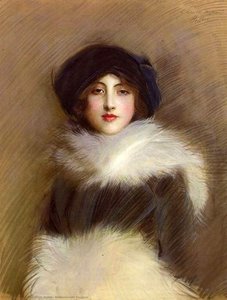
Helleu’s artistic focus centered on capturing the essence of female subjects—primarily aristocratic ladies—whose portraits became iconic representations of their time. He meticulously studied his models, striving to convey not merely physical likeness but also inner character and emotional state. The composition of “Visage” exemplifies this approach: a tightly cropped profile view emphasizes the woman’s head and shoulders, skillfully framing her gaze directed off to the side—a gesture that speaks volumes about composure and thoughtfulness. A prominent bow adorning her hair serves as a decorative element, subtly reinforcing the image's formal elegance and highlighting social status. The balanced arrangement of elements contributes to an overall sense of harmony despite the asymmetry inherent in portraiture.Technique: Drypoint Etching – Precision & Texture
Helleu’s artistic brilliance resided primarily in his mastery of drypoint etching, a technique he embraced wholeheartedly during his formative years alongside fellow Impressionists like Whistler and Sargent. This method involved scratching lines onto a copper plate using a stylus—a process demanding considerable patience and precision—before transferring the inked image onto paper. The resulting print possesses remarkable textural qualities thanks to the interplay between hatching and cross-hatching techniques, which Helleu employed extensively to build up areas of shadow and volume. Fine, delicate lines delineate facial features and hair texture with exceptional accuracy, capturing subtle nuances that would elude less skilled artists.Historical Context & Artistic Influences: Impressionism's Legacy
Helleu’s artistic trajectory was profoundly shaped by the burgeoning Impressionist movement, which challenged academic conventions and championed plein air painting—working outdoors directly from nature—as opposed to studio-based methods. Artists like Monet and Renoir revolutionized painting with their exploration of light and color, prioritizing subjective perception over objective representation. Helleu absorbed these influences, adapting Impressionistic principles to the formal constraints of portraiture while retaining a distinctive stylistic voice. His work reflects the broader cultural shift toward valuing beauty and emotion—a hallmark of the Belle Époque—marking him as one of the era’s most accomplished visual artists.Symbolism & Emotional Impact: Elegance Beyond Appearance
“Visage” transcends mere visual depiction; it embodies a deeper symbolic resonance rooted in the psychological complexities of its subject. The woman's serene expression conveys dignity and composure, reflecting the idealized femininity prevalent during the Belle Époque—a period characterized by societal expectations regarding female behavior and appearance. The bow in her hair symbolizes refinement and aristocratic status, reinforcing the portrait’s social context. Ultimately, Helleu’s masterpiece invites contemplation on themes of beauty, grace, and inner strength—elements that continue to captivate viewers today and solidify his place as a master of artistic expression.Artist Biography
Paul César Helleu: A Portrait of the Belle Époque
- Born: Vannes, France (1859)
- Died: 1927
Early Life and Artistic Training
Paul César Helleu was born in Vannes, Brittany, France, in 1859. His father, a customs inspector, passed away when Helleu was still a teenager. Despite his mother's initial reservations, he moved to Paris at a young age to pursue his artistic ambitions. He studied at Lycée Chaptal and, at the remarkably young age of sixteen, gained admission to the prestigious École des Beaux-Arts. There, he received formal training under Jean-Léon Gérôme.
Helleu's early exposure to the Impressionist movement during the Second Impressionist Exhibition in 1876 proved pivotal. He was deeply influenced by artists like John Singer Sargent, James McNeill Whistler, and Claude Monet, captivated by their innovative techniques and focus on outdoor scenes—a stark contrast to traditional studio practices.
Development as an Artist: Influences and Techniques
To support himself early in his career, Helleu worked for Théodore Deck’s ceramic workshop, hand-painting decorative plates. This experience honed his technical skills. A significant turning point came with his meeting and mentorship under Giovanni Boldini, a portrait painter known for his bravura style. Boldini's influence significantly shaped Helleu's artistic direction.
A close friendship developed between Helleu and John Singer Sargent, which lasted throughout their lives. Sargent’s encouragement and support were crucial to Helleu’s early career. Helleu's mastery of drypoint etching was a defining characteristic of his work. Introduced to the technique by James Jacques Tissot, he quickly became a virtuoso, employing it with the same dynamism and sophistication as his pastels.
Major Works and Recognition
Helleu is best known for his portraits of elegant women from Parisian society during the Belle Époque. Notable subjects included the Duchess of Marlborough, the Marchesa Casati, Belle da Costa Greene, Louise Chéruit, and Helena Rubenstein. His ability to capture their beauty and grace with a refined elegance earned him widespread acclaim.
- Portraits: Helleu’s portraits are celebrated for their delicate lines, subtle color palettes, and the way they convey both physical likeness and personality.
- Drypoint Etchings: His drypoint etchings were particularly popular, allowing for multiple prints to be distributed among friends and family. He produced over 2,000 of these throughout his career.
- Grand Central Terminal Mural: A significant achievement was the commission to create a mural depicting constellations for the ceiling of Grand Central Terminal in New York City. This ambitious project showcased his artistic vision on a grand scale.
Legacy and Historical Significance
Paul César Helleu’s work embodies the spirit of the Belle Époque—a period characterized by optimism, elegance, and artistic innovation. His portraits offer a valuable glimpse into the lives and fashions of Parisian high society during this era.
- Influence on Art: Helleu's innovative use of drypoint etching influenced subsequent generations of printmakers.
- Representation of the Belle Époque: He is considered one of the foremost artists in capturing the essence and aesthetic ideals of the Belle Époque.
- Family Legacy: Notably, he was the father of Jean Helleu and grandfather of Jacques Helleu, both influential artistic directors for Parfums Chanel, demonstrating a lasting family connection to the world of art and design.
Helleu’s work is represented in major museums worldwide, including the Musée d'Orsay and the Louvre in Paris, as well as the Tate in London and the Metropolitan Museum of Art in New York.

Paul César Helleu
1859 - 1927 , France
Quick Facts
- Artistic Movement Or Style: Belle Époque, Impressionism
- Artists Or Movements Influenced By This Artist: ['Parfums Chanel (artistic directors)']
- Artists Who Influenced This Artist:
- Jean-Léon Gérôme
- John Singer Sargent
- James McNeill Whistler
- Claude Monet
- Giovanni Boldini
- James Jacques Tissot
- Date Of Birth: December 17, 1859
- Date Of Death: March 23, 1927
- Full Name: Paul César Helleu
- Nationality: French
- Notable Artworks:
- Still Life with Hydrangias
- Ceiling mural, Grand Central Terminal
- Place Of Birth: Vannes, France
Related Articles
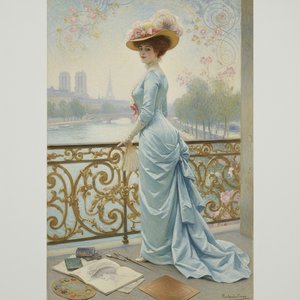
Paul César Helleu: Capturing Belle Époque Elegance & Artistic Innovation
Explore the captivating world of Paul César Helleu, master portraitist of the Belle Époque. Discover his innovative techniques, iconic works like 'Portrait of Margaret Kelly,' and investment potential with OriginalUniqueArt.

Cézanne's Masterpieces: 25 Iconic Artworks to Transform Your Space
Journey through 25 iconic artworks by Paul Cézanne – a master of Impressionism and Post-Impressionism. Explore his landscapes, still lifes, and the stories behind these timeless masterpieces. Discover museum-quality reproductions & curated decor at OriginalUniqueArt.com.
Etching Masters: 10 Legendary Prints That Revolutionized Art | OriginalUniqueArt
Journey through 10 legendary etching masterpieces by Rembrandt, Dürer & Goya. Explore the history of printmaking and discover timeless art for your home. Find museum-quality reproductions at OriginalUniqueArt.com.
Paul Klee's Masterpieces: Explore 25 Iconic Paintings & Prints | OriginalUniqueArt
Journey through Paul Klee's 25 most iconic paintings & prints. Explore his abstract style, Bauhaus influence, and vibrant color palettes. Find museum-quality art reproductions & decor ideas at OriginalUniqueArt.com. Discover all masterpieces online.

Etching: A Historical Survey of Technique, Aesthetic Qualities & Enduring Artistic Significance
Explore the rich history of etching, from its origins to Rembrandt's masterful innovations. Discover the technique, aesthetic qualities & enduring legacy of this captivating art form. Expert insights for collectors and enthusiasts.