Early Life & Artistic Formation: A Parisian Debut
Jacques-Émile Blanche (French: [blɑ̃ʃ]; (1 January 1861 – 30 September 1942) was a French artist, largely self-taught, who became a successful portrait painter, working in London and Paris. == Early life == Blanche, an only child, was born in Pari...
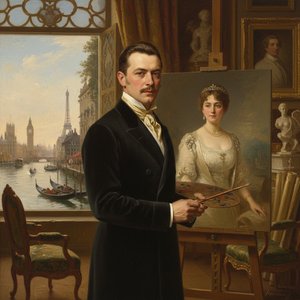
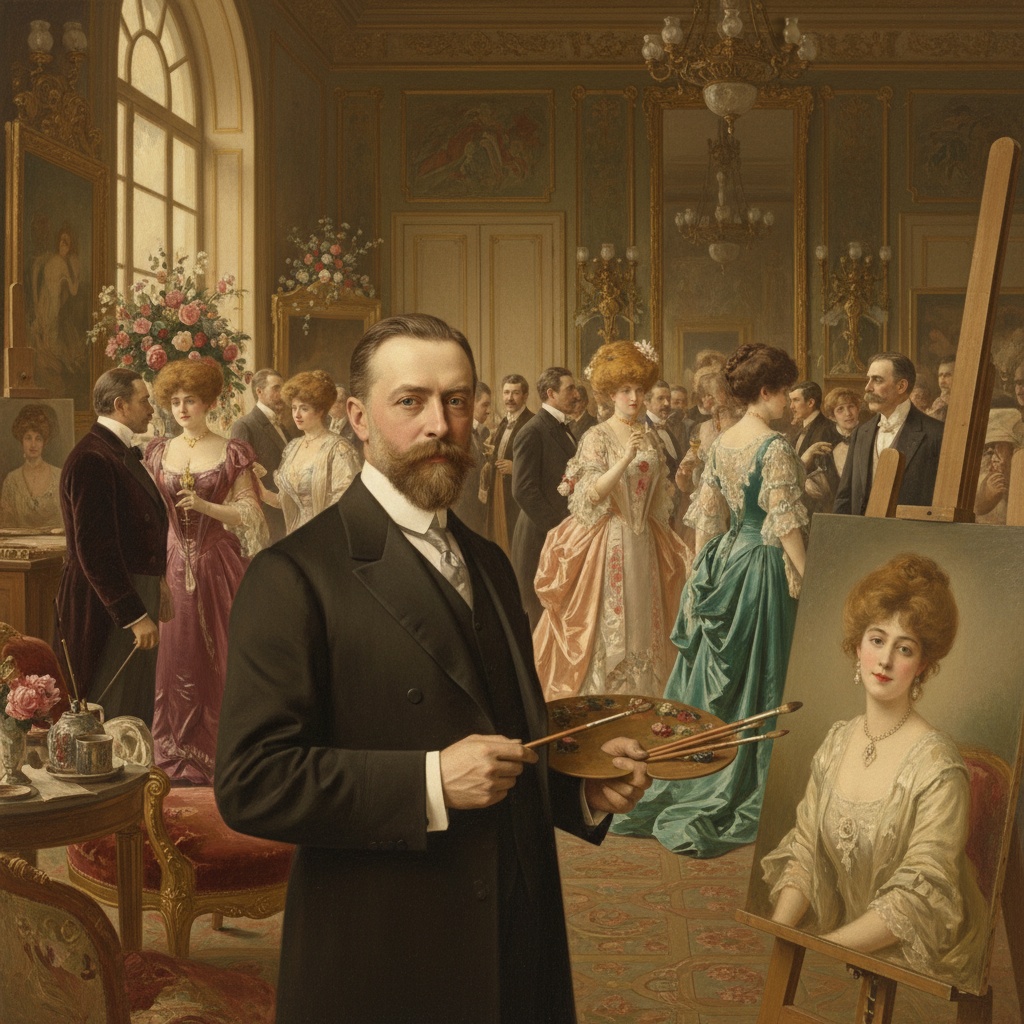
Jacques-Émile Blanche, born into a privileged Parisian milieu in 1861, was an artist whose life and work were inextricably linked to the glittering social circles he so adeptly portrayed. Unlike many of his contemporaries who endured rigorous academic training, Blanche’s path was largely self-directed, nurtured by a father—a prominent psychiatrist—who hosted salons frequented by luminaries of literature and art. This upbringing within a vibrant intellectual atmosphere proved formative, exposing the young artist to diverse perspectives and fostering an early appreciation for character study. While he received some formal instruction from Henri Gervex and Pierre-Auguste Renoir, it was observation – keen, discerning observation – that truly shaped his artistic eye. His family home, once belonging to the Princesse de Lamballe, provided a backdrop of aristocratic elegance that would later permeate his canvases. This early exposure wasn’t merely about social access; it instilled in Blanche a fascination with personality, an understanding of nuance and the subtle language of gesture—qualities that would become hallmarks of his distinctive style.
The Portraitist of Two Worlds: Paris & London Society
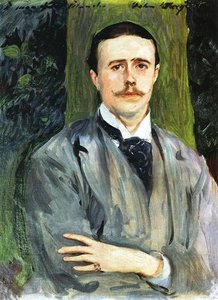 Jacques-Émile Blanche
Jacques-Émile Blanche (1861-1942) was a French Impressionist painter renowned for elegant portraits of Parisian & London society, capturing personality with loose brushwork and influenced by Manet & Whistler. Explore his work!
Blanche quickly established himself as a sought-after portraitist, skillfully navigating the artistic landscapes of both Paris and London. He wasn’t simply documenting appearances; he was capturing *essences*. His Parisian clientele included members of high society, literary figures, and fellow artists, while in London, he found patronage among the upper classes and the burgeoning art world. This transatlantic career allowed him to develop a unique perspective, blending French sophistication with British reserve. His portraits weren’t grand statements of power or wealth; they were intimate studies, often revealing vulnerabilities beneath polished exteriors. Consider his depictions of women – not idealized goddesses but individuals with complex inner lives, their gazes direct and engaging, hinting at stories untold. He possessed a remarkable ability to connect with his sitters, drawing out their personalities through careful observation and subtle brushwork. This talent extended beyond mere likeness; he captured the *atmosphere* surrounding his subjects, the weight of social expectations, or the quiet moments of contemplation.
Impressionistic Techniques & Blanche's Unique Style
Impressionism was a 19th-century art movement characterized by visible brush strokes, open composition, emphasis on accurate depiction of light in its changing qualities (often accentuating the effects of the passage of time), ordinary subject matter...
Though often categorized as an Impressionist, Blanche’s style defies easy classification. He embraced the movement’s emphasis on capturing light and atmosphere, employing visible brushstrokes and a vibrant palette, yet his approach was distinctly his own. Unlike Monet or Renoir, who focused primarily on landscapes and fleeting moments of everyday life, Blanche remained steadfastly committed to portraiture. His technique drew inspiration from 18th-century English masters like Thomas Gainsborough and Joshua Reynolds, valuing elegance and refinement over strict realism. He also absorbed the influence of Édouard Manet and John Singer Sargent, adopting their loose brushwork and sophisticated use of chiaroscuro—the dramatic interplay of light and shadow. London Bridge (1914), for example, showcases his Impressionistic leanings with its dynamic composition and urban charm, yet it’s the subtle rendering of light on the buildings and water that truly captivates. Similarly, in Mischief (1901), the elegant style and rich textures are achieved through a masterful manipulation of brushstrokes, creating an intimate portrayal of Parisian society.
Beyond the Brushstroke: Personality, Intimacy & Proust’s Influence
 Mischief
Discover "Mischief" by Jacques-Émile Blanche – a captivating 1901 oil painting of Parisian society. Explore its chiaroscuro, elegant style & rich textures. #impressionism #art
What truly set Blanche apart was his ability to convey personality. He wasn't interested in superficial beauty; he sought to capture the inner lives of his sitters, their quirks, anxieties, and hidden depths. This fascination with character led to a profound friendship with Marcel Proust, who became one of his most devoted admirers—and subjects. Proust recognized Blanche’s unique talent for psychological insight, appreciating his ability to reveal the complexities of human nature through portraiture. Their relationship was mutually beneficial; Proust provided insightful critiques and helped edit several of Blanche's publications, while Blanche offered a glimpse into the world of Parisian high society that informed Proust’s own literary explorations. Portrait of a Woman, exemplifies this intimate approach—the subject’s gaze is both alluring and enigmatic, inviting the viewer to contemplate her inner world. This focus on psychological depth wasn't merely artistic; it reflected Blanche’s own keen interest in human behavior and his desire to understand the motivations that drive us.
A Legacy in Portraits: Key Works and Enduring Appeal
Jacques-Émile Blanche left behind a remarkable body of work—a gallery of portraits that offer a fascinating glimpse into the Belle Époque and Edwardian eras. From his depictions of Aubrey Beardsley to Virginia Oldoini, Countess of Castiglione, his subjects were often unconventional or controversial figures, adding another layer of intrigue to his paintings. His legacy extends beyond mere technical skill; he captured not just *who* people were but *how* they felt, the weight of their social positions, and the complexities of their inner lives. His influence can be seen in the work of subsequent portrait artists who sought to move beyond superficial likenesses and delve into the psychological depths of their sitters. Today, his paintings continue to captivate audiences with their elegance, intimacy, and insightful portrayals of a bygone era. OriginalUniqueArt.com offers exquisite reproductions of Blanche’s masterpieces, allowing art enthusiasts to experience the beauty and nuance of his work firsthand, bringing the spirit of Belle Époque society into your home.