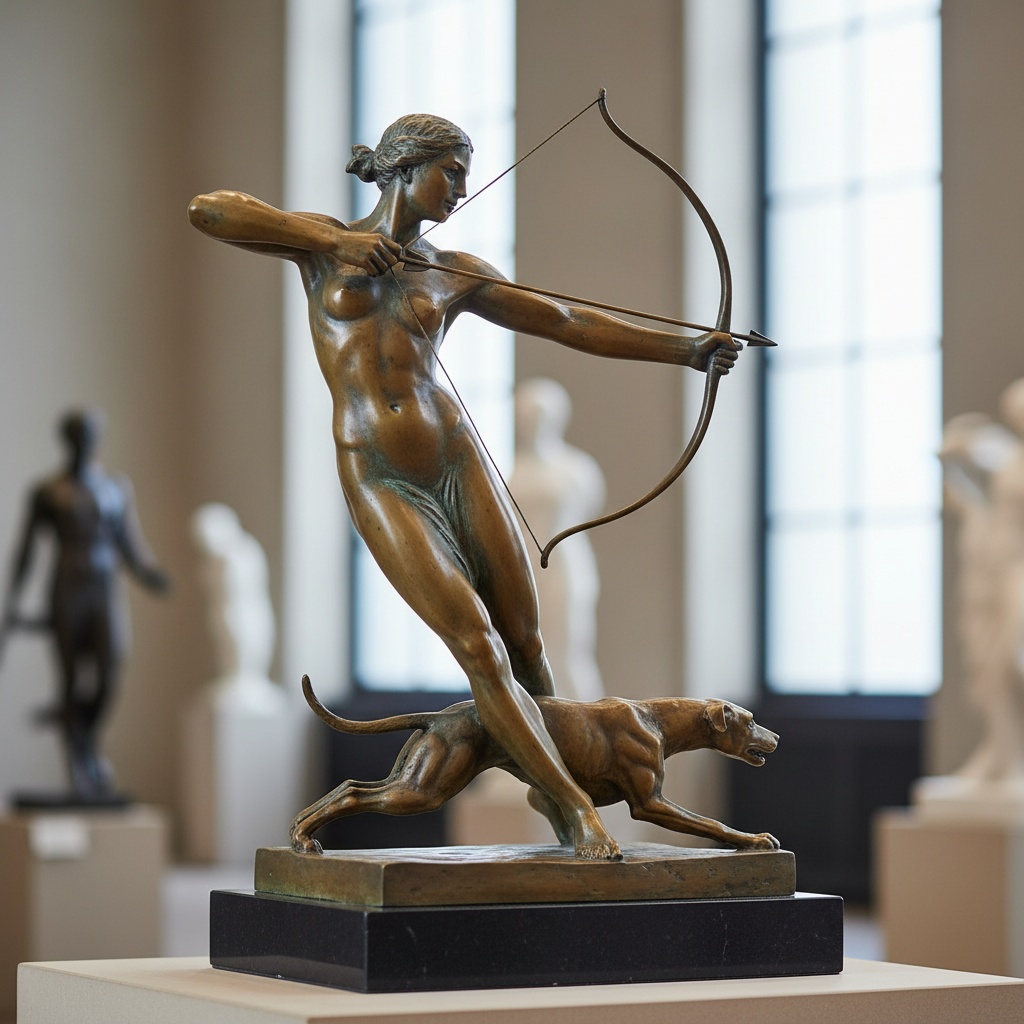
The Rejection of Beaux-Arts: Manship's Early Rebellion
American modernism, much like the modernism movement in general, is a trend of philosophical thought arising from the widespread changes in culture and society in the age of modernity. American modernism is an artistic and cultural movement in the Un...
Paul Howard Manship, a name synonymous with the elegance and streamlined power of American Art Deco sculpture, didn’t emerge from a vacuum. His artistic journey was fundamentally shaped by a deliberate turning away from the prevailing academic traditions of his time – specifically, the Beaux-Arts style that dominated American art in the late 19th and early 20th centuries. While many contemporaries embraced the ornate grandeur and historical references favored by institutions like the École des Beaux-Arts in Paris, Manship sought a different path, one rooted in simplicity, linearity, and a fascination with ancient cultures beyond the European canon. This wasn’t merely stylistic preference; it was a philosophical rejection of what he perceived as an overly rigid and imitative approach to art. His early studies at the St. Paul School of Art and later at the Pennsylvania Academy of Fine Arts provided him with foundational skills, but it was his time assisting Solon Borglum that truly ignited his desire for something new. Manship’s rebellion wasn't about destroying tradition entirely; rather, it was a quest to distill its essence, stripping away superfluous detail in favor of dynamic form and evocative symbolism. This nascent spirit would blossom during his pivotal years at the American Academy in Rome.
Mythological Narratives & Classical Forms: A Signature Style
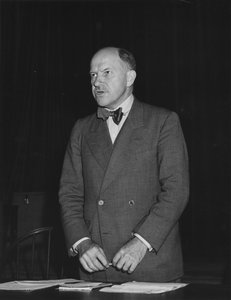 Paul Manship
Paul Manship (1885-1966) was a leading American sculptor of the Art Deco movement, renowned for his classical style & mythological themes. Famous for Rockefeller Center's Prometheus and monuments honoring both World Wars. Explore his elegant works!
Rome proved transformative for Manship. Immersed in the ruins and relics of antiquity, he developed a profound appreciation for classical sculpture – not as a set of rules to be slavishly followed, but as a source of inspiration. However, his engagement with classicism wasn’t limited to Greek and Roman art; he also became captivated by Egyptian, Assyrian, and pre-classical forms. This eclectic blend is what defines his signature style: graceful figures rendered with flowing lines, often depicting mythological subjects imbued with a sense of timelessness and quiet power. Freedom & Justice, one of his most celebrated works, exemplifies this perfectly. The sculpture isn’t simply a representation of abstract concepts; it embodies them through the dynamic interplay of form and gesture. Manship wasn't interested in literal depictions but rather in capturing the *spirit* of these narratives. His sketches, like those for National Sculpture Society Medals (three studies), reveal his meticulous process – a constant refinement of line and composition to achieve an ideal balance between realism and abstraction. He sought to create sculptures that were both visually striking and intellectually stimulating, inviting viewers to contemplate the deeper meanings embedded within their forms.
Prometheus and Public Commissions: Defining an Era
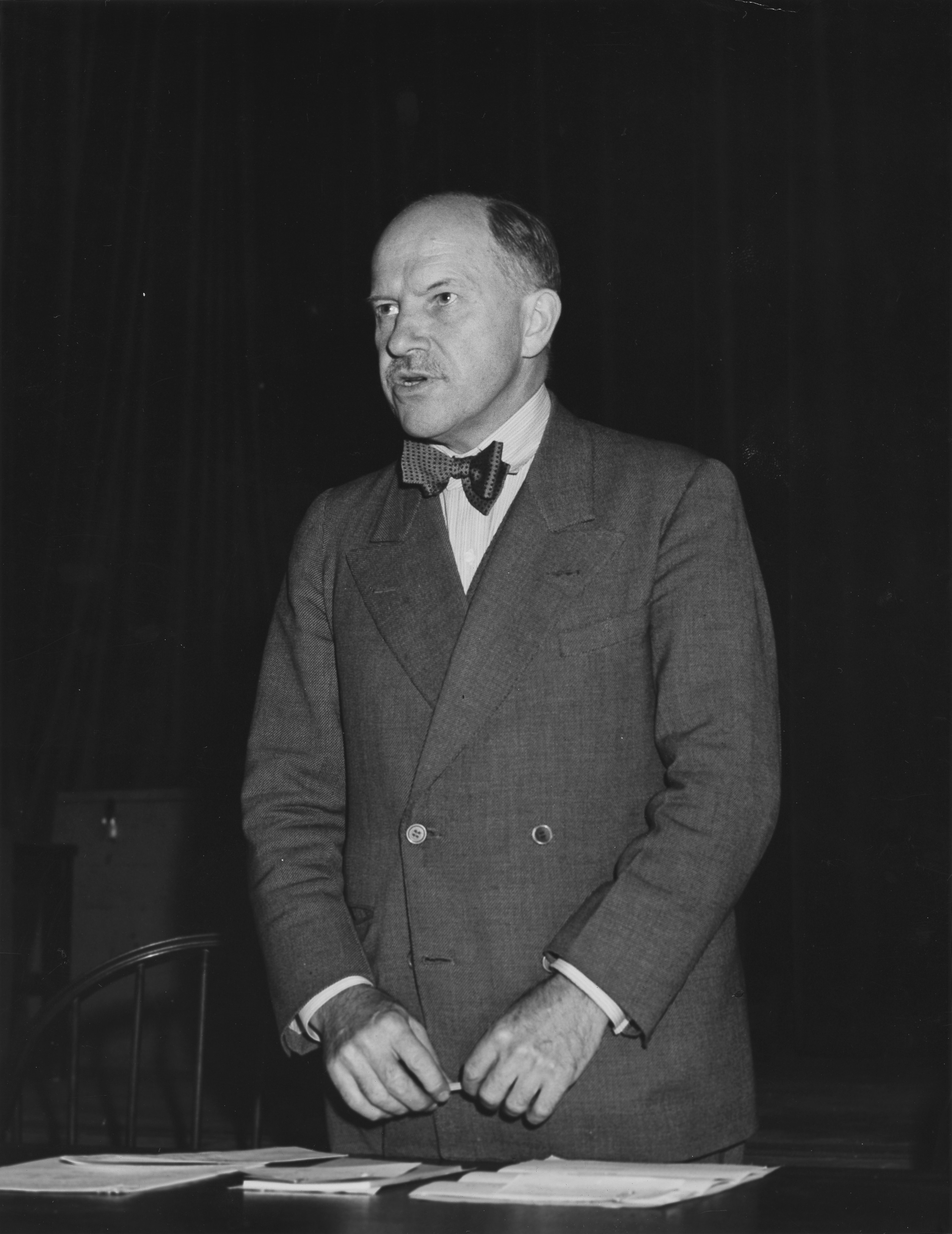 Wikipedia: Paul Manship
Paul Howard Manship (December 25, 1885 – January 31, 1966) was an American sculptor. He consistently created mythological pieces in a classical style, and was a major force in the Art Deco movement. He is well known for his large public commissions, ...
The commission for Prometheus, gracing Rockefeller Center in New York City, cemented Manship’s reputation as a leading American sculptor. Completed in 1934, the monumental gilded bronze figure isn't merely a decorative element; it’s a powerful symbol of human aspiration and progress. The sculpture’s dynamic pose, radiating energy and defiance, perfectly captures the spirit of the Art Deco era – an age characterized by optimism, innovation, and a belief in the power of technology. But Manship wasn’t solely focused on grand public statements. He also undertook numerous other commissions, including war memorials honoring both World Wars, demonstrating his versatility and commitment to civic art. These projects allowed him to explore different themes and scales, further refining his artistic vision. His ability to seamlessly blend classical forms with modern sensibilities made his work incredibly popular during this period, appealing to a broad audience that appreciated both its aesthetic beauty and symbolic resonance.
Manship’s Influence on American Modernism & Art Deco Design
While often categorized as an Art Deco sculptor, Manship's influence extends beyond the confines of that single movement. He played a crucial role in shaping the broader landscape of American modernism, bridging the gap between traditional and contemporary aesthetics. His emphasis on streamlined forms, simplified compositions, and mythological themes resonated with other artists and designers working during this period. He wasn’t alone in exploring these ideas; contemporaries like Gaston Lachaise, known for his voluptuous female nudes, and Reuben Nakian, whose work delved into the sensuality of Greek mythology, shared a similar fascination with classical forms and expressive abstraction. However, Manship’s unique ability to synthesize these influences – combined with his technical mastery – set him apart. His sculptures weren't just beautiful objects; they were statements about the possibilities of art in a rapidly changing world. He helped establish a distinctly American voice within the modernist movement, one that embraced both tradition and innovation.
Beyond the Monumental: Intimate Works and Sketches
The grandeur of Prometheus often overshadows the quieter beauty of Manship’s smaller works and preparatory sketches. These intimate pieces offer a glimpse into his artistic process, revealing his meticulous attention to detail and his constant pursuit of perfection. Works like Evening, demonstrate his ability to capture subtle emotions and nuanced forms in a more restrained setting. His sketchbooks are particularly revealing, filled with studies of animals, mythological figures, and classical motifs. These drawings aren’t simply preliminary designs; they're works of art in their own right, showcasing his expressive line work and his deep understanding of anatomy. They reveal the artist at work, grappling with form and composition, constantly refining his vision until it met his exacting standards. These lesser-known pieces provide a more complete picture of Manship’s artistic journey, demonstrating that his talent extended far beyond large-scale public commissions.
Collecting Manship Today: Investment and Aesthetic Value
Today, Paul Manship's sculptures are highly sought after by collectors worldwide. His works represent not only a significant contribution to American art history but also a tangible connection to the elegance and optimism of the Art Deco era. Investing in a Manship sculpture is more than just acquiring a beautiful object; it’s owning a piece of cultural heritage. The market for his pieces remains strong, with prices ranging from modest sums for smaller bronzes to substantial figures for major public commissions or rare early works. His sculptures are consistently featured in museum collections and auctions, demonstrating their enduring appeal and increasing value. Beyond the financial considerations, collecting Manship offers a unique aesthetic experience – the opportunity to live with art that embodies grace, power, and timeless beauty. His ability to harmonize classical forms with modern sensibilities ensures his work will continue to captivate audiences for generations to come. For those seeking to enrich their collections with a piece of American artistic legacy, OriginalUniqueArt.com offers a curated selection of high-quality reproductions, allowing you to experience the enduring magic of Paul Manship’s vision.