

 Preview
 Send
Send Share
Share
 Details
 Guide
Guide

 Download
 Similars
 X-Ray
X-Ray Diaporama
 Stats
StatsEvening Rendezvous
 Painting
- WallArt
- Abstract Expressionism
 1962
1962- Modern
 127.0 x 163.0 cm
 Smithsonian American Art Museum
 Read More
The artwork displayed on this page is protected by copyright law, which means we cannot legally create or sell an identical reproduction. This protection is enforced under international agreements such as the Berne Convention and by national laws, including those outlined by the U.S. Copyright Law - Title 17.
As a respectful and legal alternative, we offer custom, hand-painted artworks inspired by the original. Our skilled and professional artists carefully study the original's style, mood, and artistic essence to create a new, unique piece that evokes the same feeling - while remaining an original creation in its own right.
This method fully complies with copyright regulations because it does not involve copying or duplicating the protected artwork. Instead, it is a creative reinterpretation - a new painting that is influenced by the original but not identical to it.
Hand Made Oil Reproduction
Hand-painted oil on canvas in your size and frame, made to order by our artists. ( Switch to Print Switch to Digital Image)




P118B $10

P118H $10

P118W $10

P438Z $10

P508JH $12

P508YH $12

P805H $10

P805Z $10

P919BZ $10

P919G $10

P919XJ $10

P959ZH $10

P968JZ $12

W106C $8

W218G $10

W218JH $8

W218Y $10

W307PJ $10

W316G $10

W316PJ $8

W316Y $10

W398PJ $8

W4111J $10

W500HY $15

W500JH $15

W692G $12

W849H $8

W940BG $15

W953PJ $8




Pick from our preset sizes that match the artwork's original proportions.

Type the width and the height you need, to fit your frame or your wall. This is hand-painted, so for a size with a different shape the artist can paint a bit more around the picture, or cut a bit — you choose. We send you a digital mockup to approve before the painting starts. The picture shown on this page does not show the real result — only the mockup does.
After order, OriginalUniqueArt.com team will email client for instructions and provide a mockup preview
Worldwide Delivery () in 3/4 weeks instead of standard 5 weeks. (27 October). No compromise on quality.

Free Worldwide Express Shipping

High-Quality Linen Canvas

Full Shipping Insurance

Customs Tax Refund Guarantee

True Color Matching Guarantee

100-Day Return Policy (Defects Only)

100% Money-Back Guarantee

Bulk Discount Offer
 Glass option is only available in size under 110 CM

Evening Rendezvous
Reproduction Medium
Reproduction Size
-


Total Price
$ 300
A Nocturnal Symphony of Color and Connection
In the mesmerizing depths of "Evening Rendezvous," created in 1962, we are invited into a world where the boundaries between abstraction and reality dissolve into a rhythmic dance of light and shadow. The painting serves as a breathtaking window into a social tapestry, capturing the ephemeral magic of a gathering under the cover of night. Through a masterful use of a vibrant red and blue color scheme, Norman Lewis orchestrates a visual symphony that resonates with both warmth and mystery. The deep, velvety blues suggest the encroaching twilight, while the energetic splashes of crimson evoke the pulse of life, conversation, and the shared heat of human connection. It is a piece that does not merely depict a scene; it captures the very atmosphere of an encounter.
The composition is a masterclass in depth and movement, drawing the eye through a crowded yet harmonious landscape. As one gazosts upon the canvas, figures emerge from the periphery—some standing in the immediate foreground, their presence felt through gestural strokes, while others recede into a nebulous, atmospheric background. This layering creates an immersive experience, making the viewer feel less like a distant observer and more like a guest caught in the flow of the evening's festivities. The technique employed by Lewis allows for a sense of kinetic energy; the brushwork is deliberate yet fluid, ensuring that even the most static elements of the scene seem to vibrate with the latent energy of the jazz age and the urban pulse of Harlem.
The Intersection of Abstraction and Social Reality
Beyond its aesthetic splendor, "Evening Rendezvous" carries profound historical and emotional weight. As a pivotal figure in American Abstract Expressionism, Lewis possessed a unique ability to weave social realism into abstract forms. This work stands as a testament to his skill in translating the cultural vibrancy of mid-century urban life into a universal language of shape and hue. While the painting leans toward the abstract, it is deeply rooted in the experience of the African American community. The piece belongs to a series of works that examine the complexities of social dynamics; indeed, some interpretations suggest that the white figures within the composition may represent the hooded members of hate groups, adding a layer of haunting tension to the otherwise rhythmic dance of color.
For the discerning collector or interior designer, this painting offers more than just visual beauty. It provides a profound narrative depth that can anchor a room with both sophistication and soul. The way the light seems to flicker within the crimson strokes invites long periods of contemplation, making it an ideal centerpiece for spaces dedicated to thought, creativity, or intimate conversation. To possess a reproduction of this caliber is to hold a fragment of mid-century history—a piece that celebrates the resilience, rhythm, and enduring spirit of urban connection.
Questions & Answers
What is the recommended print size for "Evening Rendezvous" by Norman Lewis?
"Evening Rendezvous" is recommended at a large print size. Other sizes are available with the same proportions.
Is "Evening Rendezvous" by Norman Lewis among the sought-after Abstract Expressionism artworks?
Within the Abstract Expressionism movement, "Evening Rendezvous" has a recognized popularity level.
What medium is "Evening Rendezvous" by Norman Lewis executed in?
The medium of "Evening Rendezvous" by Norman Lewis is painting. Reproductions aim to render the appearance of this technique.
Artist Biography
Early Life and Artistic Beginnings
Norman Wilfred Lewis, born in Harlem, New York City, in 1909, emerged as a pivotal figure in the American art landscape of the mid-20th century. His journey to becoming an Abstract Expressionist was far from conventional, rooted instead in the social realities and vibrant cultural tapestry of his upbringing. Raised on Lenox Avenue between 7th and 8th Avenues, Lewis’s early life was shaped by parents who had immigrated from Bermuda—his father a fisherman turned dock foreman, his mother a baker and later a domestic worker. While his older brother found acclaim as a jazz musician, Norman initially felt overshadowed, yet harbored a deep-seated passion for art that he pursued through self-education. He voraciously consumed books on art history, compensating for limited formal training with dedicated study. This early commitment led him to the Savage Studio of Arts and Crafts in Harlem, where Augusta Savage, a pioneering sculptor and teacher, became a crucial mentor. Savage provided not only studio space but also a vital community and encouragement during the challenging years of the Depression. Lewis’s involvement with the Works Progress Administration (WPA) further solidified his artistic foundation, bringing him into contact with contemporaries like Jackson Pollock and exposing him to diverse artistic approaches. These formative experiences instilled in him a profound sense of social responsibility alongside an evolving aesthetic sensibility.From Social Realism to Abstraction
The 1930s saw Lewis initially embrace social realism, powerfully depicting the hardships of the era—bread lines, evictions, and police brutality. His early paintings were overtly figurative, serving as direct commentaries on the struggles faced by African Americans and marginalized communities in Harlem. Works like *Meeting Place* (1930) and *Dispossessed* (1940) stand as stark reminders of this period, imbued with a raw emotional intensity. However, Lewis found himself increasingly frustrated by the limitations of purely representational art to fully convey the complexities of his experiences. He grappled with expressing social conflict through visual means, ultimately shifting towards abstraction in the 1950s. This wasn’t an abandonment of his concerns but rather a search for a more universal language—a way to evoke emotion and meaning beyond specific narratives. Lewis believed that “the goal of the artist must be aesthetic development,” striving to contribute to culture through purely visual means, even as his work remained deeply informed by his community's struggles. This transition was not immediate or easy; it involved a deliberate exploration of form, color, and gesture.The Influence of Community and Travel
Lewis’s artistic evolution was profoundly shaped by both his deep connection to Harlem and his experiences beyond its borders. He remained a lifelong resident of the neighborhood, deeply invested in its cultural life and social fabric. This commitment is reflected in works like *Jazz Musicians* (1948), which visually captures the energy and innovation of bebop music—a defining sound of Harlem’s postwar era. However, Lewis also sought broader perspectives through extensive travel during his years working on ocean freighters. These journeys to South America and the Caribbean exposed him to diverse cultures and artistic traditions, expanding his visual vocabulary and challenging his preconceived notions. He absorbed new forms, colors, and patterns, which subtly infused his later abstract work. This combination of local engagement and global exploration became a hallmark of his unique style.Recognition and Historical Significance
Despite his significant contributions, Norman Lewis remained largely overlooked during much of his career. He occupied a complex position within the art world—too “political” for some white collectors and gallery owners, yet not fitting neatly into established categories within the African-American art community. He was one of the first generation of Abstract Expressionists, but his work often defied easy categorization. In 1956, Lewis achieved a notable milestone by being selected to represent the United States at the Venice Biennale, showcasing his painting *Cathedral*. However, he continued to face challenges in gaining widespread recognition. It wasn’t until later in his life, and particularly after his death in 1979, that his work began to receive the critical attention it deserved. Today, Norman Lewis is celebrated as a pioneering figure who bridged the gap between abstraction and social commentary, paving the way for future generations of African-American artists. His legacy lies not only in his striking paintings but also in his unwavering commitment to aesthetic innovation and his profound engagement with the complexities of American life.A Lasting Aesthetic Impact
- Abstract Expressionism’s Unsung Hero: Lewis's work challenges conventional narratives surrounding Abstract Expressionism, highlighting the diversity within the movement and the contributions of artists often marginalized by mainstream art history.
- Blending Form and Content: His paintings demonstrate a unique ability to fuse abstract forms with subtle references to social realities, creating works that are both visually compelling and intellectually stimulating.
- Influence on Subsequent Generations: Lewis’s work has inspired countless artists to explore the intersection of abstraction, identity, and social commentary, leaving an enduring mark on contemporary art.
- The Power of Monochromatic Exploration: His sustained engagement with black as a compositional element pushed boundaries and challenged conventional notions of color in abstract painting.

Quick Facts
- Artistic Movement Or Style: Abstract Expressionism
- Artists Who Influenced This Artist: ['Augusta Savage']
- Date Of Birth: July 23, 1909
- Date Of Death: August 27, 1979
- Full Name: Norman Wilfred Lewis
- Nationality: American
- Notable Artworks:
- Hence We Come
- Metropolitan Crowd
- Migrating Birds
- Cathedral
- Seachange Series
- Place Of Birth: New York City, USA
Related Articles

Kandinsky's Masterpieces: 25 Paintings That Define Abstract Art | OriginalUniqueArt
Journey through Wassily Kandinsky's 25 most iconic abstract paintings. Explore his revolutionary use of color, form & spiritual expressionism. Find museum-quality Kandinsky reproductions and elevate your home decor with OriginalUniqueArt.com. Discover all masterpieces on OriginalUniqueArt.com!

Geometric Abstraction's 10 Defining Masterpieces | Art for Your Home - OriginalUniqueArt
Explore 10 defining masterpieces of Geometric Abstraction! Discover Kandinsky, Mondrian & Malevich’s iconic works. Find museum-quality art reproductions and curated decor ideas to elevate your home at OriginalUniqueArt.com.

Slate Blue Masterpieces: 10 Iconic Paintings & Timeless Home Decor Ideas
Immerse yourself in the captivating world of slate blue! Explore 10 iconic paintings by Monet, Van Gogh & Renoir. Discover their stories, techniques & find museum-quality art reproductions for your home at .

Abstract Expressionism's 10 Defining Masterpieces |
Explore 10 defining Abstract Expressionism masterpieces by Pollock, Rothko & de Kooning. Discover the stories behind these iconic paintings and find museum-quality art reproductions to elevate your home decor on .
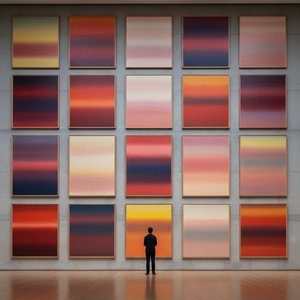
Mark Rothko's Masterpieces: 25 Paintings That Define Abstract Expressionism | OriginalUniqueArt
Explore 25 iconic Mark Rothko paintings that define Abstract Expressionism. Discover the stories, colors & emotions behind these masterpieces. Find museum-quality art reproductions and curated decor ideas at OriginalUniqueArt.com.


