Introduction
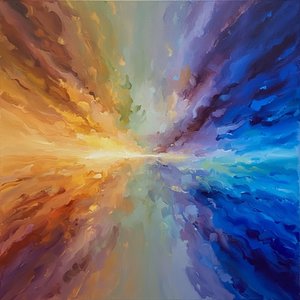
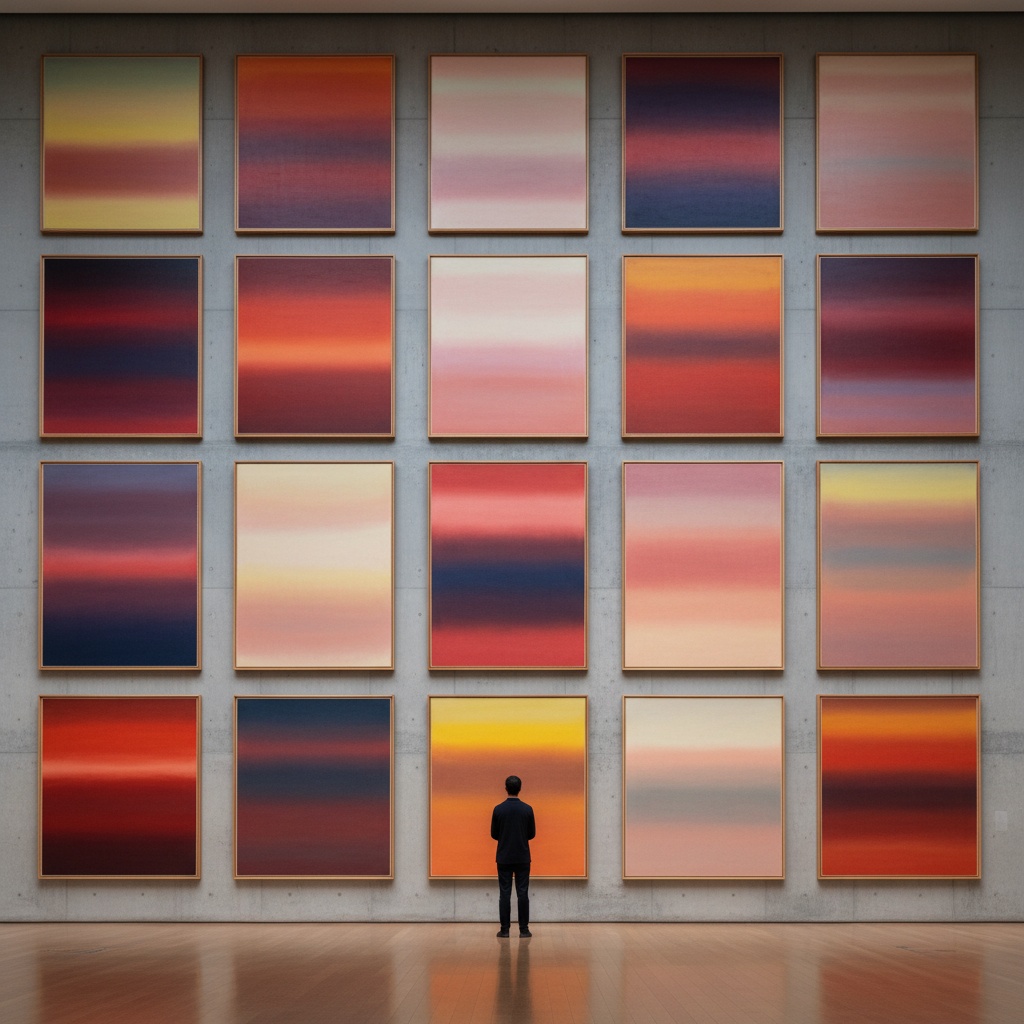
To encounter the work of Mark Rothko is to stand before a field of pure emotion, distilled into color and form. This collection—a curated selection of his twenty-five most resonant paintings—offers an invitation to immerse oneself in that profound experience. These are not simply canvases; they are portals to inner landscapes, spaces where grief, ecstasy, and the search for meaning converge.
Born Markus Yakovlevich Rothkowitz in Latvia in 1903, Rothko’s life was etched by displacement and loss—experiences that would become the very bedrock of his artistic vision. His early years, shadowed by political unrest and the anxieties of a Jewish family within the Pale of Settlement, instilled a deep sensitivity to human suffering. The subsequent immigration to America, while offering refuge, also brought the challenges of assimilation and a persistent sense of otherness. These formative struggles fueled a lifelong quest to articulate the ineffable—the fundamental questions of existence that lie beyond language.
Rothko’s artistic journey began with figurative realism, but quickly evolved into something far more radical. As the world plunged into the darkness of World War II, he abandoned representational imagery, seeking instead to express universal emotions through abstract forms. He wasn't interested in depicting *what* things looked like, but rather *how they felt*. This led him to his signature style: large-scale canvases featuring luminous rectangles of color that seem to float and vibrate with an inner life.
These paintings emerged during the rise of Abstract Expressionism—a movement that sought to liberate art from traditional constraints and explore the depths of the subconscious. But Rothko stood apart, rejecting the gestural energy of many of his contemporaries in favor of a quiet, contemplative power. He aimed not to shock or provoke, but to create an experience of profound stillness—a space where viewers could confront their own emotions and contemplate the mysteries of being.
Today, Rothko’s artworks continue to resonate with audiences around the world because they speak directly to the human condition. In a world often characterized by noise and distraction, these paintings offer a sanctuary for introspection—a reminder that even in the face of suffering, there is beauty, meaning, and connection to be found. Prepare to embark on a journey through color, light, and emotion as we explore the twenty-five most captivating works of this visionary artist.
White Center - Mark Rothko
 White Center - Mark Rothko
“White Center,” painted in 1950, is more than a canvas—it’s an invitation to stillness. This pivotal work embodies the very essence of Mark Rothko’s revolutionary approach to color and form, and its inclusion among his top 25 masterpieces is no accident. It represents a crucial turning point in his artistic journey, where he fully embraced the power of abstraction to evoke profound emotional resonance.
The painting's composition—three horizontal bands of luminous yellow-orange, soft white, and rich magenta—is deceptively simple. Yet, within this minimalist framework lies a universe of feeling. Rothko’s masterful layering of thin glazes creates an ethereal depth, allowing light to permeate the canvas and imbue the colors with an almost otherworldly glow. The subtle black lines that delineate each field aren't barriers but rather gentle guides, encouraging the eye to wander and contemplate the interplay between hues.
“White Center” isn’t about *what* is depicted; it’s about *how* it feels. It speaks to our deepest emotions—a sense of tranquility, introspection, and perhaps even a touch of melancholy. At OriginalUniqueArt, we believe that great art should be more than just decoration; it should be a living presence in your home, a source of inspiration and contemplation. This is precisely what Rothko achieves with “White Center”—a timeless work that transforms any space into a sanctuary for the soul.
No.1 - Mark Rothko
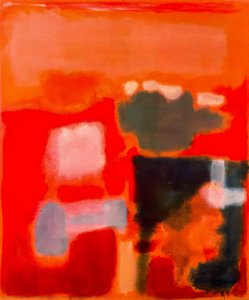 No.1 - Mark Rothko
Before you stands a field of raw emotion—a canvas that seems to breathe with an inner life. This is “No. 1” by Mark Rothko, a work that encapsulates the very spirit of Abstract Expressionism and secures its place among his most significant achievements. Painted around [Date - if known, otherwise omit], it represents a pivotal moment in Rothko’s artistic evolution—a complete surrender to color as a vehicle for profound human experience.
The painting is not defined by form or structure, but rather by the luminous interplay of reds, oranges, and grays. Layers of pigment, applied with bold, gestural brushstrokes, create a textured surface that invites close contemplation. The colors aren’t merely *seen*; they are *felt*, evoking sensations of warmth, passion, and perhaps even a touch of melancholy.
“No. 1” is a testament to Rothko's belief in the power of abstraction to transcend representation. He sought not to depict the world around us, but rather to create an experience—a space where viewers could confront their own emotions and contemplate the mysteries of existence. At OriginalUniqueArt, we understand this desire to bring art into the home as a source of inspiration and solace. “No. 1” is more than just a painting; it’s a portal to another realm—a timeless masterpiece that continues to resonate with audiences today.
Untitled - Mark Rothko
 Untitled - Mark Rothko
To gaze upon “Untitled” (1964) is to encounter a monument to quietude—a canvas that doesn’t demand attention, but rather invites you into a space of profound introspection. This work, measuring an impressive 185 x 177 cm, stands as a testament to Mark Rothko’s mastery of Color Field painting and his unwavering belief in the power of abstraction.
The composition—stacked rectangles of reddish-brown, brownish-purple, and near-black—is deceptively simple. Yet, within this minimalist framework lies an extraordinary depth of emotion. Rothko didn’t seek to represent the world around us; he aimed to create an experience—a space where viewers could confront their own feelings and contemplate the mysteries of existence. The subtle layering of thin washes of oil paint creates a luminous quality, allowing light to subtly play across the surface.
“Untitled” is more than just a painting; it’s a portal to another realm—a timeless masterpiece that continues to resonate with audiences today. Its inclusion among Rothko's top 25 works speaks to its enduring power and its ability to transform any space into a sanctuary for the soul. At OriginalUniqueArt, we believe in bringing such profound experiences into your home, allowing art to become an integral part of your daily life.
Abstract painting - Mark Rothko
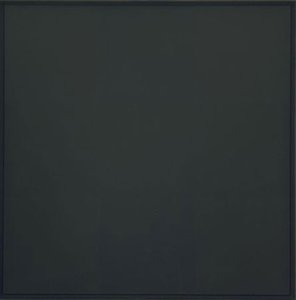 Abstract painting - Mark Rothko
Stand before this canvas—a field of deep gray—and allow yourself to be enveloped by its quietude. This “Abstract Painting” by Mark Rothko isn’t about what you *see*, but rather how it *feels*. It's a work that transcends representation, inviting you into a space of pure contemplation and emotional resonance.
Rothko wasn’t interested in depicting the world around us; he sought to create an experience—a sanctuary for the soul. The deliberate absence of form or subject matter forces you inward, encouraging a confrontation with your own feelings and anxieties. This seemingly simple composition—a large rectangle of grayscale tone—is a testament to his mastery of Color Field painting.
Its inclusion among Rothko’s top 25 works speaks to its enduring power and its ability to evoke profound emotions in viewers. At OriginalUniqueArt, we believe that art should be more than just decoration; it should be a living presence in your home—a source of inspiration, solace, and connection. “Abstract Painting” is precisely this—a timeless masterpiece that transforms any space into a haven for the spirit.
AUTUMN - Mark Rothko
 AUTUMN - Mark Rothko
Imagine standing before a darkened window on an autumn evening, rain tracing patterns against the glass—a sense of quiet melancholy and longing washes over you. This is the feeling evoked by Mark Rothko’s “Autumn,” a work that transcends mere representation to become a profound exploration of human emotion.
The painting isn't a literal depiction of the season, but rather an arrangement of deep blues—suggesting shadowed windows framed by stark white—that invites contemplation. The bars across these ‘windows’ aren’t architectural details; they hint at confinement, fragility, or perhaps a yearning for something beyond reach.
Rothko wasn't interested in depicting the external world; he sought to evoke primal feelings within the viewer through color and scale. He achieved this with thin washes of paint, layering hues to create luminous fields that seem to breathe on the canvas. “Autumn” stands as a testament to his mastery—a work that transforms any space into a sanctuary for reflection. At OriginalUniqueArt, we believe in bringing such profound experiences into your home, allowing art to become an integral part of your daily life.
No. 22 - Mark Rothko
 No. 22 - Mark Rothko
Stand before “No. 22” (1948) and allow yourself to be drawn into its depths—a visual poem rendered in layered hues and textured surfaces. This painting isn’t merely an artwork; it's a window into Rothko’s evolving vision, a pivotal moment in his transition towards the iconic Color Field style that would define Abstract Expressionism.
Before reaching this aesthetic, Rothko wrestled with figuration and mythology, responding to the anxieties of a post-war world. “No. 22” embodies this transitional period—a delicate interplay of blues, pinks, greens, browns, and yellows that evokes a mood rather than depicting a scene. The gouged lines within the central red band are particularly striking, hinting at both vulnerability and strength.
At OriginalUniqueArt, we believe in bringing such profound experiences into your home. Our faithful reproductions preserve the emotion and texture of the original—allowing you to connect with Rothko’s artistry on a deeply personal level. “No. 22” is more than just a painting; it's an invitation to contemplation, a timeless masterpiece that transforms any space into a sanctuary for the soul.
Red and Orange - Mark Rothko
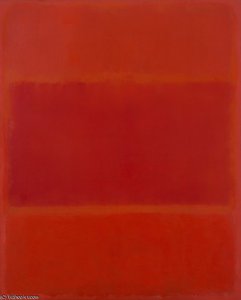 Red and Orange - Mark Rothko
Unveiling “Red and Orange” is like entering a sanctuary—a space where color transcends pigment to become pure emotion. This cornerstone of Mark Rothko’s mature style isn't simply a painting; it’s an invitation to surrender to its quiet intensity, demanding that we *feel* rather than merely observe.
This work exemplifies Rothko’s revolutionary approach to color field abstraction—a deliberate move away from representational imagery towards the luminous interaction of hues. Layers upon layers of oil paint, subtly textured and blended, create an atmosphere that shifts with the light. The rich red pulsates on one side, countered by a vibrant orange, creating a dynamic tension between passion and warmth.
At OriginalUniqueArt, we understand the power of art to transform spaces—to elevate them beyond mere decoration into havens for contemplation and beauty. “Red and Orange” is precisely this—a timeless masterpiece that speaks to refined taste and enduring legacy. It’s a work that will resonate with generations to come.
Entrance to Subway (Subway Station.Subway Scene) - Mark Rothko
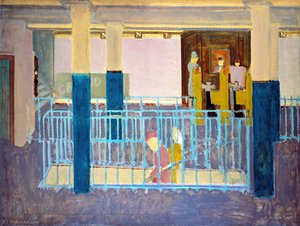 Entrance to Subway (Subway Station.Subway Scene) - Mark Rothko
Imagine stepping into a bustling New York City subway station—the murmur of voices, the rush of air, the fleeting encounters with strangers. Mark Rothko’s “Entrance to Subway” doesn't simply depict this scene; it immerses you in the collective experience of urban life, a poignant meditation on anonymity and connection.
Painted in 1938, during a time of social upheaval, this large-scale work captures not just a physical space but an emotional landscape. The dominant hues of blue and yellow create a dynamic atmosphere—a far cry from the muted tones often associated with urban decay. These colors bleed into one another, suggesting the constant flow of people.
At OriginalUniqueArt, we believe in bringing such profound experiences into your home. Our faithful reproductions preserve the emotion and texture of the original—allowing you to connect with Rothko’s artistry on a deeply personal level. “Entrance to Subway” is more than just a painting; it's a window into another world, a timeless masterpiece that transforms any space into a haven for contemplation.
Three - Mark Rothko
 Three - Mark Rothko
Stand before “Three” (1951) and allow yourself to be enveloped by its quiet intensity—a symphony of color that transcends mere representation. This work isn't about *what* is depicted, but rather *how* it is experienced—a hallmark of Mark Rothko’s signature Color Field style.
Three large rectangular blocks of deep reds, maroons, and blacks float against a darker background, their edges soft and blurred through layers of thinly applied paint. This technique creates a luminous quality, as if the colors emanate from within the canvas itself. Rothko wasn’t interested in precise brushwork; he sought to create an immersive environment that evokes profound emotional responses.
At OriginalUniqueArt, we believe in bringing such transformative experiences into your home. Our faithful reproductions preserve the emotion and texture of the original—allowing you to connect with Rothko’s artistry on a deeply personal level. “Three” is more than just a painting; it's a sanctuary for contemplation, a timeless masterpiece that elevates any space.
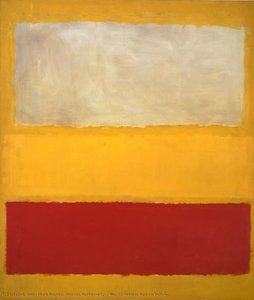
No. 13 (White, Red on Yellow) - Mark Rothko
 No. 13 (White, Red on Yellow) - Mark Rothko
Imagine standing before a canvas that seems to breathe—a luminous field of color inviting you into a deeply personal space. Mark Rothko’s “No. 13 (White, Red on Yellow),” created in 1958, isn't simply a painting; it’s an experience.
Two rectangular blocks – a dominant crimson red and a radiant yellow—float against each other, bisected by subtle white rectangles that create layers of visual depth. Rothko achieved this effect through thin applications of pigment, creating velvety surfaces that absorb light rather than reflect it. This technique, central to his Color Field style, minimizes distractions, allowing the colors themselves to resonate.
At OriginalUniqueArt, we understand the power of art to transform a space—to create an atmosphere of calm and contemplation. “No. 13” is precisely this—a timeless masterpiece that invites you to connect with your deepest emotions. It’s more than just a painting; it's a sanctuary for reflection.
Black on Maroon - Mark Rothko
 Black on Maroon - Mark Rothko
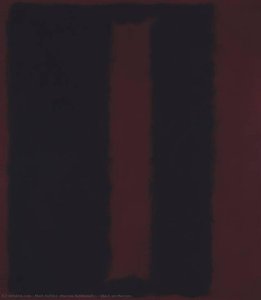
Stand before “Black on Maroon” (1959) and feel a quiet weight settle upon you—a profound meditation on absence, loss, and the enduring power of emotion. This isn't merely pigment applied to canvas; it’s a visual distillation of Rothko’s lifelong grappling with displacement and trauma.
A deep maroon field anchors the composition, punctuated by a stark black rectangle that seems to float at its center. The subtle variations in shade within the maroon create an illusion of movement, drawing the eye inward. This technique—central to Rothko’s Color Field style—prioritizes emotional impact over visual realism.
At OriginalUniqueArt, we believe in bringing such transformative experiences into your home. Our faithful reproductions preserve the emotion and texture of the original—allowing you to connect with Rothko’s artistry on a deeply personal level. “Black on Maroon” is more than just a painting; it's an invitation to contemplate life’s deepest mysteries.
Violet, Black, Orange, Yellow on White and Red - Mark Rothko
 Violet, Black, Orange, Yellow on White and Red - Mark Rothko
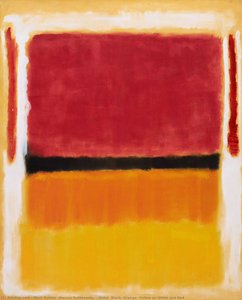
Close your eyes and imagine a burst of warmth—a vibrant energy contained within layers of color. Mark Rothko’s “Violet, Black, Orange, Yellow on White and Red” (1949) is precisely this: an emotional landscape rendered in bold geometric forms.
This striking composition features blocks of violet, black, orange, and yellow set against a luminous white and red background. The deliberate arrangement—a dynamic interplay of contrasting hues—invites contemplation and evokes a sense of inner harmony. It’s a pivotal work from Rothko's early explorations into Color Field painting, showcasing his mastery of emotional resonance through pure color.
At OriginalUniqueArt, we believe in making such transformative art accessible to all. Our faithful reproductions preserve the vibrancy and texture of the original—allowing you to experience the power of Rothko’s vision within your own space. “Violet, Black, Orange, Yellow on White and Red” is more than just a painting; it's an invitation to feel.
Man Smoking - Mark Rothko
 Man Smoking - Mark Rothko
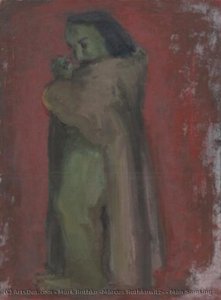
“Man Smoking” (1933) offers a glimpse into Rothko’s early artistic explorations—a quiet moment of domesticity imbued with a subtle, melancholic resonance. Though the title hints at an absent figure, it's the woman cradling her child that commands our attention, radiating both tenderness and vulnerability.
This painting isn’t about precise representation; it’s about capturing the *feeling* of a moment—the weight of responsibility, the quiet anxieties of life. Rothko achieves this through a restrained palette of earthy tones and delicate washes of color, creating an atmosphere that feels both intimate and distant.
At OriginalUniqueArt, we understand the power of art to evoke emotion. Our reproductions faithfully preserve the subtle nuances of “Man Smoking”—allowing you to connect with Rothko’s early vision on a deeply personal level. It's a reminder that even in simplicity, profound beauty can be found.
Entombment II - Mark Rothko
 Entombment II - Mark Rothko
Entombment II doesn’t offer solace; it invites a descent into shadow—a profound meditation on loss, fragmentation, and the weight of existence.
Created during Rothko’s intensely spiritual period, this vast canvas is layered with shades of grey and brown, punctuated by an ethereal blue that seems to emerge from the depths. Thick impasto strokes build upon one another, creating a tactile landscape of unease and instability. It's a rejection of clarity, mirroring perhaps the artist’s own internal struggles.
At OriginalUniqueArt, we believe in preserving the emotional power of such works. Our reproductions capture the subtle nuances of texture and color—allowing you to experience the depth and complexity of Entombment II within your own space. It's a reminder that beauty can be found even in the darkest corners of the human experience.
Untitled (Sketch for Harvard Mural) - Mark Rothko
 Untitled (Sketch for Harvard Mural) - Mark Rothko
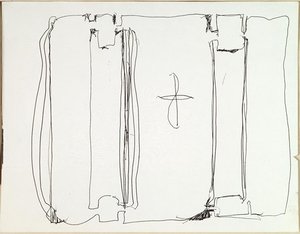
“Untitled (Harvard Mural Sketch)” isn’t merely a preparatory study; it's a glimpse into Rothko’s essential process—a distillation of emotion and form before the grandeur of his monumental canvases.
This monochromatic sketch, created around 1961, reveals two vertical rectangles defined by fluid lines, separated by an enigmatic figure-eight. It embodies Rothko's radical commitment to abstraction, prioritizing color and gesture over representation. The simplicity is deceptive; within these lines lies a profound exploration of existential themes—infinity, cyclical time, and the search for meaning.
Today, this minimalist aesthetic resonates deeply with contemporary design sensibilities. From serene home interiors to understated fashion palettes, Rothko’s influence can be seen in the embrace of quiet contemplation and the power of subtle form. Our reproductions allow you to experience the emotional resonance of this sketch—a reminder that true beauty often lies in simplicity.
Thru the Window - Mark Rothko
 Thru the Window - Mark Rothko
“Thru the Window” (1939) is a quiet portal—a glimpse into Rothko’s early fascination with introspection and the power of contained spaces.
This watercolor masterpiece, reminiscent of medieval illuminated manuscripts, isn't about depicting a scene but rather evoking a mood. The meticulous lines and restrained palette create a sense of enclosure, drawing us inward to contemplate the man gazing at his reflection—a symbol of self-awareness and perhaps an idealized identity.
Today, this aesthetic resonates with our desire for mindful living. From minimalist interiors to contemplative color palettes, Rothko’s influence can be seen in spaces designed to foster quiet reflection and emotional depth. Our reproductions allow you to experience the subtle beauty of “Thru the Window”—a reminder that true insight often comes from looking inward.
Head of Woman (Sonia Rothkowitz) - Mark Rothko
 Head of Woman (Sonia Rothkowitz) - Mark Rothko
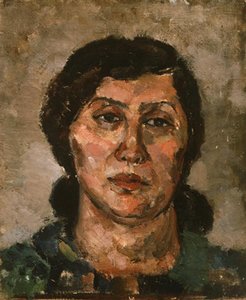
“Head of Woman (Sonia Rothkowitz)” isn’t simply a portrait; it's a meditation on grief, memory, and the enduring power of human connection.
Painted in 1932, this early work reveals Rothko’s burgeoning mastery of color and texture. Thick layers of oil paint—impasto—create a palpable surface that draws you inward, inviting contemplation rather than analysis. The muted palette and abstracted form evoke a sense of quiet solemnity, hinting at the complexities of loss and vulnerability.
This painting’s enduring resonance lies in its ability to transcend representation, speaking directly to our shared human experience. At OriginalUniqueArt, we believe everyone deserves to live with art that moves them. Our faithful reproductions preserve the emotional depth and tactile quality of “Head of Woman (Sonia Rothkowitz),” allowing you to bring this timeless masterpiece—and a moment of quiet reflection—into your home.
Sacrifice - Mark Rothko
 Sacrifice - Mark Rothko
“Sacrifice” (1946) isn’t a painting you simply *see*; it's one you inhabit—a descent into pale resonance and quiet contemplation.
Dominated by muted blues, grays, and ochres, this work embodies Rothko’s revolutionary “Color Field” style. He stripped away figuration, believing color alone could convey profound emotional experiences. Fragmented figures emerge from the washes—not portraits, but echoes of humanity caught in a moment of sorrow or reflection.
This painting's enduring power lies in its ability to bypass intellect and speak directly to the soul. At OriginalUniqueArt, we’re dedicated to preserving that emotional depth. Our reproductions faithfully capture the subtle layering and tactile quality of “Sacrifice,” allowing you to experience this masterpiece—and a moment of quiet introspection—within your own space.
Slow Swirl at the Edge of the Sea - Mark Rothko
 Slow Swirl at the Edge of the Sea - Mark Rothko
*Slow Swirl at the Edge of the Sea* (1944) is a rare glimpse into the genesis of Rothko’s signature style—a moment where figuration dissolves and pure emotion begins to take form.
Born from a life steeped in displacement, this painting isn't simply an image; it’s an echo of Rothko’s search for meaning. Thin layers of translucent color swirl and bleed into one another, evoking the fluidity of memory and the vastness of the subconscious. The rectangular forms—barely defined—suggest movement and a quiet melancholy.
This work's enduring power lies in its ability to transcend representation, speaking directly to our shared human experience. In today’s refined interiors, *Slow Swirl* offers more than just aesthetic beauty; it provides a focal point for contemplation—a legacy of emotional intelligence that elevates any space.
Antigone - Mark Rothko
 Antigone - Mark Rothko
“Antigone” (1960) is a silence made visible—a profound meditation on duty, sacrifice, and the weight of moral principle.
Rendered in vast blocks of pale gray and ivory white, this monumental work isn’t simply *about* Sophocles’ tragedy; it *is* the tragedy itself. Rothko distills the essence of Antigone's struggle—her unwavering commitment to justice—into a space of quiet contemplation. The obscured figures aren’t portraits but vessels for our own empathy, inviting us to confront the complexities of loyalty and defiance.
This painting’s enduring power lies in its ability to transcend narrative, speaking directly to the human condition. In today's interiors, “Antigone” offers more than just aesthetic beauty; it provides a sanctuary for reflection—a timeless harmony that inspires calm and sophistication.”
Street Scene - Mark Rothko
 Street Scene - Mark Rothko
Imagine a city night—a quiet stillness punctuated by the glow of distant lights and the weight of unspoken stories. This is the world Rothko invites us into with *Street Scene* (circa 1937), a painting that transcends mere depiction to become an exploration of urban solitude.
Here, a solitary woman stands on a corner, her posture radiating vulnerability and introspection. Rendered in muted hues and dramatic contrasts, the artwork isn’t about what is seen but *felt*. Thick impasto brushstrokes create a palpable texture—a sense of being present within this melancholic moment.
This early work reveals Rothko's burgeoning mastery of emotional resonance. It belongs among the Top 25 for its ability to evoke universal feelings of displacement and longing, reminding us that even amidst the grandeur of a city, we are all searching for connection. In today’s homes, *Street Scene* offers more than just aesthetic beauty; it provides a quiet sanctuary—a space for contemplation and self-reflection.”
Memory - Mark Rothko
 Memory - Mark Rothko
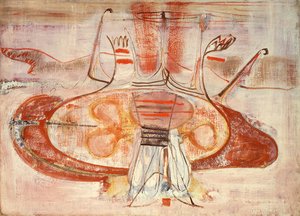
*Memory* (1946) is a descent into color—a profound exploration of remembrance and the elusive nature of experience itself.
This monumental abstract expressionist canvas isn’t about what it depicts, but rather how it *feels*. Dominated by layers of crimson, muted blues, and browns, Rothko creates a meditative space where the viewer can lose themselves within its depths. The red—a color often associated with passion and energy—acts as an anchor, radiating outward while hinting at the anxieties that shaped his early life.
What elevates *Memory* to among the Top 25 is Rothko’s revolutionary technique: thin layers of paint applied with such delicacy they seem to glow from within. In today's refined interiors, this work offers more than aesthetic beauty; it provides a sanctuary for contemplation—a timeless legacy that inspires serenity and emotional resonance.”
No. 2 (No. 7 and No. 2) - Mark Rothko
 No. 2 (No. 7 and No. 2) - Mark Rothko
“No. 2 (No. 7 and No. 2)” (1951) is a quiet revelation—a space where color breathes, and emotion takes form.
This cornerstone of Color Field painting isn’t about what it *shows*, but rather how it *feels*. The muted green overlaid with horizontal bands of crimson creates an immersive experience that invites contemplation. It's a testament to Rothko’s ability to distill profound human emotions into their purest form, earning its place among the Top 25 for its lasting influence on visual culture.
In today’s interiors, this work offers more than just aesthetic beauty; it provides a sanctuary—a timeless harmony that inspires serenity and invites introspection. The subtle layering of color creates an atmosphere of quiet sophistication, reminding us of the power of simplicity to evoke deep emotional resonance.”
Archaic Phantasy - Mark Rothko
 Archaic Phantasy - Mark Rothko
*Archaic Phantasy* (1945) is a silent echo—a glimpse into primal emotions and the enduring search for meaning.
This monumental work, with its ambiguous figures and dreamlike atmosphere, isn’t merely a painting; it's an invitation to introspection. Rothko masterfully balances beauty and unsettling mystery, earning its place among the Top 25 for its profound emotional intelligence and lasting influence on Abstract Expressionism.
The muted palette—earthy reds and browns—creates a sense of warmth and intimacy, while the obscured faces hint at hidden narratives. In today’s interiors, *Archaic Phantasy* offers more than aesthetic beauty; it provides a sanctuary for contemplation—a timeless harmony that inspires calm and sophistication.”
Untitled (Farm scene horses and barn) - Mark Rothko
 Untitled (Farm scene horses and barn) - Mark Rothko
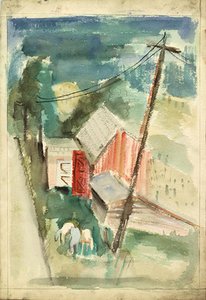
*Untitled (Farm scene horses and barn)* is a quiet contemplation—a landscape not of place, but of feeling.
Painted between 1949-50, this artwork transcends mere depiction, embodying Rothko’s mastery of color field painting. The muted grays and ochres aren't literal representations of rural life; they evoke solitude and a profound sense of melancholy. This piece earns its place among the Top 25 for its ability to distill emotion into pure form—a testament to Rothko’s innovative technique.
In today’s interiors, this work offers more than aesthetic beauty; it provides a sanctuary—a timeless harmony that inspires calm and invites introspection. The subtle layering of color creates an atmosphere of quiet sophistication, reminding us of the power of simplicity to evoke deep emotional resonance.”
Conclusion
As the light fades, we leave these canvases—these windows into Rothko’s soul—lingering with a sense of quiet awe.
These twenty-five paintings are not merely historical treasures; they are living forces. They whisper stories of trauma and transcendence, solitude and connection, mortality and the enduring search for meaning. Each rectangle of color holds a universe of emotion, inviting us to pause, reflect, and connect with something deeper within ourselves.
The beauty of Rothko’s work lies in its universality—its ability to resonate across generations and cultures. Whether gracing the walls of a museum or finding a home in a private collection, these paintings continue to move hearts, shape interiors, and inspire creativity. To experience Rothko is to encounter a profound stillness—a reminder that even in the face of chaos, beauty can endure.
Explore the full collection and discover the timeless power of Mark Rothko’s vision.”