Preview
 Send
Send Share
Share
 Details

 Download
 Similars
 X-Ray
X-Ray Diaporama
Basse cour


 Read More
Giclée / Art Print
Museum-quality giclée or canvas print with fast production and flexible finish options. ( Buy Hand Made Painting Buy Image)




P118B $10

P118H $10

P118W $10

P438Z $10

P508JH $12

P508YH $12

P805H $10

P805Z $10

P919BZ $10

P919G $10

P919XJ $10

P959ZH $10

P968JZ $12

W106C $8

W218G $10

W218JH $8

W218Y $10

W307PJ $10

W316G $10

W316PJ $8

W316Y $10

W398PJ $8

W4111J $10

W500HY $15

W500JH $15

W692G $12

W849H $8

W940BG $15

W953PJ $8




Pick from our preset sizes that match the artwork's original proportions.

You may enter your own dimensions to fit a specific frame or space. If your selected size does not match the original image's proportions, we will either crop the artwork or extend the image with a mirrored or solid-fill edge. A digital mockup will be sent for your approval before production begins.
Please note that the on-screen preview does not reflect the actual cropping or extension. Only the mockup will accurately show the final composition.
While custom sizes are available, we recommend selecting a dimension from the predefined list to preserve the original proportions.
Worldwide Delivery () in 2 weeks instead of standard 4/5 weeks. (13 August)

Free Worldwide Express Shipping

High-Quality Linen Canvas

Full Shipping Insurance

Customs Tax Refund Guarantee

True Color Matching Guarantee

60-Day Return Policy (Defects Only)

100% Money-Back Guarantee

Bulk Discount Offer
 Glass option is only available in size under 110 CM

Basse cour
Giclée / Art Print
Reproduction Size
-


Total Price
$ 81
Collectible Description
The Lively Bounty of Flemish Life
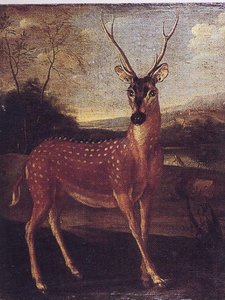
To gaze upon Nicasius Bernaerts's Basse cour is to step directly into the sun-dappled, earthy heart of 17th-century Flemish rural life. This painting is far more than a mere collection of fowl; it is a vibrant celebration of agricultural abundance and domestic prosperity. The composition bursts with life, featuring a lively gathering of chickens whose varied plumage—from deep blacks to creamy golds—captures the very essence of spirited existence. Bernaerts has masterfully arranged these subjects in an informal tableau, allowing each bird its moment in the spotlight while maintaining a cohesive, natural energy across the canvas.
A Masterclass in Textural Realism
Technically, this work is a testament to the meticulous skill of the Flemish Baroque period. Bernaerts employed oil paint on panel, a medium that allowed him to achieve an astonishing level of verisimilitude. Observe the feathers: they are not simply painted; they seem to possess weight and softness. The artist’s handling of texture—the overlapping barbs, the sheen on a rooster's elaborate crest—is breathtakingly realistic. While the overall perspective maintains a certain flatness characteristic of the era, it is counterbalanced by the palpable depth achieved through Bernaerts's nuanced understanding of light. A soft, diffused illumination seems to emanate from an unseen source, gently highlighting the contours and rich colors of the plumage against the muted, dark background.
Symbolism of Status and Sustenance
Historically, the subject matter itself carries significant weight. The term Basse cour refers not just to a simple yard, but often to an exhibition or display of prized poultry—a visible marker of wealth, status, and successful husbandry in the Dutch Golden Age context. Owning such a piece was akin to displaying one's connection to the land and its bounty. The chickens, therefore, become potent symbols: they speak of reliable sustenance, the cyclical nature of life, and the quiet, enduring prosperity that underpinned much of the era’s mercantile success.
Bringing Rustic Grandeur Home
For the modern collector or designer, this reproduction offers an unparalleled opportunity to infuse a space with historical narrative and organic warmth. The palette—dominated by rich ochres, warm browns, and muted grays—is inherently grounding, making it a perfect focal point for rooms seeking an antique, cultivated atmosphere. Whether displayed in a formal hall or a cozy study, the Basse cour invites contemplation of nature’s intricate beauty. It is art that whispers tales of bygone markets and skilled craftsmanship, transforming a simple wall into a gallery celebrating life's most humble, yet magnificent, details.
Artist Biography
Nicasius Bernaerts: A Flemish Master of Animal Art
Nicasius Bernaerts, Monsù Nicasio or simply Nicasius (15 March 1620, Antwerp – 16 September 1678, Paris) was a Flemish painter of animals, hunting pieces and flowers who had an international career in Italy and Paris. He worked in his native Antwerp, Italy and France. In the final part of his career he worked for the French court and provided tapestry designs to the Gobelins Manufactory in Paris.- Early Life & Training: Bernaerts was born in Antwerp, a city renowned for its artistic heritage. He began his artistic journey under the tutelage of Frans Snyders, arguably the most celebrated animal painter of his time in Flanders. Snyders’s masterful depictions of wildlife and hunting scenes profoundly influenced Bernaerts's style and technique.
- Italian Period & Recognition: Following his training, Bernaerts embarked on a formative trip to Italy where he adopted the moniker ‘Monsù Nicasio’. His work quickly gained acclaim, attracting the patronage of Ferdinando II de’ Medici, Grand Duke of Tuscany, demonstrating the burgeoning interest in Flemish art within the Italian Renaissance.
- French Career & Royal Patronage: Bernaerts subsequently relocated to France around 1643 and established himself as a prolific artist in Paris for several years. He was admitted into the Royal Academy of Painting and Sculpture in 1663, securing royal commissions that cemented his reputation as a leading figure in French Baroque art. Notably, Louis XIV entrusted him with the task of painting animals from his newly formed menagerie at Versailles – a monumental undertaking reflecting the grandeur of the monarchy and Bernaerts’s skill in capturing animal anatomy and behavior.
- Tapestry Design & Artistic Legacy: Bernaerts's contribution extended beyond individual paintings; he served as a designer for the Gobelins Manufactory, producing stunning tapestry panels that showcased his artistic vision. Furthermore, he worked for the royal real estate office (garde-meuble de la couronne), supplying animal studies and artworks to adorn the palaces of Versailles and Fontainebleau.
- Later Life & Artistic Influence: Bernaerts’s later years were marked by hardship due to alcoholism, tragically diminishing his artistic output. He died in poverty in 1678, leaving behind a legacy as one of Flanders's most accomplished animal painters. Alexandre-François desportes, Bernaerts’s pupil, carried forward his stylistic innovations and contributed to the continuation of Flemish animal art traditions.

nicasius bernaerts
1620 - 1678
Quick Facts
- Artistic Movement Or Style: Baroque
- Artists Or Movements Influenced By This Artist: David de Koninck
- Artists Who Influenced This Artist: Frans Snyders
- Date Of Birth: 1620
- Date Of Death: 1678
- Full Name: Nicasius Bernaerts
- Nationality: Flemish
- Notable Artworks:
- DEUX PETITS CHIENS
- Oiseaux et faisans
- Autruche
- Place Of Birth: Antwerp
Related Articles
Met Museum's 25 Masterpieces: Art History & Decor Inspiration | OriginalUniqueArt
Journey through 25 iconic artworks at the Metropolitan Museum of Art! Explore Van Gogh, Monet, Rembrandt & more. Discover art history, inspiring stories, and museum-quality reproductions to elevate your home decor. Explore the full collection on OriginalUniqueArt.com.
National Gallery of Art's Masterpieces: 25 Iconic Paintings for Your Home Decor
Explore 25 iconic artworks from Washington DC's National Gallery of Art! Discover masterpieces by Cézanne, Matisse & Picasso. Find museum-quality art reproductions and elevate your home decor with timeless paintings. Explore the full collection online at OriginalUniqueArt.com.

Whistler's Masterpieces: Explore 25 Iconic Paintings & Aesthetic Art for Your Home
Journey through 25 iconic James Abbott McNeill Whistler paintings! Explore his masterpieces of Aestheticism, from 'Nocturne in Black and Gold' to captivating portraits. Find museum-quality art reproductions & elevate your home decor with OriginalUniqueArt.com. Discover the full collection online.

Baroque Masterpieces: 10 Paintings That Defined an Era |
Journey through the drama & grandeur of Baroque art! Explore 10 masterpieces by Caravaggio, Rembrandt, Rubens & more. Discover stunning oil paintings, rich colors & timeless stories. Find museum-quality reproductions at .
Henri Matisse's Masterpieces: Explore 25 Iconic Paintings & Art Decor Ideas
Journey through Henri Matisse's 25 most iconic paintings! Explore Fauvism, vibrant colors & the stories behind masterpieces like 'The Dance'. Find museum-quality art reproductions and curated decor ideas to elevate your space. Discover all masterpieces on OriginalUniqueArt.com.