() ·

A painting made for you, by hand

Ignudo (13)

Hand Made Oil Reproduction

Hand-painted oil on canvas in your size and frame, made to order by our artists. ( Switch to Print Switch to Digital Image)

Collectible Description

Michelangelo's 'Ignudo (13)' from the Sistine Chapel ceiling: A powerful study of the human form, showcasing Renaissance artistry and divine inspiration.

Artist Biography

High Renaissance master of the Sistine Chapel. Discover his legendary sculptures and frescoes today.

from ·

Chapter 1

How large should it be?

Slide to change the size; the picture on the left shows the frame at its real width. The proportions of the original are kept.

Standard
custom
CM
INCH

Pick from our preset sizes that match the artwork's original proportions.

width
height

Type the width and the height you need, to fit your frame or your wall. This is hand-painted, so for a size with a different shape the artist can paint a bit more around the picture, or cut a bit — you choose. We send you a digital mockup to approve before the painting starts. The picture shown on this page does not show the real result — only the mockup does.

Chapter 2

How should it arrive?

Choose the edges of the stretched canvas

Choose your frame

Corner sample of the WhiteWrap canvas edge finish, stretched on solid wood bars
White $1
Corner sample of the BlurSideWrap canvas edge finish, stretched on solid wood bars
Blurside $1
Corner sample of the ExtendedWrap canvas edge finish, stretched on solid wood bars
Extended $1
Corner sample of the P118B picture frame: moulded polystyrene, 5 cm wide and 3 cm thick
P118B $10
Corner sample of the P118H picture frame: moulded polystyrene, 5 cm wide and 3 cm thick
P118H $10
Corner sample of the P118W picture frame: moulded polystyrene, 5 cm wide and 3 cm thick
P118W $10
Corner sample of the P438Z picture frame: moulded polystyrene, 5.5 cm wide and 3.5 cm thick
P438Z $10
Corner sample of the P508JH picture frame: moulded polystyrene, 7 cm wide and 3.5 cm thick
P508JH $12
Corner sample of the P508YH picture frame: moulded polystyrene, 7 cm wide and 3.5 cm thick
P508YH $12
Corner sample of the P805H picture frame: moulded polystyrene, 5 cm wide and 3.5 cm thick
P805H $10
Corner sample of the P805Z picture frame: moulded polystyrene, 5 cm wide and 3.5 cm thick
P805Z $10
Corner sample of the P919BZ picture frame: moulded polystyrene, 7 cm wide and 3.5 cm thick
P919BZ $10
Corner sample of the P919G picture frame: moulded polystyrene, 7 cm wide and 3.5 cm thick
P919G $10
Corner sample of the P919XJ picture frame: moulded polystyrene, 7 cm wide and 3.5 cm thick
P919XJ $10
Corner sample of the P959ZH picture frame: moulded polystyrene, 5 cm wide and 3 cm thick
P959ZH $10
Corner sample of the P968JZ picture frame: moulded polystyrene, 6 cm wide and 4 cm thick
P968JZ $12
Corner sample of the W106C picture frame: solid wood, 5 cm wide and 3 cm thick
W106C $8
Corner sample of the W218G picture frame: solid wood, 5 cm wide and 3 cm thick
W218G $10
Corner sample of the W218JH picture frame: solid wood, 5 cm wide and 3 cm thick
W218JH $8
Corner sample of the W218Y picture frame: solid wood, 5 cm wide and 3 cm thick
W218Y $10
Corner sample of the W307PJ picture frame: solid wood, 6 cm wide and 3 cm thick
W307PJ $10
Corner sample of the W316G picture frame: solid wood, 6 cm wide and 3 cm thick
W316G $10
Corner sample of the W316PJ picture frame: solid wood, 6 cm wide and 3 cm thick
W316PJ $8
Corner sample of the W316Y picture frame: solid wood, 6 cm wide and 3 cm thick
W316Y $10
Corner sample of the W398PJ picture frame: solid wood, 5 cm wide and 3 cm thick
W398PJ $8
Corner sample of the W4111J picture frame: solid wood, 6.5 cm wide and 3.5 cm thick
W4111J $10
Corner sample of the W500HY picture frame: solid wood, 7 cm wide and 5 cm thick
W500HY $15
Corner sample of the W500JH picture frame: solid wood, 7 cm wide and 5 cm thick
W500JH $15
Corner sample of the W692G picture frame: solid wood, 8 cm wide and 4 cm thick
W692G $12
Corner sample of the W849H picture frame: solid wood, 5 cm wide and 3 cm thick
W849H $8
Corner sample of the W940BG picture frame: solid wood, 7.5 cm wide and 4.5 cm thick
W940BG $15
Corner sample of the W953PJ picture frame: solid wood, 6 cm wide and 3.5 cm thick
W953PJ $8
Corner sample of the H24-GOLD picture frame: carved wood with gesso, 10 cm wide and 6 cm thick
H24-GOLD $30
Corner sample of the H24-SILVER picture frame: carved wood with gesso, 10 cm wide and 6 cm thick
H24-SILVER $30
Corner sample of the H36-GOLD picture frame: carved wood with gesso, 15 cm wide and 6.5 cm thick
H36-GOLD $45
Corner sample of the H36-SILVER picture frame: carved wood with gesso, 15 cm wide and 6.5 cm thick
H36-SILVER $45
Frame preview
Framed

Moulding: . Overall size with the frame: .

Chapter 3

Who paints it, and should anything change?

Examples of what can be changed: Replace face with customer photo; Add pet (e.g., replace cat with dog); Include hidden message in background; Change background landscape or elements.
After order, OriginalUniqueArt.com team will email client for instructions and provide a mockup preview

Worldwide Delivery () in 3/4 weeks instead of standard 5 weeks. (1 November). No compromise on quality.

Chapter 4

The finishing touches

A nameplate, as in a museum?

Engraved Bronze Plaque Details

This elegant plaque features the artist's name and the title of the artwork, finely engraved for a timeless presentation.

It is made from bronze with a refined, elegant finish. The text is precisely laser-engraved for a sharp and permanent result. Measuring 9x2 cm, the plaque is compact yet easy to read. It's built to be durable and scratch-resistant, offering a professional, museum-quality look. Mounting is simple thanks to the included adhesive backing.

Transparent Acrylic Plaque Details

The plaque includes essential engraved details such as the artist's name, the title of the artwork, the date it was created, the type of media used-like oil on canvas or watercolor-a brief description of the piece, and a QR code that links to the complete artwork information.

It is crafted from clear acrylic, offering a sleek, modern appearance. The text is UV-engraved in black to ensure strong visual contrast. With a size of 10x15 cm, it ensures optimal readability. It comes equipped with two metal hooks for secure wall mounting. The plaque is designed to be weather-resistant, making it suitable for various environments, and it includes interactive features that work seamlessly with smartphone scanning.

Black Acrylic Plaque Details

This elegant plaque includes engraved information such as the artist's name, the title of the artwork, the date it was created, the type of media used (like oil on canvas or watercolor), a short description of the artwork, and a QR code for quick access to more information.

The plaque itself is made from refined black acrylic with a premium finish. The text is laser-engraved in white for high contrast and readability. Its size is 10x15 cm, designed to be easy to read. It comes with two metal hooks for professional mounting. The design is sleek and fits any interior style. It is also weather-resistant and durable, with built-in digital integration for mobile compatibility.

A protective varnish?

When do you need it?

Chapter 5

Your painting, as you ordered it

Ignudo (13)

Reproduction Medium

Reproduction Size

-

Elite Senior Artist

More detail, finesse, and extra production time

-

Reproduction Frame

-

-

For artworks or reproductions larger than 105 cm (approximately 41 inches) on any side, the frame will be shipped as a kit, disassembled. This method ensures safe delivery and prevents damage during transport.

Professional assembly required - this is not a DIY product.
The kit must be assembled and the canvas stretched by an experienced professional framer, using wood glue (not supplied), a canvas stretching plier and clamps to hold the bars square while the glue dries. Incorrect assembly or uneven canvas tension can permanently damage the artwork and is not covered by our warranty.

  • All solid wood bars are included, precisely cut to size.

  • Assembled with the screws provided, plus wood glue for the corner joints, which is not supplied and must be sourced by your framer.

  • Professional tools are required and not included: a canvas stretching plier (tensioner) and clamps to hold the bars square while the glue dries.

Important:
The corner joints require wood glue, the bars must be held with clamps until the glue is fully dry, and tightening the canvas on the assembled frame requires a canvas stretching plier. None of these are included in the kit. Please arrange an experienced professional framer before ordering this size.

Nameplate

-

-

Protective Varnish

Glossy Varnish (enhances colors, protects against light/moisture)

-

Customize My Artwork

Examples of what can be changed: Replace face with customer photo; Add pet (e.g., replace cat with dog); Include hidden message in background; Change background landscape or elements.

-

Urgent

Worldwide Delivery () in 3/4 weeks instead of standard 5 weeks. (1 November). No compromise on quality.

-

Express Shipping

Worldwide Delivery () in 5 weeks. (8 November).

Included

Total Price

$ 300

Total Price $ 300

Glass option is only available in size under 110 CM

Included with every order

  • Free Worldwide Express Shipping
  • High-Quality Linen Canvas
  • Full Shipping Insurance
  • Customs Tax Refund Guarantee
  • True Color Matching Guarantee
  • 100-Day Return Policy (Defects Only)
  • 100% Money-Back Guarantee
  • Bulk Discount Offer

Ignudo (13): A Study in Human Form within Michelangelo's Sistine Chapel

Ignudo (13), meaning "Nude (13)," is one of a series of nude male figures painted by Michelangelo Buonarroti on the ceiling of the Sistine Chapel in Vatican City. Created between 1508 and 1512 as part of his monumental fresco cycle depicting scenes from Genesis, this particular figure stands out for its anatomical precision and expressive posture. It is not a narrative element within a specific biblical story but rather an idealized representation of human beauty and strength, contributing to the overall aesthetic harmony of the chapel's ceiling.

Style and Technique: High Renaissance Idealism

Ignudo (13) exemplifies the artistic ideals of the High Renaissance. Michelangelo’s style is characterized by a profound understanding of human anatomy, achieved through meticulous observation and study of classical sculptures. The figure displays a remarkable level of detail in its musculature, veins, and skin texture. The fresco technique itself—applying pigments to wet plaster—demands speed and precision. Michelangelo's mastery allowed him to create vibrant colors and lasting images despite the challenges of this medium. The composition is carefully balanced, with the nude figure positioned against a backdrop that creates depth and perspective within the vast ceiling.

Historical Context: A Papal Commission and Artistic Innovation

The Sistine Chapel ceiling project was commissioned by Pope Julius II, a powerful and ambitious patron of the arts. Julius sought to transform the chapel into a magnificent testament to papal authority and religious devotion. Michelangelo initially resisted the commission, preferring sculpture to painting, but ultimately accepted the challenge. The sheer scale of the undertaking—covering over 5,000 square feet—was unprecedented. Ignudo (13), along with the other frescoes, represents a pivotal moment in art history, marking a shift towards greater naturalism and dynamism in religious imagery. It was created during a period of intense artistic competition and innovation in Rome.

Symbolism and Emotional Impact: Beauty, Strength, and Human Potential

While Ignudo (13) doesn't directly illustrate a biblical narrative, it carries symbolic weight within the context of the Sistine Chapel. The idealized nude figure represents human potential and physical perfection—a reflection of Renaissance humanist ideals that celebrated human achievement and beauty. The figure’s relaxed yet powerful posture conveys a sense of confidence and serenity. Michelangelo’s skill in rendering the human form evokes a profound emotional response, inspiring awe and admiration for the capabilities of both the artist and humankind. The placement of these figures amongst scenes from Genesis suggests a connection between divine creation and human existence.

Legacy and Influence: A Cornerstone of Western Art

Ignudo (13) has had an enduring impact on Western art, influencing generations of artists with its anatomical accuracy, dynamic composition, and expressive power. The figure’s iconic status is evident in countless reproductions and parodies. It remains a testament to Michelangelo's genius and the transformative power of High Renaissance art. The Sistine Chapel ceiling as a whole continues to draw millions of visitors each year, solidifying Ignudo (13)’s place as one of the most recognizable and celebrated works of art in history.

Questions & Answers

How can "Ignudo (13)" by Michelangelo Buonarroti be used in home decor?

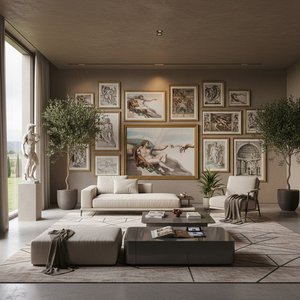
"Ignudo (13)" is suggested for statement, and the recommended space is a living room.

How does the subject of "Ignudo (13)" relate to Michelangelo Buonarroti's usual themes?

"Ignudo (13)" depicts nude, male figure, sistine chapel, michelangelo, fresco, anatomy, renaissance, sculpture, while Michelangelo Buonarroti's recorded themes are part of sistine chapel ceiling, demonstrates mastery of anatomy, key work in high renaissance art, classical antiquity, renaissance humanism, biblical creation story, human potential & divinity, papal authority & power. Comparing the two shows how the work relates to the artist's usual subjects.

Where in the home does a reproduction of "Ignudo (13)" fit well?

The recommended space for "Ignudo (13)" by Michelangelo Buonarroti is a living room. The suggestion can of course be adapted to your interior.

More about this painting

Switch to Print Switch to Digital Image Send
Details Guide Add to favorites Download Similars Diaporama Q&A Stats

In numbers

  • 1511the year it was painted
  • 29frames to choose from
  • standard sizes, in its own proportions
  • 5weeks to paint and deliver it
Michelangelo Buonarroti

Michelangelo Buonarroti

1475 - 1564, Italy

Quick facts about Michelangelo Buonarroti

  • Artistic Movement Or Style:
    • High Renaissance
    • Mannerism
  • Artists Or Movements Influenced By This Artist: ['Mannerism']
  • Artists Who Influenced This Artist:
    • Domenico Ghirlandaio
    • Donatello
    • Masaccio
  • Full Name: Michelangelo di Lodovico Buonarroti Simoni
  • Nationality: Italian
  • Notable Artworks:
    • Pietà
    • David
    • The Creation of Adam
    • The Last Judgment
    • Moses
  • Place Of Birth: Caprese Michelangelo, Italy
  • Date Of Birth: 1475
  • Date Of Death: 1564

Artist Biography

The Hands of Caprese

In the hills of Caprese, a boy learned the weight of stone and the grit of marble dust. Born in 1475, Michelangelo di Lodovico Buonarroti Simoni spent his early years near Settignano, where his father owned a quarry. The smell of damp earth and the sound of hammers against rock were part of his childhood. He did not start with brushes but with the chisel. His apprenticeship under Domenico Ghirlandaio in Florence brought him into contact with the city's growing interest in the human form, yet it was the Medici gardens that truly shaped his eyes. There, among the ancient Greek and Roman fragments, he studied how light falls across muscle and bone.

His work began to take shape through a deep study of anatomy. He looked at the way a limb carries weight and how skin stretches over a joint. This focus on the physical reality of the body became his primary language. By the time he reached Rome in 1496, he was already carving figures that possessed a heavy, palpable presence. The Pietà, completed in 1499, shows this early ability to make marble appear as soft as flesh, even as it carries the weight of a dead man.

The Weight of the Sistine Ceiling

The task of the Sistine Chapel ceiling was not something he sought. He saw himself as a sculptor, someone who pulls life out of stone rather than spreading pigment on plaster. Yet, for four years, he worked in the high reaches of the chapel, painting over 300 figures from the Book of Genesis. The physical toll was visible in his daily life. He spent hours in difficult positions, his body strained by the reach and the heavy application of fresco technique. In panels like The Creation of Adam, the tension is found in the small gap between two fingers, a moment of near-contact that holds the viewer's attention through pure composition.

As time passed, his style moved away from the balanced ideals of the High Renaissance toward something more restless. His later works, such as The Last Judgment on the altar wall, show a shift toward Mannerism. The figures became more elongated and the compositions more crowded and dramatic. This change reflected a shifting spiritual climate in Rome. He continued to work with an intensity that many found overwhelming, often leaving projects unfinished as his mind moved toward new architectural or sculptural problems.

Architecture and Final Years

In his later decades, Michelangelo turned much of his attention to the structure of buildings. At age 71, he took over the work on St. Peter's Basilica, altering the plans to create a more massive, imposing design. He also designed the Laurentian Library, where his use of architectural elements broke from tradition, creating a sense of movement within the stone itself. His work on the Piazza del Campidoglio in Rome showed how he could organize a public space using symmetry and classical motifs to guide the eye through the square.

He died in Rome in 1564, leaving behind a legacy written in marble, fresco, and stone. His life was defined by several key roles:

  • Sculptor: Carving works like David from single blocks of Carrara marble.
  • Painter: Executing the vast narrative cycles of the Sistine Chapel.
  • Architect: Redesigning the foundations of St. Peter's Basilica and the Laurentian Library.
  • Poet: Expressing his inner thoughts through verse.

Quick Facts

  • Notable elements or techniques: Detailed human anatomy
  • Subject or theme: Nude male figure
  • Artist: Michelangelo Buonarroti
  • Artistic style: Renaissance
  • Movement: High Renaissance

Art Quiz

There is only one correct answer for each question.

Question 1:
Who is the artist of Ignudo (13)?
Question 2:
In which location can you find Ignudo (13)?
Question 3:
What artistic technique was primarily used to create Ignudo (13)?
Question 4:
Approximately when was Ignudo (13) created?