Text size

() ·

A painting made for you, by hand

Last Judgement

Hand Made Oil Reproduction

Hand-painted oil on canvas in your size and frame, made to order by our artists. ( Switch to Print Switch to Digital Image)

Collectible Description

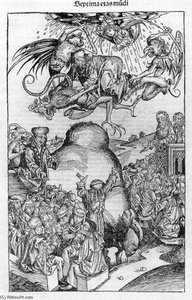
A dramatic depiction of the biblical Last Judgement by German Renaissance master Michael Wolgemut captures the intense emotions of souls facing their fate, offering a profound piece for your collection to explore.

Artist Biography

Explore Michael Wolgemut (1434-1519), a German Renaissance painter & printmaker who mentored Albrecht Dürer! Discover his Flemish influences and iconic woodcuts from the Nuremberg Chronicle.

from ·

Chapter 1

How large should it be?

Slide to change the size; the picture on the left shows the frame at its real width. The proportions of the original are kept.

Standard
custom
CM
INCH

Pick from our preset sizes that match the artwork's original proportions.

width
height

Type the width and the height you need, to fit your frame or your wall. This is hand-painted, so for a size with a different shape the artist can paint a bit more around the picture, or cut a bit — you choose. We send you a digital mockup to approve before the painting starts. The picture shown on this page does not show the real result — only the mockup does.

Chapter 2

How should it arrive?

Choose the edges of the stretched canvas

Choose your frame

Corner sample of the WhiteWrap canvas edge finish, stretched on solid wood bars
White $1
Corner sample of the BlurSideWrap canvas edge finish, stretched on solid wood bars
Blurside $1
Corner sample of the ExtendedWrap canvas edge finish, stretched on solid wood bars
Extended $1
Corner sample of the P118B picture frame: moulded polystyrene, 5 cm wide and 3 cm thick
P118B $10
Corner sample of the P118H picture frame: moulded polystyrene, 5 cm wide and 3 cm thick
P118H $10
Corner sample of the P118W picture frame: moulded polystyrene, 5 cm wide and 3 cm thick
P118W $10
Corner sample of the P438Z picture frame: moulded polystyrene, 5.5 cm wide and 3.5 cm thick
P438Z $10
Corner sample of the P508JH picture frame: moulded polystyrene, 7 cm wide and 3.5 cm thick
P508JH $12
Corner sample of the P508YH picture frame: moulded polystyrene, 7 cm wide and 3.5 cm thick
P508YH $12
Corner sample of the P805H picture frame: moulded polystyrene, 5 cm wide and 3.5 cm thick
P805H $10
Corner sample of the P805Z picture frame: moulded polystyrene, 5 cm wide and 3.5 cm thick
P805Z $10
Corner sample of the P919BZ picture frame: moulded polystyrene, 7 cm wide and 3.5 cm thick
P919BZ $10
Corner sample of the P919G picture frame: moulded polystyrene, 7 cm wide and 3.5 cm thick
P919G $10
Corner sample of the P919XJ picture frame: moulded polystyrene, 7 cm wide and 3.5 cm thick
P919XJ $10
Corner sample of the P959ZH picture frame: moulded polystyrene, 5 cm wide and 3 cm thick
P959ZH $10
Corner sample of the P968JZ picture frame: moulded polystyrene, 6 cm wide and 4 cm thick
P968JZ $12
Corner sample of the W106C picture frame: solid wood, 5 cm wide and 3 cm thick
W106C $8
Corner sample of the W218G picture frame: solid wood, 5 cm wide and 3 cm thick
W218G $10
Corner sample of the W218JH picture frame: solid wood, 5 cm wide and 3 cm thick
W218JH $8
Corner sample of the W218Y picture frame: solid wood, 5 cm wide and 3 cm thick
W218Y $10
Corner sample of the W307PJ picture frame: solid wood, 6 cm wide and 3 cm thick
W307PJ $10
Corner sample of the W316G picture frame: solid wood, 6 cm wide and 3 cm thick
W316G $10
Corner sample of the W316PJ picture frame: solid wood, 6 cm wide and 3 cm thick
W316PJ $8
Corner sample of the W316Y picture frame: solid wood, 6 cm wide and 3 cm thick
W316Y $10
Corner sample of the W398PJ picture frame: solid wood, 5 cm wide and 3 cm thick
W398PJ $8
Corner sample of the W4111J picture frame: solid wood, 6.5 cm wide and 3.5 cm thick
W4111J $10
Corner sample of the W500HY picture frame: solid wood, 7 cm wide and 5 cm thick
W500HY $15
Corner sample of the W500JH picture frame: solid wood, 7 cm wide and 5 cm thick
W500JH $15
Corner sample of the W692G picture frame: solid wood, 8 cm wide and 4 cm thick
W692G $12
Corner sample of the W849H picture frame: solid wood, 5 cm wide and 3 cm thick
W849H $8
Corner sample of the W940BG picture frame: solid wood, 7.5 cm wide and 4.5 cm thick
W940BG $15
Corner sample of the W953PJ picture frame: solid wood, 6 cm wide and 3.5 cm thick
W953PJ $8
Corner sample of the H24-GOLD picture frame: carved wood with gesso, 10 cm wide and 6 cm thick
H24-GOLD $30
Corner sample of the H24-SILVER picture frame: carved wood with gesso, 10 cm wide and 6 cm thick
H24-SILVER $30
Corner sample of the H36-GOLD picture frame: carved wood with gesso, 15 cm wide and 6.5 cm thick
H36-GOLD $45
Corner sample of the H36-SILVER picture frame: carved wood with gesso, 15 cm wide and 6.5 cm thick
H36-SILVER $45
Frame preview
Framed

Moulding: . Overall size with the frame: .

Chapter 3

Who paints it, and should anything change?

Examples of what can be changed: Replace face with customer photo; Add pet (e.g., replace cat with dog); Include hidden message in background; Change background landscape or elements.
After order, OriginalUniqueArt.com team will email client for instructions and provide a mockup preview

Worldwide Delivery () in 3/4 weeks instead of standard 5 weeks. (9 November). No compromise on quality.

Chapter 4

The finishing touches

A nameplate, as in a museum?

Engraved Bronze Plaque Details

This elegant plaque features the artist's name and the title of the artwork, finely engraved for a timeless presentation.

It is made from bronze with a refined, elegant finish. The text is precisely laser-engraved for a sharp and permanent result. Measuring 9x2 cm, the plaque is compact yet easy to read. It's built to be durable and scratch-resistant, offering a professional, museum-quality look. Mounting is simple thanks to the included adhesive backing.

Transparent Acrylic Plaque Details

The plaque includes essential engraved details such as the artist's name, the title of the artwork, the date it was created, the type of media used-like oil on canvas or watercolor-a brief description of the piece, and a QR code that links to the complete artwork information.

It is crafted from clear acrylic, offering a sleek, modern appearance. The text is UV-engraved in black to ensure strong visual contrast. With a size of 10x15 cm, it ensures optimal readability. It comes equipped with two metal hooks for secure wall mounting. The plaque is designed to be weather-resistant, making it suitable for various environments, and it includes interactive features that work seamlessly with smartphone scanning.

Black Acrylic Plaque Details

This elegant plaque includes engraved information such as the artist's name, the title of the artwork, the date it was created, the type of media used (like oil on canvas or watercolor), a short description of the artwork, and a QR code for quick access to more information.

The plaque itself is made from refined black acrylic with a premium finish. The text is laser-engraved in white for high contrast and readability. Its size is 10x15 cm, designed to be easy to read. It comes with two metal hooks for professional mounting. The design is sleek and fits any interior style. It is also weather-resistant and durable, with built-in digital integration for mobile compatibility.

A protective varnish?

When do you need it?

Chapter 5

Your painting, as you ordered it

Last Judgement

Reproduction Medium

Reproduction Size

-

Elite Senior Artist

More detail, finesse, and extra production time

-

Reproduction Frame

-

-

For artworks or reproductions larger than 105 cm (approximately 41 inches) on any side, the frame will be shipped as a kit, disassembled. This method ensures safe delivery and prevents damage during transport.

Professional assembly required - this is not a DIY product.
The kit must be assembled and the canvas stretched by an experienced professional framer, using wood glue (not supplied), a canvas stretching plier and clamps to hold the bars square while the glue dries. Incorrect assembly or uneven canvas tension can permanently damage the artwork and is not covered by our warranty.

  • All solid wood bars are included, precisely cut to size.

  • Assembled with the screws provided, plus wood glue for the corner joints, which is not supplied and must be sourced by your framer.

  • Professional tools are required and not included: a canvas stretching plier (tensioner) and clamps to hold the bars square while the glue dries.

Important:
The corner joints require wood glue, the bars must be held with clamps until the glue is fully dry, and tightening the canvas on the assembled frame requires a canvas stretching plier. None of these are included in the kit. Please arrange an experienced professional framer before ordering this size.

Nameplate

-

-

Protective Varnish

Glossy Varnish (enhances colors, protects against light/moisture)

-

Customize My Artwork

Examples of what can be changed: Replace face with customer photo; Add pet (e.g., replace cat with dog); Include hidden message in background; Change background landscape or elements.

-

Urgent

Worldwide Delivery () in 3/4 weeks instead of standard 5 weeks. (9 November). No compromise on quality.

-

Express Shipping

Worldwide Delivery () in 5 weeks. (16 November).

Included

Total Price

$ 300

Total Price $ 300

Glass option is only available in size under 110 CM

Included with every order

  • Free Worldwide Express Shipping
  • High-Quality Linen Canvas
  • Full Shipping Insurance
  • Customs Tax Refund Guarantee
  • True Color Matching Guarantee
  • 100-Day Return Policy (Defects Only)
  • 100% Money-Back Guarantee
  • Bulk Discount Offer

A Vision of Divine Reckoning

In the profound stillness of the late fifteenth century, Michael Wolgemut captured a moment of unparalleled cosmic significance. His Last Judgement is not merely a painting but a window into the medieval soul, a dramatic tableau where the temporal meets the eternal. The composition centers upon the majestic figure of Jesus Christ, serving as the ultimate arbiter of human destiny. Surrounding Him is a dense, emotive tapestry of humanity; men and women from every stratum of life are gathered in a state of profound vulnerability. Some figures stand with stoic resignation, while others kneel in fervent prayer or cower in anticipation of their fate. The sheer scale of the assembly—at least thirteen distinct souls visible in the immediate foreground—creates an immersive experience that draws the viewer into the very heart of the divine tribunal.

The artistry of Wolgemut, a master deeply rooted in the Nuremberg tradition, shines through in the meticulous attention to detail and the heavy, expressive linework characteristic of the transition from Late Gothic to Renaissance sensibilities. Every fold of drapery and every furrowed brow contributes to a sense of palpable tension. The inclusion of sacred texts and books held by certain figures suggests the weight of law and scripture, reminding the observer that this judgment is rooted in divine truth. Through his masterful use of light and shadow, Wolgemut imbues the scene with a chiaroscuro-like gravity, ensuring that the spiritual weight of the subject matter is felt physically by anyone standing before the work.

Historical Resonance and Symbolic Depth

To understand this masterpiece, one must look to the vibrant artistic landscape of Nuremberg around 1500. As a mentor to the legendary Albrecht Dürer, Wolgemut was a pivotal figure in shaping the German Renaissance. This period was marked by an intense preoccupation with mortality, salvation, and the looming presence of the divine. The Last Judgement serves as a profound theological mirror, reflecting the anxieties and hopes of an era standing on the precipothe of massive religious and social shifts. The symbolism is layered; the figures are not merely individuals but archetypes of human experience—the pious, the repentant, and the fearful—all unified by the singular event of their final accounting.

For the discerning collector or interior designer, this reproduction offers more than just aesthetic beauty; it provides a focal point of immense intellectual and emotional depth. The painting’s ability to command a room lies in its narrative complexity. It is a piece that invites contemplation, making it an ideal centerpiece for a library, a study, or a formal gallery space where conversation and reflection are encouraged. Bringing such a work into a contemporary setting creates a striking dialogue between the historical weight of the Northern Renaissance and the modern pursuit of meaning through art.

An Eternal Masterpiece for the Modern Collector

Owning a high-quality reproduction of Wolgemut’s Last Judgement is an opportunity to preserve a fragment of art history. The painting’s dramatic impact is timeless, transcending its 1500 origins to speak to the universal human condition. Whether one is drawn to the intricate technical execution of the Nuremberg Master or the hauntingly beautiful depiction of spiritual reckoning, this artwork stands as a testament to the power of religious narrative in fine art. It is an investment in atmosphere, offering a sense of grandeur and historical continuity that few other subjects can provide.

Questions & Answers

What explains the copyright situation of "Last Judgement" by Michael Wolgemut?

"Last Judgement" by Michael Wolgemut is in the public domain - its copyright has expired. Copyright duration runs from the artist's death, which occurred in 1519.

Where can I find artworks similar to "Last Judgement" by Michael Wolgemut?

Works similar to "Last Judgement" are listed on the artwork's Similars page.

What is the format of "Last Judgement"?

"Last Judgement" by Michael Wolgemut has a panoramic format. The format describes the proportions of the composition.

More about this painting

Preview AR preview Switch to Print Switch to Digital Image Send
Details Guide Add to favorites Download Similars X-Ray Diaporama Q&A Stats

In numbers

  • 1500the year it was painted
  • 29frames to choose from
  • standard sizes, in its own proportions
  • 5weeks to paint and deliver it
Michael Wolgemut

Michael Wolgemut

1434 - 1519, Germany

Quick facts about Michael Wolgemut

  • Artistic Movement Or Style: Late Gothic, Renaissance
  • Artists Or Movements Influenced By This Artist: ['Albrecht Dürer']
  • Artists Who Influenced This Artist: ['Flemish masters']
  • Date Of Birth: 1434
  • Date Of Death: 1519
  • Full Name: Michael Wolgemut
  • Nationality: German
  • Notable Artworks:
    • Zwickau High Altar
    • Nuremberg Chronicle
    • Memminger Portrait
  • Place Of Birth: Nuremberg, Germany

Artist Biography

A Nuremberg Master: The Life and Legacy of Michael Wolgemut

Born around 1434 in the vibrant city of Nuremberg, Germany, Michael Wolgemut emerged as a pivotal figure in the transition from Late Gothic to Renaissance art. His name, sometimes rendered as Wohlgemuth or Wolgemuth, resonates through art history not only for his own artistic contributions but also—and perhaps more profoundly—for his role as mentor to one of the greatest masters of all time: Albrecht Dürer. Wolgemut’s journey began within a familial artistic tradition; he received his initial training from his father, Valentin Wolgemut, a painter himself. This foundation instilled in him an early appreciation for the craft and set the stage for a career that would span decades and leave an indelible mark on German art. He further honed his skills as an assistant to Hans Pleydenwurff, a prominent Nuremberg artist, gaining invaluable experience within a bustling workshop environment. A brief sojourn in Munich with Gabriel Malesskircher proved less fruitful, ending in a legal dispute, but it underscored Wolgemut’s ambition and willingness to seek opportunities beyond his native city.

Workshop Leadership and Artistic Development

A turning point arrived in 1472 when Wolgemut married Pleydenwurff's widow, Barbara, inheriting not only a life partner but also the established workshop of one of Nuremberg’s leading artists. This acquisition propelled him to the forefront of the city’s artistic scene. Wilhelm Pleydenwurff, Hans’ son, joined the workshop as an assistant and later became a partner, creating a dynamic collaborative environment. Under Wolgemut's direction, the workshop flourished, becoming renowned for its diverse output—from intricately carved and painted wood retables to exquisitely detailed altar pieces. His style reveals a clear influence from Flemish masters, suggesting possible travels within Flanders (modern Belgium and surrounding areas). This is evident in his meticulous attention to detail, rich color palettes, and realistic depictions of figures and textures. He wasn’t merely replicating the Flemish aesthetic; he was adapting it, infusing it with a distinctly German sensibility that would characterize much of Northern Renaissance art.

The Nuremberg Chronicle and the Rise of Woodcut

Wolgemut's legacy extends far beyond painting. He stands as a key figure in the revival of German woodcut artistry. His workshop became a prolific producer of woodcuts, often commissioned by publishers to illustrate books—a burgeoning market fueled by the recent invention of the printing press. These weren’t simply functional illustrations; they were works of art in their own right, demonstrating advancements in technique that allowed for more nuanced depictions of volume and shading. Frequently hand-colored after printing, these woodcuts brought visual narratives to a wider audience than ever before. However, his most monumental achievement remains his collaboration with Wilhelm Pleydenwurff on the illustrations for Hartmann Schedel’s *Liber Chronicarum*, published in 1493—better known as the Nuremberg Chronicle. This lavishly illustrated chronicle was a landmark publication, showcasing Wolgemut's mastery of woodcut design and meticulous planning. The project involved creating hundreds of intricate images depicting biblical scenes, historical events, and fantastical creatures, all meticulously laid out alongside Schedel’s text. The sheer scale and ambition of the Nuremberg Chronicle cemented Wolgemut’s reputation as a leading artist of his time.

A Teacher's Influence: Dürer and Beyond

Perhaps Michael Wolgemut’s most enduring legacy lies in his role as teacher to Albrecht Dürer, arguably Germany’s greatest artist. Dürer apprenticed with Wolgemut between 1486 and 1489, receiving a comprehensive artistic education that laid the foundation for his own groundbreaking career. While Dürer ultimately surpassed his mentor in fame and innovation, he consistently acknowledged Wolgemut's influence throughout his life. He learned not only technical skills—drawing, painting, woodcut techniques—but also the importance of meticulous observation, careful composition, and a dedication to craftsmanship. Wolgemut instilled in Dürer a deep appreciation for both artistic tradition and innovative experimentation. Beyond Dürer, Wolgemut’s workshop trained numerous other artists, contributing significantly to the flourishing artistic landscape of Nuremberg and beyond. His contribution to German art isn't solely defined by his individual works but also by the vibrant artistic ecosystem he fostered.

Lasting Significance

Michael Wolgemut died in 1519, leaving behind a rich artistic legacy that continues to resonate today. Major works such as the Retable of the High Altar at Zwickau (1479), the Great Retable for the Church of the Augustinian Friars in Nuremberg, and the Town Hall Decorations at Goslar demonstrate his versatility and skill. His portraits, known for their realistic depictions and meticulous detail—examples are held by institutions like the Royal Institution in Liverpool—reveal a keen eye for character and individuality. Wolgemut’s influence extended beyond his direct students; his innovative approach to woodcut design helped shape the development of German art in the late 15th century, impacting book production and artistic dissemination during the Renaissance. He successfully blended Flemish influences with local traditions, creating a unique style that paved the way for future generations of artists. He remains a vital link between the Late Gothic period and the burgeoning Renaissance, a testament to his enduring contribution to art history.

Quick Facts

  • Artist: Michael Wolgemut
  • Movement: German Renaissance
  • Notable elements: Jesus Christ with various figures and books
  • Artistic style: Late Gothic to Renaissance transition