Preview
 Send
Send Share
Share
 Details
 Guide
Guide

 Download
 Similars
 X-Ray
X-Ray Diaporama
 Stats
StatsMaréchal de Saxe
 Pastel
- WallArt
- Rococo Portraiture
 Early Modern
 61.0 x 51.0 cm
 The Louvre
 Read More
Giclée / Art Print
Museum-quality giclée or canvas print with fast production and flexible finish options. ( Buy Hand Made Painting Switch to Digital Image)




P118B $10

P118H $10

P118W $10

P438Z $10

P508JH $12

P508YH $12

P805H $10

P805Z $10

P919BZ $10

P919G $10

P919XJ $10

P959ZH $10

P968JZ $12

W106C $8

W218G $10

W218JH $8

W218Y $10

W307PJ $10

W316G $10

W316PJ $8

W316Y $10

W398PJ $8

W4111J $10

W500HY $15

W500JH $15

W692G $12

W849H $8

W940BG $15

W953PJ $8




Pick from our preset sizes that match the artwork's original proportions.

Type the width and the height you need, to fit your frame or your wall. A print can only be cut, never made bigger than the picture, so a size with a different shape loses a part of the image. We send you a digital mockup to approve before we print anything. The picture shown on this page does not show the real cut — only the mockup does.
Worldwide Delivery () in 2 weeks instead of standard 4/5 weeks. (27 October)

Free Worldwide Express Shipping

High-Quality Linen Canvas

Full Shipping Insurance

Customs Tax Refund Guarantee

True Color Matching Guarantee

100-Day Return Policy (Defects Only)

100% Money-Back Guarantee

Bulk Discount Offer
 Glass option is only available in size under 110 CM

Maréchal de Saxe
Giclée / Art Print
Reproduction Size
-


Total Price
$ 81
A Vision of Rococo Grandeur
In the delicate dance of light and pigment, few works capture the aristocratic splendor of the eighteenth century as intimately as Maurice Quentin de La Tour’s 1731 pastel portrait, Maréchal de Saxe. To gaze upon this masterpiece is to step directly into the opulent intellectual landscape of Enlightenment France, where every brushstroke—or in this case, every soft application of pastel—serves to elevate the subject beyond mere mortal likeness. The portrait does not simply present a military commander; it orchestrates a symphony of power, prestige, and refined grace. Through the masterful use of the pastel medium, De La Tour achieves an ethereal luminosity that oil paints often struggle to replicate, allowing the skin tones to glow with a lifelike warmth and the fabrics to shimmer with a soft, tactile elegance.
The subject himself, the celebrated Maréchal de Saxe, is rendered with a profound sense of dignity. Clad in the authoritative attire of his station, he wears a striking blue sash draped across his shoulder, a symbol of high rank that cuts through the composition with a regal vibrancy. His black coat, punctuated by meticulously detailed gold buttons, speaks to the wealth and status inherent in his role as an influential advisor to Louis XV. De La Tour’s technical prowess is most evident in the subtle gradations of color; he blends hues of cerulean, cream, and gold so seamlessly that the textures of silk, lace, and skin appear almost tangible. This soft-focus brilliance is a hallmark of the Rococo style, creating an atmosphere that feels both intensely real and dreamily idealized.
The Intersection of Might and Intellect
Beyond the surface beauty of the portrait lies a deeper narrative regarding the cultural zeitgeist of the era. During this period, the ideals of the Enlightenment—reason, virtue, and intellect—were beginning to reshape the French court. De La Tour, a master of characterization, does not merely depict a soldier of war; he presents an embodiment of these very ideals. The Maréchal’s expression, marked by a quiet confidence and a gaze of seasoned wisdom, suggests a man whose strategic brilliance is matched by his philosophical depth. This portrayal aligns beautifully with the spirit of contemporaries like Voltaire, whose influence permeated the artistic circles of the time.
The minimalist background serves a vital compositional purpose, stripping away the distractions of a cluttered landscape to focus the viewer's entire emotional investment on the man himself. By placing the Maréchal against a plain, light-colored void, De La Tour ensures that the interplay of shadow and light on the subject's face becomes the focal point. This choice emphasizes the psychological depth of the sitter, inviting collectors and art enthusiasts to contemplate the weight of responsibility carried by such an influential figure.
An Enduring Legacy for the Discerning Collector
For the interior designer or the passionate art collector, a high-quality reproduction of Maréchal de Saxe offers more than just a decorative element; it provides a window into a vanished era of elegance. The piece possesses a unique ability to anchor a room, bringing a sense of historical gravity and sophisticated charm to any space. Whether placed in a sunlit library or a formal dining hall, the soft textures and regal color palette of the pastel medium evoke a feeling of timeless luxury.
Owning a reproduction of this caliber allows one to celebrate the technical mastery of Maurice Quentin de La Tour, an artist who redefined the possibilities of pastel. The artwork serves as a conversation piece that bridges the gap between the historical grandeur of the French monarchy and the modern aesthetic appreciation for fine detail and emotive portraiture. It is an investment in atmosphere, a tribute to the enduring power of the Rococo spirit, and a profound addition to any curated collection of fine art.
Questions & Answers
Who sells hand-painted copies of "Maréchal de Saxe" by Maurice Quentin de La Tour?
Hand-painted copies of "Maréchal de Saxe" by Maurice Quentin de La Tour are sold on this website: a hand-painted oil reproduction on linen canvas, ordered from its Hand-Painted Reproduction page.
Where is "Maréchal de Saxe" by Maurice Quentin de La Tour on display today?
You can see the original "Maréchal de Saxe" at The Louvre, Paris, France.
Can I see an X-ray view of "Maréchal de Saxe" by Maurice Quentin de La Tour?
The X-Ray view of "Maréchal de Saxe" by Maurice Quentin de La Tour is on the artwork's X-Ray page: an interactive examination of the image through eleven optical layers.
Artist Biography
Maurice Quentin de La Tour: A Life in Pastel
- Born: September 5, 1704, Saint-Quentin, France
- Died: February 17, 1788, Saint-Quentin, Picardy, Kingdom of France
- Known For: Rococo portraiture in pastel, capturing likenesses of Voltaire, Louis XV, and Madame de Pompadour.
Early Life and Artistic Development
- Maurice Quentin de La Tour was born into a musical family; his father, François de La Tour, was a musician for the Duc du Maine. Despite initial familial expectations, Maurice pursued painting.
- Around 1724, he moved to Paris, where he began his artistic career. Early training included studies with Jacques Spoede and a brief period in Rheims. A trip to England in 1725 further influenced his style.
- His early portraits, such as the one of Voltaire (1731), demonstrated an emerging talent for capturing character and likeness. This portrait was notably engraved by Langlois, bringing him wider recognition.
Artistic Style and Notable Works
- Pastel Mastery: De La Tour is celebrated for his exceptional skill in using pastels. He employed the medium to create portraits with a remarkable softness and delicacy, capturing subtle nuances of expression and texture.
- Rococo Influence: His work exemplifies the Rococo style, characterized by elegance, grace, and a focus on portraying fashionable society.
- Notable Works:
- Portrait of Voltaire (1731) - Established his reputation early in his career.
- Self-Portrait, Laughing (c. 1737) – Showcases his ability to portray personality and wit.
- Portrait of Madame de Pompadour – A significant commission demonstrating his skill in capturing the likeness of a prominent figure.
- Portraits of Louis XV - Several portraits of the French King, solidifying his position within the court.
- Salon Exhibitions: He regularly exhibited at the Paris Salon, showcasing a series of 150 portraits over three decades, which became a highlight for visitors.
Recognition and Later Life
- Royal Recognition: In 1737, he was recognized by the Royal Academy of Painting and Sculpture. He later became portraitist to the king in 1750.
- Philanthropy: As his wealth grew, de La Tour dedicated himself to philanthropic endeavors, founding a school for drawing in Saint-Quentin and supporting impoverished artists.
- Mental Health Challenges: Around 1773, he experienced a nervous breakdown, leading to periods of mental illness and eventual retirement to his hometown of Saint-Quentin.
Legacy and Historical Significance
- De La Tour’s portraits are highly valued for their psychological insight and technical brilliance. He elevated pastel portraiture to new heights, influencing subsequent generations of artists.
- His ability to capture the essence of his subjects—their personalities, intelligence, and social standing—made him one of the most sought-after portraitists of his time.
- Today, his works are held in prestigious museums worldwide, including the Musée du Louvre, providing valuable insights into 18th-century French society and artistic practices.
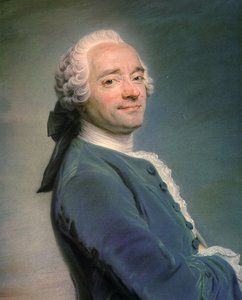
Maurice Quentin de La Tour
1704 - 1788 , France
Quick Facts
- Full Name: Maurice Quentin de La Tour
- Nationality: French
- Date Of Birth: 1704
- Date Of Death: 1788
- Place Of Birth: Saint-Quentin, France
- Notable Artworks:
- Portrait of Madame de Pompadour
- Louis XV
- Self-portrait, laughing
- Artistic Movement Or Style: Rococo
Related Articles
The Elegance of Rococo Portraiture: A Journey Through Grace, Soft Light, and Pastel Dreams
Discover the exquisite world of Rococo portraiture. Explore the delicate beauty of 18th-century French art, from pastel light to graceful asymmetry, and learn how to bring this era of elegance into your home through masterfully hand-painted oil reproductions.

Maurice Quentin de La Tour: Light, Shadow & the Rococo Portrait
Explore the captivating world of Maurice Quentin de La Tour, a master of Rococo portraiture. Discover his innovative pastel techniques, intimate depictions of French aristocracy, and lasting artistic legacy. Learn more at OriginalUniqueArt.

Goya's Masterpieces: Explore 25 Iconic Paintings & Art Prints | OriginalUniqueArt
Delve into the world of Francisco Goya with OriginalUniqueArt. Explore 25 iconic paintings – from 'The Third of May' to his haunting Black Paintings. Discover the stories, techniques & emotions behind these Spanish masterpieces. Find museum-quality art reproductions for your home at OriginalUniqueArt.com!
Georges de La Tour: Luminosity, Spirituality & Realism in Baroque Painting
Discover the captivating world of Georges de La Tour, a Baroque master renowned for his dramatic chiaroscuro & spiritual realism. Explore key works, influences, and his remarkable rediscovery. Learn more at OriginalUniqueArt.
Águeda Ruiz de la Prada: A Study of Eclecticism & Emotional Resonance in Contemporary Spanish Painting
Discover the vibrant world of Ágatha Ruiz de la Prada, a leading figure in contemporary Spanish art. Explore her eclectic style, emotional depth & legacy – a must-read for discerning collectors.