

 Preview
 Send
Send Share
Share
 Details
 Guide
Guide

 Download
 Similars
 X-Ray
X-Ray Diaporama
 Stats
StatsRococo Islands


 Read More
The artwork displayed on this page is protected by copyright law, which means we cannot legally create or sell an identical reproduction. This protection is enforced under international agreements such as the Berne Convention and by national laws, including those outlined by the U.S. Copyright Law - Title 17.
As a respectful and legal alternative, we offer custom, hand-painted artworks inspired by the original. Our skilled and professional artists carefully study the original's style, mood, and artistic essence to create a new, unique piece that evokes the same feeling - while remaining an original creation in its own right.
This method fully complies with copyright regulations because it does not involve copying or duplicating the protected artwork. Instead, it is a creative reinterpretation - a new painting that is influenced by the original but not identical to it.
Hand Made Oil Reproduction
Hand-painted oil on canvas in your size and frame, made to order by our artists. ( Switch to Print Switch to Digital Image)




P118B $10

P118H $10

P118W $10

P438Z $10

P508JH $12

P508YH $12

P805H $10

P805Z $10

P919BZ $10

P919G $10

P919XJ $10

P959ZH $10

P968JZ $12

W106C $8

W218G $10

W218JH $8

W218Y $10

W307PJ $10

W316G $10

W316PJ $8

W316Y $10

W398PJ $8

W4111J $10

W500HY $15

W500JH $15

W692G $12

W849H $8

W940BG $15

W953PJ $8




Pick from our preset sizes that match the artwork's original proportions.

Type the width and the height you need, to fit your frame or your wall. This is hand-painted, so for a size with a different shape the artist can paint a bit more around the picture, or cut a bit — you choose. We send you a digital mockup to approve before the painting starts. The picture shown on this page does not show the real result — only the mockup does.
After order, OriginalUniqueArt.com team will email client for instructions and provide a mockup preview
Worldwide Delivery () in 3/4 weeks instead of standard 5 weeks. (27 October). No compromise on quality.

Free Worldwide Express Shipping

High-Quality Linen Canvas

Full Shipping Insurance

Customs Tax Refund Guarantee

True Color Matching Guarantee

100-Day Return Policy (Defects Only)

100% Money-Back Guarantee

Bulk Discount Offer
 Glass option is only available in size under 110 CM

Rococo Islands
Reproduction Medium
Reproduction Size
-


Total Price
$ 300
A Tapestry of Dreams: Exploring Mary Jo Dalrymple Tw’s “Rococo Islands”
- Subject Matter and Composition:
- Style and Technique:
- Historical Context and Influences:
- Symbolism and Emotional Resonance:
Style and Technique
Dalrymple Tw's approach leans heavily into the aesthetic principles of Rococo art, specifically drawing inspiration from the opulent interiors and decorative patterns characteristic of Louis XV’s France. This influence manifests in a meticulous attention to symmetry and ornamentation—elements that elevate the quilt beyond simple patchwork. The quilting technique itself is masterful, employing satin stitch quilting to create smooth, flowing lines that mimic the undulating curves found in Rococo frescoes and stucco moldings. Furthermore, the artist utilizes appliqué techniques – carefully stitched fabric shapes layered onto the base quilt – to add textural richness and visual complexity. These appliqués aren’t haphazard additions; they are strategically placed to reinforce compositional balance and contribute to the overall sense of grandeur.Historical Context and Influences
The quilt's creation in 1982 places it squarely within a period marked by significant artistic experimentation and cultural shifts. While Basquiat’s influence is palpable—his unflinching portrayal of social realities mirroring the rebellious spirit of punk rock—the quilt’s aesthetic harkens back to earlier eras, specifically the Belle Époque, where quilting served as a comforting ritual amidst anxieties about modernity. The sun motif isn't merely decorative; it symbolizes hope and renewal – themes frequently explored in Romantic art alongside Rococo—reflecting a broader yearning for beauty and harmony during a time of rapid industrialization and social upheaval.Symbolism and Emotional Resonance
Beyond its formal stylistic considerations, “Rococo Islands” possesses a powerful emotional core. The dominant blues evoke tranquility and introspection, mirroring the contemplative mood favored by Rococo painters who sought solace in idealized landscapes and mythological narratives. Conversely, the whites represent purity and innocence—a counterpoint to the darker hues that often signaled moral decay. The central sun design embodies optimism and resilience – qualities celebrated throughout art history as emblems of triumph over adversity. Ultimately, Dalrymple Tw’s quilt invites viewers into a realm of personal reflection, prompting them to contemplate themes of comfort, beauty, and enduring artistic legacy. It's a testament to the transformative power of craftmanship and its ability to convey profound emotional truths.Questions & Answers
At what size is "Rococo Islands" suggested for a living room?
In a living room, "Rococo Islands" is suggested at a large print size.
What does the 1982 date of "Rococo Islands" correspond to in Mary Jo Dalrymple Tw's career?
The 1982 date places "Rococo Islands" in the Late Career of Mary Jo Dalrymple Tw's development.
When was "Rococo Islands" made?
"Rococo Islands" dates from 1982. The date places the work within Mary Jo Dalrymple Tw's career and its era.
Artist Biography
A Tapestry of Memory and Imagination
Born in Paducah, United States of America, Mary Jo Dalrymple Tw has carved a unique niche within the realm of textile arts, transforming fabric into an evocative medium for storytelling. Her work transcends the traditional boundaries of quilting, moving beyond mere decorative craft to become a profound meditation on memory and the enduring beauty of handcrafted artistry. Through her meticulous approach, she weaves together elements of the past and present, creating pieces that serve as windows into a dreamlike landscape of imagination.
The essence of her artistic vision is perhaps most vibrantly captured in her work “Rococo Islands,” a piece that demonstrates her ability to blend historical aesthetic principles with contemporary textile techniques. In this work, one finds a mesmerizing dance of blues and whites, punctuated by a radiant sun motif that breathes life into the fabric. Her compositions often invite the viewer into a world where texture and color coalesce to form a visual language of great depth and emotional resonance.
Technique and Aesthetic Influence
Dalrymple Tw’s artistic development is marked by a sophisticated command over complex textile methods. Her approach leans heavily into the aesthetic principles of Rococo art, drawing inspiration from the opulent and ornamental characteristics found in the decorative patterns of 18th-century France. This influence is not merely superficial; it is embedded in her very method of construction.
To achieve her signature look, she employs several advanced techniques:
- Satin Stitch Quilting: She utilizes this method to create smooth, flowing lines that mimic the undulating curves found in classical frescoes and stucco moldings.
- Appliqué: By carefully layering stitched fabric shapes onto a base quilt, she adds a layer of textural richness and visual complexity to her compositions.
- Symmetry and Ornamentation: Her work maintains a meticulous attention to balance, elevating the medium of quilting to a level of grandeur typically associated with fine art.
Artistic Legacy and Recognition
The significance of Dalrymple Tw’s work lies in her ability to elevate the quilt from a functional object to a sophisticated piece of contemporary art. Her contributions to the textile community are recognized through the presence of her works in esteemed collections, such as those held by the Arkansas Museum of Fine Arts. Her pieces, including notable works like “Medusa Project” and “Renewal,” showcase an evolving mastery of the medium.
By bridging the gap between traditional craft and fine art, she continues to inspire a deeper appreciation for the boundless imagination inherent in fiber arts. Her work stands as a testament to the power of texture, light, and pattern to communicate complex human emotions and historical echoes.

Mary Jo Dalrymple Tw
1982 - , United States of America
Quick Facts
- Artistic Movement Or Style: Rococo-inspired quilting
- Full Name: Mary Jo Dalrymple Tw
- Notable Artworks:
- Rococo Islands
- Medusa Project
- Renewal
- Place Of Birth: Paducah, United States of America
- Date Of Birth: 1982
Related Articles

Cézanne's Masterpieces: 25 Iconic Artworks to Transform Your Space
Journey through 25 iconic artworks by Paul Cézanne – a master of Impressionism and Post-Impressionism. Explore his landscapes, still lifes, and the stories behind these timeless masterpieces. Discover museum-quality reproductions & curated decor at OriginalUniqueArt.com.

The Allure of Azure: Exploring the Symbolic & Aesthetic Depths of Blue in Art History
Explore the rich history of blue in art! Discover its symbolism, from ancient pigments to modern masterpieces by Kandinsky & Seurat. Uncover the psychological impact and cultural meanings behind this captivating hue.

Geometric Abstraction's 10 Defining Masterpieces | Art for Your Home - OriginalUniqueArt
Explore 10 defining masterpieces of Geometric Abstraction! Discover Kandinsky, Mondrian & Malevich’s iconic works. Find museum-quality art reproductions and curated decor ideas to elevate your home at OriginalUniqueArt.com.
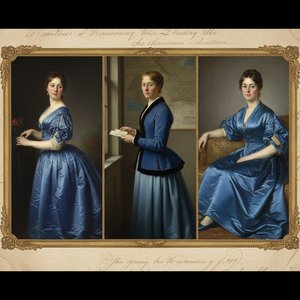
Azure Visions: Exploring Representations of the Blue Dress in Western Art History
Explore the rich history of the blue dress in Western art! Discover its symbolism, from Renaissance masterpieces to modern interpretations by artists like Martin & Schiele. Uncover cultural meanings and artistic techniques.

Slate Blue Masterpieces: 10 Iconic Paintings & Timeless Home Decor Ideas
Immerse yourself in the captivating world of slate blue! Explore 10 iconic paintings by Monet, Van Gogh & Renoir. Discover their stories, techniques & find museum-quality art reproductions for your home at .
